
Reviewed · FRANCE FARM TOURS
Valensole : Visit of a winery and lavender farm
The best part of this Valensole outing is that it goes beyond the usual lavender-field photo stop. You walk through a working estate, learn how lavender becomes essential oil, meet the people behind the farm, and see olives, almonds, fruit trees, and vines growing side by side. I especially like the organic farming focus and the chance to taste real farm products, not just browse a gift shop.
I also like the setting: an old stone farm reached by a lavender-colored sign and a simple country lane. Elodie has led a clear, well-organized tour, and the optional €5 wine tasting gives you a pleasant extra if you want to understand the estate’s newer vineyard work. The main caution is practical: this is an outdoor walk on uneven ground, so bring sturdy shoes, water, sun protection, and loose clothing.
Key points to know before you go
- Walk through a working estate: See lavender, olive trees, almond trees, fruit trees, wild plants, and vineyards in one visit.
- Learn the oil-making process: Your guide explains how lavender is distilled and turned into essential oil.
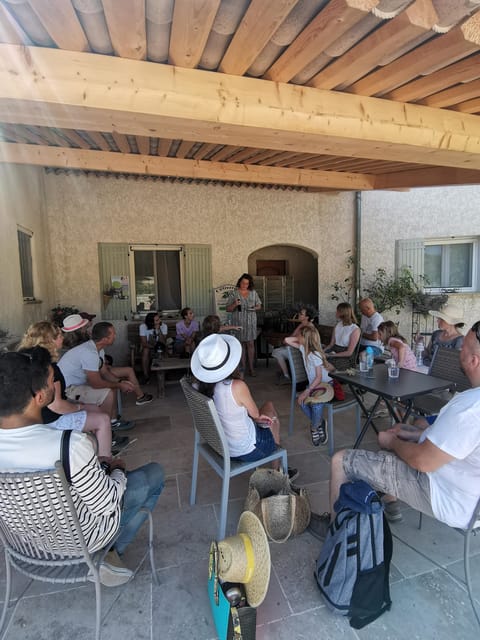
- Taste farm products: Sample lavender syrup, raw almonds, almond paste, essential oil, and several olive oils.
- Add wine for €5: The optional tasting includes the estate’s award-winning wine and may be hosted by the owner.
- Allow 150 minutes outdoors: The walk is easy but partly off-road and includes some wooded sections.
- Come prepared for heat: Water, a sun hat, sunscreen, hiking shoes, and loose-fitting clothes are specifically recommended.
A working farm, not just a lavender photo stop
Valensole is famous for purple lavender rows and dry Provençal scenery, but the strongest reason to book this experience is the wider view of rural life. The estate is not presented as a single-purpose lavender attraction. It is a working farm with several crops and a long family tradition of making and selling agricultural products.
You begin at an old stone-built property marked by a lavender-colored sign. After driving up the lane, you can park in the field in front of the house. That simple arrival matters. You are coming to a farm, not a polished visitor center, so expect a relaxed country setting rather than formal museum facilities.
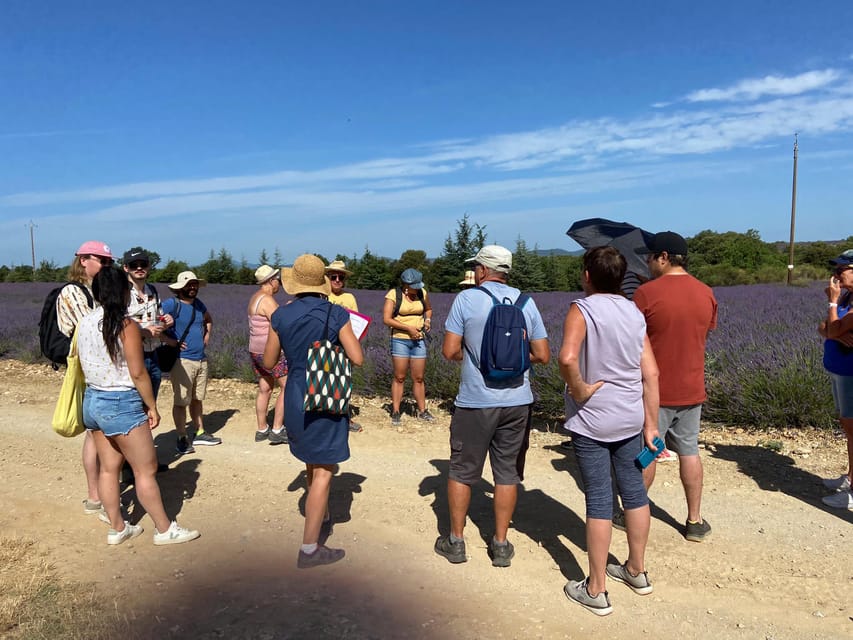
The visit lasts about two and a half hours. That gives your guide time to explain the estate, walk through several growing areas, discuss farming methods, and offer tastings without rushing from one photo stop to the next.
The scenery does much of the work. Ochre soil, blue sky, lavender, olive trees, and pale stone create the classic Provence color scheme. Still, the tour earns its price by explaining what you are seeing. You learn why the farm grows different plants, how crops fit into an organic system, and how agricultural work changes from one part of the estate to another.
More Farm Tours in France:
- Versailles Bike Tour with Palace & Queen Farm Entrance
★ 4.9 · 492 reviews - Loupian: Tour guide of our oyster farm and tasting
★ 4.9 · 86 reviews - Sturgeon Fish-Farm Visit and Caviar Discovery Tasting in Neuvic
★ 4.5 · 81 reviews
Walking among lavender, olives, almonds, and vines
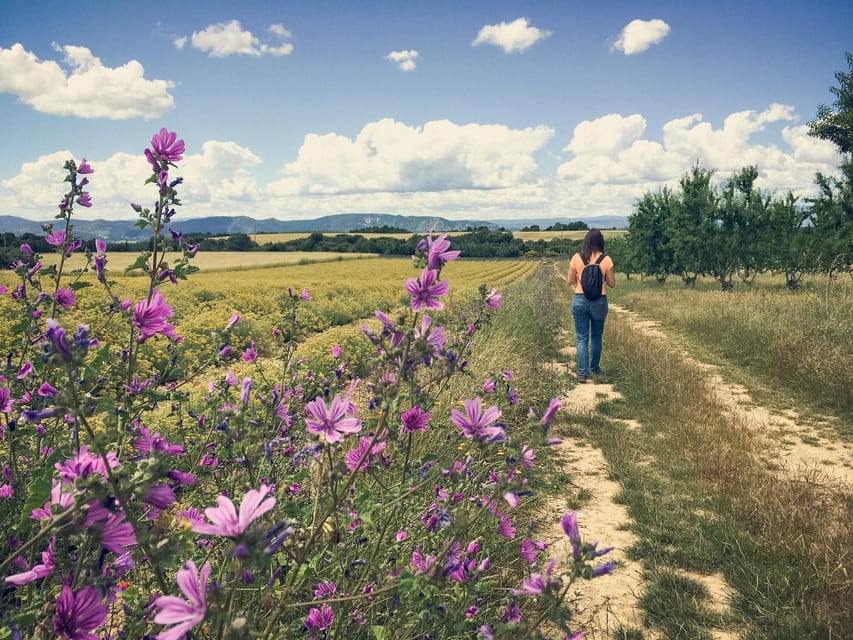
The route takes you through a mix of cultivated fields and more natural areas. You see lavender first in the setting most people associate with Valensole, but the walk also includes olive groves, almond trees, fruit trees, and vineyards.
The variety keeps the outing interesting. Lavender is visually striking, yet its role makes more sense once you see it alongside other crops. Olive trees connect the farm to one of Provence’s oldest food traditions. Almonds explain some of the products offered at the tasting table. The vines show how the estate has expanded its agricultural work and, from 2024 onward, become part of the experience.
Your guide also helps you identify wild plants and aromatic herbs. This is a small but useful detail. Instead of passing every green shrub without a second thought, you learn to notice scent, leaf shape, and the difference between a crop and a wild plant.
The walk is described as easy, but it is not a paved garden stroll. Some of the route goes off-road and through wooded areas. One especially helpful tip is to wear sturdy shoes and loose, long trousers. That combination protects your legs and gives you better footing than sandals or thin city clothes.
If you have limited mobility, ask before booking because the route is outdoors and includes uneven ground. The available information does not promise an accessible path or step-free facilities.
The story behind organic and sustainable farming
A major part of the visit is the estate’s approach to organic and sustainable agriculture. You hear how the farm works with its land and crops, rather than treating lavender as a decorative backdrop.
The guide explains the history of the property and the skills passed through generations. At some point, the farmer-agronomist responsible for the estate may join the walk for an unexpected visit. That can add a useful working perspective, since the person in charge of the land can explain choices that are harder to understand from a standard guided talk.
I like this part because it gives the outing substance. A field looks attractive in a photograph, but you learn much more when someone explains how fruit trees grow, how aromatic plants are used, and how different crops share one farm.
The tour also connects farming with finished products. Lavender becomes syrup and essential oil. Almonds appear as raw nuts and almond paste. Olives lead to several types of olive oil. These links help you understand the farm as a small production system rather than a scenic stop.
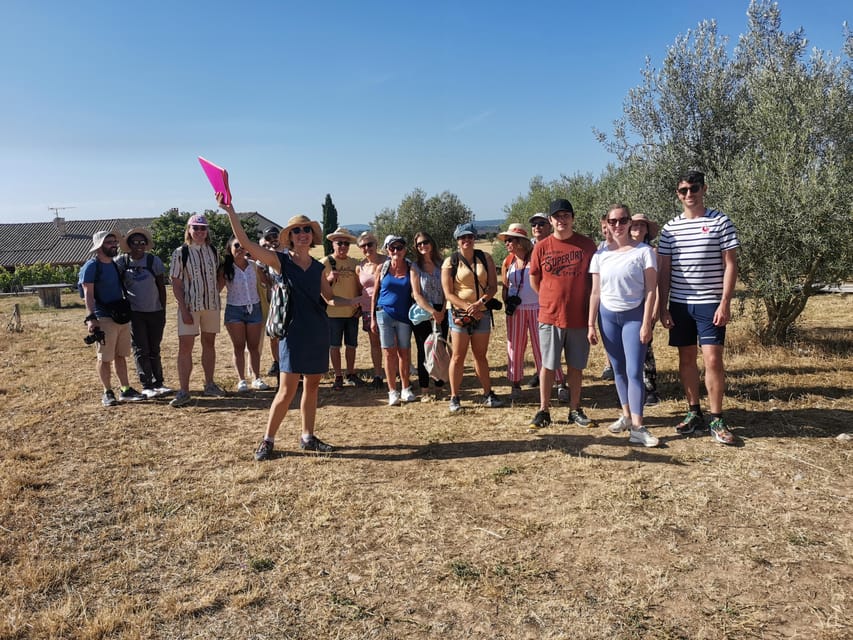
The guide may speak French, English, or German. Elodie has led the walk with detailed explanations, and the guide team can also work in Italian at a proficient level according to the available tour information. If you have a strong preference for a language, check availability when choosing your time.
How lavender becomes essential oil
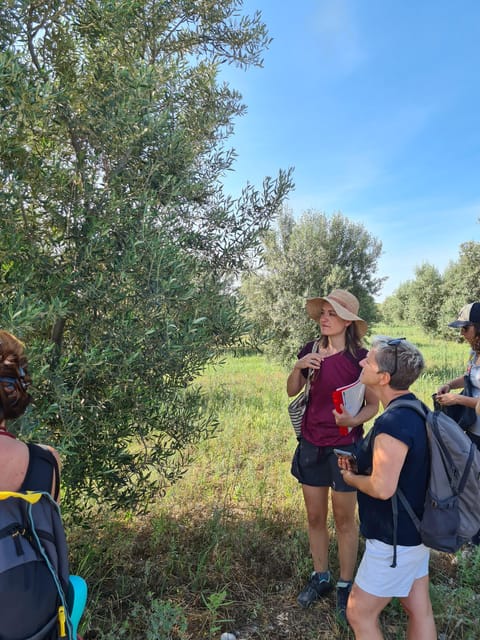
The distillation explanation is one of the most distinctive parts of the visit. You learn how lavender is processed and transformed into essential oil, moving from plant in the field to a small bottle with a strong scent and a clear commercial use.
The process gives you a better sense of why harvest timing and plant quality matter. You also learn that lavender is not only about appearance. It is an aromatic crop with a practical role in the farm’s products.
The experience includes a chance to smell aromatic plants and practice identifying them. This works well for anyone who enjoys food, gardening, natural products, or the sensory side of travel. You are not simply told the name of a plant. You are encouraged to notice its fragrance and compare it with other plants growing nearby.
The essential-oil lesson also adds context to the shop. After the walk, you can buy items such as essential oils, perfume, and soaps, but the visit gives you a clearer idea of how those products connect to the farm. Refreshments, ice cream, local beer, wine, soft drinks, and other goods are extra purchases, not part of the standard price.
Same fields, a different sort of morning:
- Lavender Harvesting and Distillation Workshop in Bellegarde
★ 5.0 · 20 reviews - Provençal Farmers market tour
★ 5.0 · 15 reviews - Versailles: Farmers Market & Royal Vegetable Garden Food Tour
★ 5.0 · 11 reviews - Award winning “From Farm to Table, A Culinary Day in Lyon”
★ 5.0 · 10 reviews
What you taste during the farm-product stop
The included tasting is a useful part of the visit and helps justify the $38 price. You can sample lavender syrup, raw almonds, almond paste, essential oil, and different olive oils.
These are small tastes, not a full lunch. Plan to eat beforehand or bring a picnic, especially if you are booking around midday. A picnic is specifically recommended, and water is essential in the Provençal heat.
The tasting also lets you compare products made from different parts of the estate. Lavender syrup shows a sweeter use for the crop. Almonds and almond paste connect the orchard to the table. Olive-oil tasting gives you a direct link to the grove you have just walked through.
You can buy farm products in the shop after the tour. Items may include almonds, olive oil, essential oil, perfume, soaps, and other typical products. Since these purchases are not included, bring a payment method if you want souvenirs or pantry supplies. The extra buying opportunity is useful, but it can also push up the final cost if you are tempted by several bottles and jars.
The optional vineyard walk and €5 wine tasting
The vineyard visit is an important newer feature. Starting in 2024, the experience includes access to the estate’s vineyards, and you can add a wine tasting for €5. Payment is accepted by card or cash.
The wine tasting is optional, so the basic $38 price remains reasonable for someone mainly interested in lavender, farming, and essential oils. If wine is a priority, the small supplement offers good value, particularly because the tasting may be given by the owner, who is passionate about the winery.
You should not assume the wine tasting is part of the standard package. Ask for it when you arrive or book it as directed by the provider, and keep €5 available if you prefer to pay cash.
The vineyards also broaden the visit beyond the region’s familiar lavender image. You get to see how one estate manages vines alongside olives, almonds, fruit trees, and aromatic plants. The wine section is best for people who enjoy learning how a farm develops several products instead of focusing on a single crop.
Is $38 a fair price for 150 minutes?
For two and a half hours, the price is fair if you want more than a quick field visit. You receive a guided walk, an explanation of organic and sustainable farming, plant identification, a distillation lesson, a vineyard visit, and farm-product tastings.
The value is strongest for couples, small groups, and curious food lovers who want context. A simple lavender photo stop may cost less, but it will not usually include this much explanation or such a broad look at a working estate.
The optional wine tasting keeps the base price flexible. You pay extra only if that part interests you. On the other hand, drinks, ice cream, wine beyond the optional tasting, and products from the shop are not included, so budget for extras if you want a longer stay or several purchases.
The tour requires at least seven participants. That condition may affect availability, especially outside the busiest summer period. Check the starting time before setting your day around it.
What to bring for a comfortable walk
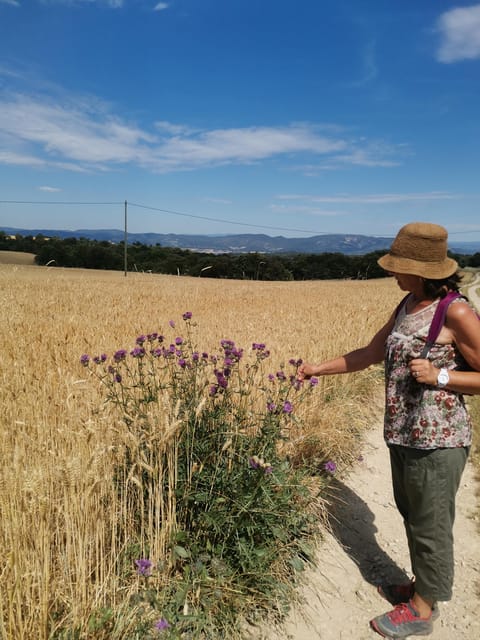
Provence sun can be strong, and much of the experience takes place outside. Pack:
- Water
- A sun hat
- Sunscreen
- Sturdy hiking shoes
- Loose-fitting clothes
- Loose, long trousers
- A picnic if you need a meal
The advice about shoes is worth taking seriously. The route is easy enough for a normal walker, but sections are off-road and pass through woods. Sandals, slippery soles, or stiff city shoes will make the walk less pleasant.
The provider also requires liability and repatriation insurance. Check that you have suitable cover before the visit. The outing can be cancelled and refunded if there is a thunderstorm under an orange weather alert or if the prefecture orders a closure.
If you cancel yourself, the stated policy is that tickets are not refundable, but the tour can be postponed to another date. Cancellation up to 24 hours in advance is otherwise listed as eligible for a full refund, so confirm the exact conditions when booking.
Who will enjoy this Valensole experience most?
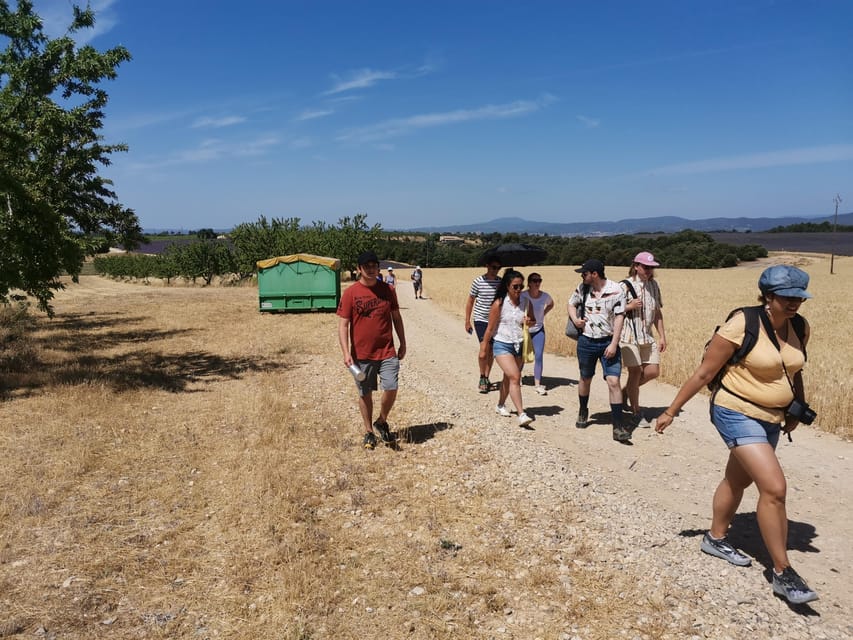
I would choose this outing if you want to understand Provence through farming, scent, and food rather than only through photographs. It suits adults, families with older children, amateur gardeners, wine lovers, and anyone interested in small-scale production.
It is also a good choice if you have already seen lavender fields and want something with more explanation. The mix of crops gives you more to notice, while the farm tastings make the visit feel connected to daily life.
You may prefer another activity if you want a short, fully paved walk, a full meal, or a formal winery tour lasting most of the day. This is a farm visit with several themes, not a dedicated wine tasting or a luxury food experience.
The language choice is another strength. French, English, and German are available, and the guide team has also handled Italian communication. Ask ahead if language is important to your booking.
Should you book it?
Book this tour if you want a friendly, practical introduction to a working Provençal estate. The best reasons are the range of crops, the essential-oil lesson, the organic farming explanation, and the chance to taste products made from the land around you.
Add the €5 wine tasting if you care about vineyards or want to meet the owner during a more focused winery presentation. Skip it if lavender, olive oil, and farm products are your main interests.
Bring water, proper shoes, and a picnic, then expect an outdoor experience with real walking and useful explanations. For $38, it offers solid value, especially when you treat Valensole as a farming region rather than a backdrop for one photograph.
FAQ
Where does the tour meet?
It meets at a beautiful old stone-built farm marked by a lavender-colored sign with the farm’s name. After driving up the lane, you can park in the field in front of the house.
How long does the experience last?
The visit lasts 150 minutes, or two and a half hours. Starting times vary, so check availability for the date you want.
What languages are available?
The tour is available in French, English, and German. The guide team can also communicate in Italian at a proficient level.
Is wine tasting included in the $38 price?
No. Wine tasting is optional and costs €5. You can pay by card or cash.
What products are included in the tasting?
The included farm-product tasting can feature lavender syrup, raw almonds, almond paste, essential oil, and different types of olive oil.
Do I need hiking shoes?
Sturdy hiking shoes are recommended because the route is mainly off-road and includes some wooded areas. Loose, long trousers are also a useful choice.
What happens in bad weather?
The outing is cancelled and refunded in the event of thunderstorms under an orange weather alert or if the prefecture orders the estate to close.
Is there a minimum group size?
Yes. A minimum of seven participants is required for the tour to operate.
Just added around France
- Versailles: Farmers Market & Royal Vegetable Garden Food Tour★ 5.0 · 11 reviews
- Award winning “From Farm to Table, A Culinary Day in Lyon”★ 5.0 · 10 reviews
- Half Day Grape Harvest Experience with Tasting in Epernay★ 5.0 · 2 reviews
- Sturgeon Fish-Farm Visit and Caviar Master Class Tasting in Neuvic★ 5.0 · 8 reviews
- English Tour into the Sturgeon Farm With a Discovery Tasting★ 5.0 · 6 reviews
- English Tour into the Sturgeon Farm With a Initiation Tasting★ 3.5 · 2 reviews
- Provençal Morning Farmers Market & Food Discovery Tour★ 5.0 · 7 reviews
- Provençal Farmers market tour★ 5.0 · 15 reviews
France Farm Tours, compared.
Versailles Bike Tour with Palace & Queen Farm Entrance
Read our review →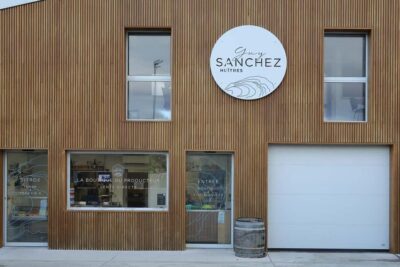
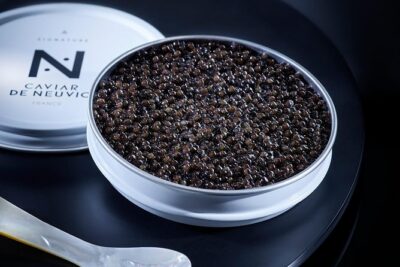
Sturgeon Fish-Farm Visit and Caviar Discovery Tasting in Neuvic
Read our review →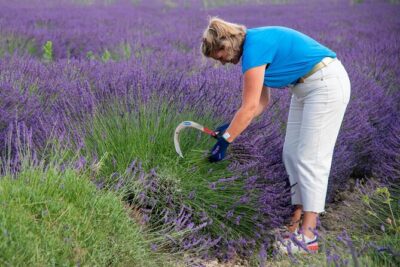
Lavender Harvesting and Distillation Workshop in Bellegarde
Read our review →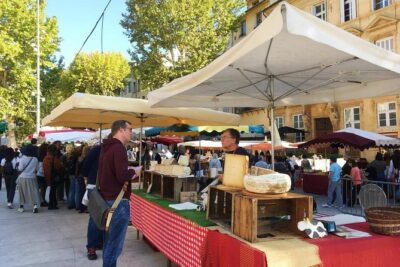

Versailles: Farmers Market & Royal Vegetable Garden Food Tour
Read our review →
Award winning “From Farm to Table, A Culinary Day in Lyon”
Read our review →
Sturgeon Fish-Farm Visit and Caviar Master Class Tasting in Neuvic
Read our review →Lists this farm appears in