
Reviewed · THAILAND FARM TOURS
Old Phuket Farm Ticket – Countryside Local Life Culture
Old Phuket Farm puts you in touch with the working side of Phuket, not just its beaches and nightlife. You can watch rubber sap run, try old-style tin panning, and learn how rice, pineapples, coconuts, and curry ingredients fit into daily life. I like the hands-on demonstrations and the chance to see water buffaloes, once vital to Thai farming. I also like the small-group feel, with one recent visit limited to about ten people and plenty of time to ask questions. The main drawback is the short two-hour visit, which gives you a useful introduction rather than a full day on a farm.
Key points
- Rubber tapping in real time: See how sap is collected from rubber trees and turned into sheets.
- Practical farm activities: Try tin panning, coconut grating, curry paste-making, and rice-farming methods.
- A look at Phuket’s tin-mining past: The panning activity connects farm life with the island’s industrial story.
- Fresh pineapple tasting: Learn how Phuket pineapples are grown, then taste local produce on site.
- English and Thai guides: Guide Bernie has been praised for clear English, patient explanations, and an easy manner.
- Simple planning: The visit lasts two hours, begins and ends at Old Phuket Farm, and includes admission and insurance.
Why Old Phuket Farm feels different from Phuket’s beach circuit
Phuket is easy to experience from a lounge chair, a tour boat, or a busy market. Old Phuket Farm gives you another view: one built around soil, trees, tools, animals, and food.
The farm offers a compact introduction to southern Thai country life. You will not spend hours wandering without direction. Instead, a guide leads you through a series of demonstrations and activities, explaining how local people worked with what grew around them.
I like this format for a first visit to Phuket. It gives you context for dishes you may eat later, especially rice, coconut-based foods, curry, and pineapple. You also see why rubber and tin mattered so much to the island.
The setting includes rice fields, rubber trees, pineapple plantations, and a traditional Thai house. The scenery is pleasant rather than grand. You come here for the working details and the chance to take part, not for a vast park or a polished theme-park show.
More Tickets in Thailand:
- Chuck Wagon Supper & Western Stage Show at Blazin’ M Ranch Ticket
★ 4.5 · 554 reviews - Skip the Line: Highgate Ostrich Farm Tour Ticket
★ 4.5 · 110 reviews - Lion Habitat Ranch Admission Ticket in Las Vegas
★ 4.5 · 106 reviews
Meeting the buffaloes and seeing old farm work
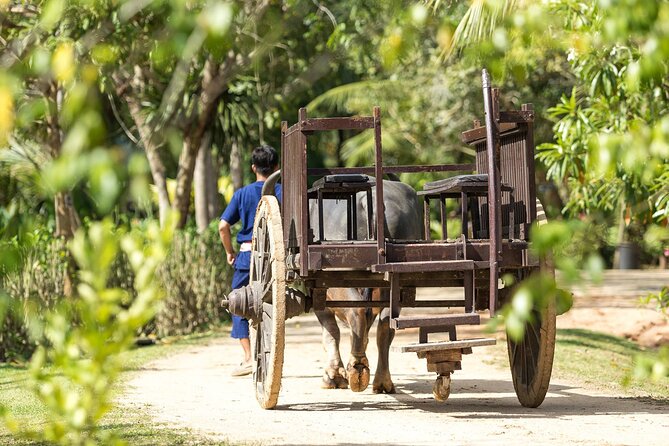
The visit begins with the water buffaloes. These animals were once central to Thai agriculture, helping farmers prepare fields and carry out heavy work before modern equipment became common.
This stop matters because it turns an abstract history lesson into something you can see. The guide explains the buffaloes’ role in farming, giving you a clearer sense of how much labor went into growing rice.
For children, the animals provide an immediate point of interest. For adults, they help explain the pace and effort of older rural life. The farm does not simply present a buffalo as a photo opportunity. It places the animal within the farming system.
You should expect a short visit rather than an extended animal program. The buffaloes are one part of a broader route, so the appeal comes from how this stop connects with the rice fields and the rest of the farm.
Watching rubber sap become useful material
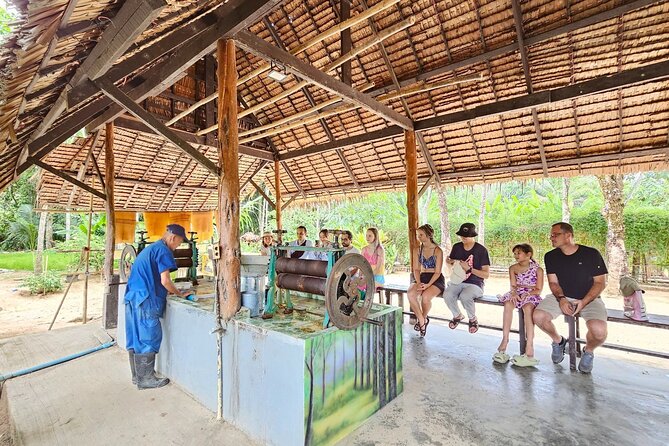
Rubber is one of the most interesting parts of the visit because the process is easy to miss when you only see finished products in shops. At the farm, you watch the guide demonstrate how sap is drawn from a rubber tree.
You then learn how the liquid is handled and made into rubber sheets. This simple sequence helps you understand the work behind a common material used in everyday goods.
The demonstration is especially useful if you have never seen a rubber plantation. It is direct, visual, and brief enough to hold your attention. You can ask questions through the English or Thai guide, depending on the language of your booking.
I would pay close attention here, because the activity shows how farming depends on repeated, careful work. It is not a dramatic performance. That is part of its value. You are seeing a practical technique, not a staged cultural dance designed only for photographs.
Rice fields and the work behind every bowl
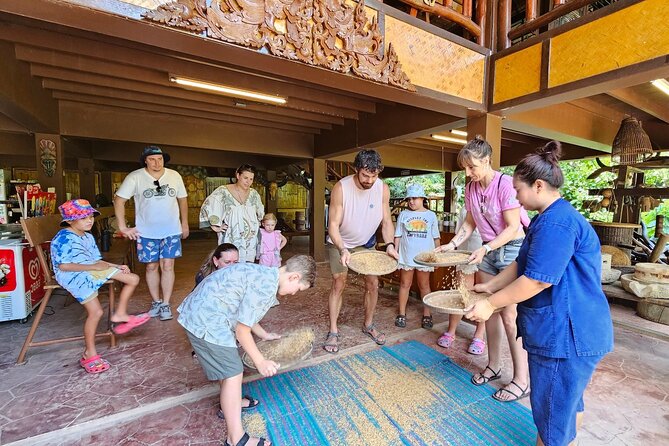
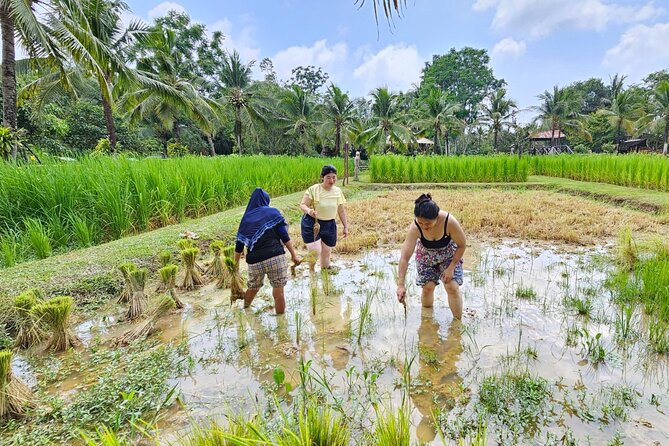
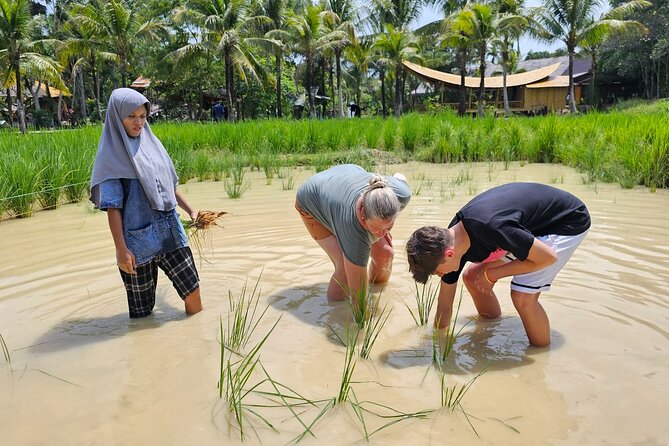
Rice is treated as a staple of Asian food, but the farm helps you see the work that comes before a meal. You learn about traditional planting and harvesting methods in the rice fields.
The guide explains how farmers handled the crop and gives you a chance to try parts of the process yourself. The exact activity can depend on the conditions at the farm, but the focus remains on old farming methods rather than modern machinery.
This is a good place to slow down. The rice fields may look calm, yet the work involved planting and harvesting was demanding. The visit makes that effort easier to understand.
I also like the connection between the fields and the cooking activities later. Rice is not presented as an isolated crop. It forms part of a food system that includes coconut, herbs, spices, and curry paste.
More Farm Tours in Thailand:
- Half-Day Thai Cooking Class at Organic Farm in Chiang Mai
★ 5.0 · 19,087 reviews - Chiang Mai: Authentic Cooking Class with Market & Farm Visit
★ 4.9 · 4,546 reviews - Chiang Mai: Cooking Class with Organic Farm at Mama Noi
★ 4.9 · 1,151 reviews - Full Day Thai Cooking at Farm (Chiang Mai)
★ 5.0 · 1,127 reviews
Tin panning connects the farm to Phuket’s past
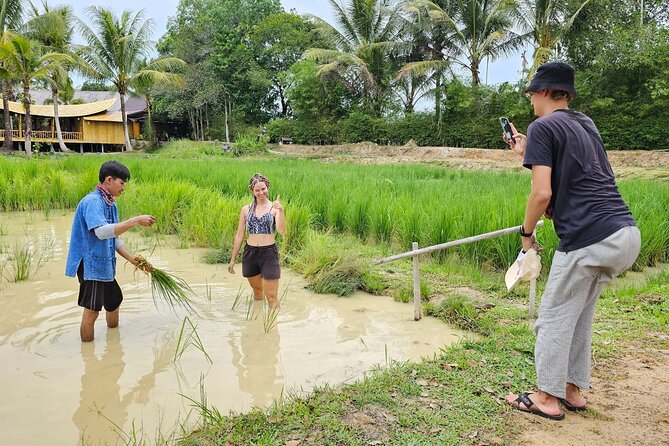
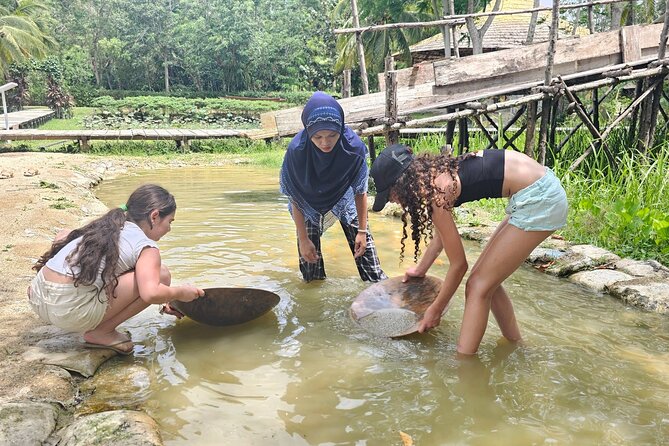
Tin panning is an unusual addition to a farm visit. It recalls Phuket’s long association with tin mining and gives you a hands-on way to learn about that part of the island’s past.
You use a pan and water in an activity based on the search for tin. It is simple, physical, and well suited to families. You may not become an expert miner in a few minutes, but you will understand more about the technique and why tin had such an important place in Phuket.
This stop also adds variety. The tour moves from animals and crops to an activity linked with mining, so the two hours do not feel like one long lecture about agriculture.
The limitation is that tin panning is an introduction, not a visit to a working mine. If you want detailed industrial history, this will feel brief. If you want a clear, memorable activity that links Phuket’s economy with its past, it works well.
Pineapples, coconut, and the food on the farm

The pineapple stop brings the farm’s produce to the table. You learn how Phuket’s pineapples are grown and get to taste fresh fruit.
That tasting is a small but welcome part of the visit. You are not just looking at plants. You get to connect the growing process with the flavor of the finished food.
The traditional Thai house is where the cooking-related activities become more practical. You can watch coconut grating and take part in making curry paste with fresh farm ingredients.
These tasks show how much preparation can sit behind familiar Thai flavors. Coconut is not simply poured from a carton, and curry paste is not just a colorful spoonful in a restaurant kitchen. The guide shows the older methods and lets you try them.
One caution is important: meals are not included in the admission price. The farm has a restaurant, and the food has been praised for its quality, but you should treat any meal as an extra purchase rather than part of the two-hour ticket.
A guide can make or break the two-hour visit
The guide matters here because many of the activities need explanation. A good guide tells you what you are seeing, gives you a turn, and links each task to Phuket’s daily life.
The English and Thai options make the experience practical for international visitors. If Bernie is leading your group, expect a guide who speaks clear English, answers questions, and explains the work methods in a way that is easy to follow. His style has been described as friendly, energetic, and patient.
That matters if you do not speak English with complete confidence. The demonstrations are visual, but the context comes from the guide. Clear instructions make the difference between simply watching someone grate coconut and understanding why the task was done that way.
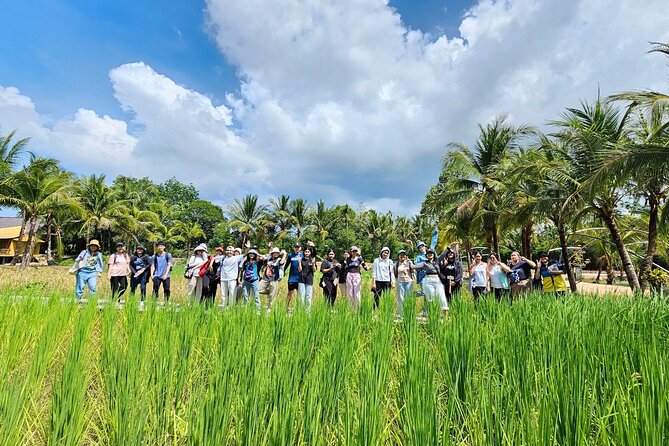
The group size can be modest. One recent booking had about ten people, which is a comfortable number for activities where each person needs a turn. Still, group size can vary, so do not assume every departure will be identical.
What the two-hour schedule feels like
The visit begins at Old Phuket Farm and remains on site. You do not spend the two hours riding between separate attractions, which keeps the pace focused.
A typical route includes:
- Meeting the water buffaloes and learning about traditional farm work
- Seeing rubber trees tapped for sap
- Visiting the rice fields and learning planting and harvesting methods
- Trying tin panning
- Exploring pineapple growing
- Watching or trying coconut grating and curry paste-making at the Thai house
- Tasting fresh pineapple and local produce
The order may vary, but the mix is the main attraction. You get scenery, history, food, and practical tasks in one short visit.
Two hours is enough for a satisfying introduction. It is not enough for a slow, private look at every part of farm life. I would book it as a focused cultural stop, perhaps before or after another Phuket activity, rather than expecting a complete rural day.
Because the experience ends at the farm, you can continue to another attraction or return to your hotel at your own pace. You need to arrange your own way to the meeting point, since transport is not listed as part of the experience.
Is the $36 price good value?
At $36 per person, the price is reasonable if you want several activities rather than one short demonstration. Admission, an English guide, Thai guide support, and full insurance are included.
The value comes from the variety. You see buffaloes, rubber trees, rice fields, pineapple plants, and a traditional house. You also get to try tin panning, coconut grating, curry paste-making, and elements of rice farming.
That would be harder to arrange independently in a two-hour visit. You would need to find a farm, identify which activities are available, and arrange explanations in English or Thai. Here, the route is organized and the guide keeps the visit moving.
The price is less attractive if you mainly want a meal or a relaxed farm walk. Food is not included, and the visit is fairly structured. You are paying for access, demonstrations, guidance, and participation, not for a long countryside retreat.
For families, the hands-on format adds value. Children aged 4 to 11 use the child ticket, and the activity gives them several ways to stay involved instead of asking them to listen to a long history talk.
Who will enjoy this farm visit most?
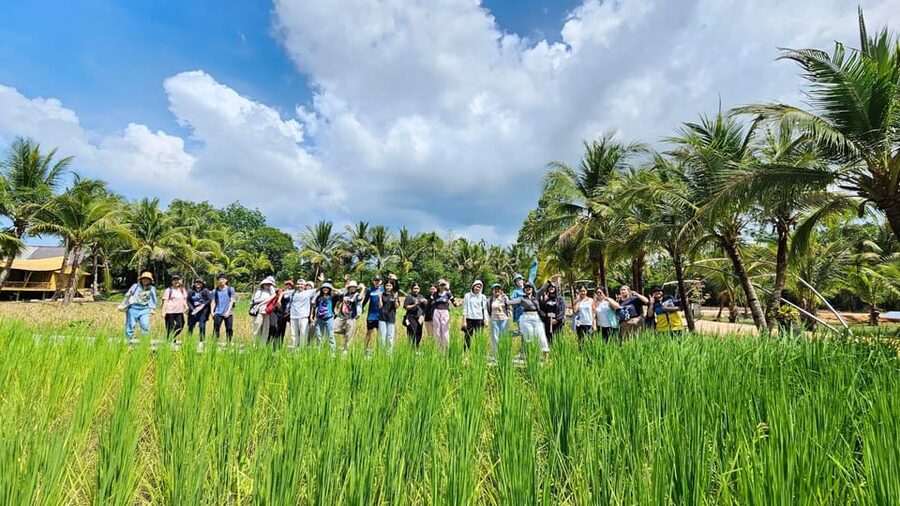
I would recommend Old Phuket Farm to families, first-time visitors to Phuket, and anyone who wants a break from beach activities. It is also a good choice if you like food and want to understand the ingredients before they reach your plate.
It suits curious people who prefer doing something over simply taking photographs. Tin panning, coconut grating, curry paste-making, and rice-farming activities give you a reason to take part.
The visit may be less satisfying if you want a quiet, unstructured afternoon. The two-hour route is organized around demonstrations, so you should expect a planned sequence rather than free time.
It also may not satisfy someone seeking a full agricultural workshop. The tour introduces many subjects, but each receives only a short amount of time. Think of it as a well-packed cultural lesson with practical stops.
Practical details before you book
You can cancel up to 24 hours before the activity for a full refund. You can also reserve now and pay later, which helps if your Phuket schedule is still changing.
Check the available starting times before booking, since the experience lasts two hours and departure times can vary. The activity begins at Old Phuket Farm, and you make your own way to the meeting point.
Admission and insurance are included. Meals are not, so bring that cost into your plans if you want to eat at the farm restaurant.
The tour is offered in English and Thai. If you have questions about a farming method or cooking task, ask them as you go. The activities are more useful when you understand the reason behind each one.
Should you book Old Phuket Farm?
Book it if you want a friendly, active introduction to Phuket’s rural traditions. The best parts are the range of tasks, the chance to see working techniques up close, and the clear link between farming, food, rubber, and tin.
I would be especially inclined to book it for a family or a short Phuket stay. You get a lot into two hours, and the visit gives you stories and context that a beach day cannot.
Skip it if you want an all-day farm experience, included lunch, or a completely independent walk. For everyone else, $36 is a fair price for a compact visit with a guide, several hands-on activities, fresh pineapple, and a useful look at the island beyond its resort areas.
FAQ
Where does the Old Phuket Farm experience take place?
The activity takes place at Old Phuket Farm in Phuket. You make your own way to the meeting point, and the visit begins and ends on site.
How long does the experience last?
The visit lasts two hours. Starting times vary, so you should check availability when booking.
What activities can I try at the farm?
You can try tin panning, coconut grating, curry paste-making, and parts of traditional rice farming. You can also watch rubber tapping and learn about pineapple cultivation.
Will I see water buffaloes?
Yes. The visit includes an introduction to buffaloes and their role in traditional Thai agriculture.
Is food included in the ticket?
No. Meals are not included. Fresh pineapple and local produce are part of the farm experience, while food from the restaurant costs extra.
What languages are available?
The experience is offered with English and Thai guides.
Can I cancel my booking?
Yes. You can cancel up to 24 hours in advance for a full refund. You can also reserve now and pay later.
Just added around Thailand
- The Rice Barn Thai Cooking Farm Chiangmai★ 5.0 · 603 reviews
- Bangkok Floating Market & Boat Ride to an Orchid Farm★ 4.6 · 34 reviews
- Bangkok: Private Floating & Railway Markets with Farm Visits★ 4.6 · 8 reviews
- Authentic Thai Cooking Class and Farm Visit in Chiang Mai★ 5.0 · 66 reviews
- Chiang Mai: Half Day Cooking Class at Organic Farm★ 4.8 · 96 reviews
- Off the Map Chiang Mai Jungle Coffee Trek Roast and Brew★ 5.0 · 107 reviews
- Sunset Thai Cooking with Grandma – Farm & Evening Feast★ 5.0 · 127 reviews
- Morning Thai Cooking with Grandma – Market Visit & Farm Tour★ 5.0 · 148 reviews
Thailand Farm Tours, compared.
Half-Day Thai Cooking Class at Organic Farm in Chiang Mai
Read our review →
Authentic Cooking Class with Market & Farm Visit
Read our review →
2-Day Jungle Trek with Elephant Farm & Raft Ride
Read our review →![Floating & Railway Market and Coconut Farm Tour [Optional Luxury]](https://photo.farmingtravels.com/wp-content/uploads/floating-railway-market-and-coconut-farm-tour-optional-luxury-400x267.jpg)
Floating & Railway Market and Coconut Farm Tour [Optional Luxury]
Read our review →
Lists this farm appears in