
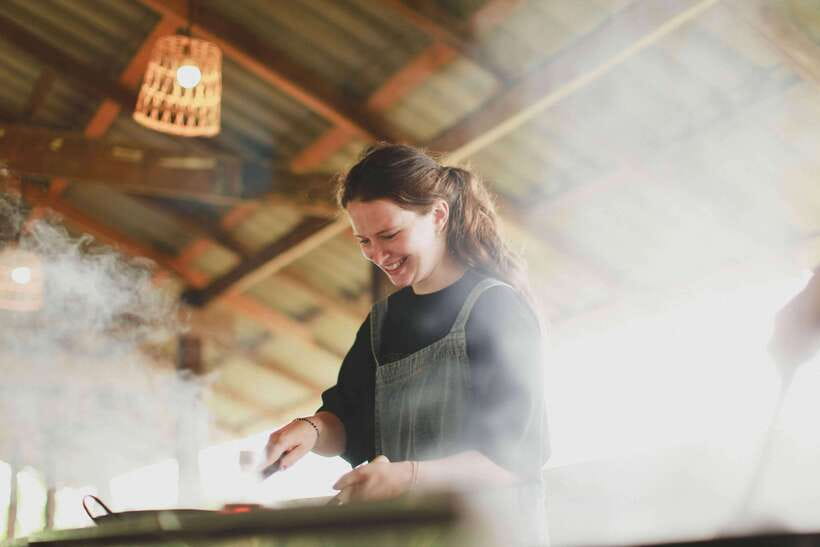
Reviewed · COOKING CLASSES
Chiang Mai: HALF-DAY COOKING COURSE at a Thai Cooking Farm
The best part of this Chiang Mai cooking course is that it starts before you reach the kitchen. You visit a local market with guides such as Oily, Katie, Timi, or Gobby, learn what the herbs and spices are for, then cook a full Thai meal at your own station. I like the market-to-kitchen connection, and I like that you do the chopping, stirring, frying, and seasoning yourself. The main consideration is the six-hour length and the generous amount of food, so arrive hungry and keep your afternoon or evening free.
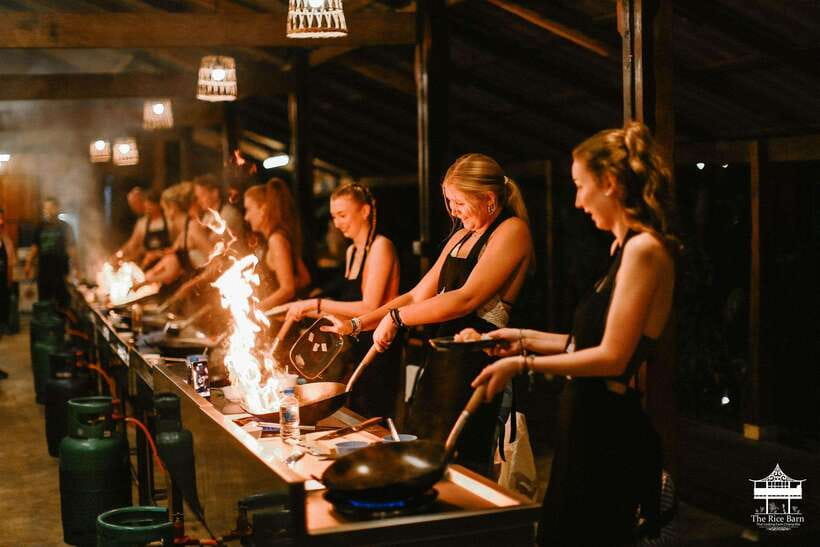
I also like the setting. The Rice Barn Thai Cooking Farm uses an open-air kitchen beside gardens and working farmland, rather than a plain city classroom. The clean individual workstations make the class easy for beginners, though experienced cooks may find the measured ingredients and quick recipes less challenging than a free-form lesson.
Key points
- Market first: Learn to identify Thai vegetables, herbs, spices, fruit, and coconut milk before cooking.
- Your own cooking station: Each person prepares the dishes hands-on, with demonstrations and supervision from the instructor.
- Five filling dishes: Typical menus include tom yum, pad Thai, cashew chicken, mango sticky rice, and a choice of green or Panang curry.
- Rice Barn setting: Cook in an open-air kitchen beside gardens and farmland, with clean, orderly facilities.
- Strong value at $28: Transport, ingredients, drinks, instruction, and a color recipe ebook are included.
- Easy for mixed groups: Solo visitors, couples, families, first-time cooks, and more confident home chefs can all take part.
From Chiang Mai hotel pickup to the local market
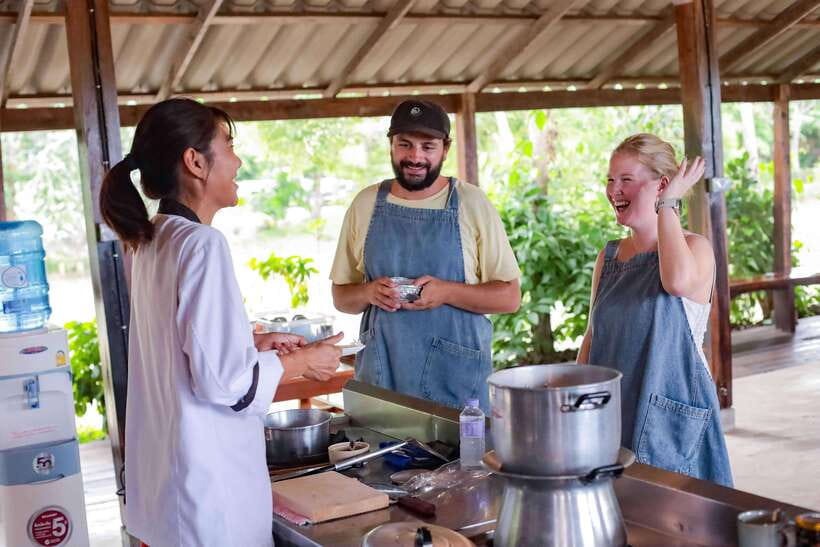
The experience begins with pickup at your hotel in Chiang Mai. Round-trip transport comes in an air-conditioned vehicle, a useful touch in Chiang Mai’s heat and a relief if you are carrying nothing more than a phone and a camera.
The exact pickup time depends on the morning or evening departure you choose. The full activity lasts six hours, so this is not a quick two-hour demonstration squeezed between temple visits. Plan it as one of your main activities for the day.
The first stop is a local market. This is more than a shopping pause. Your instructor introduces the ingredients used in the recipes, explains how they are used, and points out produce that may be unfamiliar if you do not often cook Thai food.
You might see Thai herbs, vegetables, fruit, curry ingredients, and coconut products before they are turned into lunch or dinner. One particularly interesting detail is the chance to see how coconut milk is made. That small lesson helps explain why fresh coconut products taste and behave differently from the canned versions many home cooks know.
The market visit gives the recipes some context. Instead of treating curry paste, basil, chilies, or lime as mysterious items on a printed recipe card, you see them as ordinary food sold and used locally. You also get a better idea of the balance Thai cooking aims for: salty, sour, sweet, spicy, and fragrant.
The market stop is also one of the parts you can enjoy even if you are not a serious cook. It gives you a look at everyday food shopping in Chiang Mai and may help you recognize ingredients later in your trip. One person even returned to the same market to shop after the class.
More Cooking Classes in Chiang Mai:
- Half-Day Thai Cooking Class at Organic Farm in Chiang Mai
★ 5.0 · 19,087 reviews - Chiang Mai: Authentic Cooking Class with Market & Farm Visit
★ 4.9 · 4,546 reviews - Chiang Mai: Cooking Class with Organic Farm at Mama Noi
★ 4.9 · 1,151 reviews
The short ride to the Rice Barn Thai Cooking Farm
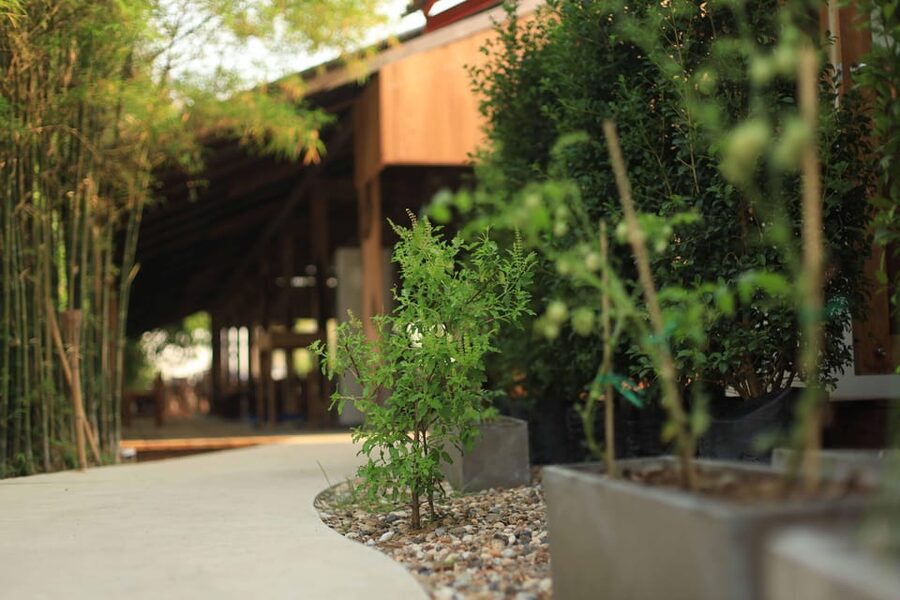
After the market, the vehicle takes you to the Rice Barn Thai Cooking Farm. The setting is a major part of the appeal. The class takes place in an open-air kitchen beside gardens, with produce growing on the property and farmland nearby.
This is a more pleasant place to spend six hours than a sealed classroom. You can see the surrounding gardens while you cook, and the farm setting makes the lesson feel connected to the food rather than staged as a stand-alone activity.
The property is described as clean and well organized, with stainless steel individual workstations. Cleanliness matters in a hands-on class, especially when several people are chopping, frying, and handling raw ingredients at once. The work areas are arranged so that each person can take part instead of simply watching the instructor prepare everything.
You will find drinks such as water, soda, or beer available at the cooking school, though coffee and tea are specifically included. The course also has toilet facilities on site. Those are small practical details, but they matter during a long class in a rural setting.
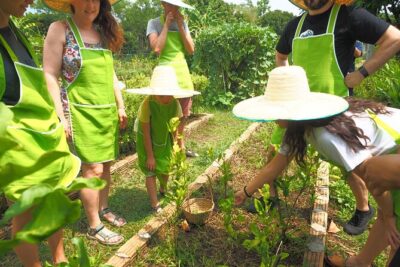
The farm is not presented as a formal agricultural tour, so do not expect a detailed working-farm program. Your main purpose is cooking. Still, the gardens and nearby fields add a sense of place, and you may see local farmers working in the area.
Cooking at your own stainless steel station
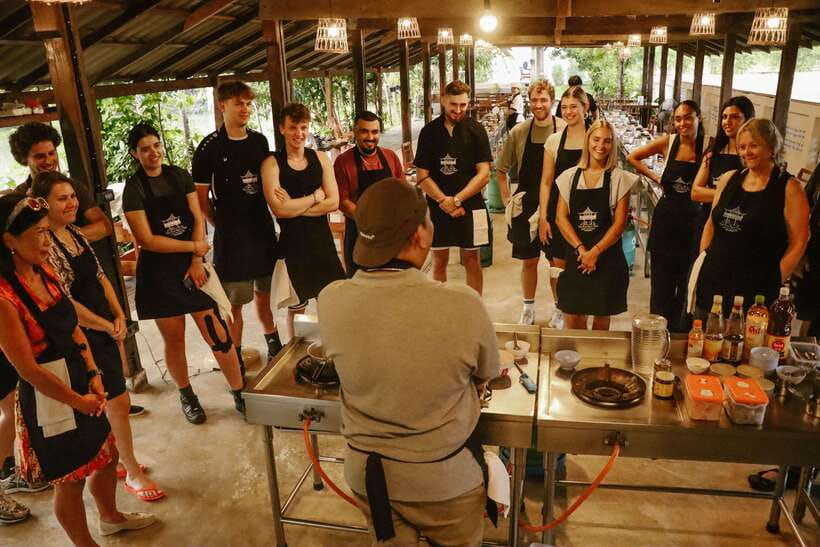
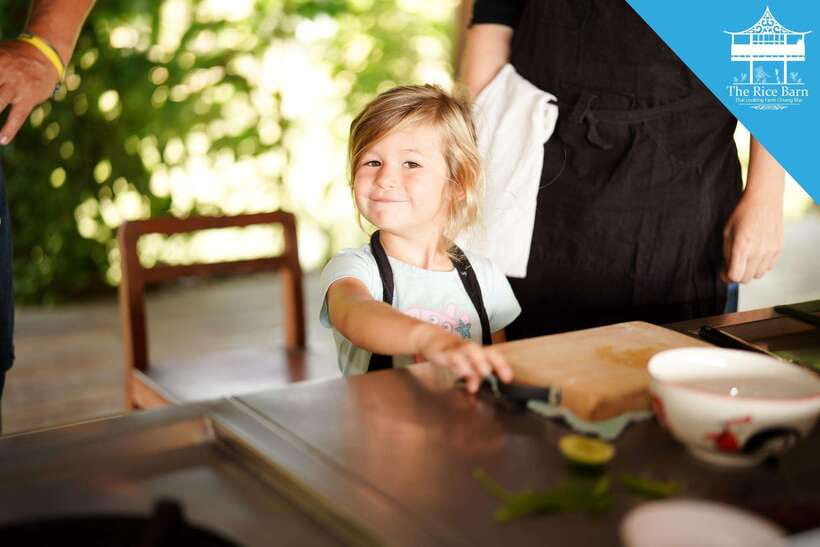
The central strength of the class is its hands-on format. Each person commands an individual cooking station, so you are not merely watching a chef make the meal while you take notes.
The instructor first demonstrates each recipe. You watch the method, hear why certain ingredients are used, and then repeat the steps at your own station. The teachers supervise as you cook and can help with timing, heat, seasoning, and technique.
This setup works well for beginners. You can follow a clear sequence without needing to guess what happens next, and the teacher can correct mistakes before they become dinner. The class is also friendly for solo visitors because everyone cooks individually, even though the group shares the same lesson and meal.
The instructors are a big part of the experience. Oily is repeatedly praised for her humor and clear explanations. Katie is described as attentive, entertaining, and especially good at explaining ingredients and cooking methods. Timi brings energy and comedy to the demonstrations, while Gobby is known for keeping the group involved and relaxed.
You may have one instructor or a small team, depending on the session. Names appearing in the course feedback include Oily, Katie, Timi, Gobby, Koppi, and Oilly, with different spellings used for some names. The teaching style seems lively rather than formal. Expect jokes, group interaction, and plenty of encouragement alongside the actual cooking.
That approach is useful in a class where some people are nervous around a wok and others already know their way around a kitchen. You can learn without feeling tested. At the same time, the group format means the pace is set by the class, not just by you.
What you cook during the six-hour course
The menu generally covers five familiar Thai dishes. The exact selection can vary, but the most commonly described combination includes:
- Tom yum soup
- Pad Thai
- Cashew chicken
- Green curry or Panang curry
- Mango sticky rice
Some sessions mention four dishes plus sticky rice prepared by the instructors, while others describe five dishes cooked by the participants. The practical point is simple: you will eat a large meal, and the exact hands-on portion may differ slightly by session.
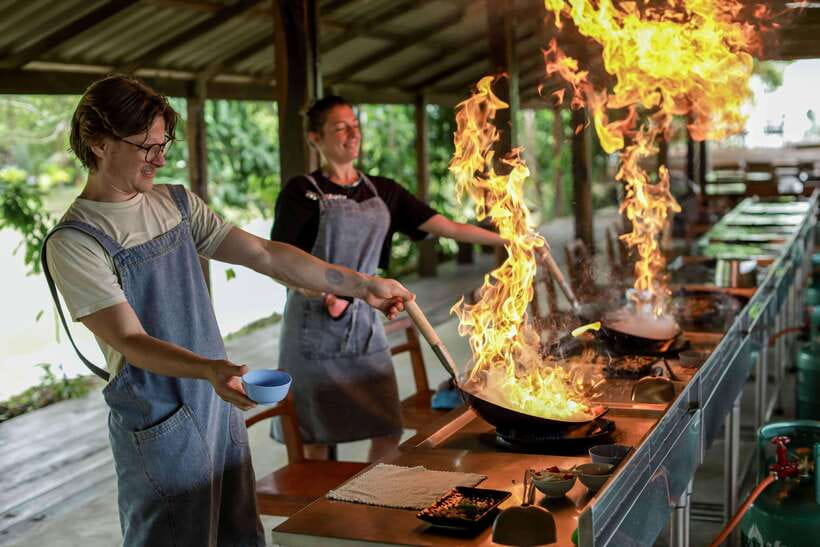
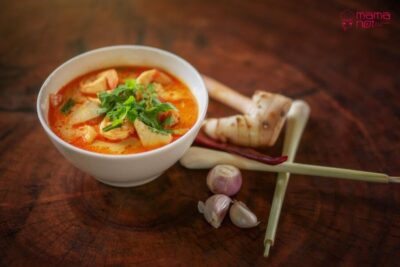
Tom yum gives you a lesson in the hot, sour side of Thai cooking. Pad Thai offers a familiar dish with plenty of room to learn about sauce balance and noodle texture. Cashew chicken can include a dramatic flambé step, which several people found especially memorable.
The curry choice lets you pick between green curry and Panang curry in many sessions. That is useful if you have a preference, though you should not assume every menu will offer every dish. Ask about the current menu when you book if one particular recipe matters to you.
Mango sticky rice is the sweet finish. Sticky rice is sometimes prepared in front of the group rather than fully cooked by each participant, but you still learn how it fits into the meal and get to eat it afterward.
One advantage of this menu is variety. You work with soup, noodles, stir-fry, curry, and dessert rather than repeating one technique five times. The drawback is that the recipes are designed to fit into a group class, so a confident cook may want more freedom to create sauces or adjust the ingredient ratios from scratch.
Some ingredients are portioned in advance, often in exact amounts. That keeps the class moving and makes success more likely, especially for people cooking Thai food for the first time. It also means the lesson is more about learning the method and flavor balance than about practicing full market shopping, ingredient selection, and recipe design.
More Half-Day Trips in Chiang Mai:
- From Rome: Half-Day Frascati Wine Tour with Farmhouse Lunch
★ 4.9 · 372 reviews - Half-Day Experience in Local reindeer farm in Lapland
★ 4.5 · 87 reviews - Half-Day Trip to Egyptian Green Farm from Cairo with Breakfast
★ 5.0 · 7 reviews
How much food you actually get
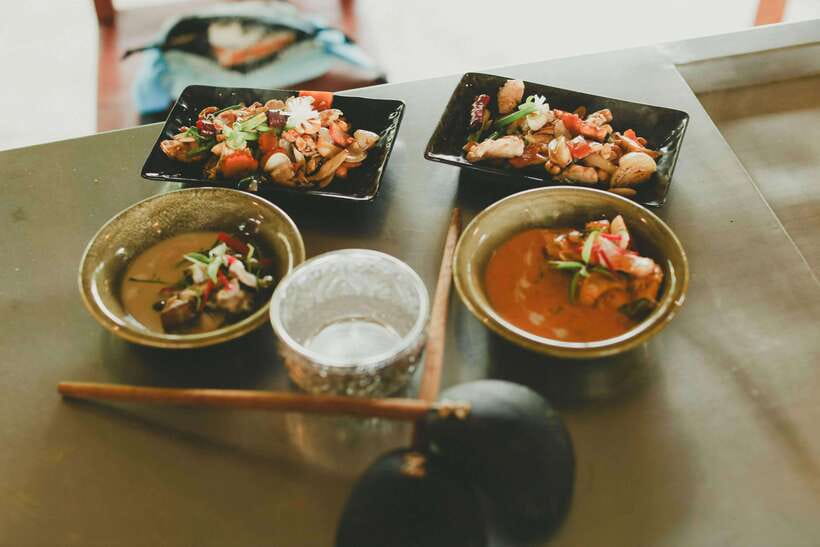
The meal is generous. You cook several dishes and then eat them, so this is not a sample-sized tasting. Plan to skip breakfast or keep lunch light if you attend the morning session, and do not eat a large meal before an afternoon or evening class.
The amount of food makes the $28 price easy to assess. You are not paying only for a demonstration. The price includes hotel pickup and return, air-conditioned transport, the market visit, ingredients, cooking instruction, tea or coffee, the meal you prepare, and a color recipe ebook.
For Chiang Mai, that is a strong package at this price. A restaurant meal alone would not give you the market lesson, cooking practice, farm setting, and recipes to take home. The value is strongest if you plan to repeat the dishes after your trip.
The course also suits people who want a social activity without giving up personal space. You cook beside the group, but your own station means you are not dependent on a partner who chops too slowly or takes over the wok. Solo participants can meet people during the demonstrations and meal, then focus on their own cooking when needed.
Families can also fit into the format. One family found the instructor especially good with children, although the supplied information does not specify a minimum age. If you are booking with young children, ask the operator about age requirements and how many children can share a station.
What the recipe ebook adds
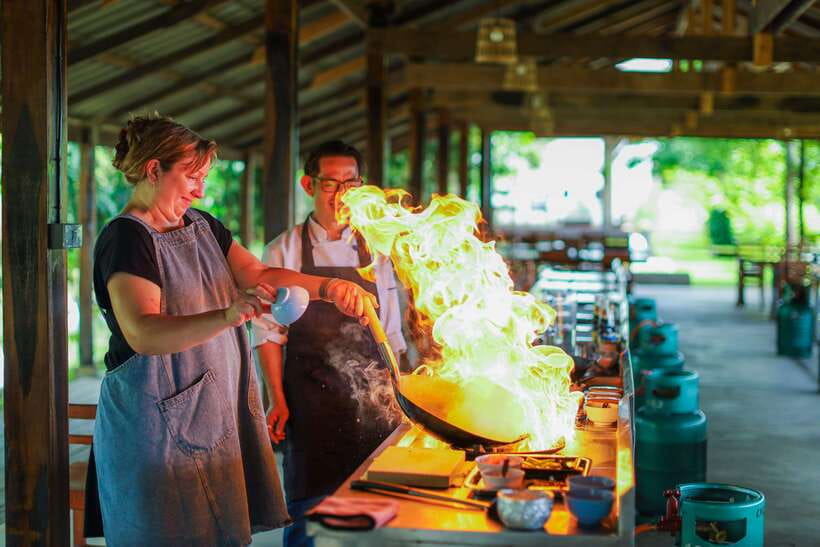
At the end of the course, you receive a color recipe ebook. This is more useful than a single printed recipe because it gives you a way to recreate the dishes at home and may include more recipes than the ones prepared during your session.
The ebook turns the class into a practical souvenir. Thai food can be difficult to reproduce when you remember only the general idea, especially with curry paste, lime, fish sauce, sugar, coconut milk, and chilies all needing balance. Having the written recipes makes it easier to cook for friends or family later.
The class also aims to give you confidence rather than just a pleasant meal. You see each dish demonstrated, cook it yourself, and then taste the result. That sequence helps you understand what the finished texture and seasoning should be.
Keep your expectations sensible. A recipe ebook cannot replace the exact Thai ingredients or equipment used at the farm, and the class does not turn you into a professional chef in one day. But it gives you a sound starting point and a memorable reason to try the recipes again.
The practical tradeoffs before booking
The six-hour duration is worth considering. The class includes transport, market time, several dishes, eating, and the farm visit, so the length is justified. Still, it will take up most of a morning or afternoon, and you should not schedule a temple tour or other fixed appointment too close to the end.
Pickup is included from hotels in Chiang Mai. The information does not promise pickup from every type of accommodation or from locations outside the city, so confirm your address before booking.
English is the listed teaching language. The instructors use demonstrations as well as spoken explanations, which helps make the class easier to follow, but you should choose this activity only if you are comfortable learning in English.
The course offers free cancellation up to 24 hours before the start time, and you can reserve now and pay later. Those terms are useful if your Chiang Mai schedule may change, but check the booking conditions attached to your chosen date.
The class is not ideal if you want a quiet, private lesson. The teachers keep the group laughing and involved, and the kitchen can accommodate more people than the smaller sessions some people experience. If you prefer a slower private lesson or want to build every sauce from your own measurements, this may feel too structured.
Dietary needs should be raised in advance. One instructor was able to help with a gluten-free requirement, but the available information does not provide a full allergy policy or a separate menu. Do not assume every substitution is possible without asking.
Who will enjoy the Rice Barn class most
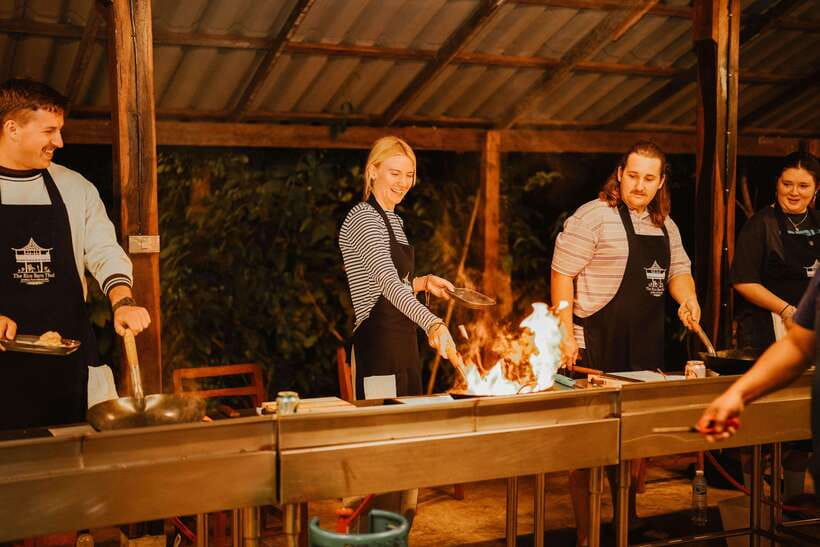
I would choose this course if you want to combine food, local shopping, and a day outside central Chiang Mai. It works especially well for first-time Thai cooks, couples, families, and solo visitors who want an activity with a natural social element.
It is also a good pick for people who enjoy eating what they make. The food is plentiful, and the menu gives you several different styles of Thai cooking in one session.
Experienced cooks can still enjoy the market, ingredients, teacher demonstrations, and farm setting. Just know that the measured portions and guided steps keep the class accessible. If your main goal is advanced knife work, recipe development, or regional northern Thai cooking, you may want to ask about the menu first. Khao soi, for example, is not listed among the standard dishes.
The class seems particularly strong for anyone who wants to take a useful skill home. You do not simply watch a chef cook. You practice the dishes yourself, receive the recipes, and leave with a better sense of how Thai flavors work together.
Should you book this Chiang Mai cooking course?
Book it if you want a hands-on Thai food day with reliable transport, a market introduction, plenty to eat, and an attractive rural setting. At $28, the inclusion of ingredients, instruction, transport, drinks, and the recipe ebook makes the price hard to fault.
I would hesitate only if six hours is too long for your schedule, if you need a fully private class, or if you want an advanced lesson with complete control over every ingredient. For most visitors, the Rice Barn Thai Cooking Farm offers a friendly and practical way to understand Chiang Mai through food, then recreate a little of that experience at home.
FAQ
How long is the Chiang Mai Thai cooking course?
The activity lasts six hours. It is offered as a morning or evening cooking course, with starting times shown according to availability.
What dishes can I cook?
The menu commonly includes tom yum soup, pad Thai, cashew chicken, mango sticky rice, and a choice between green curry and Panang curry. The exact number and selection can vary by session.
Do I cook the food myself?
Yes. The course is hands-on, and each person uses an individual cooking station. The instructor demonstrates each recipe before you prepare it yourself with supervision.
Is hotel pickup included?
Yes. Pickup and return from your hotel in Chiang Mai are included in an air-conditioned vehicle.
Does the course visit a local market?
Yes. The class begins with a visit to a local market, where the instructor explains Thai ingredients, produce, herbs, spices, and coconut milk before you go to the cooking farm.
Is the class taught in English?
Yes. English is the listed instruction language.
What is included in the price?
The $28 price includes cooking materials and ingredients, round-trip transport, coffee or tea, and a color recipe ebook.
Can I cancel if my plans change?
You can cancel up to 24 hours before the activity for a full refund. The booking also offers a reserve-now-and-pay-later option.
Just added around Chiang Mai
- The Rice Barn Thai Cooking Farm Chiangmai★ 5.0 · 603 reviews
- Authentic Thai Cooking Class and Farm Visit in Chiang Mai★ 5.0 · 66 reviews
- Chiang Mai: Half Day Cooking Class at Organic Farm★ 4.8 · 96 reviews
- Off the Map Chiang Mai Jungle Coffee Trek Roast and Brew★ 5.0 · 107 reviews
- Sunset Thai Cooking with Grandma – Farm & Evening Feast★ 5.0 · 127 reviews
- Morning Thai Cooking with Grandma – Market Visit & Farm Tour★ 5.0 · 148 reviews
- Morning Cooking Class in Organic Farm with Local Market Tour★ 5.0 · 157 reviews
- Evening Cooking Class in Organic Farm with Local Market Tour★ 5.0 · 394 reviews
Cooking Classes, compared.
Half-Day Thai Cooking Class at Organic Farm in Chiang Mai
Read our review →
Cooking Class and Lunch at a Tuscan Farmhouse with Local Market Tour from Florence
Read our review →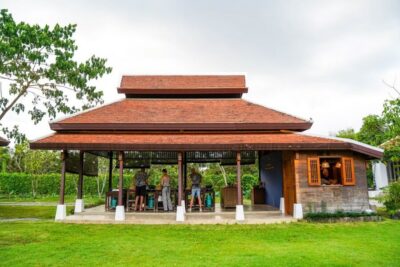
Authentic Cooking Class with Market & Farm Visit
Read our review →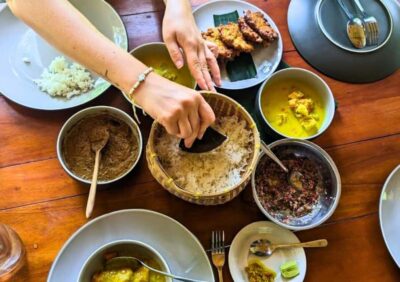

Hands-On Cooking Class & Farmhouse Tour on the Amalfi Coast
Read our review →Lists this farm appears in