
Reviewed · USA FARM TOURS
Explore Chicago’s Indoor Mushroom Farm Experience
Chicago’s indoor mushroom farm tour takes you behind the doors of a working food producer, not a display built for tourists. You’ll follow gourmet mushrooms from raw growing material through sterilization, inoculation, incubation, fruiting, and packaging for Chicago restaurants and shops.
I like the clear production chain and the chance to connect mushroom farming with regenerative agriculture. I also like the small-group limit of 25, which should make it easier to hear and see what is happening. The main drawback is that this is a grown-up, working-farm visit rather than a hands-on family attraction. Young children can attend, but the subject matter may not hold them for long.
Key points to know before booking
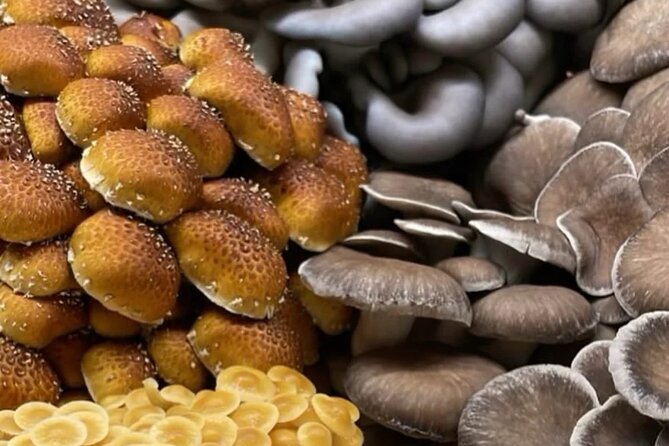
- See the full growing process: Follow substrate preparation, sterilization, inoculation, incubation, fruiting, and packaging.
- Visit a working Chicago producer: Four Star Mushrooms supplies retail and wholesale customers throughout Chicagoland.
- Learn why mushrooms matter: The tour explains mushroom cultivation and its connection to regenerative agriculture.
- Plan for about 90 minutes: The guided tour itself is described as about 60 minutes, so allow the full advertised time.
- Expect an adult-focused visit: Children are allowed, but the material is aimed more at adults than young families.
- Book ahead: The experience is commonly reserved about 23 days before the visit.
A working mushroom farm in Chicago
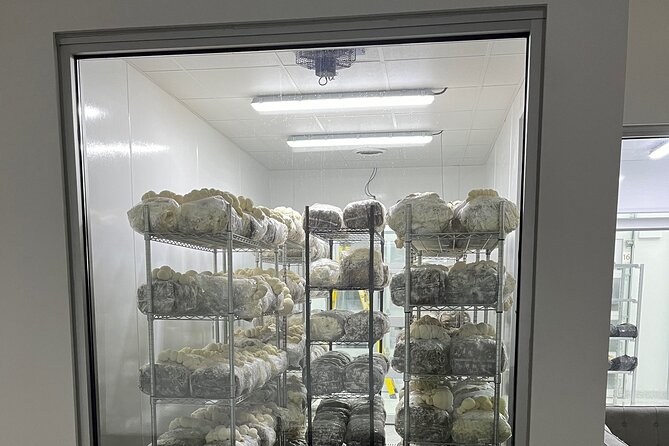
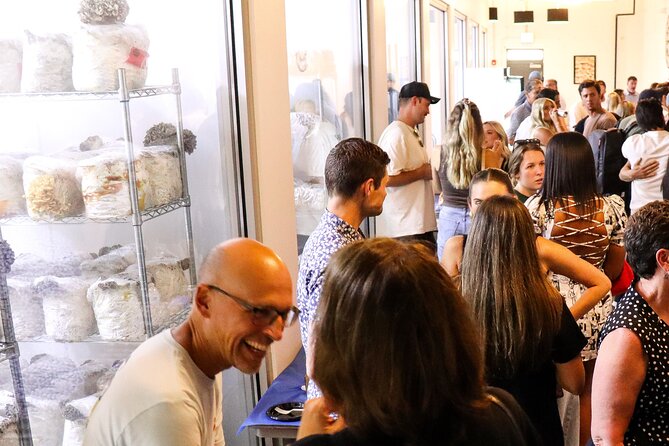
Most farm tours take you past fields, barns, or rows of crops. This one takes place indoors, at 320 N Oakley Blvd on Chicago’s West Side. The setting is a controlled environment agriculture facility, where temperature, timing, cleanliness, and growing conditions matter at every step.
That makes this a useful tour for seeing how food production can fit into a city. You are not simply looking at mushrooms on a shelf. You are learning how a specialty producer manages a delicate crop from raw material to finished product.
The farm grows gourmet specialty mushrooms for retail and wholesale customers across Chicagoland. That local connection gives the tour a practical edge. You can think about the mushrooms not just as an unusual crop, but as food moving through Chicago’s restaurant and grocery network.
I especially like the way this experience links a very specific crop to a larger food question. How can cities produce more food close to the people who eat it? Mushroom cultivation does not answer every part of that question, but it offers an interesting example of indoor farming in action.
More Farm Tours in the USA:
- Maui Pineapple Farm Tour in Haliimaile
★ 5.0 · 2,855 reviews - Half-Day Thoroughbred Horse Farm Tour in Kentucky
★ 5.0 · 1,924 reviews - Premium Amish Country Tour including Amish Farm and House
★ 4.5 · 1,306 reviews
Following the mushroom process from start to finish
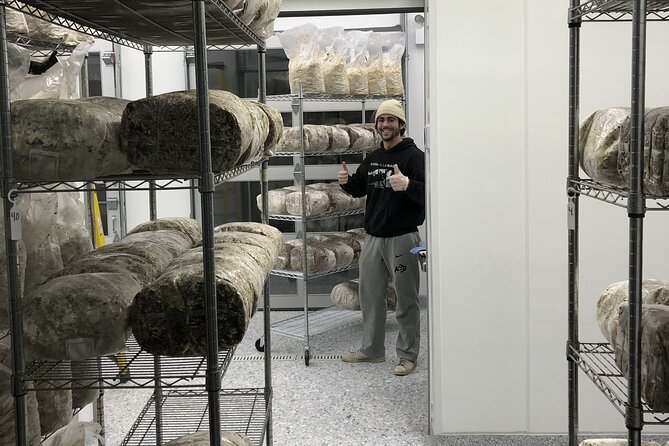
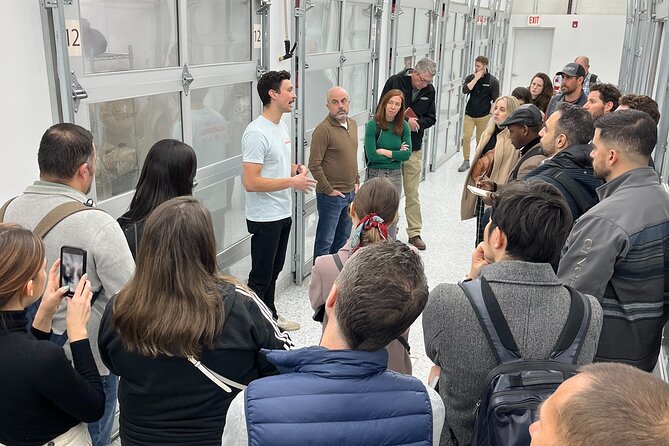
The visit begins with the basic material used to grow the mushrooms. You’ll see how raw substrate is bagged and prepared before it enters the next stage. The substrate is the growing medium, so this early step matters. Good preparation creates the base for everything that follows.
The bags are then sterilized. This is one of the less glamorous but more important parts of the process. The growing environment must be controlled so the desired mushroom culture has a fair chance to develop. You may not get a dramatic visual moment here, but you will get a better understanding of why mushroom farming depends on careful procedures.
Next comes inoculation, when the mushroom culture is introduced to the prepared substrate. The bags are then staged for incubation. At this point, the process becomes a lesson in patience. The mushrooms do not simply appear after a bag is filled. They need time and controlled conditions before fruiting begins.
The tour then moves toward the grow rooms, where fruiting happens. This is likely to be the part many people look forward to most, since you can see the crop in its production setting rather than in a market display.
The final stage is packaging. You’ll see how the finished mushrooms are prepared for retail and wholesale customers throughout the Chicago area. That last step helps connect the growing room to the meal on your plate. It also shows that a farm tour can be about handling, presentation, and distribution as much as cultivation.
Why controlled environment agriculture matters
Controlled environment agriculture can sound like a technical phrase, but the idea is straightforward. Food is grown indoors, with the producer managing the conditions that affect the crop.
For mushrooms, that control is central to the growing process described here. Substrate must be prepared and sterilized. The bags must be inoculated. Incubation and fruiting take place in separate stages. The farm’s rooms and routines are built around those needs.
You’ll also hear about regenerative agriculture and the role mushroom cultivation can play in it. The tour does not treat mushrooms as a novelty alone. It places them within a discussion about how farming can use resources, manage waste, and support healthier production systems.
The supplied details do not spell out every regenerative practice used at the facility, so you should not expect a long list of claims about the farm. Instead, think of this as a chance to learn why mushroom production is often included in conversations about newer and more resource-conscious forms of agriculture.
That context is valuable because it gives the tour more weight than a simple behind-the-scenes look. You leave with a better sense of how an urban farm can be both a food business and a place to discuss the future of agriculture.
What the 60-minute tour is like
The guided portion of the experience is listed at about 60 minutes, while the full activity is listed as roughly 1 hour and 30 minutes. I would plan your day around the longer figure. It gives you room for arrival, orientation, movement through the facility, and the complete tour without feeling rushed.
The tour follows a logical path through production. You begin with substrate preparation, then move through sterilization, inoculation, incubation, fruiting, and packaging. That order should help you understand the process even if you know little about mushrooms before arriving.
This is not presented as a cooking class, tasting event, or mushroom-picking activity. The focus is the farm operation itself. You are there to see how the crop is produced and prepared for sale.
The group limit is 25 people. That is not an especially tiny group, but it is far more manageable than a large sightseeing crowd. You should have a better chance of hearing the guide and seeing the areas being explained. Since the tour takes place in a working facility, staying with the group and paying attention to instructions will matter.
The visit is offered in English. No guide names are provided, so you should not book expecting a named host or a particular presenter.
Same fields, a different sort of morning:
- Unique Horse Farm Tours with Insider Access to Private Farms
★ 5.0 · 1,192 reviews - Lahaina: Maui Ku’ia Estate Guided Cacao Farm Tour and Tasting
★ 5.0 · 1,103 reviews - Maui: Road to Hana Adventure with Farm to Table Lunch
★ 5.0 · 877 reviews - Hawaiian Salt Farm Tour in Kona
★ 5.0 · 767 reviews
The Chicago restaurant connection
One of the most useful parts of the experience is its connection to Chicago’s food scene. Four Star Mushrooms sends its products to restaurant and retail customers throughout Chicagoland.
That detail helps you understand why the farm is set up as a serious production facility. These mushrooms are not grown only for demonstration. They are packaged and distributed as food for customers.
The connection also gives the tour a local flavor. You are seeing part of the supply chain behind the city’s restaurants, rather than visiting an isolated farm with no clear link to daily life in Chicago.
If you enjoy food tours, this offers a different angle. You will not be walking through a market or sampling several dishes. Instead, you will learn how one ingredient reaches the businesses that serve it. That makes the experience a good companion to Chicago’s restaurant culture, especially for people curious about where specialty ingredients come from.
Is the $20 price fair?
At $20 per person, this is priced as an affordable specialty tour. The value depends on your interest. If you enjoy food production, urban agriculture, science, or mushrooms, the price is easy to justify for a guided look inside a working facility.
You are getting more than a short explanation at a storefront. The visit covers several stages of production and includes access to areas such as the grow rooms and packaging operation. The group is also capped at 25 people, which supports a more personal format.
The value is weaker if you are looking for a broad Chicago sightseeing activity. This tour focuses on one producer at one location. It will not show you major city landmarks, and it does not replace a general city tour.
I would also keep expectations sensible about entertainment. The subject is practical and process-focused. Some parts, such as bagging and sterilization, may appeal most to people who enjoy seeing how things work. If you want action, tastings, or a polished museum-style presentation, this may feel too specialized.
For the right audience, though, $20 is a reasonable price for access to a working urban farm and a clear explanation of how specialty mushrooms are grown and sold.
Bringing children to the farm
Children are permitted, and the facility has welcomed families. Still, the experience is aimed more at adults. A parent who brought children ages 5 and 3 found that the kids were tolerated warmly, but also noted that the tour was really for grownups.
That is useful guidance. Young children may be interested in the unusual setting, the mushrooms, or the equipment, but the production explanation may be longer than their attention span. The presence of a forklift also means you should keep children close and follow all instructions. The family feedback specifically noted that the children wanted to touch the forklift but did not do so.
I would consider this a better choice for older children who ask questions about food, science, farming, or restaurants. For very young children, book it only if you are comfortable managing them through a working facility and accepting that the educational material may be aimed above their level.
The farm’s response to the family feedback was welcoming, so parents should not feel that children are automatically out of place. Just treat the visit as an adult-focused tour where children may attend, not as a children’s attraction.
Who will get the most from this experience?
I would recommend the tour most strongly to:
- People curious about urban farming and food production
- Mushroom fans who want to see cultivation rather than just buy or eat the product
- Visitors interested in regenerative agriculture
- Chicago residents who want a fresh local activity
- Food-minded visitors who enjoy learning about restaurant supply chains
- Older children and teenagers with an interest in science or farming
It is also a good option when you want something different from the usual Chicago attractions. The experience has a clear subject and a defined length, so it can fit into a day of exploring without taking over your entire schedule.
I would be more cautious about booking it for very young children, anyone who dislikes technical explanations, or anyone expecting a tasting. The supplied information does not promise samples, food, or a chance to handle the mushrooms.
Timing, meeting point, and group size
The tour starts at noon at 320 N Oakley Blvd, Chicago, Illinois 60612. It ends back at the same meeting point, so you do not need to arrange a separate return location.
A mobile ticket is provided, and confirmation is sent when you book. The experience is limited to a maximum of 25 people. Since the activity is commonly booked about 23 days in advance, I would reserve ahead if your Chicago schedule is fixed.
The full activity lasts about 1 hour and 30 minutes, although the guided tour is described as about 60 minutes. Allow the full 90 minutes when planning another activity afterward.
No transportation is included in the information provided, so you should make your own way to the meeting point. Check the address carefully before setting out, especially if you are fitting this into a larger day around Chicago.
A simple cancellation safety net
Free cancellation is available if you cancel at least 24 hours before the start time. Canceling less than 24 hours before the experience, or making changes inside that window, means you will not receive a refund.
The cut-off uses Chicago local time. That detail matters if you are arranging the tour while traveling across time zones. If your plans are uncertain, make any changes early rather than waiting until the day before.
Should you book the mushroom farm tour?
Book this experience if you want a close look at how specialty mushrooms are grown in Chicago, and if controlled agriculture sounds more interesting to you than another standard sightseeing stop. The tour offers a clear production story, from substrate to packaging, plus useful context about regenerative agriculture and local food supply.
The $20 price is fair for a focused 90-minute visit, especially with a group limit of 25. I would choose it for adults, food lovers, urban farming fans, and older children with a real interest in how food is made.
Skip it if you need a family attraction built around play, tastings, or famous landmarks. For everyone else, this is a practical way to see a working side of Chicago that most city tours leave out.
FAQ
Where does the mushroom farm tour begin?
The tour begins at 320 N Oakley Blvd, Chicago, Illinois 60612.
What time does the experience start?
The scheduled start time is 12:00 pm.
How long does the tour last?
The full activity lasts approximately 1 hour and 30 minutes. The guided tour itself is described as about 60 minutes.
What will I see during the visit?
You will see substrate being bagged and sterilized, the inoculation and incubation stages, the grow rooms where fruiting takes place, and the packaging process for retail and wholesale customers.
Is the tour offered in English?
Yes. The experience is offered in English.
Can I cancel for a full refund?
Yes, if you cancel at least 24 hours before the experience start time. Cancellations or changes made less than 24 hours before the start time are not refundable.
Just added around the USA
- Yolo: Vineyards, Farms & Cultural Gems – Audio Driving Tour★ 4.3 · 5 reviews
- Ventura: Rail Bike Guided Tour with Farm Stand Stop★ 4.1 · 18 reviews
- Small-Group Vineyard and Orchard Tour with Wine Tasting in Muscoda★ 5.0 · 2 reviews
- Connect with Rescue Animals on a Private Farm Tour in Catskills★ 5.0 · 27 reviews
- Cozy Farm Experience with Wagon Wheels and Acoustic Meal★ 5.0 · 2 reviews
- Farm Tour at Clover Brooke Llama/Alpaca/Goat Farm★ 4.5 · 6 reviews
- Gourmet Mushroom Farm Tour in Tennessee★ 5.0 · 5 reviews
- Farms, Flights: Finger Lakes Brewery Tour★ 4.5 · 25 reviews
USA Farm Tours, compared.
Half-Day Thoroughbred Horse Farm Tour in Kentucky
Read our review →
Premium Amish Country Tour including Amish Farm and House
Read our review →
Unique Horse Farm Tours with Insider Access to Private Farms
Read our review →
Maui Ku’ia Estate Guided Cacao Farm Tour and Tasting
Read our review →
Road to Hana Adventure with Farm to Table Lunch
Read our review →

Maui Horseback Adventure at Circle M Ranch With Real Cowboys
Read our review →Lists this farm appears in