
Reviewed · ITALY FARM TOURS
From Parma: Parmigiano Reggiano Farm Tour & Tasting with Transfer
Parmigiano Reggiano is not simply cheese with a famous name. It is a tightly controlled local product, made from milk, salt, time, and plenty of patient human work. This morning visit takes you inside a working caseificio, where you can watch the cheese being cooked, lifted, shaped, salted, tested, and stacked for aging.
I like two things right away: the ride from Parma takes you through the dairy country that supplies the milk, and the tour shows the whole chain from forage and cows to finished wheel. I also like the tasting, which pairs two ages of cheese with balsamic vinegar, honey, and regional sparkling wine. The main consideration is value. At $89.49, it is not a cheap tasting, especially if your main goal is only to eat cheese.
The essentials at a glance
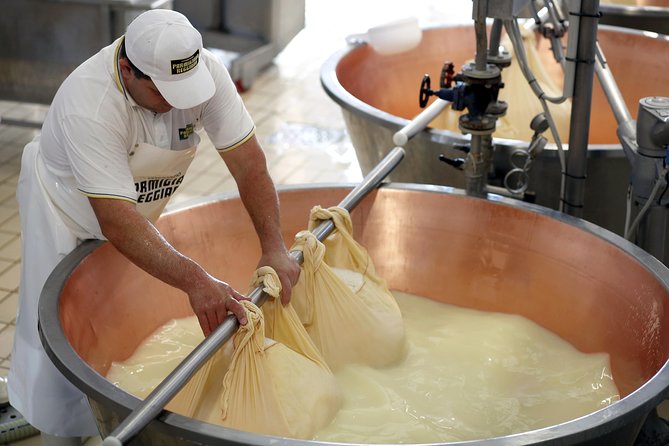
- A working caseificio: See cheesemakers separate whey, form the curds, shape wheels, and prepare them for aging.
- The countryside matters: The route passes fields and stables connected to the strict feeding rules for Parmigiano Reggiano cows.
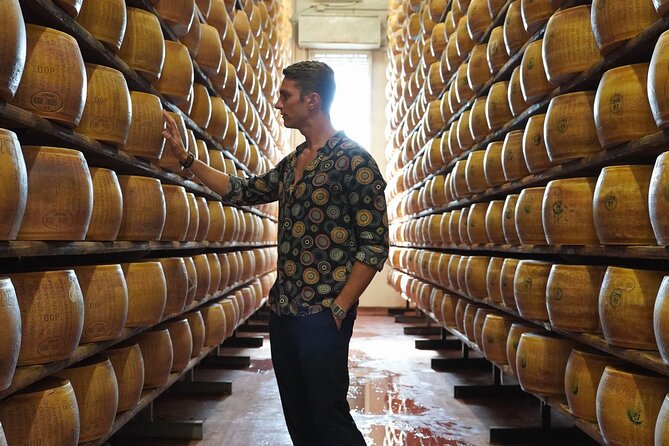
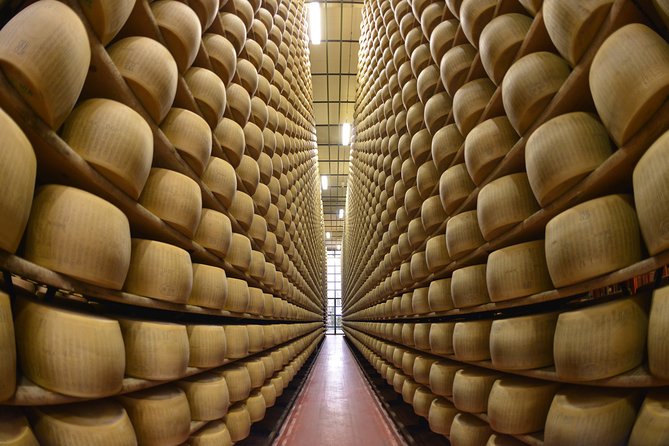
- The aging room is the visual high point: Thousands of wheels sit in long rows while their flavor develops.
- The tasting compares ages: Sample two versions of Parmigiano Reggiano with balsamic vinegar and local sparkling wine, with honey also included in the broader tasting description.
- Pickup is simple: Meet at the NH Parma beside the train station at 8:30 am, then return there after the visit.
- Small-group format: The van carries a maximum of 15 people, and the tour is offered in English.
Why Parma is the right place for Parmigiano Reggiano
The name Parmigiano Reggiano is protected. Authentic wheels can only be made in the provinces of Parma, Modena, and Reggio Emilia, along with parts of Bologna and Mantova. Cheese made elsewhere may look similar, but it cannot legally use the same name.
That local limit is not just a marketing trick. The cheese depends on a particular farming and production system. The cows receive specific dry and fresh forage set by the Consorzio, the organization that protects the cheese and checks its standards. On the drive from Parma, you pass the fields and farm buildings that support this system.
I like this context because it gives the factory visit a sense of place. You are not being shown a generic food-production line. You are visiting one small part of a food tradition tied closely to the land around Parma.
The tour also helps explain why Parmigiano Reggiano costs more than ordinary hard cheese. Each wheel begins with carefully controlled milk and then spends a long time aging. A wheel that fails inspection cannot carry the official mark, even after all that work.
More Farm Tours in Italy:
- Florence Pizza or Pasta Class with Gelato Making at a Tuscan Farm
★ 5.0 · 6,801 reviews - Cooking Class and Lunch at a Tuscan Farmhouse with Local Market Tour from Florence
★ 5.0 · 4,831 reviews - Sorrento Farm and Food Experience including Olive Oil, Limoncello, Wine tasting
★ 5.0 · 2,524 reviews
Meeting at the NH Parma at 8:30 am
The tour begins at the NH Parma, Viale Paolo Borsellino 31, right beside the train station. Pickup and drop-off are included, which is useful if you are staying in central Parma or arriving by train and want to avoid arranging a taxi into the countryside.
The drive to the farm is short, with one traveler describing it as roughly 20 minutes. That makes this a practical morning outing rather than a full-day commitment. The total activity lasts about two and a half hours, including transport, while the factory visit itself takes about two hours.
The air-conditioned vehicle is a real advantage in warm weather. The group size is capped at 15, so this should feel more manageable than a large coach tour. Still, you are visiting an active farm, not a polished museum. Part of the experience takes place outdoors, so sensible clothing and shoes are wise.
Do not bring luggage or large bags on the van. If you are checking out of a hotel and heading directly to the station, ask the operator about luggage storage before booking. Children of every age must be included in the reservation and pay a fee because each child needs a seat.
Watching milk become a cheese wheel
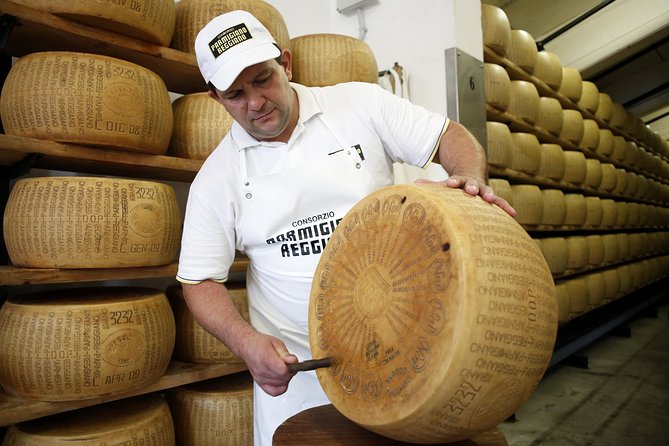
At the caseificio, the visit follows the cheese through its main production stages. You see the milk being cooked so the curds separate from the whey. The cheesemakers then lift and shape the mass into the familiar round wheels.
This is the part where a good guide makes a difference. Guides including Sergio, also called George on some departures, Loris, Matteo, and Daniele have been praised for explaining the process clearly and answering questions. The exact guide is not guaranteed, but English is offered throughout the experience.
The production is hands-on and easy to follow. You can watch the cheese masters at work rather than simply looking at photographs or displays. One especially useful detail is the taste of the cheese before salt is added. It does not yet have the flavor most people associate with Parmigiano Reggiano, which helps show how much the salting and aging stages change the final product.
The caseificio described for this tour is a smaller producer that handles the process in-house. That means you may see a more direct connection between the farm, the milk, the cheesemakers, and the finished cheese. The tradeoff is that the visit may feel less polished than a large industrial facility, but it can also feel more personal.
From shaping and salting to the stagionatura
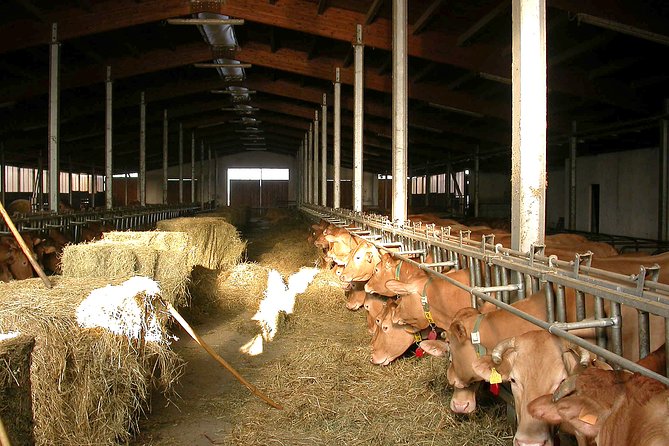
After the curds are formed, the cheese moves through shaping and salting. The wheels are prepared for the long aging period, known in Italian as stagionatura.
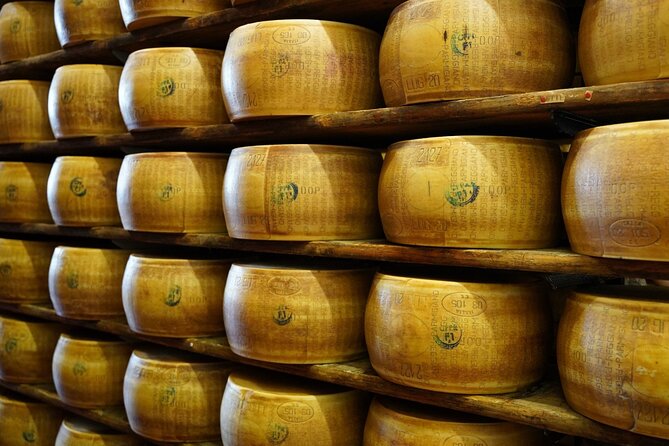
The aging room is likely to be the most memorable stop. Rows of wheels fill the space, often numbering in the thousands. The cheese perfumes the air, and the sheer number of wheels gives you a clear sense of the time and effort behind a single piece sold in a shop.
This is also where the tour puts supermarket Parmesan into perspective. You learn why the age of a wheel matters and why older cheese tastes different. At the tasting, the contrast between two ages is noticeable. Younger cheese tends to be more approachable, while older cheese develops a firmer texture and stronger flavor.
The visit does not claim to turn you into a cheesemaker in two hours. It does give you enough information to understand what you are buying. That is valuable later in Parma, where shops sell wheels at many ages and prices.
Same fields, a different sort of morning:
- Sorrento: Pizza Lesson, Wine, and Limoncello at a Local Farm
★ 5.0 · 1,513 reviews - Florence: Pizza or Pasta Class with Gelato at a Tuscan Farm
★ 4.9 · 1,181 reviews - Hands-On Cooking Class & Farmhouse Tour on the Amalfi Coast
★ 5.0 · 956 reviews - Pizza School with Wine and Limoncello Tasting in a Local Farm
★ 5.0 · 845 reviews
How a wheel earns the official mark
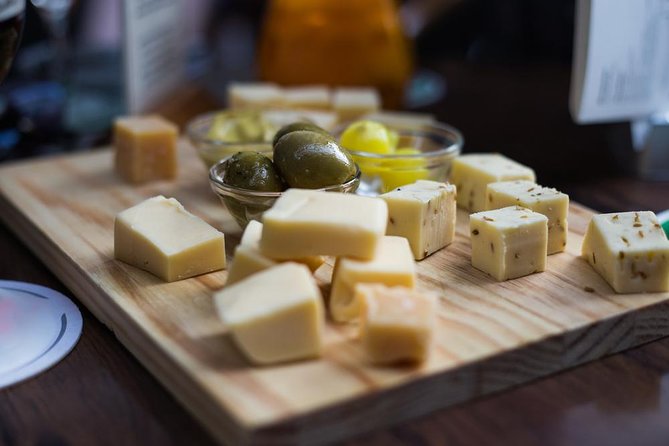
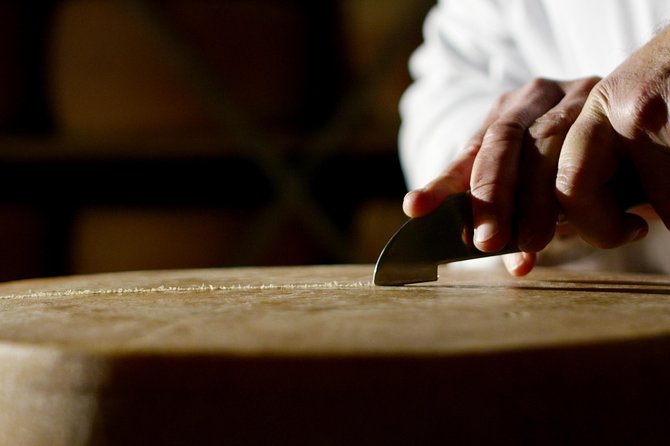
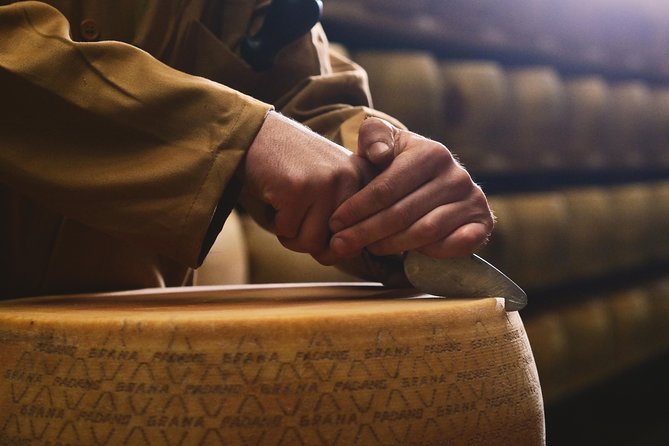
Parmigiano Reggiano must pass strict checks before it can be sold under its protected name. The tour explains the inspection process, including the famous hammer test.
An inspector taps the wheel and listens for signs of faults inside. It is a simple-looking method, but it reflects the close attention given to every wheel. Cheese that passes receives the official fire branding. The mark tells you that the wheel has met the rules set by the Consorzio.
I find this one of the most useful parts of the visit because it changes how you read a label. You learn that the name is not just a regional flourish. It represents a production area, approved milk practices, a set method, aging, and a final inspection.
The guide may also explain what happens to cheese that does not qualify. The exact details can vary by producer, but the key point is clear: not every wheel made in the area becomes official Parmigiano Reggiano.
A tasting with balsamic vinegar and sparkling wine
The tasting comes at the end, after you have seen the production. Two different ages of Parmigiano Reggiano are served so you can compare texture and flavor. Balsamic vinegar and local sparkling wine accompany the cheese, and honey is also included in the tour description.
This is not a huge meal, so do not book it as a replacement for lunch. It is a focused tasting that lets you notice the changes created by aging. The balsamic adds sweetness and acidity, while the sparkling wine gives the cheese a clean partner.
You may also have a chance to buy cheese directly from the farm shop. Some visitors have taken cheese home, while the farm can ship purchases according to the arrangements available there. If you want an especially old wheel, one guide suggested a Parma shop selling 100-month-aged Parmigiano Reggiano. That is an extreme example of how long this cheese can mature.
If you are flying home, check your airline and customs rules before buying a large quantity. For a train-based Italy trip, a small vacuum-packed piece is the easier souvenir, but storage and shipping details should be confirmed at the farm.
What the guides add to the visit
A strong guide is important here because the process can look repetitive if nobody explains what you are seeing. The most effective departures have included guides such as Sergio, Loris, Matteo, Daniele, Pietro, and George. They have been described as friendly, clear, funny, and well informed about both the cheese and the Parma area.
Some guides also discuss other local foods, including Prosciutto di Parma. That is useful regional context, though this particular experience is centered on Parmigiano Reggiano. If you are interested in both foods, check the exact booking you choose because separate prosciutto visits may be offered by the same operator.
The guide can also help with practical Parma advice, including restaurants and shops. That added local help is a nice bonus, but I would not book the tour solely for restaurant recommendations. The main value is seeing the cheese production up close.
Is $89.49 a fair price?
At $89.49 per person, the cost covers the round-trip transfer, an English-speaking guided visit, the farm and cheese factory, and the tasting. It also saves you the trouble of finding a rural caseificio and arranging transport there and back.
The price makes more sense if you are staying in Parma without a car. A rented car or taxi might reduce the cost for a couple, but then you would need to find a producer accepting visits, handle the route, and avoid driving after a wine tasting. The included transfer keeps the morning simple.
The value is weaker if you want only a quick sample of Parmigiano Reggiano. Parma has shops and restaurants where you can taste the cheese for far less. The tour earns its price through access to the working factory, the production explanation, the countryside drive, and the comparison of aged cheeses.
One dissenting assessment found the tour too expensive for the amount of time involved. That is a fair concern. The tour is short, and two and a half hours may feel brief if you expect a large meal or several farms. On the other hand, many departures finish back at the NH Parma around 10:55 am, leaving most of the day free for Parma’s cathedral, Baptistery, food market, and restaurants.
Who should book this morning tour?
I would recommend it most strongly to food-focused visitors, first-time visitors to Parma, and anyone curious about how protected Italian products are made. It also suits solo visitors because the small group gives you an easy way to meet people without committing to a full-day excursion.
Families can join, but remember that every child needs a paid place and the van has limited seating. The farm setting can be interesting for children, especially if the visit includes a look at young cows, but the detailed production explanation may be more appealing to older children.
This is also a good choice if you arrive in Parma by train. The meeting point is easy to reach, and the return to the same hotel near the station lets you continue by rail afterward.
I would skip it if you dislike food-production settings, need a long sleep-in morning, or already have a rental car and a confirmed farm visit. I would also skip it if your budget is tight and your main aim is tasting rather than learning.
The activity operates in bad weather when conditions are safe. Since it takes place partly at an active farm, dress for changing conditions and wear shoes suitable for walking. The van is not a place for large bags.
Final call: book or not?
Book this tour if you want to understand why Parmigiano Reggiano is different from ordinary Parmesan, and if you value seeing the work behind the label. The visit is short, well organized, and focused on one producer rather than trying to pack several food stops into one rushed morning.
The best reasons to go are the small caseificio, the full view from cows and forage to aging wheels, the hammer-and-fire-branding explanation, and the side-by-side tasting. The main reason to hesitate is the price for a two-and-a-half-hour activity.
For most food-minded visitors with a morning free in Parma, I think the access and included transport justify the cost. Book at least 24 hours ahead if your plans are firm, since cancellations made later are not refundable. Expect a practical, hands-on introduction to one of Italy’s great cheeses, not a luxury food event.
FAQ
Where does the tour begin?
The meeting point is the NH Parma, Viale Paolo Borsellino 31, beside the Parma train station.
What time does the tour start?
The tour starts at 8:30 am.
How long does the experience last?
The total experience lasts approximately two hours and 30 minutes. The guided factory visit itself takes about two hours.
Is hotel pickup included?
Pickup and drop-off are included from the NH Parma and central Parma hotel arrangements next to the train station. The activity returns to the meeting point.
What will I taste?
You will taste Parmigiano Reggiano paired with balsamic vinegar and local sparkling wine. The tasting includes two different aged cheeses, and honey is also included in the tour description.
Is the tour offered in English?
Yes. The experience is offered in English.
Can I bring luggage on the van?
No. Large bags and luggage are not allowed on the van. You should contact the operator about luggage storage details.
Can children join the tour?
Yes. Children of all ages can participate, but every child must be included in the booking and must pay a fee because seating in the van is limited.
Just added around Italy
- Paestum and Buffalo Farm Day Tour from Sorrento★ 5.0 · 3 reviews
- Slowlife Family Farm- Cook with us From Garden to Table Syracuse★ 5.0 · 10 reviews
- Siena: Small-group Cooking Class in a Chianti Farm★ 4.9 · 21 reviews
- Small Group E-Bike Chianti Tour with farm lunch from Siena★ 5.0 · 34 reviews
- Guided tour of the Marsala Salt Pans and salt harvesting★ 4.7 · 60 reviews
- Visit to the olive grove, oil tasting and lunch at the farm★ 5.0 · 31 reviews
- Alcamo Farm Animals and Aromatic Garden★ 4.0 · 45 reviews
- Food Experience at our Farm in Noto Hills★ 5.0 · 17 reviews
Italy Farm Tours, compared.
Florence Pizza or Pasta Class with Gelato Making at a Tuscan Farm
Read our review →
Cooking Class and Lunch at a Tuscan Farmhouse with Local Market Tour from Florence
Read our review →
Sorrento Farm and Food Experience including Olive Oil, Limoncello, Wine tasting
Read our review →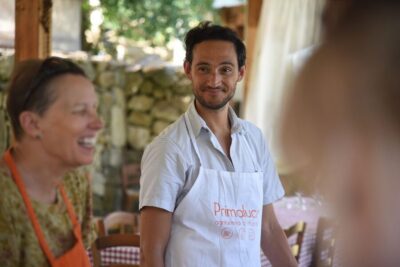
Pizza Lesson, Wine, and Limoncello at a Local Farm
Read our review →
Pizza or Pasta Class with Gelato at a Tuscan Farm
Read our review →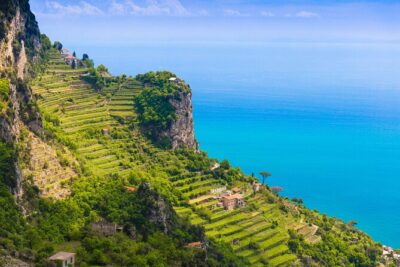
Hands-On Cooking Class & Farmhouse Tour on the Amalfi Coast
Read our review →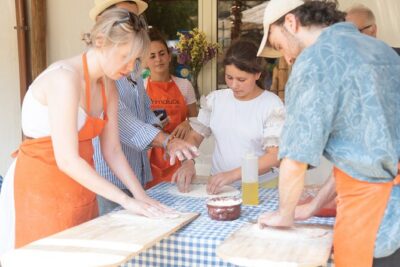
Pizza School with Wine and Limoncello Tasting in a Local Farm
Read our review →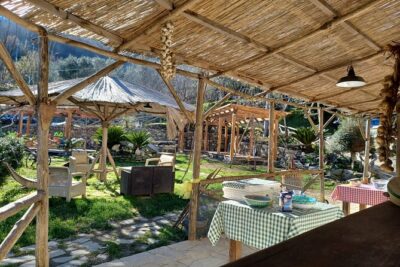
Authentic Farm Tour with Pizza, Cheese, Wine & Limoncello Tasting
Read our review →Lists this farm appears in