
Reviewed · GREECE FARM TOURS
Olympia Shore Ex: Olympic site, Honey Farm & Olive Oil Tasting
Ancient Olympia is the main event here, but the day adds two tastes of modern Greek life: honey and olive oil. You’ll walk across the grounds where the ancient Olympic Games began, then sit beneath chestnut trees at Klio’s Honey Farm for homemade sweets and a drink.
I like the easy port pickup and the strong site guiding, especially when Elena or Alena leads the Olympia visit. I also like the family welcome at the honey cottage. The catch is clear: the advertised price of $119.48 does not cover the €20 Olympia admission or the €12 honey-farm fee, and the olive-oil stop feels too commercial for some people.
Key points to know before booking
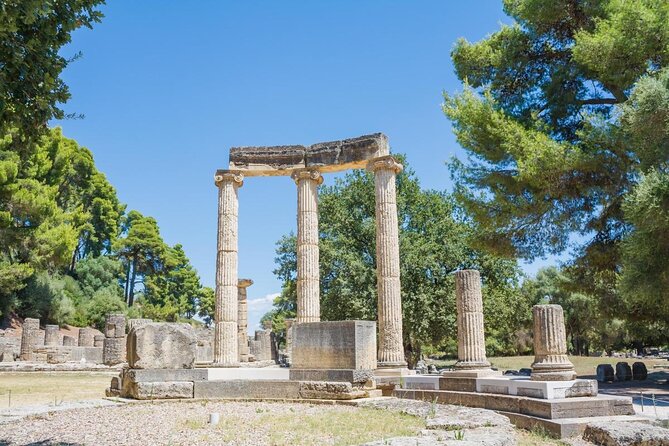
- Ancient Olympia is the heart of the excursion: Expect about 90 minutes at the open-air archaeological site, with the gymnasium, palestra, Temple of Hera, Temple of Zeus, and stadium.
- Klio’s Honey Farm is a tasting visit, not a working apiary tour: There are no beehives at the cottage, partly to protect people with allergies and children.
- The olive stop takes place at Padelina Shopping Center: You’ll sample olives, olive oils, balsamic vinegar, honey, and other local products in an indoor market setting.
- Port transport is included: Pickup and drop-off take place at Katakolon Port in an air-conditioned vehicle.
- Budget for extra entrance fees: Olympia costs €20 per person, and the honey cottage lists a €12 admission fee. An official guide inside the site is described as optional, so confirm exactly what your booking includes.
- This suits a flexible half-day schedule: The tour lasts about four to five hours and is offered in English, with a maximum advertised group size of 25.
From Katakolon Port to the birthplace of the Games
Your day begins at the central gate of Katakolon Port, inside the port area, near the signboard marked PORT OF KATAKOLON, JOHN LATSIS. Look for The Travel Insiders sign. The exact pickup time is sent by message, so keep your phone available before leaving the ship.
The drive to Olympia is part of the appeal. You leave the waterfront and head through the countryside toward one of Greece’s most important archaeological sites. Port pickup matters here because arranging transport independently can eat into a short cruise stop. With this tour, the vehicle, driver, and return journey are handled together.
The advertised vehicle is an air-conditioned van, and several tour accounts describe a clean, comfortable small bus or Mercedes van. The tour is promoted as semi-private, with a maximum of 25 people. That is smaller than a cruise-line coach, though the actual group size can vary, so do not assume you’ll receive a private tour.
The English-speaking tour leader handles the day, while the Olympia portion may be led by an official local guide. Guides named in the tour material include Elena and Alena, both praised for bringing the ruins to life, and Taytothta, who was described as making the outing lively and personal. The guide you receive depends on the departure.
More Farm Tours in Greece:
- Mykonos: Farm, Ano Mera Village, and Beaches Guided Tour
★ 4.4 · 1,283 reviews - Crete: Road-trip to Lasithi, Zeus Cave & Olive Mill Farm
★ 4.4 · 451 reviews - Heraklion: Olive Farm Tour with Tasting of Local Delicacies
★ 4.9 · 411 reviews
Walking through Ancient Olympia’s athletic grounds
The archaeological site is an open-air park, and you should expect a fair amount of walking. The main site visit lasts about 90 minutes, usually in the shade where possible, but you are still outdoors in the Greek sun. Wear practical shoes, bring water, and be ready for uneven ancient ground.
The first important stops are the gymnasium and palestra. These were athletic training areas, and they help you picture Olympia as a working sports center rather than a pile of isolated stones. A good guide makes the layout easier to understand by connecting the surviving foundations to the athletes, trainers, and contests once held here.
The Temple of Hera is especially meaningful because the modern Olympic flame-lighting ceremony takes place here. The ancient and modern Games are not the same institution, but this spot provides a direct link between them. It is one of the places where the old site feels connected to the world you know today.
The Temple of Zeus was the largest temple in the sanctuary. The original gold and ivory statue of Zeus, once counted among the Seven Wonders of the Ancient World, is gone, but the scale of the temple ruins still gives the stop weight. Your guide’s explanation is important here because the remaining columns and stones do not tell the full story by themselves.
The final major highlight is the ancient Olympic stadium. This is where the visit becomes physical and memorable. You can walk across the same broad running ground used for ancient athletic contests and see how large the stadium was without modern seating or machinery.
The site guide is one of the strongest parts of the tour. Elena, in particular, is repeatedly singled out in the supplied material for clear explanations, good pacing, and an engaging manner. That said, a 90-minute guided visit can feel long if you are mainly interested in taking photographs. If you prefer a quick look and free time, tell the tour leader early and ask how much independent time is available.
Entrance to the archaeological site is not included in the tour price. The listed cost is €20 per person. Some departures may provide help with buying tickets or moving through the entrance, but you should still treat the admission fee as an extra cost, not a surprise included benefit.
Klio’s Honey Farm beneath the chestnut trees
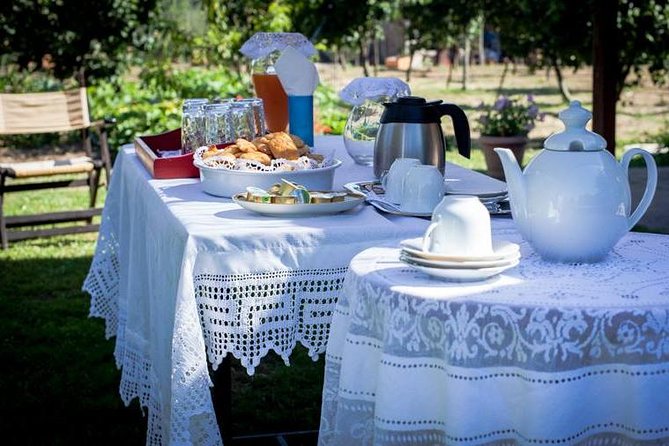
After Olympia, the day shifts from ancient stones to a small local cottage. At Klio’s Honey Farm, you meet a beekeeper and hear stories about local honey production and family life. The setting is described as a shaded cottage beneath chestnut trees, with coffee or juice and homemade sweets.
This is not a technical beekeeping demonstration. There are no beehives at the cottage. The operator explains that this arrangement protects people and children who may have bee allergies, while still allowing visitors to learn about honey and taste local products.
That distinction matters. If you expect to see working hives, protective clothing, or honey extraction equipment, this stop may disappoint you. If you enjoy a relaxed visit with a local family and a chance to sample traditional foods, it can be the most personal part of the day.
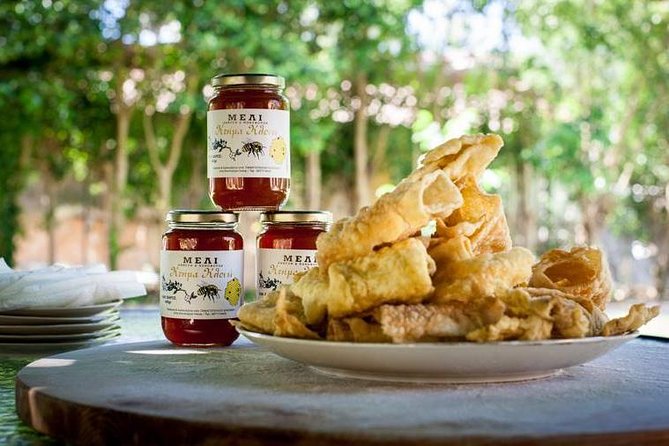
The food is simple and strongly tied to Greek home cooking. You may try diples, a fried pastry drizzled with honey; pasteli, made with honey and peanuts or sesame; and spoon sweet, such as quince preserved in syrup. Honey itself is central, and the visit may include other homemade products.
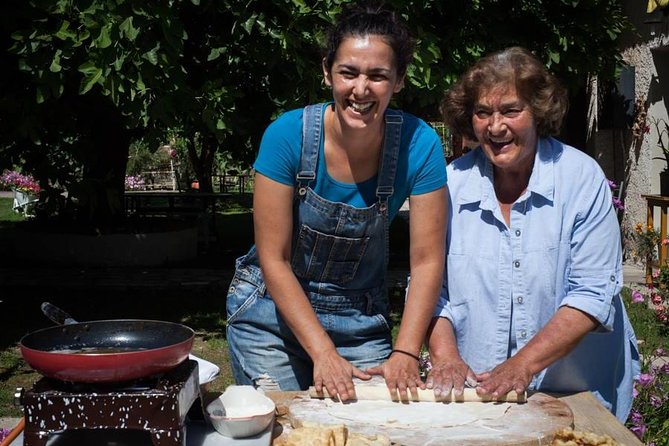
The warm welcome is the point. Several accounts describe the family atmosphere, with multiple generations involved in the cottage. You are not simply standing at a retail counter for a quick sample. You are invited to sit, listen, and taste. Still, the length of the stop is about 50 minutes, and anyone uninterested in honey or local sweets may find it slow.
The listed honey-farm admission is €12 per person. Some tour information elsewhere has referred to a €10 charge, so I would confirm the current amount before you go. Since the main tour price does not include this fee, add it to your budget.
Olive oil, balsamic vinegar, and the Padelina market
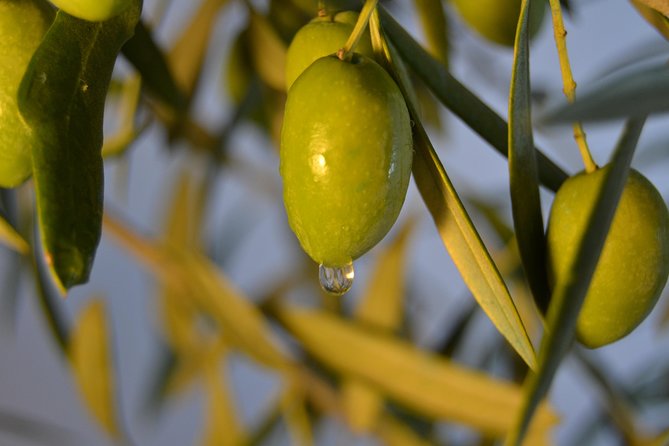
The olive stop takes about 40 minutes at Padelina Shopping Center, an indoor flea market with a section devoted to local foods. You can sample different varieties of olives, extra virgin olive oil, infused oils, balsamic vinegar, honey, snacks, and related products.
The tasting itself is included. You may find olive oils flavored with herbs, spices, or truffle, along with Kalamata olives and several types of balsamic products. Some accounts also describe olive-oil creams, lotions, and other items for sale.
This is useful if you want to compare Greek flavors or buy food products to take home. The indoor setting can also provide a break after walking around Olympia. The staff can present a wide range of samples, and the stop gives you a quick introduction to common Greek pantry staples.
But call it what it is: an olive market, not an olive farm or an olive-oil mill. You will not necessarily see olive trees, pressing equipment, or the stages of production. Some people enjoy the tasting and shopping. Others find the stop too much like a roadside retail visit and would rather spend the time in Olympia or in town.
The operator treats the honey cottage and olive market as a way to connect the ancient site with present-day rural life. That idea works best if you enjoy food, shopping, and informal local contact. If your priority is archaeology, the second half may feel less focused than the first.
Same fields, a different sort of morning:
- Lassithi, Zeus Cave, Olive Mill Farm & Knossos Combo Tour
★ 4.6 · 404 reviews - Naxos Perivoli Farm Experience & Wood-fire Cooking Class
★ 5.0 · 339 reviews - Melanes: Naxos Perivoli Farm & Cooking Class with Wood Fire
★ 5.0 · 177 reviews - Traditional Olive Grove and Dragon Fruit Farm Tour
★ 4.8 · 118 reviews
What the $119.48 price really covers
At $119.48 per person, the tour is not the cheapest way to see Olympia once you add the required site costs. The base price covers port pickup and drop-off, air-conditioned transportation, and the olive-oil market tasting. It does not cover the €20 archaeological admission or the €12 honey-farm admission.
That puts the known extra fees at €32 per person, before any optional official guide charge. The wording around the guide is worth checking carefully because some tour information describes a guided Olympia visit, while the inclusions list calls the official tourist guide optional. Ask at booking whether your specific departure includes a certified guide inside the archaeological site.
The value depends on how much you need transport and structure. From a cruise ship, direct port transportation has real worth. You avoid arranging a taxi, finding the site, watching the clock alone, and getting back to Katakolon. You also receive a planned mix of archaeology, food tasting, and countryside scenery.
The value is weaker if you mainly want Ancient Olympia and do not care about honey or olive oil. You are paying for stops you may consider secondary, and the extra admission fees make the final cost higher than the headline figure.
Some experiences have also changed when a local business was closed. In one reported case, the olive market was unavailable and the program was altered to include the archaeological museum instead. That kind of substitution may be practical, but it means the exact food portion is not guaranteed every day.
Pace, group size, and comfort
The full outing takes roughly four to five hours. That makes it workable for many cruise schedules, but you should compare the announced return time with your ship’s all-aboard time. The tour company sends the exact pickup time by message, and the day requires coordination between the port, Olympia, the honey cottage, and the market.
The pace is moderate but not motionless. The archaeological site involves walking over open ground, and some people find the heat more tiring than expected. The honey visit provides shade and a seated break, while the indoor market offers another change of pace.
Most people can participate, and service animals are allowed. The experience is offered in English. There is no separate accessibility detail describing surfaces, step-free access, or vehicle arrangements, so contact the provider if those points matter to you.
The maximum advertised group size is 25. That is a reasonable middle ground: more personal than a large coach, but not the same as a private outing. If your party wants to linger at one ruin, skip the olive stop, or change the order, the fixed group plan may feel restrictive.
The main strengths and weaknesses
The strongest part is the Olympia guiding. The site is large and its foundations can be hard to read without help. A guide such as Elena or Alena can explain how the gymnasium, temples, and stadium fit together, giving the ruins a clear shape.
The second strong point is the honey cottage. The family setting, homemade sweets, and shaded seating offer a gentler view of Greece than a standard monument visit. It is especially appealing if you enjoy food traditions and small-scale local contact.
Transport is another practical advantage. A clean, air-conditioned vehicle and a driver who knows the route make a difference during a hot shore day. Good communication at pickup also matters, since missing the vehicle at the port would create a serious problem.
The weaknesses are equally clear. The extra admission fees can make the tour feel expensive, especially when the headline price suggests a more complete package. The lack of actual beehives may disappoint anyone expecting a farm demonstration.
The olive market divides opinion. I would book this stop as a tasting and shopping session, not as an educational farm visit. If you dislike sales-oriented stops, ask whether you can spend that time elsewhere, though the itinerary is built around the visit and may not offer a separate alternative.
Who should book this Olympia shore excursion?
I would choose this tour if you want Ancient Olympia with transportation already arranged and you also enjoy tasting local foods. It is a good fit for first-time visitors who want a guide at the major ruins, a family-style stop, and an easy ride back to the port.
It also suits you if you prefer a gentle introduction to Greek food rather than a formal cooking class. The honey, olives, olive oils, balsamic vinegar, diples, pasteli, and quince spoon sweet give you several flavors to try without requiring a full day.
I would think twice if you want a private, archaeology-focused visit. The group format, fixed stops, retail setting, and added fees may frustrate you. I would also skip it if you expect to see beehives or olive pressing in action.
Free cancellation is available up to 24 hours before the start time. Poor weather or failure to reach the minimum group size can lead to a different date, another experience, or a full refund. Those conditions are useful for a shore excursion, but they do not remove the need to check your ship schedule carefully.
Should you book it?
Book this Olympia tour if you want a well-organized half-day with strong archaeological guiding, comfortable port transport, and a taste of local hospitality. The honey cottage is the more distinctive food stop, while the olive market is practical but clearly commercial.
Before paying, confirm the current honey-farm fee, the €20 Olympia admission, and whether an official site guide is included. If you accept those extras and view the olive stop as shopping rather than farm education, the day offers a balanced look at ancient Olympia and modern rural Greece. If you want only the ruins, arrange a simpler archaeological visit instead.
FAQ
Where does the tour meet in Katakolon?
Pickup is at the central gate of Katakolon Port, inside the port area, near the signboard marked PORT OF KATAKOLON, JOHN LATSIS. Look for The Travel Insiders sign.
How long does the excursion last?
The experience lasts approximately four to five hours.
Is transportation included?
Yes. Port pickup and drop-off are included, along with transportation in an air-conditioned vehicle.
Is the archaeological entrance fee included?
No. The listed entrance fee for the Archaeological Site of Olympia is €20 per person.
Is the honey-farm admission included?
No. The listed fee for Klio’s Honey Farm is €12 per person. Some supplied tour information refers to €10, so confirm the current amount before departure.
Are there beehives at Klio’s Honey Farm?
No. The cottage does not keep beehives there, partly to protect people and children with allergies. You can still meet a beekeeper, hear about local honey, and taste products.
What food is included at the tastings?
The offerings can include extra virgin olive oil, infused oils, Kalamata olives, balsamic vinegar, honey, diples, pasteli, and quince spoon sweet.
Is the tour guided in English?
Yes. The experience is offered in English. An official tourist guide leads the Olympia visit when that service is included or selected.
Just added around Greece
- Volos: Cook Like a Local at a Greek Farm★ 5.0 · 7 reviews
- Traditional Greek Cooking Class @ Lefkada Micro Farm★ 4.7 · 32 reviews
- Visit a Farm and Horseback Riding in Nature★ 5.0 · 10 reviews
- Insightful Pistachio Orchard and Factory Tour★ 4.5 · 27 reviews
- Flavors of Santorini: Farm-to-Table Meal Wine & Authentic Village★ 5.0 · 12 reviews
- Santorini 5 Hour Private Oia Tour & Lunch/Dinner at a Local Farm★ 5.0 · 40 reviews
- Cooking Class Sunset Dinner and Tour in Paros Farm★ 5.0 · 5 reviews
- Katakolon 7hour tour : Olympia-Honey Farm-Winery-Beach★ 5.0 · 53 reviews
Greece Farm Tours, compared.
Farm, Ano Mera Village, and Beaches Guided Tour
Read our review →
Road-trip to Lasithi, Zeus Cave & Olive Mill Farm
Read our review →
Olive Farm Tour with Tasting of Local Delicacies
Read our review →
Lassithi, Zeus Cave, Olive Mill Farm & Knossos Combo Tour
Read our review →
Naxos Perivoli Farm Experience & Wood-fire Cooking Class
Read our review →
Melanes: Naxos Perivoli Farm & Cooking Class with Wood Fire
Read our review →
Traditional Olive Grove and Dragon Fruit Farm Tour
Read our review →
Wine Tasting Tour at a traditional farm in Mykonos
Read our review →Lists this farm appears in