
Reviewed · 1-HOUR EXPERIENCES
One Hour Coral Farm Tour, Discover Australia’s Marine Life
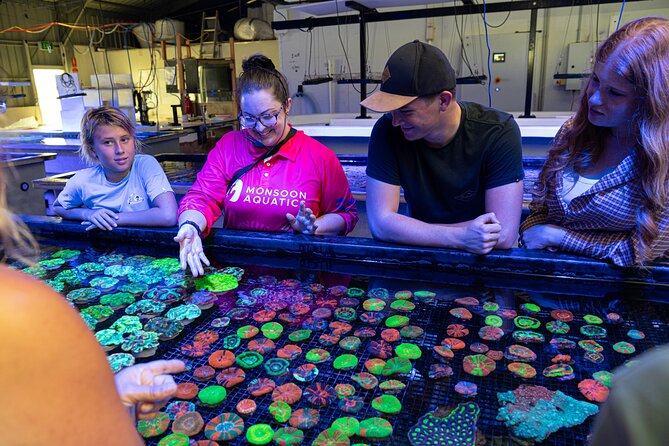
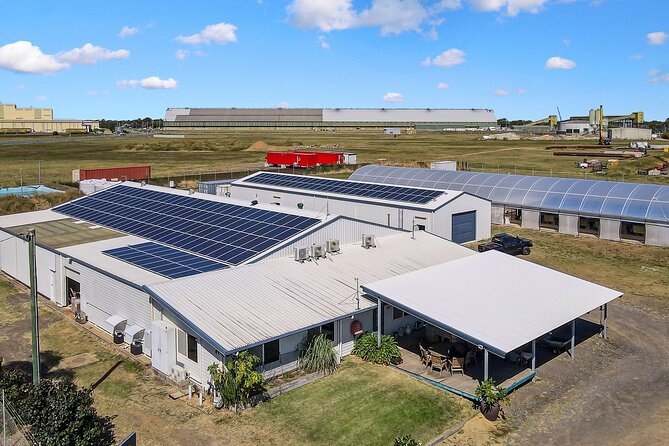
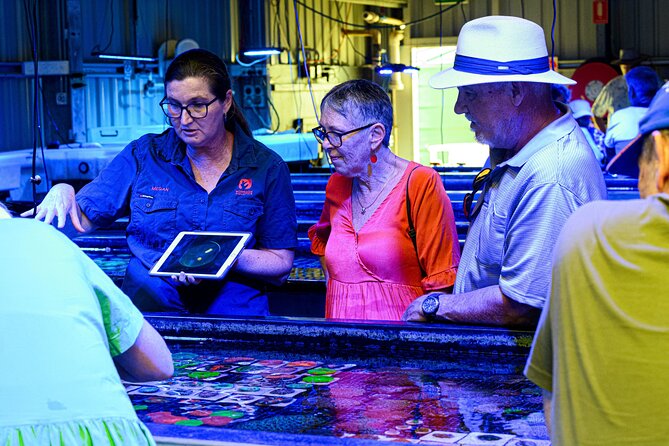
The most striking part of this coral farm tour is seeing reef life from land, close enough to study the tiny shapes, colors, and fish that are easy to miss in the open ocean. At Monsoon Aquatics in Burnett Heads, you walk through a working aquaculture farm with more than 200 coral species gathered from around Australia.
I like two things right away: the tour explains both coral biology and real reef-restoration work, and it includes live feeding and propagation demonstrations rather than just rows of display tanks. The loan phone filter is another smart touch, since it helps your camera capture colors that ordinary phone photos often lose.
The main consideration is that this is a working farm, not a polished aquarium attraction. Floors may be wet, closed-in non-slip shoes are needed, and the tour runs in all weather. The 10am start also requires planning, especially since the farm has one main tour time each day.
Why this small coral farm tour is worth your time
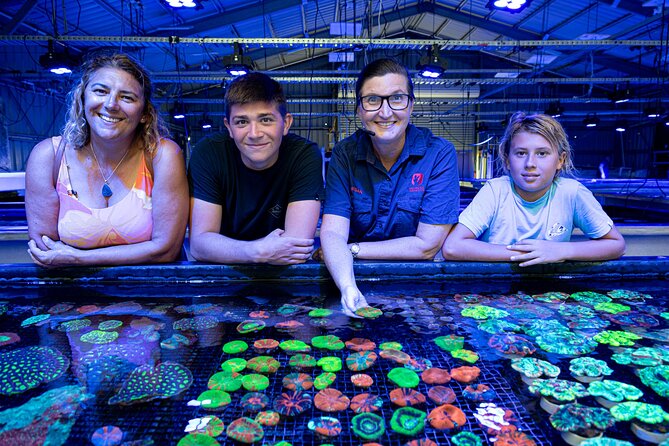
- More than 200 coral species: You can compare many forms of coral gathered from around Australia, not just view one standard reef display.
- A working aquaculture farm: You see the practical side of coral care, including cultivation, feeding, and propagation.
- Reef restoration research: The tour connects colorful tanks to the larger task of protecting marine ecosystems.
- Indoor and outdoor tanks: Different lighting and settings show how coral can look under changing conditions.
- Phone camera filter included: You can borrow a special lens filter during the tour to improve coral photos.
- Small group format: The maximum group size is 16, which gives the guide room to explain the displays and answer questions.
Arriving at Monsoon Aquatics in Burnett Heads
The tour begins at 145 Buss Street, Burnett Heads, Queensland 4670. You meet there at 10am, and the experience finishes back at the same spot. That simple arrangement makes this easy to add to a Bundaberg-area morning, but you need to arrive ready for a fixed schedule.
Bookings are essential. The experience is listed as about one hour, with the full timing described as roughly one hour and 15 minutes, so I would allow at least 75 minutes rather than planning another activity immediately afterward.
The farm is not presented as a formal indoor museum. It is an active aquaculture site, and that affects what you wear and how you move around. Choose closed-in, non-slip shoes because water can make the floors wet. This is a small but important detail. Sandals or smooth-soled shoes are a poor match for working tank areas.
The tour runs in all weather. That matters in Queensland, where a wet morning does not necessarily cancel an outdoor component. Bring sensible clothing and be prepared for both indoor and outdoor viewing areas.
More One-Hour Experiences in Australia:
- Guided reindeer farm visit and one hour sledge safari
★ 5.0 · 21 reviews - 1 Hour Private Quad Biking with 30 minutes Camel Farm Visit
★ 5.0 · 8 reviews - 1 Hour Guided Farm Tour in the Adirondacks
★ 5.0 · 2 reviews
Seeing coral from the land
The tour gives you a chance to examine reef life without booking a boat trip, snorkel session, or scuba outing. That makes it useful for people who want a closer look at coral biology but prefer to stay on land.
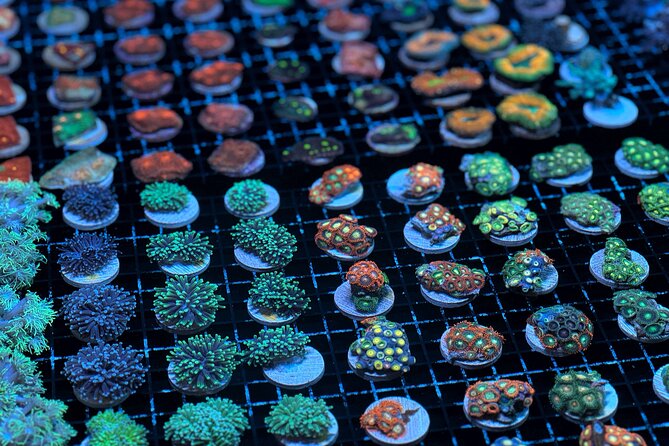
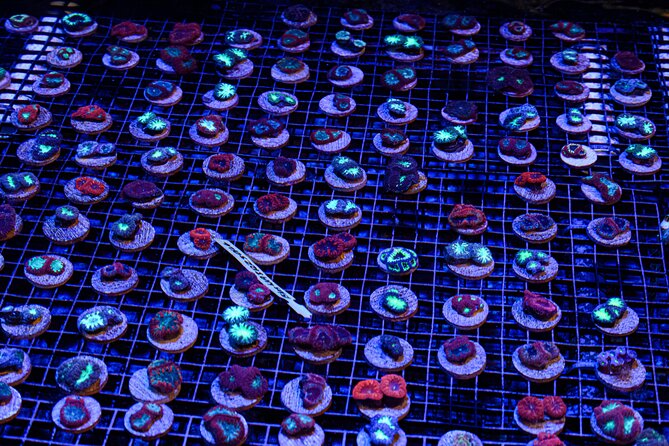
You can expect to move through areas with indoor and outdoor tanks. The different settings help show how coral changes under different lights. One of the most useful parts of the experience is simply taking time to look. Coral is not one uniform object. It can form branching structures, rounded shapes, fine textures, and pale or strong colors.
The farm holds more than 200 coral species sourced from around Australia. That variety gives the guide plenty to compare, and it gives you a better sense of coral as a broad family of living organisms rather than a single reef decoration.
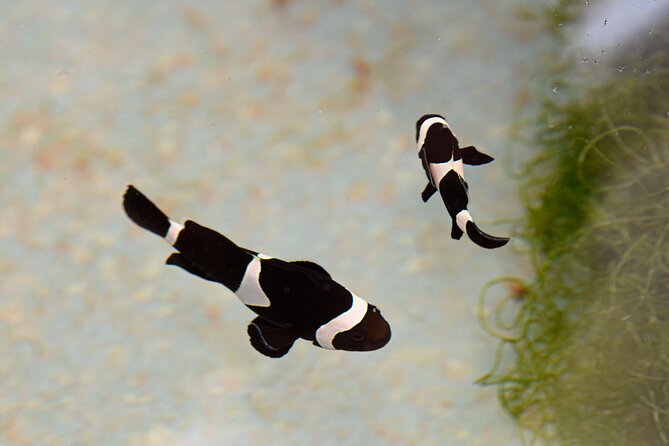
Fish are part of the appeal, too. The farm breeds different clownfish varieties, adding movement to the tanks and giving children another detail to watch. If you are visiting with tween children, this is likely to hold their attention better than a talk that relies only on explanations.
I also like the fact that the tour lets you view healthy coral up close. You can see the condition of the animals and the care that goes into keeping them, rather than looking at a distant reef through a mask or a boat window.
The feeding and propagation demonstrations
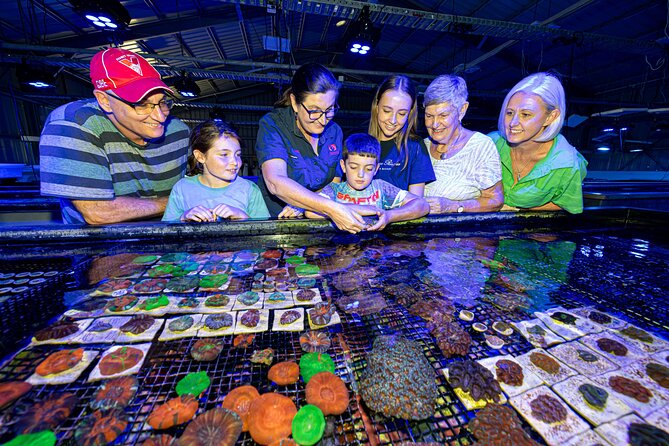
The live coral feeding demonstration helps explain that coral is living marine life with specific needs. It turns a pretty display into a practical lesson about care, growth, and survival.
Propagation is just as important. You learn how coral can be cultivated and handled as part of reef-restoration work. The exact methods are best explained by the guide on the day, but the central idea is clear: coral farming is not only about selling or displaying coral. It can also support research and efforts to preserve marine ecosystems.
This is where the tour offers more value than a quick look at tanks. You are shown some of the work behind coral survival. The staff’s research focuses on reef restoration and marine ecosystem preservation, tying the farm to wider concerns around the Great Barrier Reef.
For me, this practical connection is the strongest reason to book. You are not simply being told that reefs matter. You are seeing a facility that grows coral, studies it, and works with the problems faced by reef environments.
Guides who make the hour work
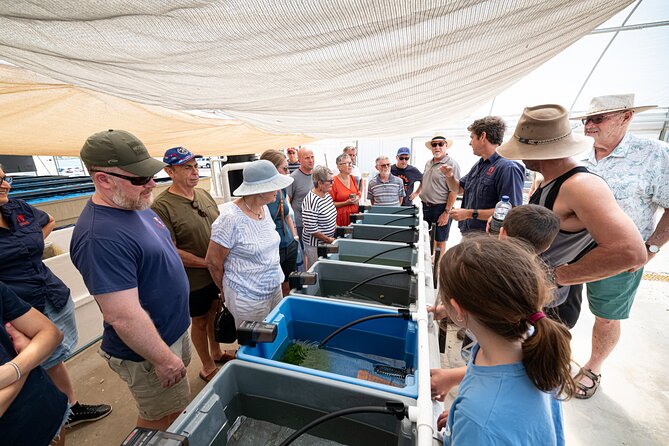
The guide matters on a tour built around small details. The available guide names include Megan, Indie, and Nyki, and the experience can change slightly depending on who leads the session.
Megan is specifically noted for making the tour informative and welcoming. Indie has led several tours, including sessions focused on the many coral types in the tanks. Nyki has also guided the experience, with attention to both the displays and the practical workings of the farm.
You should expect a guide-led hour rather than a self-guided walk. That is useful because coral can be difficult to understand without context. A guide can point out differences you might overlook and explain what you are seeing in plain terms.
One practical note is that the farm can be noisy because it is a working facility. One account described a guide’s voice as loud at the start, but at a useful volume among the equipment. That is not a serious flaw, but it helps set expectations. You are visiting an operating aquaculture farm, not a silent gallery.
The group limit is 16 people. That is small enough to keep the tour focused, though your ability to stand closest to a tank may depend on the group and the space available. The limited size should also give you a better chance to hear the explanations and ask questions.
More Farm Tours in Australia:
- Hidden Gems: Boutique Full-Day Wine, Farm & Lunch Tour
★ 5.0 · 881 reviews - Melbourne: Yarra Valley Wine, Choc, Farm Fresh, Gin Tour
★ 4.9 · 258 reviews - 3- Hour Wine and Harvest the Hunter Horse Tour in Pokolbin
★ 5.0 · 165 reviews - Experience Coffin Bay Oyster Farm and Bay Tour
★ 5.0 · 161 reviews
Taking better coral photographs
The tour includes a special lens filter that fits over a phone camera. You borrow it for the duration of the visit, then return it afterward.
This is a thoughtful inclusion. Aquarium lighting can make coral colors look dull, washed out, or different from what you see with your eyes. The filter is intended to help your phone capture those colors more accurately.
I would still treat the photo feature as an extra, not the main reason to go. You will get more from the tour if you first watch the feeding, listen to the explanations, and compare the tanks. Then use the filter to record a few favorite coral forms or fish.
Because the farm has different lighting in its indoor and outdoor tanks, you may notice a clear change in how the coral appears from one area to the next. That makes the photography element more interesting than simply taking the same picture over and over.
A good choice for families and reef fans
This tour suits anyone who wants to understand coral without committing to an ocean excursion. Marine enthusiasts will appreciate the number of species and the chance to see cultivation work. Nature lovers will get a clear look at the living systems behind reef conservation.
It is also a good family option. Children can watch fish, compare unusual coral shapes, and take part in the visual side of the experience. Coloring tables are available on the deck while you wait, which is a useful touch for younger children.
The tour is especially well suited to curious visitors who ask how things work. You are not just shown a finished reef scene. You learn about growth, feeding, propagation, and preservation.
The stated physical requirement is moderate fitness. You should be comfortable moving around a working farm and standing for the tour. Service animals are allowed. No other specific accessibility details are provided, so contact the operator before booking if you need particular assistance.
Is $22.95 good value?
At $22.95 per person, this is a reasonably priced one-hour attraction, particularly because admission, a guided explanation, live demonstrations, and the phone filter are included.
The value depends on what you want from a marine experience. If you are looking for open-water swimming, a reef cruise, or a full-day wildlife outing, this is not a substitute. It is a short land-based visit with a clear educational focus.
If you are already in the Bundaberg area, the price is easier to justify. You get access to a specialist coral facility, a guide, and a close look at species you may not otherwise see. The coral-farm setting also offers something different from a standard public aquarium.
The small group limit adds value, since the experience is not designed for a large crowd moving quickly past tanks. Still, keep the duration in mind. At about an hour to an hour and 15 minutes, this is a focused visit, not a full morning attraction.
Plan around the 10am start
The scheduled start is 10am, and the farm’s main tour time is described as one tour per day. That makes advance booking important. You should not assume you can arrive later and join another session.
The experience is booked about nine days ahead on average, which suggests that some planning is sensible, particularly during busy periods. Confirmation is provided when you book.
A free cancellation policy applies if you cancel at least 24 hours before the start time. Cancellations made within 24 hours are not refunded, and changes inside that period are not accepted. The cut-off follows local Queensland time.
Since the tour ends where it begins, it is easy to combine with another Bundaberg-area plan. Just leave enough time for the possible 75-minute duration, plus your drive and parking arrangements.
What to bring and what to expect
Keep your preparation simple:
- Wear closed-in, non-slip shoes.
- Allow up to 75 minutes for the full visit.
- Arrive for the 10am start.
- Bring a phone if you want to use the supplied lens filter.
- Expect both indoor and outdoor tank areas.
- Be ready for wet floors and the sounds of a working farm.
- Book ahead because places are limited and the tour schedule is fixed.
You do not need to bring special reef gear. This is a land-based experience, so there is no snorkeling or diving equipment involved.
The phone filter is loaned for the tour, not given to you as a souvenir. Use it carefully and return it before leaving.
Who should book this experience?
I would recommend it to anyone with a real interest in coral, reef protection, or marine farming. It is also a smart choice for families who want an educational activity that remains visual and fairly short.
The tour may be less satisfying if you want a large visitor center with many exhibits, a long guided walk, or direct access to the Great Barrier Reef. The working-farm setting is part of its appeal, but it also means wet floors, equipment noise, and a more practical presentation.
For a first visit to the Bundaberg area, I would treat this as a specialist attraction. It offers a look at the care and research that happen behind the reef experience, and it can add meaning to any later visit to the coast.
Should you book the coral farm tour?
Yes, if you want a close look at living coral and prefer a short, guided experience on land. The combination of more than 200 coral species, feeding and propagation demonstrations, fish breeding, and reef-restoration research gives the tour real substance for $22.95.
Book it if you enjoy learning how marine life is cared for, if you are visiting with children who like fish and color, or if you want an unusual Bundaberg-area activity. Skip it only if your priority is swimming or boating on the reef itself.
Wear safe shoes, reserve the 10am session ahead of time, and allow the full 75 minutes. With those details handled, Monsoon Aquatics offers a focused and worthwhile look at Australia’s coral-farming work.
FAQ
Where does the coral farm tour start?
The tour starts at Monsoon Aquatics, 145 Buss Street, Burnett Heads, Queensland 4670, Australia.
What time does the tour begin?
The tour starts at 10am.
How long does the experience last?
The guided tour is described as one hour, with the approximate total duration listed as one hour and 15 minutes.
How much does the tour cost?
The price is $22.95 per person.
How many people can join the tour?
The maximum group size is 16 people.
What coral and marine life will I see?
You can see more than 200 coral species sourced from around Australia, along with fish including different clownfish varieties.
Is the tour suitable in wet weather?
Yes. Tours run in all weather. You should wear closed-in, non-slip shoes because the floors may be wet.
Can I cancel for a refund?
Yes, if you cancel at least 24 hours before the experience start time. Cancellations made less than 24 hours before the start are not refunded.
Just added around Australia
- Wonga: Guided Fishing, Farming and Tasting Tour★ 5.0 · 2 reviews
- Alpaca Farm Tours with Toffeemont★ 5.0 · 8 reviews
- Macadamias Australia Orchard Tour in Bundaberg★ 5.0 · 15 reviews
- Hook-A-Barra Fishing and Farm Activity★ 5.0 · 47 reviews
- Oyster Farm Tour with Hotel Pick-up and return from Port Lincoln★ 5.0 · 11 reviews
- Group Live Pearl Harvest Experience – Perth★ 5.0 · 2 reviews
- Newcastle: Country Towns River & Farm Tour with BBQ★ 5.0 · 3 reviews
- Honey Farm Tour. Morning Tea. Guided Tasting★ 5.0 · 3 reviews
1-Hour Experiences, compared.

Guided reindeer farm visit and one hour sledge safari
Read our review →
1 Hour Private Quad Biking with 30 minutes Camel Farm Visit
Read our review →
1-Hour Horse Riding Tour at Palomino Ranch Near Tbilisi
Read our review →
Lists this farm appears in