
Reviewed · SPAIN FARM TOURS
Canarian farmhouse in Mogan, mango farm and vermouth factory
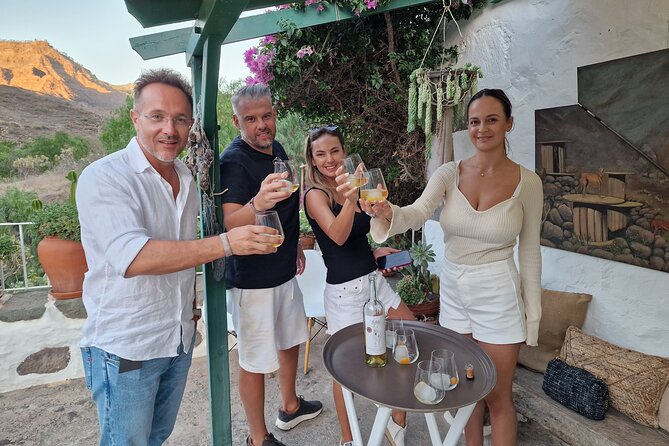
Gran Canaria’s sunny south has plenty of beaches, but this experience takes you a few steps inland to a 200-year-old Canarian farmhouse in Pueblo de Mogán. You’ll see traditional buildings, a cactus garden, tropical fruit trees, and the small operation behind Lolito, described as the first vermouth made in Gran Canaria.
I like the relaxed scale and the direct connection between farm, kitchen, and drink. I also like that you get more than a tasting: the walk explains how mangoes, avocados, soursops, and tunera cactus fit into Canarian food. The main drawback is practical: the path down to the mango plantation is not suitable for baby carriages or people with disabilities.
Key points
- A restored farmhouse: Explore a traditional Canarian complex dating back about 200 years.
- Fruit grown on site: See mangoes, avocados, soursops, and cactus, with an explanation of their culinary uses.
- Lolito vermouth tasting: Try both red and white vermouth made at the farm.
- A distinctive dessert: Sample cold mango and yogurt soup with chocolate cubes when that option is selected.
- Small-group setting: The experience is limited to 15 people, which suits a calm, personal visit.
- Easy location near Puerto de Mogán: The farmhouse is about 10 minutes from Puerto de Mogán by the description provided, with public transportation nearby.
A 200-year-old farmhouse in Pueblo de Mogán
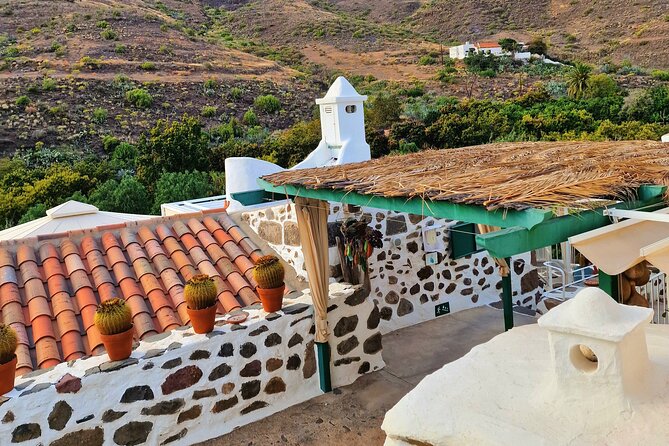
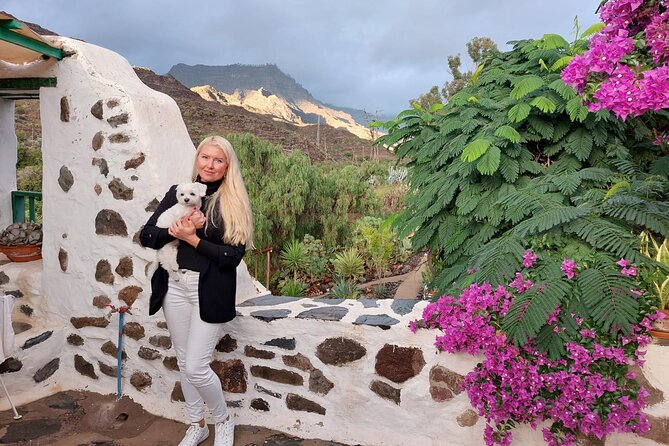
The appeal here begins with the setting. Instead of meeting in a busy resort or large attraction, you arrive at Los Pasitos, 2, in Mogán, where an old Canarian farmhouse has been carefully restored as a working property.
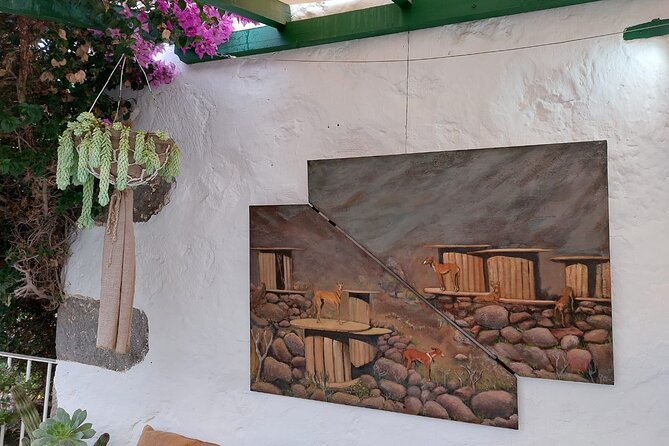
The buildings follow traditional Canarian architectural forms. That matters because the farmhouse gives you a feel for how rural homes in the islands were arranged and built, rather than presenting only a polished tasting room. You can look around the complex, see the old structures, and connect the food and drink to the place where they are produced.
I like this opening because it gives the visit a clear sense of place. The house is not just a backdrop for lunch. It is part of the story, and the restored buildings help you understand the setting before you walk through the garden and plantation.
The experience is guided by the owner, whose enthusiasm for both the restaurant and the farm comes through clearly in the way the visit is presented. No guide name is provided, but you should expect a personal introduction rather than a large commercial tour.
More Farm Tours in Spain:
- Montserrat Lunch & Wine at Farmhouse Small Group from Barcelona
★ 5.0 · 2,368 reviews - Barcelona: Montserrat Visit & Lunch at Farmhouse Small Group
★ 4.7 · 1,313 reviews - Montserrat Full Day Tour with Farmhouse Lunch and Winery Visit
★ 5.0 · 1,068 reviews
The cactus garden and Canarian plants
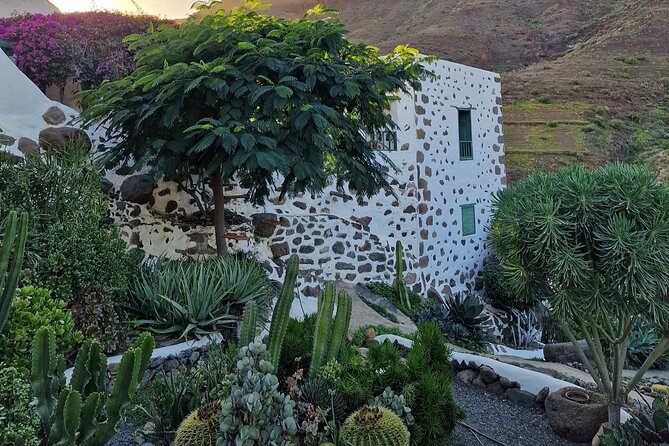
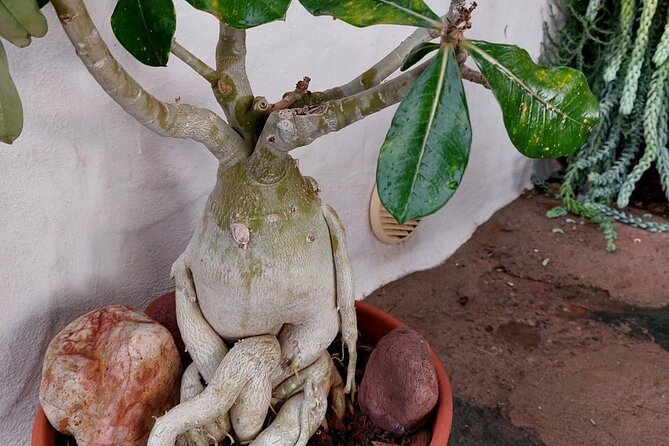
The next part of the visit takes you into the cactus garden. Cacti are not treated as decoration alone here. You learn about tunera, the local term for prickly pear cactus, and how this plant is used in Canarian cooking.
This is one of the more useful parts of the tour because it adds context to a plant you may see across the islands. Gran Canaria’s dry climate makes cacti a natural part of the scenery, but the visit shows you their practical role as well.
The garden also sets up the farm’s wider theme: food that grows in the local climate. You are not simply tasting imported tropical fruit in a restaurant. You are seeing how some of it is cultivated and then used in the kitchen.
The garden visit should be easy for most people, though the full route later includes a downhill section to the mango plantation. If you have limited mobility, ask about the exact route before booking. The experience is specifically not suitable for wheelchair users or baby carriages on the way down to the plantation.
Mangoes, avocados, and soursops growing on the farm
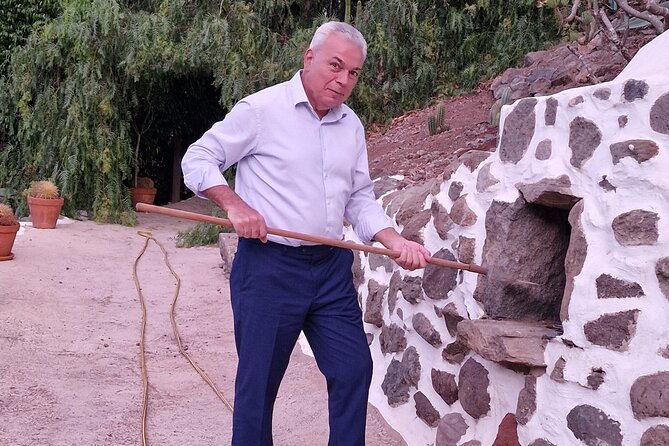
The plantation is the most distinctive part of the visit. You see mangoes, avocados, and soursops growing on the property, then hear how these fruits are used in Canarian cuisine.
For you, the value is in seeing the ingredients before they reach the plate. Mango is familiar to most people, but soursop may be less familiar. The experience gives you a chance to connect the fruit’s appearance and growing conditions with the flavors served later.
The farm visit also makes the dessert more meaningful. A mango dish can be pleasant anywhere, but tasting mango after seeing the trees gives the food a stronger local link. I like that the explanation focuses on use, not just identification. You learn what the fruit is and why it matters in the kitchen.
The route is short overall, with the full experience lasting about two hours, but the plantation access is an important consideration. The information provided does not describe the path in detail, so you should not assume it is fully level or paved. Anyone with mobility concerns should contact the provider before reserving.
Lolito, Gran Canaria’s own vermouth
The tasting centers on Lolito, made at the farmhouse and described as the first vermouth produced in Gran Canaria. You taste both the red and white versions.
That is a strong reason to choose this outing over a standard farm walk. The vermouth gives you something specific to look for, and the tasting ties the agricultural setting to a local product. You are not only looking at plants. You are sampling what the owners make from their own food and drink culture.
The two versions also make the tasting more interesting than a single sample. Red and white vermouth offer a simple comparison, and the host can explain the difference in the context of the farm’s production. The available information does not give tasting notes or alcohol content, so you should expect an introduction and sample rather than a formal wine-school lesson.
Water is included, and toilet facilities are available. The food and drink portion is presented as the red and white Lolito vermouth, with the mango dessert available when that option is selected. Check the exact option at booking if the dessert is important to you.
Same fields, a different sort of morning:
- Montserrat & Winery Visit Tour with Traditional Farmhouse Lunch
★ 4.5 · 1,035 reviews - Ría de Arousa: Boat Ride to Mussel Farm with Tasting
★ 4.7 · 845 reviews - Valencia: Orange Farm and Orchard Trip with Tastings
★ 4.9 · 702 reviews - La Herradura Coffee Farm: tour in Europe’s only plantation
★ 4.8 · 430 reviews
Cold mango and yogurt soup with chocolate cubes
The dessert is called mango gazpachuelo and is described as a cold mango and yogurt soup with chocolate cubes. The name may sound unusual if you expect a conventional cake or pastry, but that is part of the fun.
The dish uses the farm’s mango in a light, chilled format. The yogurt gives it a creamy edge, while the chocolate adds a contrasting note. It is a small but memorable way to finish the visit, and it gives you a better idea of how the property’s fruit moves from plantation to table.
I would choose the dessert option if you enjoy trying dishes that are tied closely to the place. If you want only the farmhouse tour and vermouth tasting, check your reservation details carefully, since the dessert is noted as available if the option is selected.
The experience does not include a full dinner. If you want a larger meal, the associated restaurant offers dinner reservations at an additional cost of about €30 to €50 per person. That can turn the short visit into a longer food-focused stop, but dinner is an extra plan, not part of the basic price.
What $69.79 means in practical terms
The price is $69.79 per person for about two hours. That is not a budget attraction, so the value depends on what you want from the visit.
You are paying for a small, hosted experience that combines several elements: a historic farmhouse, a garden, a plantation walk, an explanation of local fruit, two vermouth tastings, and a dessert option. If you would otherwise pay separately for a farm tour and a tasting, the package makes more sense.
The price is harder to justify if you mainly want a quick drink or a large meal. This is not a full restaurant experience, and dinner costs extra. The visit works best when you value the setting and the personal connection to the produce, not simply the amount of food served.
The group is capped at 15 people. That limit should help keep the visit quieter and make it easier to hear the owner and ask questions. It also means you should not expect the scale or structure of a large organized attraction. The pace is likely to feel more personal and less rushed, though the exact group size may vary.
A calm break from Puerto de Mogán
The farmhouse is described as about 10 minutes from Puerto de Mogán, making it a sensible add-on if you are staying near the port or spending part of the day there. The meeting point is Los Pasitos, 2, 35140 Mogán, and the activity ends back at the same location.
Public transportation is nearby, but no transfer from a hotel is included in the information provided. You need to arrange your own way to the meeting point and allow time to find the farmhouse.
The short duration is useful. At roughly two hours, this can fit into a half-day without taking over your schedule. You can pair it with time in Puerto de Mogán or plan dinner afterward, though dinner at the associated restaurant should be reserved separately.
I like the fact that the experience does not try to fill an entire day with bus travel and multiple stops. You spend the time in one place, with the house, plants, drinks, and food connected to one another.
Who will enjoy this experience most

I would recommend this for you if you enjoy food, small farms, local products, and traditional buildings. It is especially appealing if you have already seen plenty of beaches and resort streets and want a quieter change of pace.
It also suits anyone curious about how tropical fruit is grown in Gran Canaria. The visit gives you more than a photo opportunity because the fruit is discussed in relation to Canarian cuisine.
Couples and small groups should find the two-hour format easy to fit into a holiday. The limited group size may also appeal to you if large coach excursions are not your style.
Families should check the route carefully. Service animals are allowed, and most people can participate, but the downhill path to the mango plantation is not suitable for baby carriages. The access note also rules out the plantation section for people with disabilities, so contact the provider before booking if you need an adapted route.
This is not the right choice if you want a long meal, a large winery-style production tour, or a full-day cultural excursion. It is a compact farm and tasting visit with a strong personal element.
Booking details and cancellation
You receive confirmation at the time of booking, and the activity is offered in English. A mobile ticket is accepted, which keeps the arrival process simple.
You can cancel for a full refund up to 24 hours before the local start time. Cancellations or changes made less than 24 hours before the start are not accepted for a refund.
The tour begins and ends at Los Pasitos, 2, in Mogán. Since no hotel pickup is included, plan your own transport and check the meeting point before setting out.
Should you book the Mogán farmhouse visit?
Book this experience if you want an intimate taste of rural Gran Canaria, especially if the combination of farm-grown fruit and locally made vermouth appeals to you. The restored house, cactus garden, plantation, and Lolito tasting give the visit a clear identity.
The strongest reasons to go are the personal setting, the chance to see mangoes and other fruit growing, and the unusual cold mango dessert. The main reasons to hesitate are the price, the short duration, and the plantation access for anyone using a wheelchair or baby carriage.
For a relaxed two-hour stop near Puerto de Mogán, I think it offers good value when you care about local food and place. If you want a full dinner or a broad island tour, spend your money elsewhere and visit this farmhouse only if you can make the tasting and agricultural focus part of your day.
FAQ
Where does the experience begin?
It begins at Los Pasitos, 2, 35140 Mogán, Las Palmas, Spain.
Where does the experience end?
It ends back at the meeting point at Los Pasitos, 2.
How long does the visit last?
The experience lasts about two hours.
How much does the experience cost?
The listed price is $69.79 per person.
Is the experience offered in English?
Yes. The experience is offered in English.
What can I see at the farmhouse?
You can see a restored Canarian farmhouse dating back about 200 years, traditional buildings, and a cactus garden.
Which fruits grow on the farm?
The farm grows mangoes, avocados, and soursops. You also learn about the use of tunera cactus in Canarian cuisine.
What drinks are included?
The tasting includes red and white Lolito vermouth. The farm describes Lolito as the first vermouth made in Gran Canaria.
Is dessert included?
A cold mango and yogurt soup with chocolate cubes is available when the dessert option is selected. Check your chosen option at booking.
Is dinner included?
No. Dinner is not included. A separate restaurant reservation may be available, with dinner costing about €30 to €50 per person.
Is the route suitable for baby carriages and people with disabilities?
The route down to the mango plantation is not suitable for baby carriages or people with disabilities. Most other participants can take part, and service animals are allowed.
How many people can join the experience?
The maximum group size is 15 people.
Is public transportation available nearby?
Yes. The meeting point is near public transportation.
Can I cancel for a refund?
Yes. You can receive a full refund if you cancel at least 24 hours before the local start time. Changes or cancellations made less than 24 hours before the start are not accepted for a refund.
Just added around Spain
- Vigo: Bay of San Simón Mussel Farming Tour★ 5.0 · 6 reviews
- Animal farm park with free hotel pickup★ 5.0 · 2 reviews
- Olive Oil Farm Tour with Tasting from Seville★ 4.5 · 61 reviews
- From Seville: Pig Farm private day tour and old villages visit★ 4.5 · 4 reviews
- Bull Breeding Farm: Guided Half-Day Tour from Seville★ 4.5 · 24 reviews
- ” Basque Farm House & Cider house” tour + meal from San Sebastian★ 5.0 · 9 reviews
- Fuerteventura Villages Caves and Farm Tour with Lunch from North★ 3.0 · 9 reviews
- Menorca: Cheesemaking and Farm-Fresh Product Tasting★ 5.0 · 29 reviews
Spain Farm Tours, compared.

Montserrat Lunch & Wine at Farmhouse Small Group from Barcelona
Read our review →
Montserrat Visit & Lunch at Farmhouse Small Group
Read our review →
Montserrat Full Day Tour with Farmhouse Lunch and Winery Visit
Read our review →
Montserrat & Winery Visit Tour with Traditional Farmhouse Lunch
Read our review →
Ría de Arousa: Boat Ride to Mussel Farm with Tasting
Read our review →
La Herradura Coffee Farm: tour in Europe’s only plantation
Read our review →
Alicante : E-Bike Coast Tour, Roman Fish Farm and Snorkeling
Read our review →Lists this farm appears in