
Reviewed · COOKING CLASSES
Farming & Cooking Class in Hoi An – Small Group Tour
The best part of this Hoi An cooking class is that the meal begins long before you enter the kitchen. You visit a local market, help work the soil at Tra Que Vegetable Village, gather ingredients, and then turn them into lunch. Min, Uyen, and Jessica are among the hosts associated with the class, and the teaching is designed to be hands-on rather than a cooking demonstration from the sidelines.
I like the link between farm and table, because you see herbs and vegetables growing before you use them. I also like the mix of activities: a market visit, a bicycle ride through rice fields, traditional farming, a medicinal foot massage, and roughly two hours of cooking. The main consideration is pace. Five hours is a substantial half-day, and the farming work, cycling, and kitchen time may feel active in hot or wet weather.
Key points to know before booking
- Market shopping comes first: You help select produce and learn how local herbs, vegetables, and fruit are used.
- Tra Que is the heart of the day: You hoe soil, collect seaweed, transplant seedlings, and water crops with a local farmer.
- Cooking is genuinely hands-on: You chop, prepare, cook, and flip dishes rather than simply watching a chef.
- Four signature dishes are included: Green papaya salad, banh xeo, spring rolls, and fish in a clay pot form the main menu.
- A herbal foot massage breaks up the activity: It follows the farm work and uses traditional medicinal herbs.
- The $38 price covers the main costs: Lunch, transport, an English speaking guide or chef, water, farming, and the massage are included.
From Hoi An market to a Tra Que farm kitchen
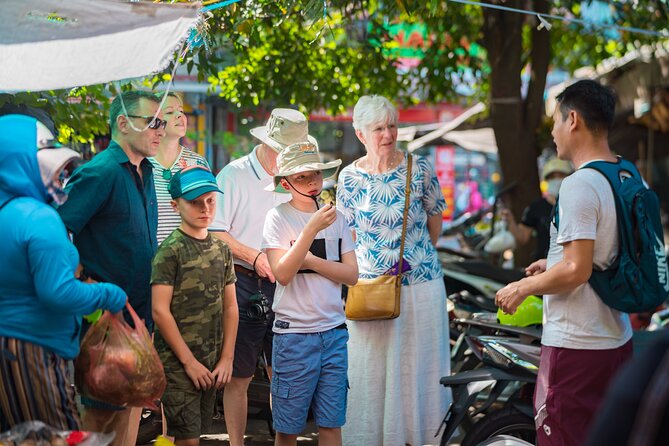
This experience gives you a useful look at how food moves through daily life in Hoi An. Instead of arriving at a kitchen and receiving a fixed menu, you begin at a local market with your guide. You see the produce that will shape the meal and get an explanation of the vegetables, fruit, and herbs used in Vietnamese cooking.
That opening matters. Vietnamese food depends heavily on fresh greens, herbs, texture, and balance. A market visit helps you understand why a handful of herbs or a particular papaya matters to the finished dish. It also gives you a chance to ask questions before the cooking begins.
The exact market routine may vary with the day and the available produce. The important point is that the ingredients are connected to the meal, not presented as anonymous items already waiting on a counter. If you enjoy food tours but want more than a tasting walk, this is a strong start.
After the market, the route continues toward Tra Que Vegetable Village. The tour information describes cycling through rice fields and quiet villages, followed by a walk through the garden. Private transportation is included, but cycling is also part of the described route, so ask about the day’s transport arrangement if you are not comfortable on a bicycle.
More Cooking Classes in Vietnam:
- Cocolocal Farm Cooking Class with market tour and basket boat
★ 5.0 · 231 reviews - Farm-To-Table Healthy Cooking Class in Ho Chi Minh City
★ 5.0 · 79 reviews - Rural Hoi An Cycling, Cooking Class at Organic Farm
★ 5.0 · 72 reviews
Why Tra Que Vegetable Village gives the class its character
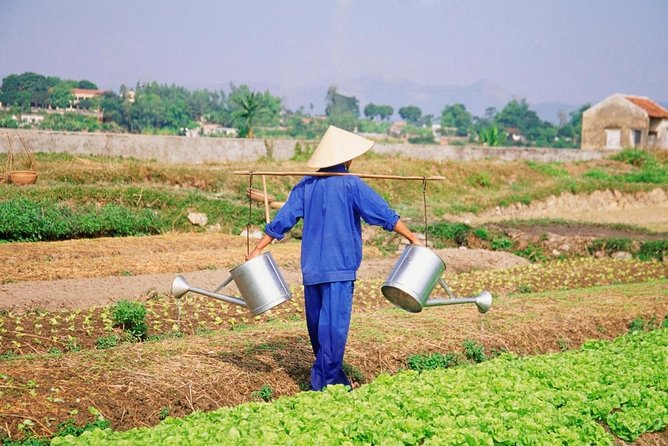
Tra Que is not just a backdrop for a cooking lesson. It is where you take part in simple farming tasks using traditional methods. You may hoe the soil, collect seaweed, transplant seedlings, and water the crops. These jobs are physical, but they are also short, practical ways to see how local vegetables are grown.
I like this section because it keeps the class tied to place. You do not only learn that Vietnamese cooks use herbs and greens. You see those plants in the garden, walk among them, and learn how farming supports the food served in the kitchen.
The garden walk also gives you time to identify culinary herbs and vegetables before they are prepared. That can be more useful than a long explanation at a cooking station. You are likely to remember an herb more easily after seeing it growing and then tasting it at lunch.
Be realistic about the farming portion. This is an introductory activity, not a full day of agricultural work. Still, it requires bending, handling soil, and spending time outside. Wear clothing and shoes that can cope with dirt and water, especially during warm or rainy weather. The tour depends on good conditions and may be moved or canceled if weather makes the activity impractical.
The foot massage is a welcome pause
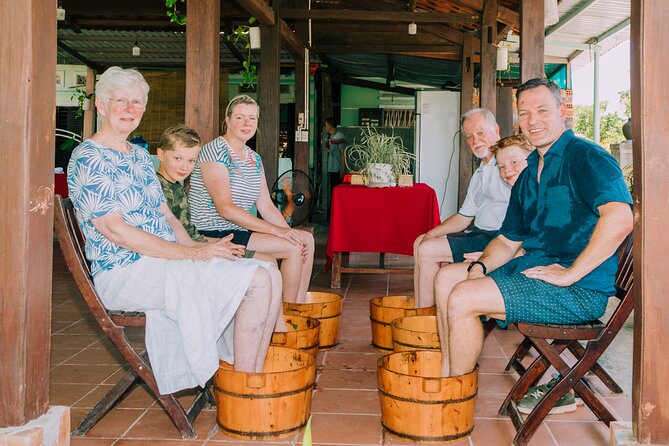
After the farm work, you take a break with a traditional foot massage using medicinal herbs. This is a useful design choice. The day includes cycling, walking, gardening, and kitchen work, so the massage gives you a quiet pause before the cooking begins.
The massage is included in the price, rather than offered as an extra service at the end. It also adds a cultural element without taking over the day. You get a glimpse of a traditional health treatment while giving your feet time to recover.
Do not book this experience expecting a spa afternoon. The massage is one part of a five hour activity, not the central attraction. Its value is in the timing: it breaks up the active morning or afternoon and helps the day feel less like a race from one task to the next.
A two hour cooking class with food you can repeat at home
The cooking portion lasts about two hours and focuses on dishes that are recognizable, practical, and strongly tied to Vietnamese home cooking. The menu includes:
- Green papaya salad
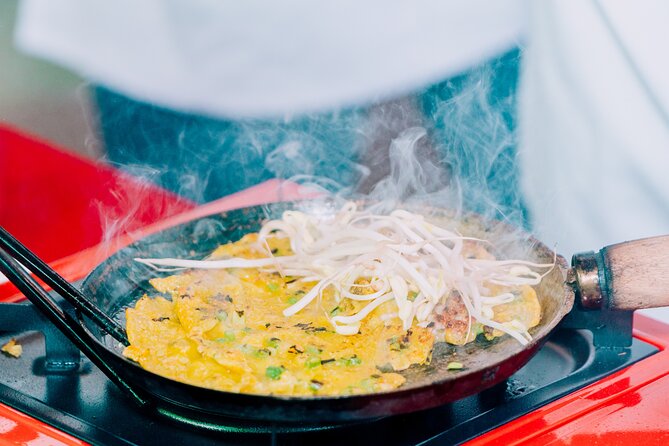
- Banh xeo, a crisp Vietnamese pancake
- Spring rolls
- Fish cooked in a clay pot
You prepare the food yourself after the chef demonstrates the techniques. That distinction matters. You are not simply watching ingredients being chopped and then receiving a finished plate. The class is hands-on, with opportunities to chop, mix, roll, cook, and flip your own pancake.
The banh xeo is likely to be the most theatrical dish. Getting the pancake crisp and turning it without breaking it takes a little practice. Spring rolls are also useful to learn because the method can be repeated at home, provided you can find suitable wrappers and fresh ingredients.
The papaya salad teaches balance rather than complicated technique. You work with fresh produce, herbs, and seasoning to create a dish that is crisp, bright, and sharply flavored. The fish in a clay pot gives the menu a warmer, more substantial dish and shows a different side of Vietnamese cooking.
The value here is not only the meal. You leave with recipes and methods that can be used at home. The dishes are varied enough to teach several basic skills, including knife work, wrapping, seasoning, pan cooking, and slow preparation in a clay pot.
More Workshops in Vietnam:
- Coffee Farm Tour with Roasting & Tasting Workshop – Da Lat
★ 5.0 · 126 reviews - Scented Candle Workshop in Twin Beans Farm Da Lat
★ 5.0 · 70 reviews - Unique farm to Table cooking class in Saigon
★ 5.0 · 69 reviews - Cooking Class Hoi An – Organic Garden – Farming Tour-Handicrafts
★ 5.0 · 56 reviews
Local hosts make a difference
The class is led by an English speaking guide or local chef, and several names appear in the experience details. Min is associated with the market visit and cooking instruction. Uyen is described as a guide at the vegetable village, while Jessica is connected with hosting and teaching the class.
That human element is important because the day involves many small questions. You may want to know why one herb is chosen over another, how to keep a spring roll from splitting, or how Vietnamese cooks season fish. A local host can explain the food in its cultural setting instead of handing you a recipe sheet without context.
The teaching style appears designed to be friendly and personal. The activity is described as a private class with individualized instruction, yet the maximum group size is 15 people and the product is also called a small group tour. I would clarify the expected group size when booking if personal instruction is your main reason for choosing it.
A group of 15 is still manageable for a guided cooking activity, but it will not feel the same as a lesson for two or four people. The good news is that the class includes direct participation, so you have a task to perform rather than waiting through a long demonstration.
What the $38 price really covers
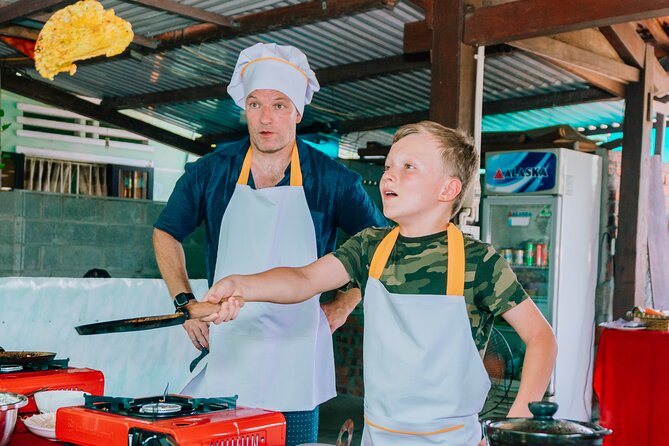
At $38 per person, this is a fair value for a five hour experience if you want a full activity rather than a meal alone. The price includes lunch, private transportation, an English speaking guide or local chef, bottled mineral water, farming with a local farmer, and the traditional foot massage.
The comparison is not simply $38 for a cooking lesson. You are paying for a market visit, transport, the farm experience, instruction, ingredients, a meal, water, and a massage. A shorter class focused only on recipes may cost less, but it will not offer the same range of activities.
The price is especially sensible for someone who wants a structured half-day outside central Hoi An. You do not need to arrange separate transport to Tra Que or work out how to connect a market visit with a cooking class. The main extras are personal expenses and insurance, which are not included.
Group discounts are available, and morning or afternoon departures give you some control over how the class fits around the rest of your Hoi An plans. Since the activity is booked an average of 21 days ahead, reserving early is sensible during busy periods.
Morning or afternoon: choosing the better departure
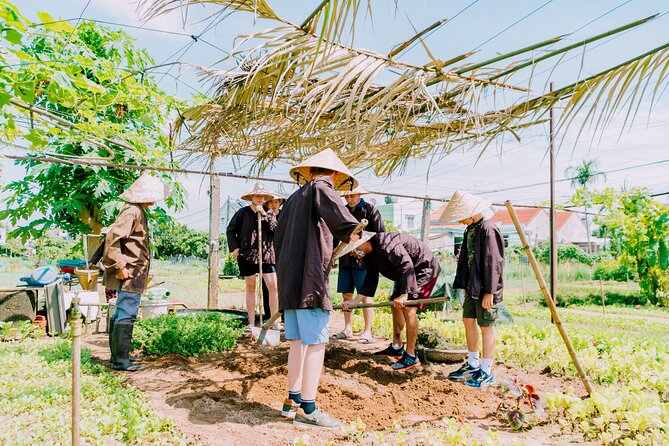
The morning option is a natural fit if you want the meal to serve as lunch. You can begin with the market, continue to the farm, take the massage break, and finish by eating what you prepared. That leaves the later part of the day open for Hoi An’s old town or another activity.
The afternoon option may suit you if you prefer a slower start or want to spend the morning exploring on your own. The meal will come later, so plan your earlier food intake accordingly. The core sequence remains the same: market, countryside route, garden, farming, massage, cooking, and eating.
Because the experience lasts about five hours, avoid placing another fixed tour too close to its expected finish. Farming, cooking, and transport do not always run to the minute, and you will enjoy the class more if you are not watching the clock.
Who will enjoy this experience most
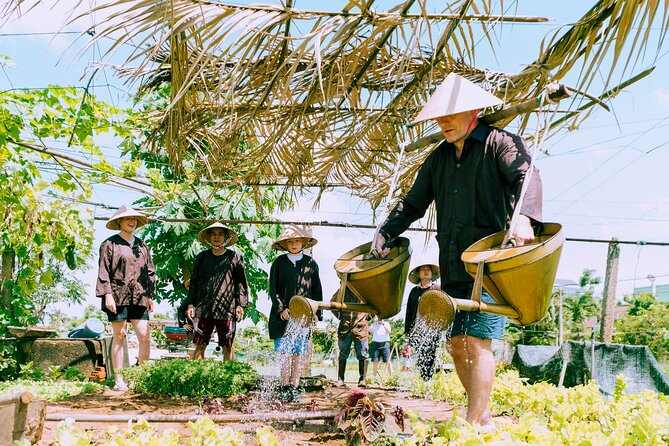
I would recommend this class to you if food is one of the main reasons you visit Vietnam and you want context around the dishes. It also suits couples, families, and small groups who like mixing light activity with a meal.
It is a good choice for cooks of different skill levels. Beginners get clear tasks and recipes, while more experienced home cooks can focus on Vietnamese seasoning, herbs, and cooking methods. The fact that you eat your own work makes the class feel rewarding even if your pancake is not perfectly shaped.
You should think twice if you dislike outdoor work, cycling, handling soil, or structured group activities. The class is not only about sitting at a kitchen counter. It asks you to move between several settings and take part in farm tasks before cooking.
Vegetarian and special diets can be requested, but you should state your needs in advance. The published menu includes fish in a clay pot, so do not assume the standard menu will suit you without an adjustment.
Practical details that affect your day
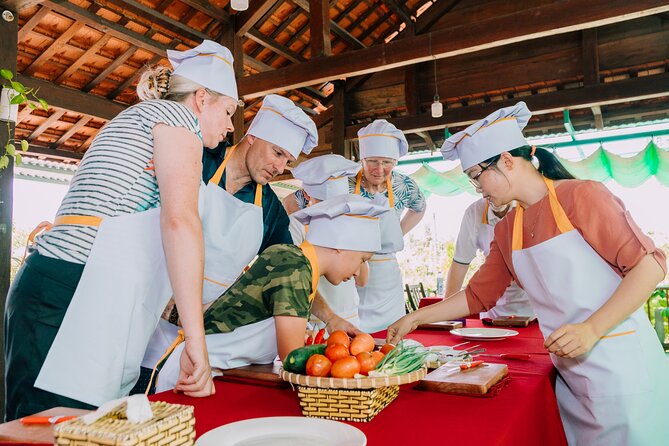
Pickup is offered, and private transportation is included. A local guide meets you at your hotel, which removes much of the usual uncertainty about reaching Tra Que. Mobile tickets are available, and confirmation is provided at booking.
The tour allows a maximum of 15 people. The description also presents the class as private and individualized, so ask for clarification if you require a fully private session rather than a small group setting.
Good weather is required. If conditions are poor, the operator offers another date or a full refund. The same applies if the minimum number of participants is not reached. For ordinary cancellations, you receive a full refund if you cancel at least 24 hours before the start time. Cancellations or changes inside that window are not refunded or accepted.
Bring comfortable clothing suitable for walking, cycling, gardening, and cooking. Since the activity includes water, soil, and food preparation, practical clothes are wiser than anything you need to keep spotless.
Should you book the Tra Que farming and cooking class?
Book it if you want Hoi An food presented as part of everyday life, from market produce to garden herbs to a meal you prepare yourself. The strongest feature is the complete chain: you see the ingredients, help grow them, learn the recipes, and eat the result.
I would choose this over a kitchen-only class if you have five hours available and like variety. The farming is simple, the massage is brief, and the cycling details may vary, but together they create a fuller picture of rural Hoi An.
Skip it if you want a fast, highly polished cooking demonstration or if outdoor activity is not your thing. For everyone else, $38 buys a well-filled half-day with food, transport, local instruction, and several experiences that are difficult to combine on your own.
FAQ
How long does the farming and cooking class last?
The experience lasts approximately five hours.
What dishes will I learn to prepare?
The class includes green papaya salad, banh xeo, spring rolls, and fish in a clay pot.
Is lunch included?
Yes. Lunch made during the class is included.
Does the tour include transportation?
Yes. Pickup is offered, and private transportation is included.
Is a foot massage part of the experience?
Yes. A traditional foot massage using medicinal herbs is included after the farming activities.
Can I request vegetarian food or a special diet?
Yes. Vegetarian meals and special diets can be requested.
How many people can join the tour?
The maximum group size is 15 people. The experience also describes the class as private with individualized instruction, so you should confirm the exact format when booking.
What happens if I need to cancel?
You can receive a full refund by canceling at least 24 hours before the start time. Cancellations or changes made less than 24 hours before the start time are not accepted for a refund.
Just added around Vietnam
- Hoi An: Cycling – Water Buffalo Riding Farming and Fishing★ 5.0 · 2 reviews
- Cycling, Water Buffalo Riding, Traditional Farming Life★ 5.0 · 10 reviews
- Hoi An Wet Rice Farming Tour-Basket Boat Tour Fishing-Lunch★ 4.1 · 11 reviews
- Hoi An Wet Rice Farming Tour Private Round Boat Fishing & Lunch★ 5.0 · 13 reviews
- From Hoi An: Cooking Class at Organic Farm★ 5.0 · 40 reviews
- Cooking Class Hoi An – Organic Garden – Farming Tour-Handicrafts★ 5.0 · 56 reviews
- Rural Cycle, Market Tour, Basket Boat & Organic Farm Cooking★ 5.0 · 64 reviews
- Dalat: MOTORBIKE TOUR TO PONGOUR FALLS- SILK- COFFEE FARM★ 4.9 · 52 reviews
Cooking Classes, compared.
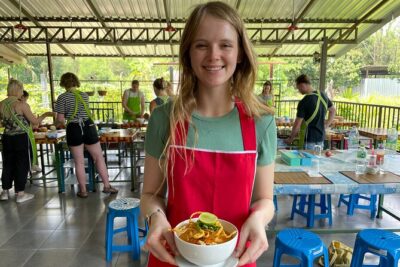
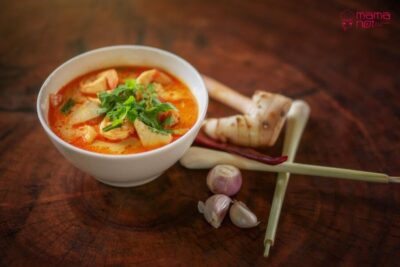
Half-Day Thai Cooking Class at Organic Farm in Chiang Mai
Read our review →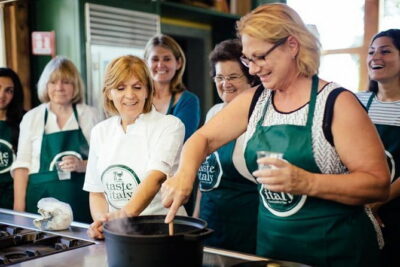
Cooking Class and Lunch at a Tuscan Farmhouse with Local Market Tour from Florence
Read our review →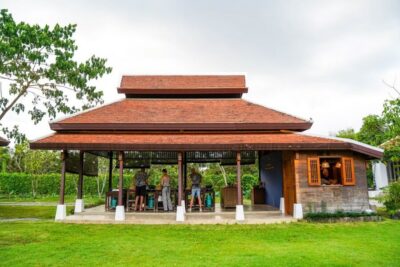
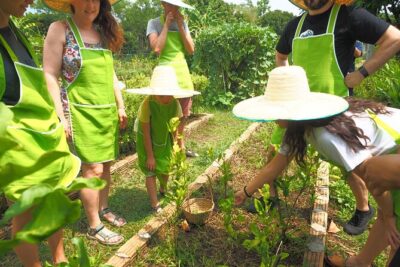
Authentic Cooking Class with Market & Farm Visit
Read our review →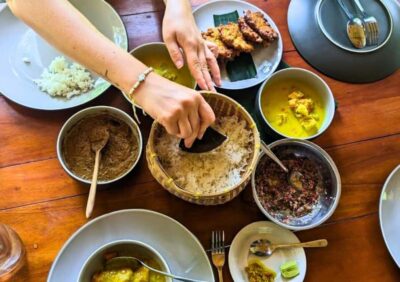
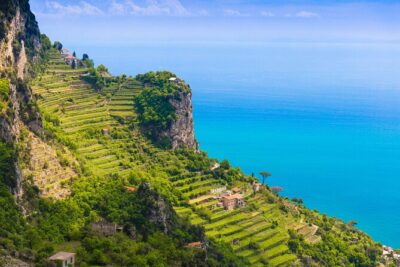
Hands-On Cooking Class & Farmhouse Tour on the Amalfi Coast
Read our review →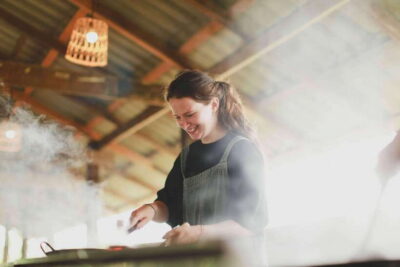
Lists this farm appears in