
Reviewed · INDONESIA FARM TOURS
Nusa Penida: Ecotourism, Seaweed Farming & East Tour
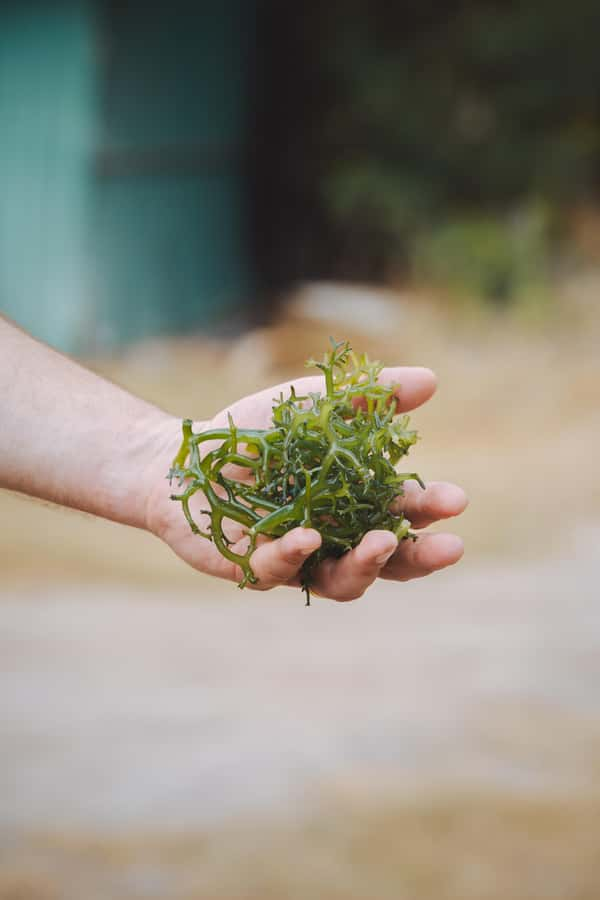
East Nusa Penida looks different when you see it through the working life of its coastal community. This six-hour outing combines hands-on seaweed farming with coral recovery work, local food, and East Penida’s big-ticket views. You are not simply driven from one photo stop to the next.
I like two things right away: you learn from people who actually work with seaweed, and your small group, limited to eight, leaves room for questions. Guide Festi has also shown a knack for shaping the day around the group, including a stop at Giri Putri Cave when time and route allowed.
The main tradeoff is pace. Six hours must cover farming, conservation, lunch, transport, and several sights, so this is not a long, slow beach day. Some parts may also depend on local conditions and the day’s timing.
Key points to know before booking
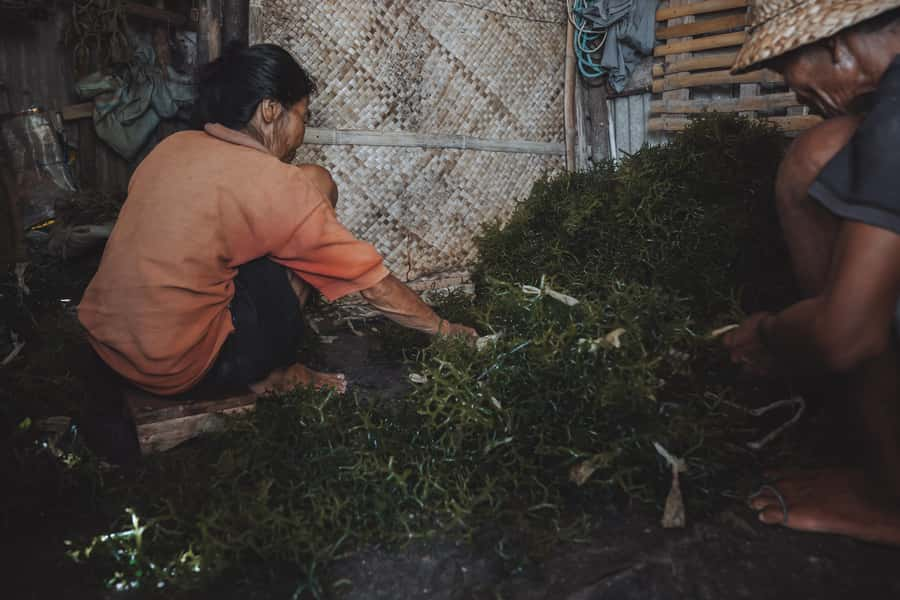
- Seaweed work is hands-on: You can help with tying and planting seaweed, then learn how local farmers prepare and use it.
- Coral recovery gives the visit purpose: The local team brings a 10-year conservation effort into the day, not just a short talk about nature.
- Festi is a standout guide: He has been praised for answering questions and making room for an extra Giri Putri Cave stop when possible.
- East Penida’s famous views are included: Atuh Beach, Diamond Beach, and the Treehouse add the classic scenery many people want to see.
- Lunch connects you with local life: Food, snacks, coffee, and tea are included, and one group was invited to eat at a seaweed farmer’s home.
- The small group matters: With no more than eight participants, the experience should feel more personal than a large sightseeing bus.
Why seaweed farming makes this tour different
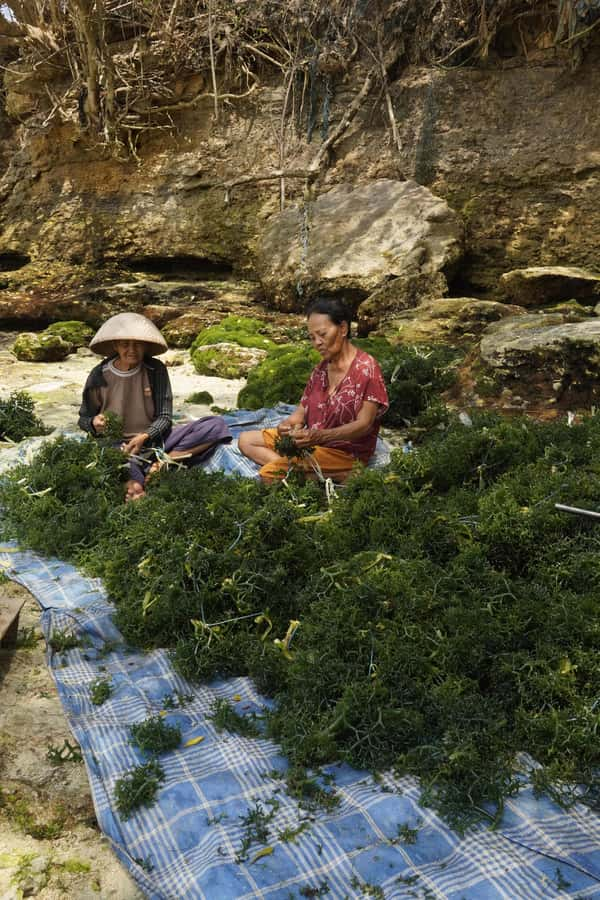
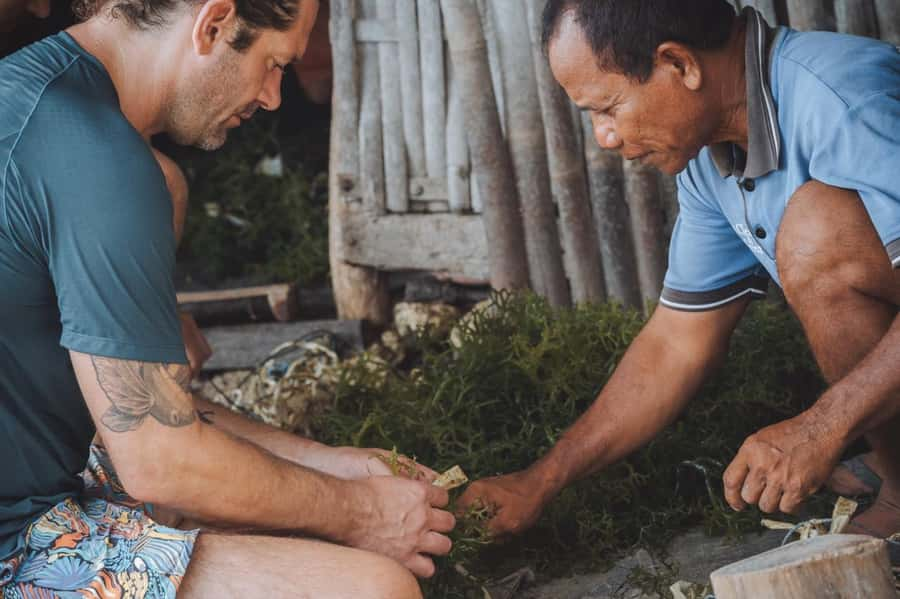
Most East Nusa Penida outings focus on cliffs, beaches, and photographs. This one adds the working coast. You learn how seaweed is grown and harvested, and you get to help with practical tasks such as tying and planting it.
That matters because seaweed is not treated here as a museum display. It supports real island livelihoods and offers an example of a coastal resource that can be grown with a lighter footprint than many other forms of ocean use. The tour connects that work to the daily life of the local community.
You may also learn about seaweed preparation and its uses. One participant described helping with algae preparation, which gives you a better sense of the full process than simply looking at a farm from a vehicle. The useful question is not only what seaweed is, but how it moves from the water into food, products, and household income.
The work can be simple, but that is the point. Tying seaweed lines or helping with planting gives you a direct role instead of leaving you as a spectator. If you prefer active cultural experiences to formal sightseeing, this is likely to be one of the strongest parts of the day.
More Farm Tours in Indonesia:
- Ubud: Balinese Cooking Class at an Organic Farm
★ 5.0 · 1,786 reviews - Balinese Farm Cooking Class by Pemulan Bali
★ 5.0 · 410 reviews - From Ubud: Authentic Bali Farm Cooking School & Organic Farm
★ 5.0 · 122 reviews
A 10-year conservation story at the coast
The Eco Tourism Nusa Penida team brings a decade of conservation work into the experience. The program includes coral recovery, so the environmental side goes beyond the seaweed farm.
You should expect conservationists to explain what they are doing and why it matters. The supplied details do not promise a specific coral restoration task for every participant, so think of this as a chance to learn about the work and, where offered, take part in suitable activities.
That distinction is useful. Sustainable tourism is often reduced to a slogan. Here, the conservation element is tied to a continuing local effort and the people carrying it out. You can ask direct questions about coral recovery, seaweed, and the pressures facing island communities.
I also like the balance between conservation and livelihood. The day does not present nature as something separate from local people. It shows how coastal care, farming, food, and income can sit in the same conversation.
Meeting the people behind the farm
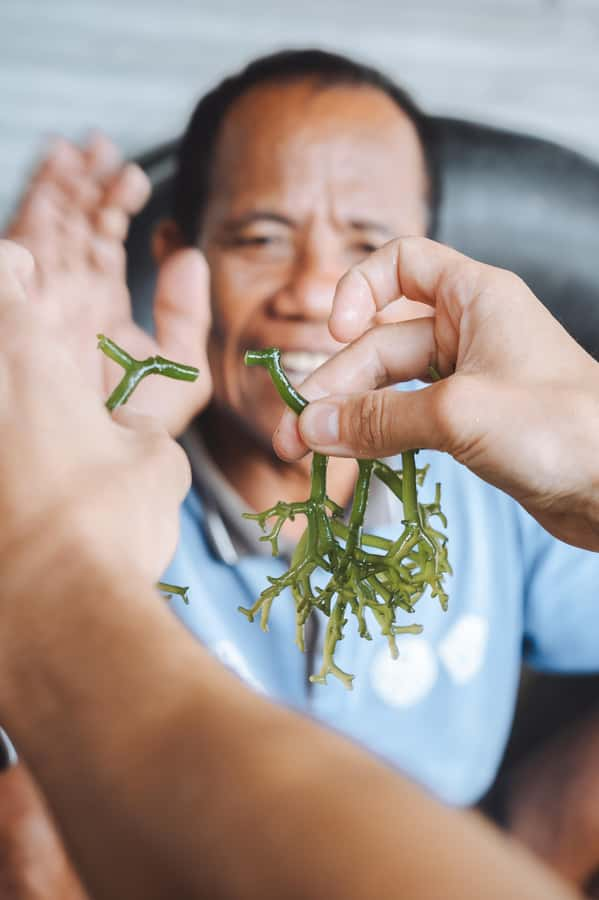
The local welcome is a central part of the outing. You meet seaweed farmers and see their work close up, rather than receiving a general lecture from someone passing through.
One seaweed farmer invited a group to eat lunch at his house. That kind of invitation cannot be guaranteed on every departure, but it shows the personal contact this tour can create. If lunch takes place in a local home, treat it as a social exchange rather than a restaurant meal with a view.
The included food also makes the price easier to assess. Lunch, snacks, coffee, and tea are covered, along with transport to the farms and sights and all taxes and fees. That saves you from building several small costs into the day.
Your guide is important here. Festi has been singled out for being helpful and for handling many questions clearly. That is valuable on a culture and conservation tour, where the quality of the explanation shapes much of what you take away.
The language choices are another practical advantage. Guiding is available in English, Indonesian, and German. You should select the language that lets you ask detailed questions comfortably, especially if farming and conservation are priorities.
Atuh Beach, Diamond Beach, and the Treehouse
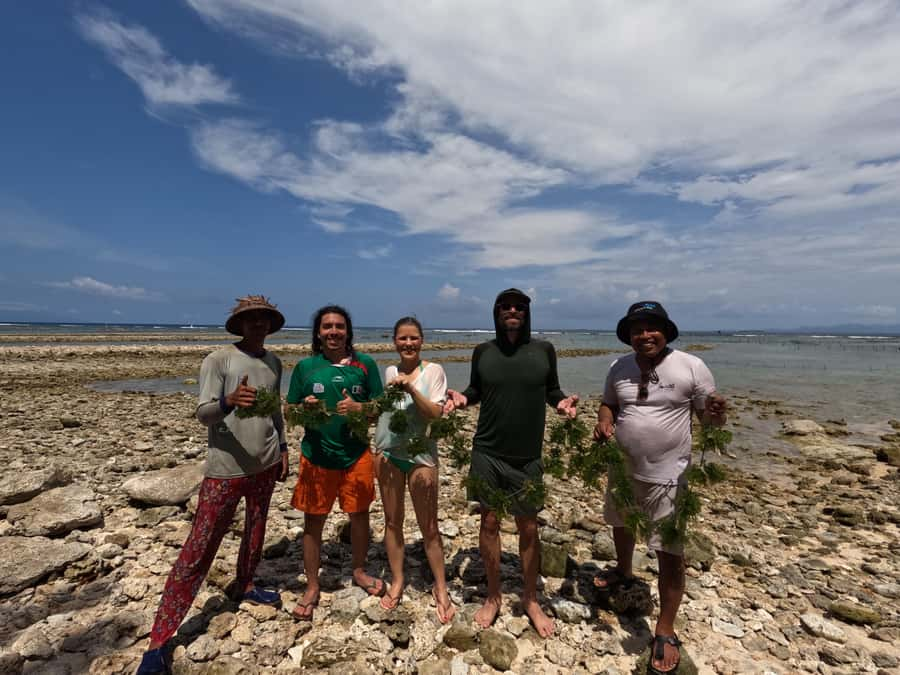
The day still includes the East Penida sights that make this part of the island popular. Atuh Beach and Diamond Beach offer the dramatic coastal views people often expect from Nusa Penida, while the famous Treehouse adds a familiar photo stop.
These places give the tour visual variety after the more hands-on farm visit. You move from work and community life to grand sea views and steep coastal scenery. That contrast is one of the outing’s strengths.
Atuh Beach and Diamond Beach are listed as part of the East Penida visit, but the supplied details do not promise a fixed amount of beach time or a specific order. Ask your guide early about the plan if one particular stop matters most to you.
The same applies to the Treehouse. It is included among the famous sights, but this is not described as a dedicated photography session. You may have time for views and pictures, but the six-hour schedule has several parts to fit together.
I would not book this tour solely for beach lounging. The coastal stops are important, but they share the day with farming, conservation, food, and transport. Book it because you want the scenery alongside a closer look at island life.
Same fields, a different sort of morning:
- Balinese Vegan Cooking Class with Fresh Harvesting & Garden Tour
★ 5.0 · 86 reviews - Balinese Cooking Class at Organic Farm
★ 5.0 · 51 reviews - Bali: Traditional Villages, Salt Farm & Tirta Gangga Tour
★ 4.9 · 31 reviews - Yogyakarta Cycling Tour Around the Villages and Fish Farm
★ 5.0 · 16 reviews
The possible Giri Putri Cave addition
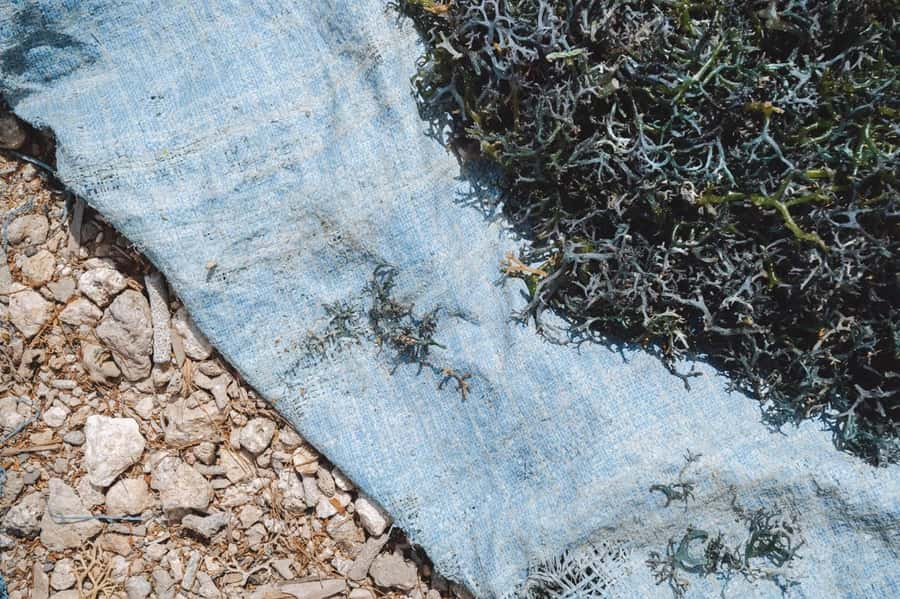
Giri Putri Cave is not listed as a guaranteed main stop, but Festi added a visit when a group was driving by and requested it. That detail tells you something useful about the guide’s approach.
The day may have some flexibility, yet you should not assume every extra request can fit. Ask politely, and understand that the route, available time, and the rest of the group matter.
This is where the small group helps. With a maximum of eight people, a conversation about an optional stop is more realistic than it would be on a full coach. Still, Atuh Beach, Diamond Beach, the Treehouse, farming, conservation, and lunch already create a full schedule.
If Giri Putri Cave is a must-see for you, confirm its status before booking. Based on the available information, it is an occasional addition, not a guaranteed part of the six-hour program.
What six hours really means
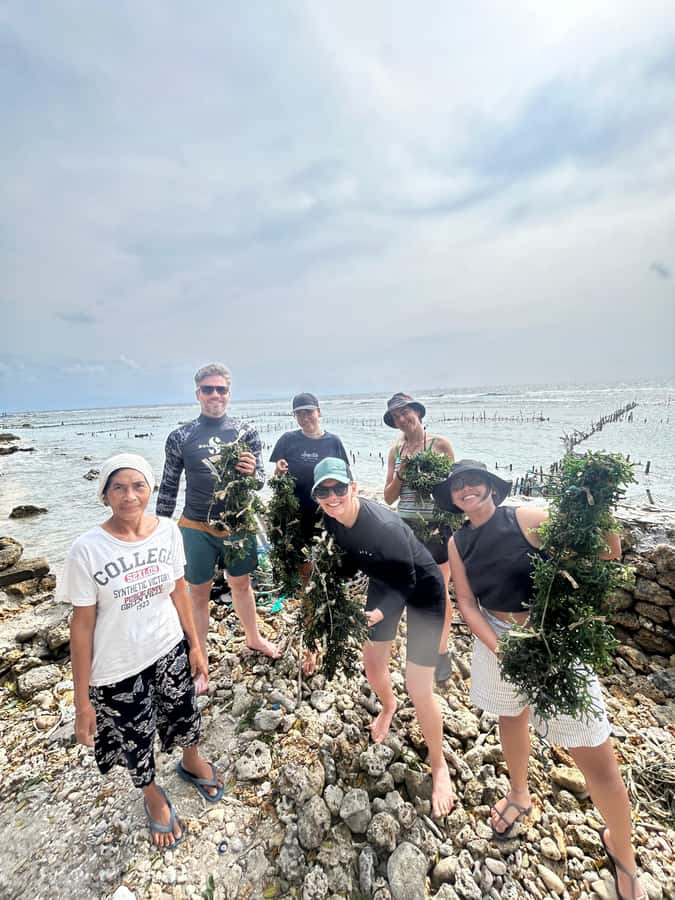
Six hours is long enough for a useful introduction to East Nusa Penida, but short enough that you need realistic expectations. Transportation takes up part of the day, and the route includes both community activities and scenic stops.
I see the duration as a good fit for someone who wants substance without giving up a full day. You get a working farm, conservation context, food, and major East Penida sights in one outing.
The drawback is that each section has limits. You will not have unlimited time at the beaches. The seaweed lesson is not presented as a full professional course. The conservation work is meaningful, but the exact practical tasks may vary.
That mix can be a strength if you want variety. It can be a weakness if you prefer one activity in depth. A person who wants several hours of swimming or photography may find the schedule too divided.
Group size, guides, and the feel of the day
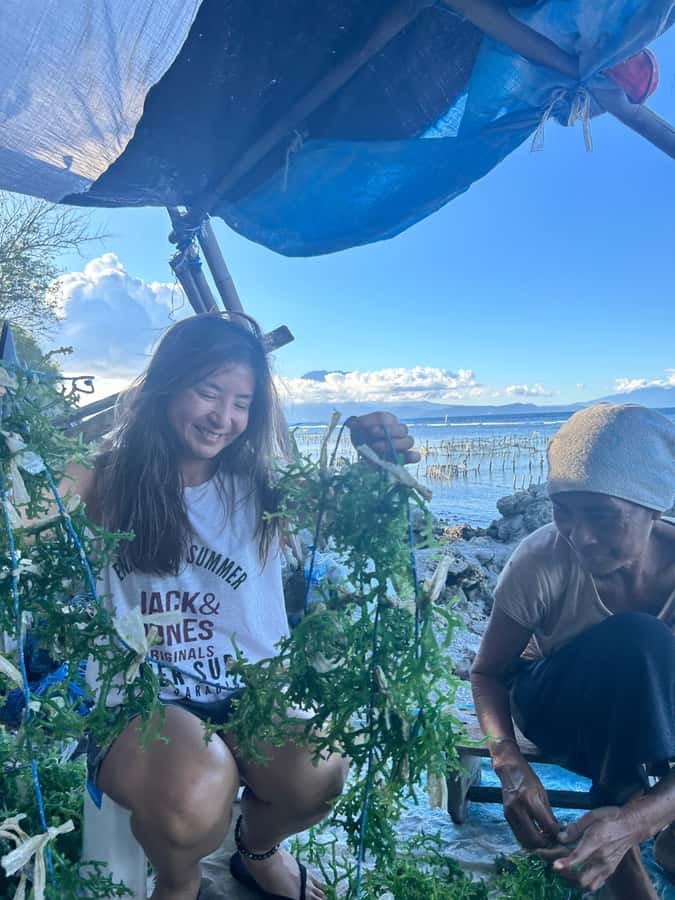
The group is limited to eight participants. That is small enough for direct conversation and a better chance to ask about farming, culture, coral recovery, and local customs.
A small group also fits the character of the experience. Meeting a farmer and handling seaweed feels more natural with a few people than with a large crowd. It can also make optional adjustments easier, although the guide still has to serve everyone.
Festi is the guide name connected with the strongest personal feedback. He has been described as helpful, clear with answers, and able to fit in an extra stop when circumstances allowed. The activity also uses guides who speak English, Indonesian, or German.
You should come ready to participate. This is not only a ride with commentary. The best use of your time is to ask questions, help when invited, and pay attention to how seaweed farming fits into family and community life.
Is $73 a fair price?
At $73 per person, the value depends on what you want from an East Nusa Penida day. If you only want transport to viewpoints, you may find cheaper ways to see a few coastal sights. If you want a small-group experience with local contact, food, conservation context, and practical participation, the price is easier to justify.
The package includes transport to the seaweed farms and sights, lunch, snacks, coffee, tea, taxes, and fees. You are also paying for a guide who can explain the work and help connect the separate parts of the day.
The most valuable element is not one specific viewpoint. It is the combination of access and context. Atuh Beach and Diamond Beach are attractive on their own, but learning how a nearby coastal community farms seaweed and works on coral recovery gives the scenery more meaning.
I would compare this with a standard sightseeing tour by asking one question: do you want to collect views, or do you want to understand more of the place while seeing the views? For the second type of day, $73 is reasonable.
Who will enjoy this most?
This suits you if you like local guides, practical cultural activities, small groups, and responsible tourism. It is especially useful for visitors who want more than a quick photo at a famous beach.
Families with older children may appreciate the hands-on seaweed work, though the supplied information does not specify an age policy. People interested in marine conservation, sustainable food, or island livelihoods should find plenty to discuss.
It also works well for visitors who want a compact East Penida introduction. You can see major sights while learning about a local industry and a conservation effort.
You may want another type of outing if you want a slow beach day, a long swim, or a tightly focused coral program. The schedule is varied, and that means no single part gets the whole day.
Free cancellation up to 24 hours before the activity and reserve-now, pay-later booking make it easier to keep plans flexible. Check the available starting times before booking, since the activity lasts six hours and the schedule matters on an island day.
My verdict on the East Penida experience
I would book this if I wanted East Nusa Penida with more substance than a string of viewpoints. The seaweed work, local farmer contact, coral recovery story, and small group make it feel connected to the island rather than detached from it.
The strongest reasons to choose it are the hands-on farming and the quality of the guide-led conversation, especially with Festi. The main caution is simple: you are fitting many elements into six hours, so do not expect a relaxed beach day or a full conservation workshop.
If you want local contact, practical learning, and the famous East Penida views in one compact outing, this is a strong choice at $73. If your priority is maximum time at Diamond Beach or Atuh Beach, choose a more focused sightseeing plan.
FAQ
How long does the Nusa Penida ecotourism experience last?
The activity lasts six hours. Check the available starting times when booking.
What places in East Nusa Penida are included?
The tour visits Atuh Beach, Diamond Beach, and the famous Treehouse, along with seaweed farms and local community sites.
Will I take part in seaweed farming?
The experience includes hands-on seaweed farming. You can learn about tying and planting seaweed and may take part in practical preparation activities.
What conservation work will I learn about?
The local team explains a 10-year conservation effort that includes coral recovery. The exact practical conservation tasks are not specified.
Is lunch included?
Yes. Lunch, snacks, coffee, and tea are included in the price.
Can lunch take place at a local farmer’s home?
A seaweed farmer invited one group to eat lunch at his house. A home meal should not be treated as guaranteed for every departure.
What languages are available?
Guides are available in English, Indonesian, and German.
How large is the group?
The activity is limited to eight participants.
Can I cancel or pay later?
You can cancel up to 24 hours in advance for a full refund. You can also reserve your place and pay later.
Just added around Indonesia
- Ubud Eco-Adventure: Farm, Rice Terraces, River & Dance Show!★ 5.0 · 2 reviews
- Yogyakarta Cycling Tour Around the Villages and Fish Farm★ 5.0 · 16 reviews
- Small-Group Farm Tour & Balinese Cooking Class in Ubud with Kadek★ 5.0 · 16 reviews
- Farm-to-Table Balinese Cooking Experience★ 4.0 · 3 reviews
- Seaweed Farming Activity and Sightseeing at Diamond Beach★ 4.5 · 3 reviews
- Farmer market, waterfalls, holy spring – All Inclusive★ 5.0 · 4 reviews
- Safari Lagoi & Eco Farm Bintan★ 3.0 · 7 reviews
- Ubud: Organic Farm Harvest, Bali Cooking Class by Pemulan★ 4.8 · 12 reviews
Indonesia Farm Tours, compared.

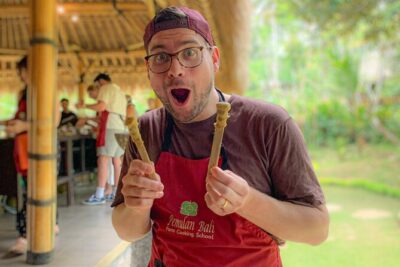

Authentic Bali Farm Cooking School & Organic Farm
Read our review →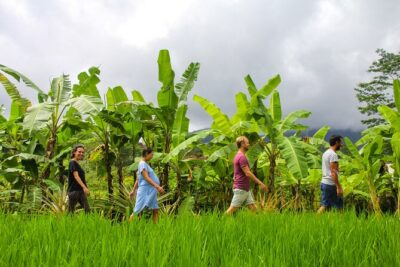
Balinese Vegan Cooking Class with Fresh Harvesting & Garden Tour
Read our review →
Traditional Villages, Salt Farm & Tirta Gangga Tour
Read our review →
Small-Group Farm Tour & Balinese Cooking Class in Ubud with Kadek
Read our review →
Yogyakarta Cycling Tour Around the Villages and Fish Farm
Read our review →Lists this farm appears in