Reviewed · OAHU FARM TOURS
Bee Farm Ecotour and Honey Tasting in Waialua, North Shore Oahu
At Hi Honey Farm, you do more than taste honey. You put on protective gear, walk through banana trees, and hold a frame from an active hive while bees work around you. It is a close look at farm life on Oahu’s North Shore, not a quick shop stop with a few samples.
I like the small group size, capped at 10 people, and the way the visit mixes useful bee facts with hands-on time. I also like the honey tasting at the end, especially since it can include about 10 varieties served with foods such as fruit, avocado, and ice cream. The main consideration is simple: this is not a good choice if you have a bee sting allergy, and solo bookings may need extra checking because a minimum of two people can apply.
Key points to know
- You handle an active honey frame: The hands-on hive visit is the heart of the tour, with photos taken as you hold frames containing bees and honey.
- The farm setting feels genuinely rural: The hives sit a short walk through banana trees, giving you a quick change of pace from Oahu’s beaches and resort areas.
- Honey tasting goes beyond a single spoonful: Raw and infused varieties are sampled, depending on the season and what is available.
- Guides keep the visit personal: Ananya, Adam, Connery, and Stanislav are among the guides who have led sessions, answering questions and helping people feel comfortable.
- The timing fits a North Shore day: The 9 a.m. start and roughly 1-hour-40-minute length leave most of the day open for other stops.
- Book with the sting risk in mind: The activity is not recommended for anyone with a bee sting allergy, and poor weather can lead to a new date or refund.
Getting to Hi Honey Farm in Waialua
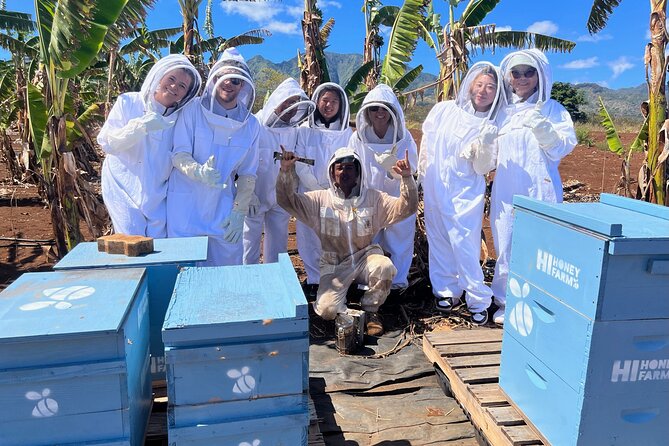
Hi Honey Farm is at 66-1128 Kaukonahua Road in Waialua, on Oahu’s North Shore. You meet at the farm at 9 a.m., and the activity ends at the same place.
That fixed meeting point makes the visit easy to pair with a North Shore day, but you will need to plan your own way there. The farm is near public transportation, according to the supplied details, though the information does not specify a particular bus route or stop. If you are building a full day around Waialua, allow time to reach the farm and then continue to your next stop.
The early start matters. A 9 a.m. meeting gives you a useful first activity before the day gets crowded with beach visits, food stops, and sightseeing. You will be finished at about 10:40 a.m., leaving plenty of daylight for the rest of your plans.
The visit is offered in English. Confirmation is provided when you book, and the group size is limited to 10 people. That limit should help keep the hive visit manageable, since everyone needs room to suit up, listen, handle a frame, and take pictures without turning the session into a production line.
More Farm Tours in the USA:
- Maui Pineapple Farm Tour in Haliimaile
★ 5.0 · 2,855 reviews - Premium Amish Country Tour including Amish Farm and House
★ 4.5 · 1,306 reviews - Unique Horse Farm Tours with Insider Access to Private Farms
★ 5.0 · 1,192 reviews
A short lesson before you meet the bees
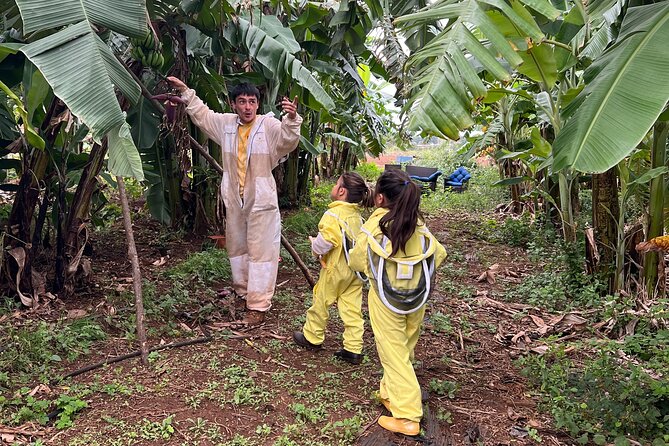
The tour begins with a brief introduction to bees and the way honey is made. This opening is more useful than it may sound. Without a little background, a hive can look like a busy wooden box full of flying insects. The introduction gives you a way to understand what you are seeing once you reach the hives.
The guides explain bee life and honey production before you put on protective clothing. Guides named Ananya, Adam, Connery, and Stanislav have led these sessions, and the feedback supplied about them is consistent: they explain clearly, answer questions, and pay close attention to comfort and safety.
I especially like that the lesson comes first. It gives children and first-time visitors a basic framework without turning the morning into a long classroom lecture. The program is designed to be fun and brief, so you get enough information to make the hive visit meaningful while still reaching the hands-on part quickly.
The exact bee activity you see can vary. The guides will do their best to point out the queen and may show you a bee birth, but those moments depend on what is happening inside the hive. That is an important expectation to set. You are visiting a working farm, not watching a staged animal show.
Walking through the banana trees to the hives
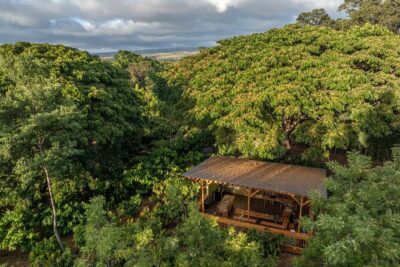
After the introduction, you suit up and walk a short distance through banana trees to the beehives. This small walk adds a rural feel without requiring a long hike. You are still close to the meeting point, but the farm setting gives the visit a clear sense of place.
The banana trees also help make the activity feel different from standard sightseeing on Oahu. You are not simply standing at a counter tasting a local product. You are seeing where the work begins, in the setting where the bees are kept and the honey is produced.
The hive visit is the part that requires the most attention. The guides help you approach the hives and explain what is happening. You will see bees at work and, if conditions allow, get a closer look at the colony. The goal is to help you understand the living process behind the jar of honey.
The supplied details say the guides will do their best to point out the queen, show a bee birth, and let you hold a frame of raw honeycomb. Those are possibilities, not guarantees. Bees do not follow a tour schedule, and the queen may be hidden. Still, the chance to see these things gives the visit more substance than a basic tasting.
Holding a frame of raw honeycomb
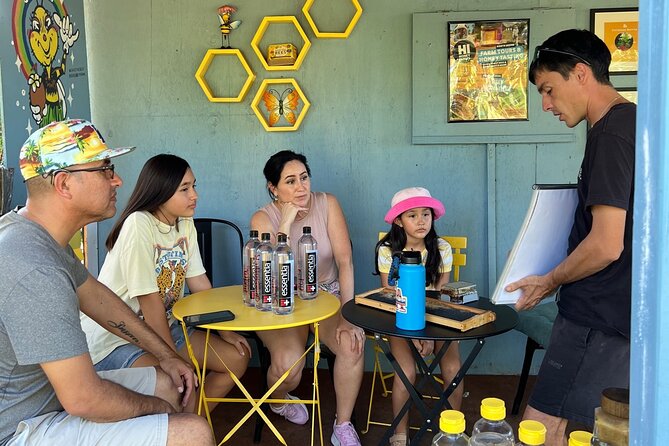
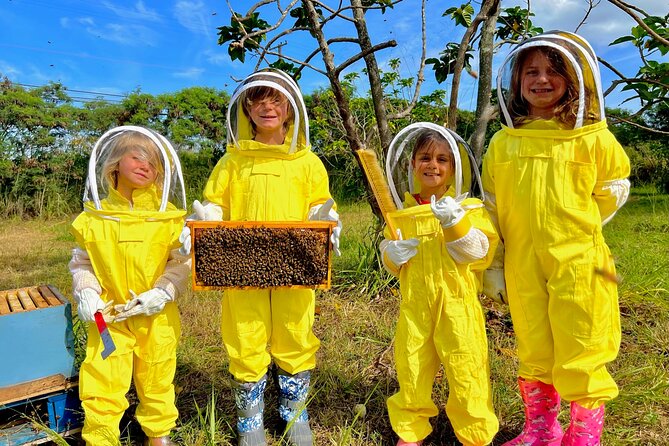
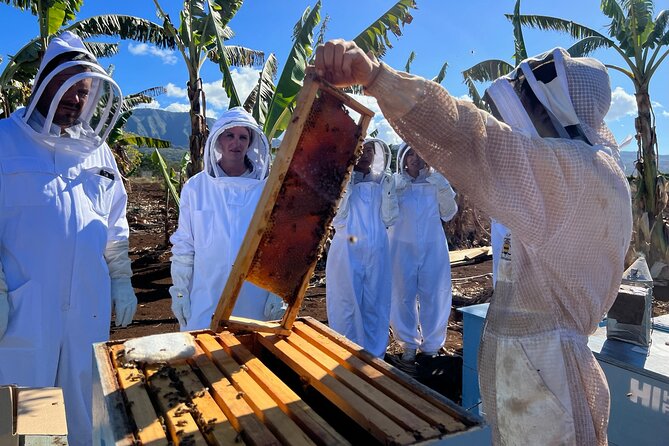
Holding a honey frame is the most unusual feature of the morning. You are not just looking through glass or watching a beekeeper work from a distance. You get to hold a frame containing bees and honey, with the guides helping you through the process.
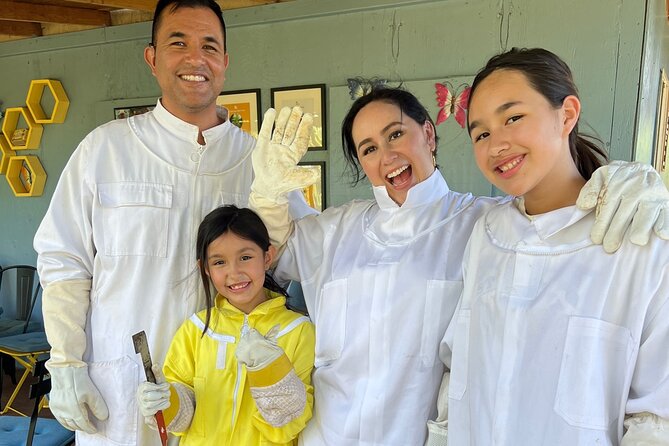
That hands-on moment explains why the protective suit matters. You will suit up before going near the hives, and the guides take care with the group. The activity is intended for most people, including families, but you should take the safety instructions seriously and tell the guides if you feel uneasy.
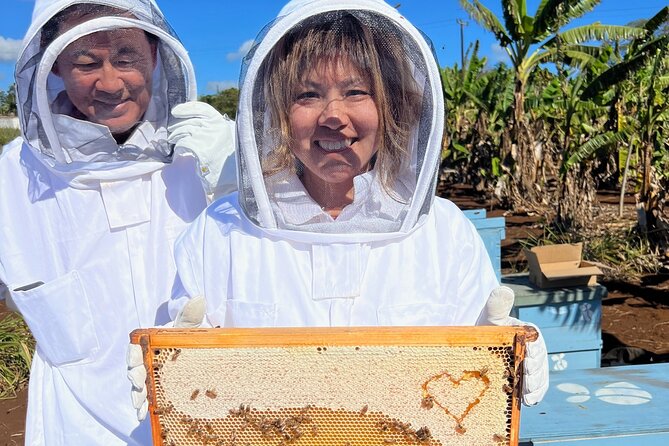
Pictures are taken during the hive portion, including photos of you holding frames with bees and honey. The keepsake photos are a nice practical touch because handling a live hive is difficult to describe later. You leave with a record of the moment, not only a jar of honey if you decide to buy some.
The experience may be especially appealing to children who ask how honey is made, though the supplied information does not set a minimum age. Parents should judge their own child’s comfort around insects and protective gear. The activity is family-friendly in spirit, but it still involves live bees and should not be treated like a petting zoo.
Same fields, a different sort of morning:
- Lahaina: Maui Ku’ia Estate Guided Cacao Farm Tour and Tasting
★ 5.0 · 1,103 reviews - Maui: Road to Hana Adventure with Farm to Table Lunch
★ 5.0 · 877 reviews - Hawaiian Salt Farm Tour in Kona
★ 5.0 · 767 reviews - Maui Horseback Adventure at Circle M Ranch With Real Cowboys
★ 5.0 · 761 reviews
What the honey tasting adds
Once you finish at the hives, you return for a tasting of Hi Honey Farm’s raw and infused honeys. Availability depends on the season, so the exact lineup can change.
The tasting is more interesting when you pay attention to differences between varieties. Honey can vary in flavor, texture, and aroma, and infused versions give you another way to notice how the base honey changes. The session may include around 10 varieties, along with different foods such as fruit, avocado, and ice cream.
That range gives the tasting a useful purpose. You are not simply deciding if you like honey in general. You can compare how the honeys work with other foods and get a clearer idea of which kind you might use at home.
The tasting also provides a calm finish after the hive visit. The first half is about bees, movement, and protective clothing. The second half lets you slow down, ask final questions, and focus on flavor. For many people, this is the point where the farm work becomes a food experience they can take home.
You can also purchase honey and farm merchandise, based on the supplied visit details. Several people chose to buy jars and even T-shirts, which makes sense if you want a local North Shore souvenir rather than a mass-produced item. Buying is optional, so you can enjoy the tasting without feeling that the visit depends on a purchase.
Is the $135 price worthwhile?
At $135 per person, this is not a low-cost attraction. The value depends on what you want from your Oahu vacation.
If you only want to taste honey, the price will probably feel high. You could buy honey at a shop for much less, and a tasting alone would not justify the full cost for most people.
The price makes more sense when you count the whole program: a farm introduction, a guided walk through banana trees, protective equipment, close access to active hives, a chance to hold a honey frame, photographs, and a guided tasting. The group is also limited to 10 people, which gives the morning a more personal feel than a large commercial tour.
I would see this as a specialty activity for people who value access and explanation. You are paying for the chance to enter a working bee farm and take part under guidance, not simply for the food at the end. Families, food-focused visitors, and people interested in sustainable farming may find the price easier to accept.
The duration is another part of the value. At about 1 hour and 40 minutes, the program is long enough to feel like a real activity but short enough to fit into a North Shore itinerary. If you have only one day in the area, you can combine it with other stops afterward.
Who will enjoy this North Shore activity
I would recommend the tour most strongly to:
- People curious about how honey is made
- Families looking for a short educational activity
- Food lovers who enjoy comparing local products
- Visitors who want a rural break from beaches and town centers
- Couples looking for an unusual morning activity
- Anyone who prefers a small group and direct contact with local producers
The experience also suits people who like taking photographs. The farm, banana trees, protective suits, honey frames, and active hives all provide memorable subject matter, and the guides take pictures during the visit.
It is less suitable if you dislike insects, feel uneasy around bees, or have a bee sting allergy. The activity is specifically not recommended for people with a bee sting allergy. You should also be comfortable following instructions around live hives.
Solo bookers should check the reservation details before heading out. One person who booked alone found that the farm required at least two people for a session, although the guide called ahead and arranged a later time. That issue was resolved, but it is worth confirming if you are booking by yourself.
Weather, timing, and practical planning
The activity requires good weather. If poor weather causes a cancellation, you will be offered another date or a full refund. Since the hive portion takes place outside, this rule is reasonable, but it means you should avoid placing the activity on the one morning when your schedule has no flexibility.
The cancellation policy allows a full refund if you cancel at least 24 hours before the 9 a.m. start time. Changes or cancellations made less than 24 hours before the activity are not accepted for a refund. Cutoff times use local time in Hawaii.
Wear something that works with a protective suit and a short outdoor walk. The supplied information does not give a clothing list, so I would not assume any special equipment beyond what the farm provides. The important point is to arrive ready to follow the guides’ instructions and spend time near active hives.
Most people can participate, and the farm is near public transportation. No separate accessibility details are provided, so anyone with mobility concerns should contact the operator before booking to ask about the short walk through the banana trees and access to the hive area.
The strongest part of the morning
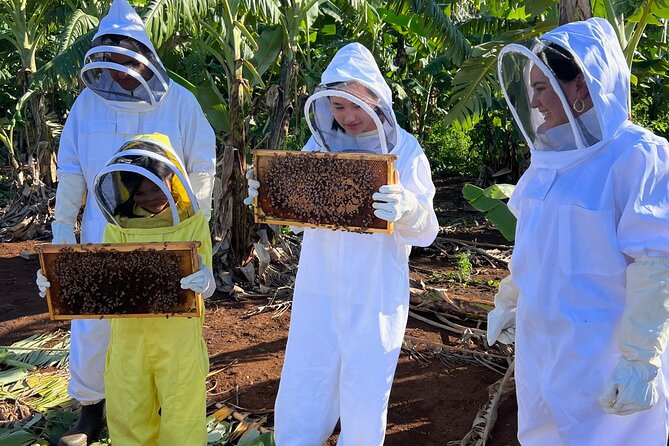
For me, the hands-on hive visit is the reason to choose this activity. The honey tasting is enjoyable, but many farms can offer samples. Fewer experiences let you suit up, walk to active hives, hold a frame of raw honeycomb, and see bees working at close range.
The guides’ attention also matters. Ananya is described as patient and passionate, while Adam, Connery, and Stanislav are also named as guides who explain the bees and production process. Good guidance is essential here. It keeps the visit safe and helps you notice details you might otherwise miss.
I also like that the program does not pretend every hive will provide a perfect photo opportunity. Seeing the queen or a bee birth depends on what the colony is doing that day. The real value is the chance to observe a working hive, with a few special sights possible along the way.
Should you book the Hi Honey Farm tour?
Book it if you want a small, hands-on North Shore activity that combines farming, food, and a little controlled adventure. The active honey frame, close guidance, photos, and tasting make this much more engaging than a standard farm shop visit.
Skip it if the $135 price is more than you want to spend on a short activity, if you have a bee sting allergy, or if you would rather keep your morning focused on beaches and major sights. If you are booking alone, confirm the minimum group requirement first.
For the right visitor, Hi Honey Farm offers a memorable look at one of Oahu’s working food traditions. You leave with a better understanding of bees, a taste for local honey, and perhaps a jar or two for the trip home.
FAQ
Where does the bee farm tour take place?
The activity takes place at Hi Honey Farm, 66-1128 Kaukonahua Road, Waialua, Hawaii 96791, on Oahu’s North Shore.
What time does the tour begin?
The tour starts at 9 a.m.
How long does the activity last?
The visit lasts approximately 1 hour and 40 minutes.
What happens during the farm visit?
You begin with a short introduction to bees and honey production, suit up, walk through banana trees to the hives, see the bees at work, and may hold a frame of raw honeycomb. The visit ends with a honey tasting.
Can I see the queen bee?
The guides will do their best to point out the queen, but seeing her is not guaranteed.
Will I get to hold a honey frame?
Yes. The program includes the chance to hold a frame of raw honeycomb, with bees and honey, while wearing protective equipment.
Is honey tasting included?
Yes. Raw and infused honeys are sampled after the hive visit. The varieties depend on availability and season.
How many people can join the tour?
The activity has a maximum group size of 10 people.
What happens if bad weather cancels the tour?
You will be offered a different date or a full refund if the activity is canceled because of poor weather.
Just added around the USA
- Las Vegas: Grand Canyon Ranch Tour with Horseback/Wagon Ride★ 4.7 · 38 reviews
- Combination Southfork Ranch and Dallas/JFK Highlights Tour★ 4.5 · 66 reviews
- Dallas and Southfork Ranch Small-Group Combo Tour★ 4.6 · 61 reviews
- Alpaca Ranch and Fiber Processing Mill Tour★ 5.0 · 24 reviews
- Guided Lilymoore Alpaca Farm Tour★ 5.0 · 38 reviews
- Grand Canyon West Skywalk Western Ranch Joshua Forest★ 5.0 · 67 reviews
- Lancaster: Amish Film, House, and Farmland Experience★ 4.6 · 72 reviews
- From Las Vegas: Maverick Ranch Breakfast and Horseback Ride★ 4.9 · 77 reviews