
Reviewed · BIG ISLAND FARM TOURS
Edible Hibiscus Guided Farm Tour (Big Island)
The most surprising part of this Hamakua Coast farm visit is that hibiscus is more than a pretty tropical flower. Near Honokaa, Susan and Lance show you how culinary varieties are grown, how hydroponic farming works, and how the flowers become tea, preserves, syrup, and sweets.
I like the hands-on tasting, especially the hibiscus tea, flowers in syrup, preserves, panna cotta, and shortbread with jam. I also like the small group size, which makes it easier to ask questions and gives the owners room to explain the difference between edible and ornamental hibiscus.
The main consideration is focus. This is a working farm and teaching visit, not a large garden packed with endless blooms. If you are curious about plants and food production, the 90 minutes should feel full. If you want a broad sightseeing stop, you may find the greenhouse and demonstration garden fairly modest.
Key points to know before you go
- Taste hibiscus in several forms: Samples may include flowers, tea, preserves, flowers in syrup, panna cotta, and shortbread with jam.
- Meet the owners: Susan and Lance lead the experience and explain their own farming methods and products.
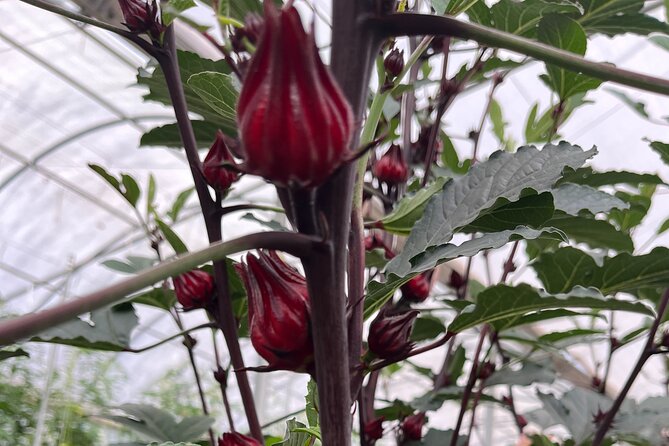
- Compare two kinds of hibiscus: You will learn why ornamental hibiscus is not the same as culinary hibiscus.
- See hydroponic farming up close: The visit includes a hydroponic greenhouse production area, not just an outdoor garden.
- Enjoy Hamakua Coast views: The farm sits in the countryside outside Honokaa, with ocean views noted as an added part of the setting.
- Plan on 90 minutes: The experience begins and ends at 44-2790 Kalopa Mauka Road and is limited to 12 people.
A small farm with a surprisingly broad menu
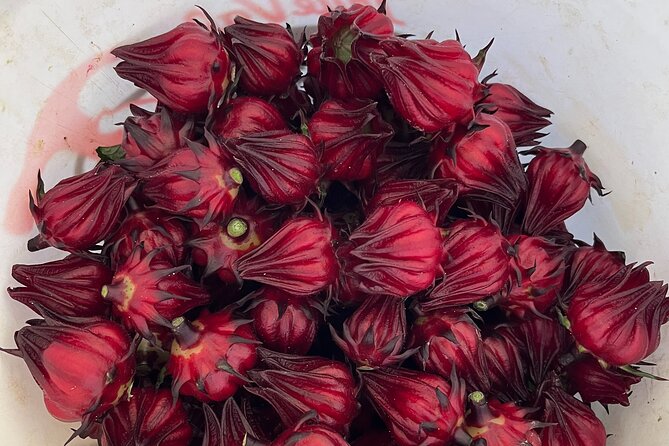
Most people know hibiscus as a bright flower used in Hawaiian yards and tropical gardens. This visit changes that picture quickly. Here, the flower is treated as a crop and an ingredient, with attention given to how it is grown, handled, and turned into food.
Susan and Lance lead the experience themselves. Their role matters because you are not simply walking past labeled plants. You are hearing how the farm operates from the people who grow the flowers and make the products. Susan is also known for a quick sense of humor, which helps keep the agricultural explanations light.
The tour begins with the agricultural story of Hawaii. That gives the flower a useful setting. You learn how farming fits into the islands’ past and present before moving into the specific work of raising edible hibiscus.
The subject is narrow, but that is part of its appeal. You will not get a general tour of every crop grown on the Big Island. Instead, you get a close look at one plant and the work behind a small farm product.
More Guided Tours in Big Island:
- Mykonos: Farm, Ano Mera Village, and Beaches Guided Tour
★ 4.4 · 1,283 reviews - Lahaina: Maui Ku’ia Estate Guided Cacao Farm Tour and Tasting
★ 5.0 · 1,103 reviews - Kaneohe: Kualoa Ranch Guided UTV Tour
★ 4.8 · 335 reviews
Outside among the hibiscus varieties
The first visual portion takes place in an outdoor demonstration garden. You see several types of hibiscus plants and flowers, then learn how to tell ornamental hibiscus from culinary hibiscus.
That difference is important. A flower that looks beautiful is not automatically meant for eating. The tour explains the distinction rather than leaving you with the vague idea that any hibiscus growing in Hawaii can go into a cup or dessert.
The garden also gives you a chance to see the plants in a working setting. This is not a perfectly groomed botanical display. One gardening-minded visitor found that some of the flowers showed signs of insect damage, a normal problem on a farm and a useful reminder that food production is not picture-perfect.
I appreciate that honesty. You may not see rows of flawless flowers at every turn. What you do see is a real growing operation, where pests, weather, and production needs affect the plants.
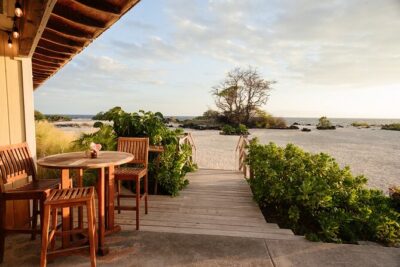
The farm setting also brings a pleasant visual bonus. The property has ocean views, so the outdoor section is not only about identifying flowers. You can pause and take in the Hamakua countryside while listening to the farming explanation.
Inside the hydroponic greenhouse
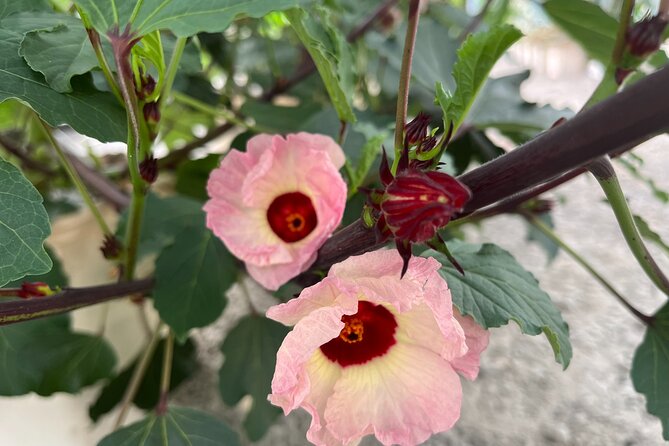
The tour then moves into the hydroponic greenhouse production area. This is likely the most useful part for anyone interested in gardening, controlled growing, or small-scale agriculture.
You learn how the farm uses hydroponic methods to produce hibiscus. The information is presented as part of the farm’s actual operation, not as a classroom lecture detached from the place around you. That makes the process easier to understand because you can connect the explanation to the plants and equipment in front of you.
If you already enjoy gardening, allow yourself time to ask questions. The greenhouse adds substance to the visit and gives you something more than a scenic walk. The small group limit of 12 helps here. You are not trying to hear an owner speak over a large crowd.
Still, keep your expectations measured. The greenhouse is a production area, not a major attraction with a long series of rooms or displays. The value comes from the explanation and the chance to see the method in use.
For someone who is not interested in plants, the greenhouse may be the slowest section. You might prefer the tasting at the end. For a gardener, however, this part may be the reason to book.
The tasting is the payoff
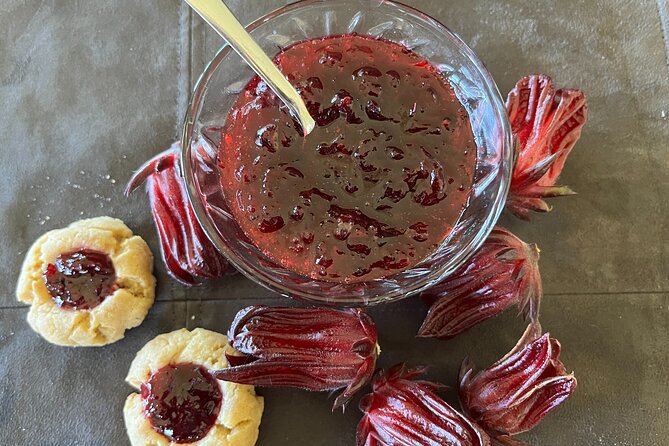
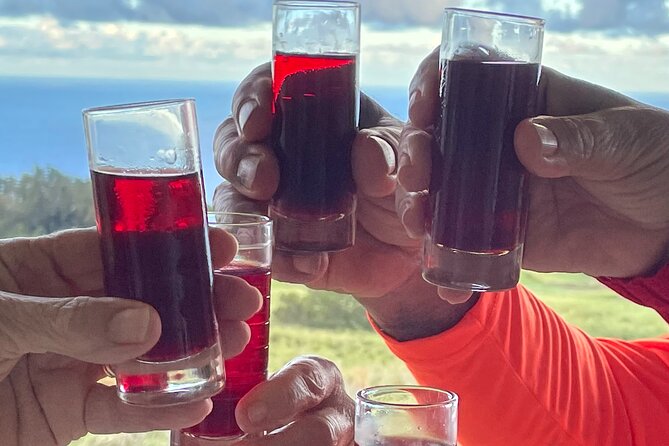
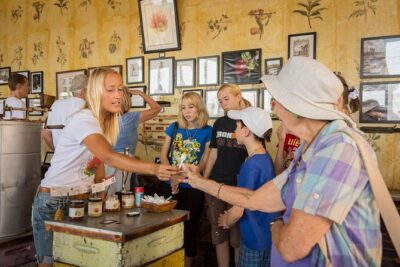
The final section is a guided tasting of hibiscus flowers, preserves, and teas. This is where the plant’s many uses become clear.
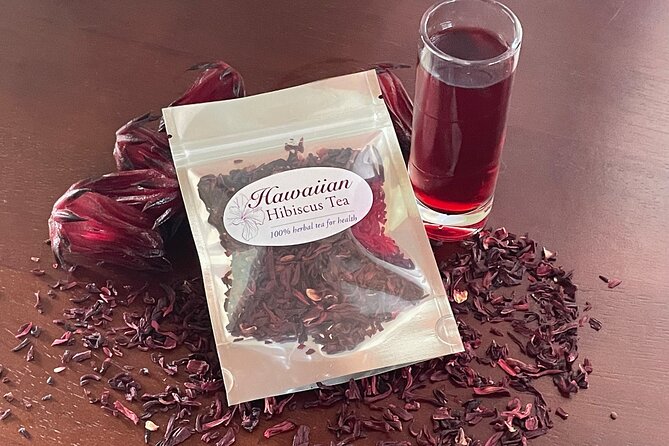
The hibiscus tea receives especially strong praise for its flavor and refreshing quality. You can also expect samples such as flowers in syrup and preserves. Depending on what is prepared, the tasting may include panna cotta and shortbread served with hibiscus jam.
That range makes the tasting more than a single cup of tea. You get to compare floral, sweet, tart, and dessert-style uses of the same crop. The experience gives you a better sense of why the farm produces hibiscus products rather than selling the flower only as a garnish.
The flowers in syrup are a good example of the farm’s approach. They show how the whole appearance of the flower can be part of the food. The preserves, by contrast, turn hibiscus into something you can spread and take home.
The tea is a practical favorite because it is easy to imagine using later. If you want to buy something at the farm, consider the tea and preserves first. The supplied information specifically encourages purchases on-site, and the products provide a useful reminder of the visit after you leave.
There is no separate admission charge indicated for the experience, though you should check the booking page for the current total price. With the tasting included, the value is strongest for anyone who would otherwise pay for a food sampling, garden visit, and short agricultural talk separately. The tour is less compelling if you only want a quick photo stop.
More Farm Tours in Big Island:
- Hawaiian Salt Farm Tour in Kona
★ 5.0 · 767 reviews - Award Winning Farm Tour: Coffee, Chocolate and Unique Gifts
★ 5.0 · 484 reviews - Small-Group Big Island Tour: Hawaii Volcanoes National Park and Kona Coffee Farm
★ 5.0 · 343 reviews - Big Island ATV Tour at Ohana Ranch
★ 5.0 · 254 reviews
Why the 90-minute length works
The scheduled time is about one hour and 30 minutes. That is long enough to cover the outdoor garden, greenhouse, farming discussion, and tasting without turning the visit into a full-day commitment.
The timing also makes this easy to add to a Hamakua Coast driving day. The meeting point is at 44-2790 Kalopa Mauka Road, Honokaa, Hawaii 96727. The activity ends at the same place, so you do not need to arrange a second pickup location.
You should allow the full 90 minutes rather than treating it as a brief stop between other plans. The owners have several subjects to cover, and the tasting is part of the experience, not an optional extra you should rush through.
The setting outside Honokaa is another reason to avoid overpacking your schedule. This is countryside, not a quick roadside attraction. Give yourself enough time to arrive, orient yourself at the meeting point, and enjoy the property before continuing along the coast.
Who will enjoy this most
I would recommend this experience most strongly to:
- Gardeners who want to see hydroponic farming in practice
- People interested in Hawaiian agriculture
- Food-focused visitors who enjoy unusual ingredients
- Couples and families who like small, owner-led activities
- Anyone looking for a quieter Big Island stop away from large attractions
- Visitors who want something they can taste and take home
The experience also suits people who like meeting the makers behind a product. Susan and Lance are not simply pointing out plants. They explain cultivation and production, then let you taste the results.
Children may enjoy the sweets and tea, but the supplied information does not give a specific child age policy or a list of activities designed for young children. If your group includes children, consider whether a farm talk and greenhouse visit will hold their attention for 90 minutes.
The tour is offered in English. Most people can participate, but no detailed accessibility information is provided, so you should ask the operator directly if someone in your group has specific mobility or access needs.
The limits of a small working farm
A fair review should mention what this experience is not. It is not a massive hibiscus estate, a formal botanical garden, or a full meal. The outdoor garden may have a limited number of edible and ornamental varieties on display, and some plants may show insect damage.
That does not make the farm visit poor. It simply sets the right expectation. You are seeing cultivation in progress, with all the imperfections that come with growing plants for food.
The tour also depends on weather and a minimum number of participants. If poor weather forces a cancellation, you can receive a different date or a full refund. The same applies if the minimum group size is not met.
Scheduling changes are worth watching. One account describes the tour being rescheduled twice, without causing a problem for that particular schedule. If your Big Island plans are tightly packed, leave some flexibility around this booking.
Booking and cancellation details that matter
A mobile ticket is provided, and confirmation is received at the time of booking. The group is capped at 12 people, a useful limit for an owner-led farm visit.
Free cancellation is available if you cancel at least 24 hours before the start time. Cancellations or changes made within 24 hours are not refunded or accepted under the stated policy. The cut-off follows local time.
Since the farm is outside Honokaa, check your driving plan carefully and do not assume that a late change will be easy to absorb. The tour begins and ends at the listed meeting point, with no separate transportation included in the supplied details.
Is the tasting worth the trip?
For me, the tasting gives the experience its clearest purpose. You leave with a practical understanding of how a flower moves from plant to finished product. Tea, preserves, flowers in syrup, panna cotta, and shortbread with jam make the lesson memorable because you can compare the results immediately.
The ocean views help, too, but they are not the main reason to go. The stronger draw is the combination of farm explanation and food samples. You are learning what makes culinary hibiscus different, then testing that difference for yourself.
If you are already spending time near Honokaa or exploring the Hamakua Coast, this is a sensible 90-minute addition. If you must cross a large part of the island solely for a short farm visit, decide first how much you enjoy gardening and food production. The tour is specialized, and its appeal depends on that interest.
Should you book the edible hibiscus farm tour?
Book it if you want a small, personal agricultural experience with real farm owners, a hydroponic greenhouse, scenic countryside, and a generous tasting. The tea and preserves are especially good reasons to leave room in your bag for a purchase.
Skip it if you want a large garden, a polished attraction, or a broad tour of Big Island agriculture. The plant displays are limited, and the subject stays focused on hibiscus.
For the right audience, this is one of those pleasant half-day add-ons that gives you a story to tell and a new ingredient to recognize. Plan for the full 90 minutes, keep your schedule flexible, and arrive ready to taste a flower in several surprising forms.
FAQ
Where does the edible hibiscus farm tour take place?
The tour takes place at 44-2790 Kalopa Mauka Road, Honokaa, Hawaii 96727, in the countryside of the Hamakua Coast.
How long does the experience last?
The experience lasts approximately one hour and 30 minutes.
Where does the tour end?
The tour ends back at the same meeting point where it begins.
What language is the tour offered in?
The tour is offered in English.
How many people can join the tour?
The experience has a maximum group size of 12 people.
What will I learn during the tour?
You will learn about Hawaiian agriculture, hibiscus cultivation, hydroponic farming, and the difference between ornamental and culinary hibiscus.
What food and drinks are included?
The guided tasting includes hibiscus flowers, preserves, and tea. Other samples may include flowers in syrup, panna cotta, and shortbread with jam.
Can I buy hibiscus products at the farm?
Yes. Farm products are available for purchase at the end of the visit.
What happens if the weather is poor or the minimum group size is not reached?
You will be offered a different date or experience, or a full refund, if the activity is canceled because of poor weather or because the minimum number of participants is not met.
Just added around Big Island
- Sunset Kona Salt Farm Tour★ 5.0 · 55 reviews
- Hala Tree Coffee Farm Tour★ 5.0 · 44 reviews
- Hamakua Coast Farm Small-Group Walking and Tasting Tour★ 5.0 · 4 reviews
- Bottle Feed & Cuddle Baby Goats at Ohana Ranch (Big Island)★ 5.0 · 29 reviews
- Farm to Table Cooking Class at Kulaniapia Falls★ 4.5 · 36 reviews
- Farm-to-Table Chef’s Dinner at Kulaniapia Falls★ 4.5 · 42 reviews
- Big Island Family Off Road Farm Adventure at Ohana Ranch★ 5.0 · 43 reviews
- Baumkuchen Farm Tour★ 4.5 · 10 reviews
Big Island Farm Tours, compared.
Award Winning Farm Tour: Coffee, Chocolate and Unique Gifts
Read our review →
Small-Group Big Island Tour: Hawaii Volcanoes National Park and Kona Coffee Farm
Read our review →
Waipi’o on Horseback: Mountain Ocean Views Working Cattle Ranch
Read our review →
Lists this farm appears in