
Reviewed · ORGANIC FARM VISITS
Santorini: Private Agri-Educational Visit to an Organic Farm
Santorini’s dry volcanic setting makes farming a lesson in patience. At Santorganics, you walk through a black currant vineyard, inspect capers and thyme, and enter a cave where herbs dry naturally. The visit gives you a useful look at island life beyond white buildings and sunset crowds.
I like the private format, which lets you ask questions and take your time with the farm’s unusual crops. I also like the tasting, especially the raisin liqueur and infused olive oils paired with local bites. The drawback is practical: this is a walking visit with no toilet facilities, and the farm is not suitable for people with mobility or fitness limitations.
Key points at a glance
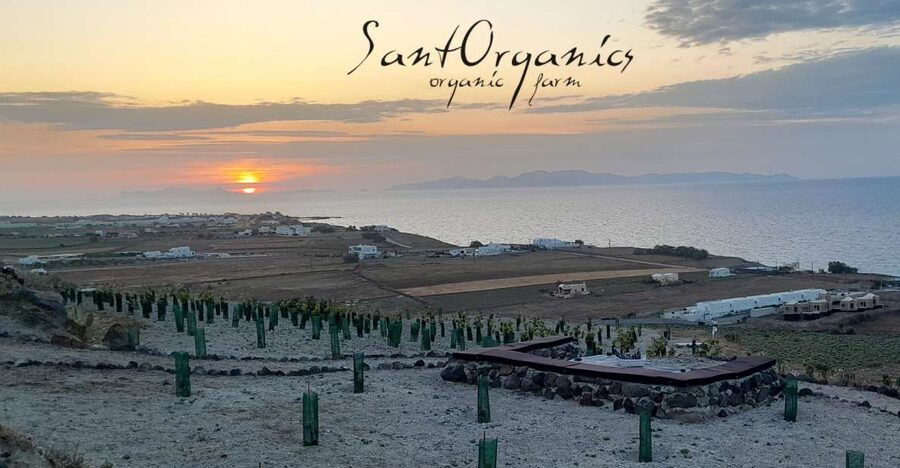
- Black currant vineyard: See the first organic black currant vineyard in Santorini and learn how local growing conditions shape the crop.
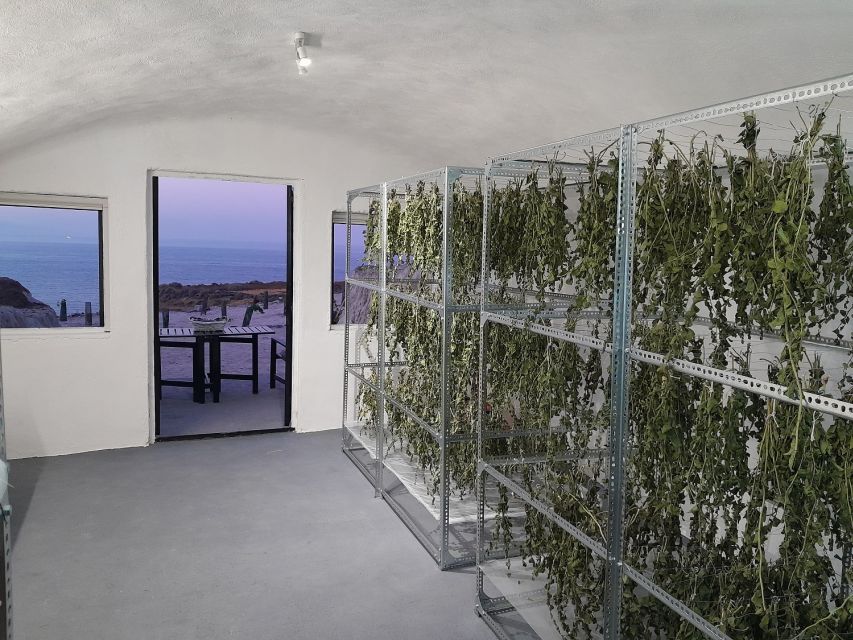
- Cave herb-drying area: Step into a traditional cave used for the natural drying stages of harvested herbs.
- Dimitris and Maria: Meet the owners, who lead the visit with a clear personal connection to their farm and its methods.
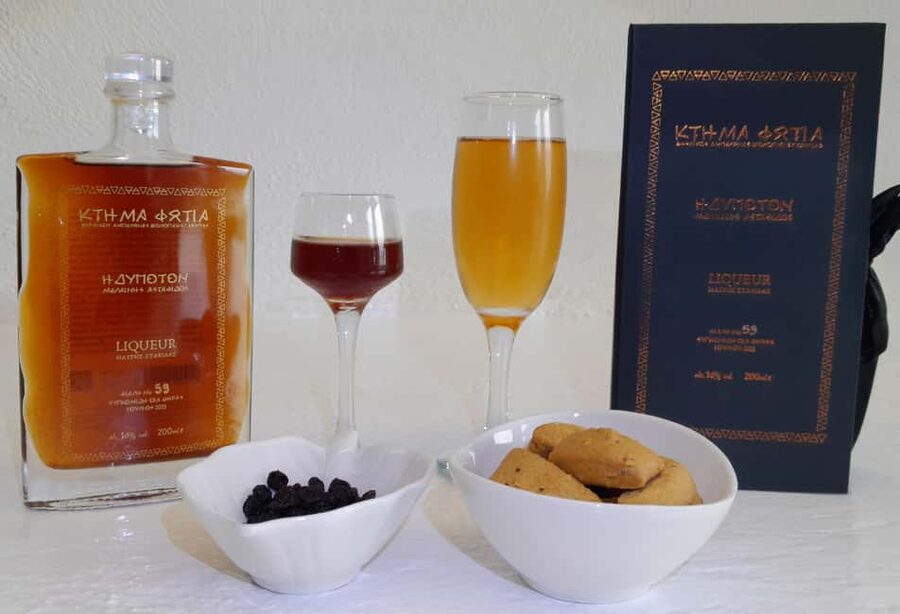
- Small, focused tasting: Sample raisin liqueur, infused extra virgin olive oil, organic must cookies, cereal breadsticks, almond rusks, prickly pear juice, and more.
- Private two-hour visit: You get a guide in Greek or English and a more personal pace than a large group tour.
- Moderate walking: Wear closed shoes and bring a hat. The route includes cobblestones and time outdoors.
A different side of Santorini, one dry crop at a time
Santorini is famous for its cliffs, churches, and sea views. This farm visit takes you to a quieter subject: how people grow and process food on a hot, dry island.
Do not picture a broad vegetable farm with rows of lettuce and tomatoes. The climate is too dry for that kind of farming on a large scale. Instead, Santorganics focuses on crops suited to the island, including black currants, capers, thyme, prickly pears, and other herbs.
That distinction matters. You are not simply walking past plants while someone lists their names. You are seeing how local agriculture responds to limited water and strong sun. The farm is described as an organic anhydrous farm, and its methods and crops reflect those conditions.
The visit is private, so you have room to ask about harvesting, drying, oil infusion, and the products in front of you. Dimitris and Maria, the owners, are part of the experience. Their role gives the tour a more personal feel than a standard commercial tasting.
More Organic Farm Visits in Greece:
- Aegina: Organic Pistachio Orchard Tour with Factory Visit
★ 4.6 · 22 reviews - Chania Area: Cooking Class at a Farm in Stylos Village (organic)
★ 5.0 · 19 reviews - Corfu: Organic Olive Oil Farm Tour with Transfer and Tasting
★ 5.0 · 8 reviews
Meeting point and the short walk to the farm
The activity begins and ends at the supplied plus code, 8G87FCC7+W5H. Since no hotel pickup or drop-off is included, you need to arrange your own way to the meeting point. Check the exact map position and allow time to arrive before the start.
From the starting point, you walk a few meters along picturesque cobblestone streets to reach the farm. That sounds easy, but cobblestones can be uneven, so closed-toe shoes are a sensible requirement rather than a suggestion.
The walking continues inside the estate. You should expect a moderate amount of movement, time on your feet, and outdoor exposure. A hiking baton is available if needed, which may help on the route, but it does not change the accessibility limits of the activity.
There are no WC or toilet facilities at the farm. Plan accordingly before you arrive. This is one of the most useful details to know before booking, especially if you are arranging the visit around other sightseeing.
Walking through Santorini’s first organic black currant vineyard
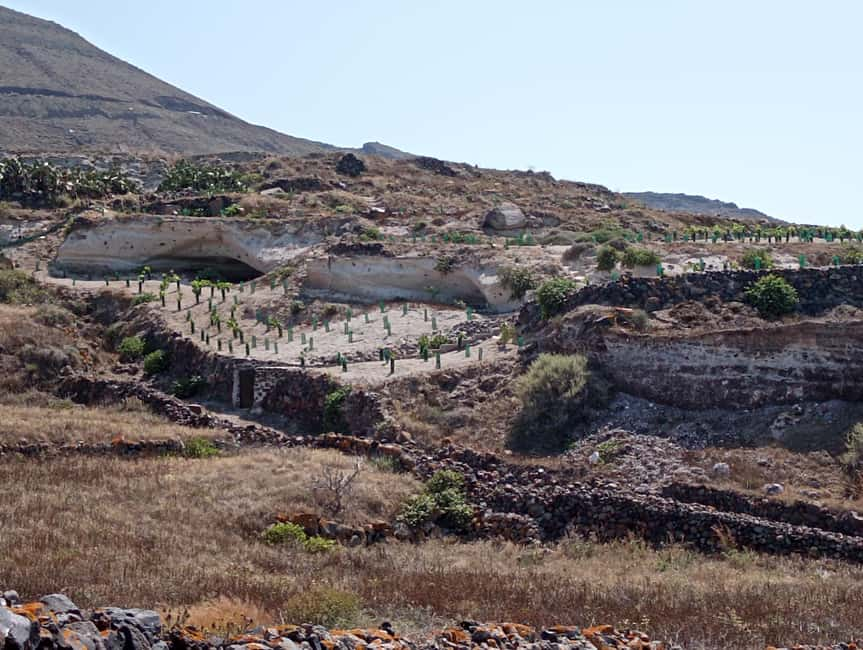
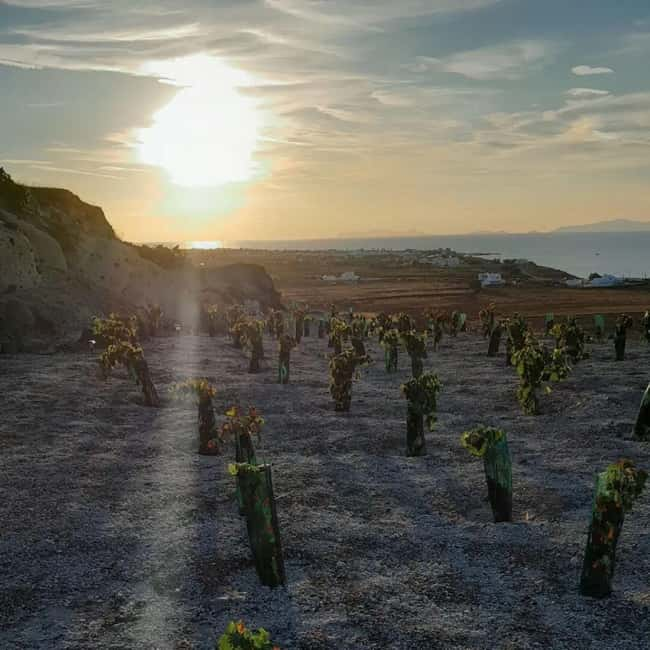
The first major stop is the black currant vineyard. This is not the familiar wine-focused side of Santorini. The farm presents black currant as one of its special crops, and you learn how it fits into the island’s agricultural traditions.
Your guide explains the harvesting processes and the work that follows. The point is not simply to see vines. It is to understand how a crop becomes a finished product, including the connection between fruit, drying, and the raisin-based tasting later in the visit.
The vineyard also gives you a useful contrast with Santorini’s better-known vineyards. You are looking at a farm built around organic production and local varieties rather than a quick photo stop beside a famous winery.
The exact condition of the plants depends on the season. You may see different stages of growth and production, but the supplied information does not promise a particular harvest date. If picking is possible during your visit, you may be able to taste some herbs directly from the farm. Treat that as seasonal, not guaranteed.
Caper, thyme, and the herbs that handle the heat
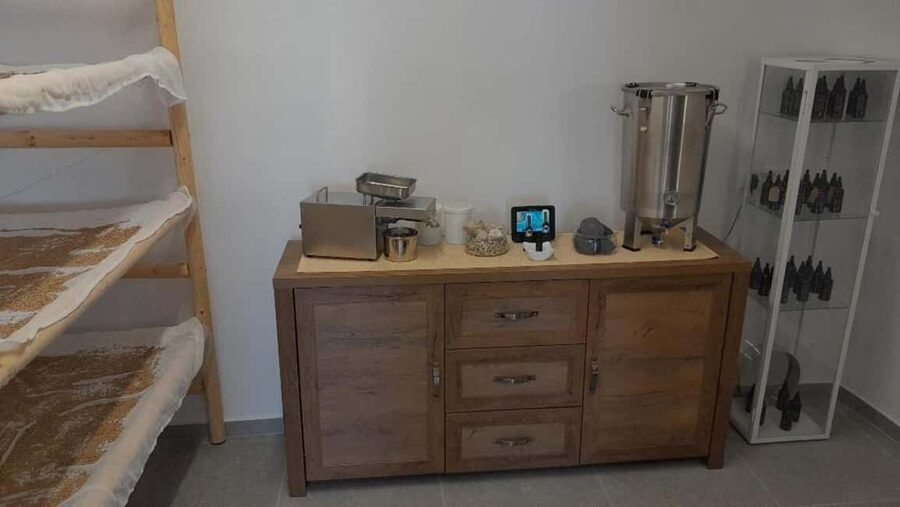
After the vineyard, the route takes you among local varieties of herbs. Caper and thyme are specifically mentioned, and they help explain why this farm does not resemble a typical mainland garden.
The plants are part of the tour’s hands-on character. You can look closely at the crops, hear how they are harvested, and, depending on the time of year, pick and taste some of them. That small act makes the farming process easier to understand than a display behind glass.
I like this section because it gives the visit a clear sense of place. Caper and thyme are not random additions to a tasting plate. They are crops suited to Santorini’s dry conditions and tied to the flavors you will encounter later.
Do not expect a large botanical collection or a formal gardening lesson. The focus is on the farm’s own crops and artisanal processes. The visit works best if you are curious about food production, not just looking for a scenic walk.
More Farm Tours in Greece:
- Mykonos: Farm, Ano Mera Village, and Beaches Guided Tour
★ 4.4 · 1,283 reviews - Crete: Road-trip to Lasithi, Zeus Cave & Olive Mill Farm
★ 4.4 · 451 reviews - Heraklion: Olive Farm Tour with Tasting of Local Delicacies
★ 4.9 · 411 reviews - Lassithi, Zeus Cave, Olive Mill Farm & Knossos Combo Tour
★ 4.6 · 404 reviews
Inside the cave used for natural herb drying
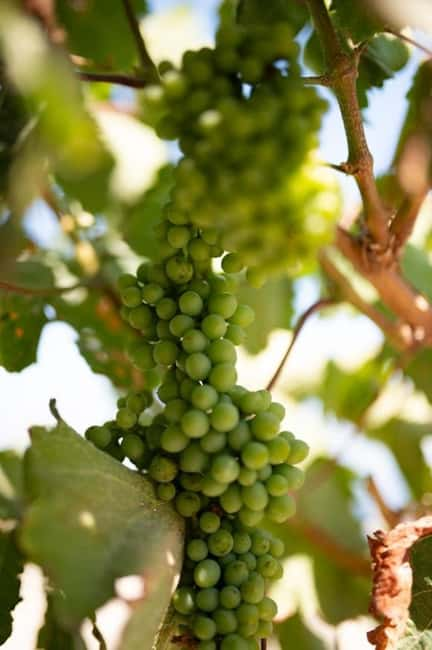
The cave is one of the more distinctive parts of the visit. It has traditionally been used for the natural drying of herbs, and your guide explains the stages between harvesting and finished product.
This stop adds useful context to the tasting. You see that the farm’s products are not simply mixed and bottled in a modern room. Drying is part of the process, and the cave connects the work to older island practices.
The cave also gives the route a change of pace. Much of the visit takes place outdoors among plants, while this stop moves you into a traditional space associated with preservation. You learn why drying matters and how it fits into the farm’s production.
The supplied details do not promise a long underground walk or a dramatic cavern tour. Think of it as a working agricultural area and teaching stop, not a cave attraction in its own right. If you have difficulty walking or feel uncomfortable in enclosed spaces, consider the physical demands before reserving.
The tasting: raisin liqueur, olive oil, and local bites
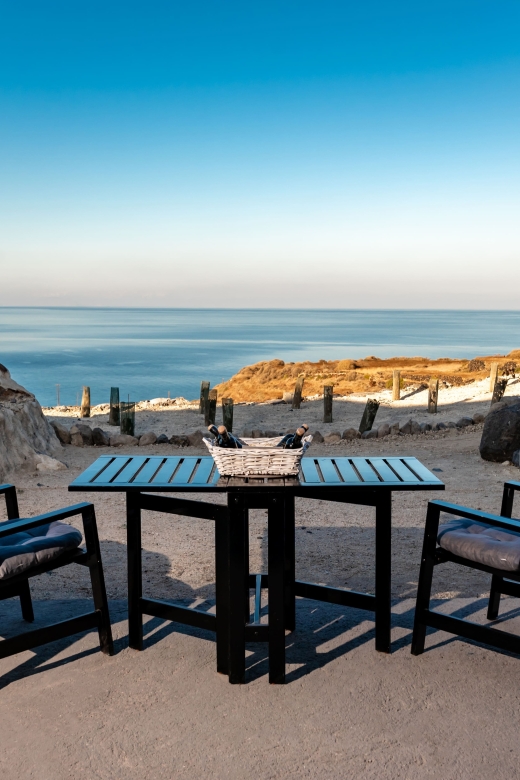
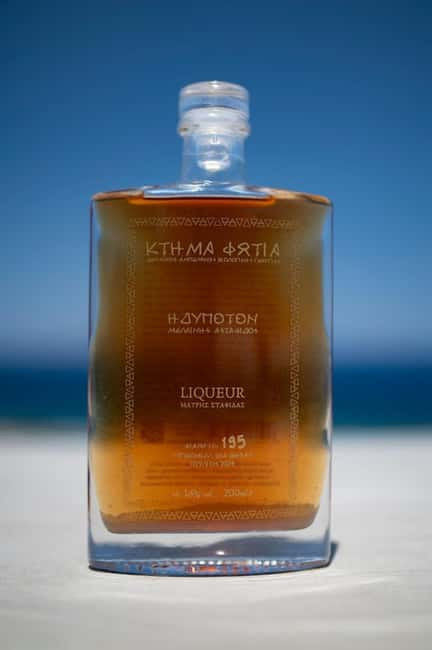
The final part of the visit is a tasting of products made or introduced by the farm. The headline items are liqueur raisin and infused extra virgin olive oil.
The raisin liqueur gives the black currant and raisin side of the farm a clear finish. You get to connect the crop you saw outside with a prepared product. The flavor is likely to be unfamiliar if you have only associated Santorini with wine, so it is worth approaching this as a local specialty rather than comparing it with standard spirits.
The infused olive oil offers a second tasting route. You sample it with regional bites, which helps you judge the oil as food rather than tasting it alone. The supplied menu includes organic must cookies, organic cereal breadsticks, organic no-sugar prickly pear juice, and almond rusks.
The farm also introduces its organic prickly pear seed oil. That is different from the infused olive oil and gives you another example of how the estate uses its crops. The information does not say that every product is served in a full meal, so come expecting a tasting rather than lunch.
This tasting is a strong part of the value. It turns the walk into a complete visit, with an explanation of production followed by the chance to sample the results. If you enjoy food-focused stops but want more than a standard wine tasting, this format should suit you.
Why the private format matters
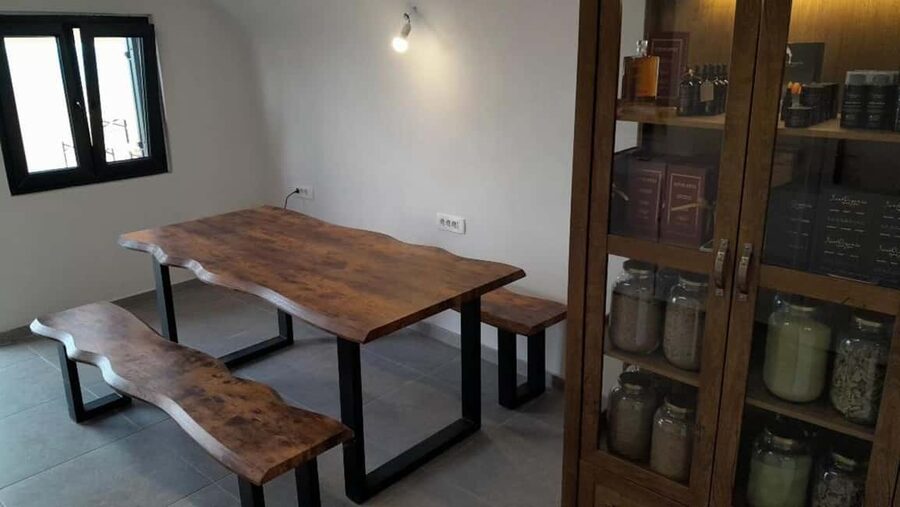
The private group setup is more important here than it would be on a simple sightseeing stop. Farming questions can be specific, and the products may be unfamiliar. With a private guide, you can ask how the herbs are dried, what the farm produces, or how the tasting items are made without trying to compete with a large crowd.
The guide speaks Greek and English. The experience is led as a private visit, and the owners may be part of the conversation. Dimitris and Maria are especially important to the character of the stop because the farm is presented through their own work and commitment.
A private group does not mean that every part of the visit can be changed at will. The route still includes walking, and the tasting and farm areas remain the core of the experience. But the format should feel more relaxed and personal than a fixed group excursion.
Is $56 per person fair?
At $56 per person, this is not the cheapest way to spend two hours in Santorini. You are paying for a private guided visit, access to an organic farm, a personal explanation of artisanal processes, and a tasting of several products.
The value depends on what you want from the island. If your priority is a famous viewpoint, a long winery tour, or transport from your hotel, this is not the right comparison. No pickup or drop-off is included, and the visit does not promise a full meal.
If you are tired of the island’s crowded commercial zones, the price makes more sense. You get a look at a different side of Santorini, meet the people behind a working farm, and sample products that are tied to the estate’s crops. The private arrangement also adds value for couples, families, or small groups who prefer questions and conversation over a fixed lecture.
I would see it as a specialty cultural visit rather than a general farm attraction. Book it for the local agriculture and the personal contact, not just for the food samples.
Timing, clothing, and physical effort
The activity lasts two hours, with starting times available according to the date you select. The information also mentions scenic views on the way, free time, walking, hiking, sunrise, and sunset as possible elements connected to the available timing. Do not assume a sunset or sunrise visit unless the chosen start time confirms it.
Bring a sun hat and wear comfortable clothes. Closed-toe shoes are required in practice, since the route includes cobblestone streets and moderate walking around a farm.
Smoking, alcohol, and drugs are not allowed during the activity. The tour is not suitable for wheelchair users, people with mobility impairments, heart problems, epilepsy, or visual impairments. It is also not recommended for people with a low level of fitness or people over 95 years old.
These limits are direct and worth taking seriously. The route may be short, but the visit is not designed as a seated tasting with a farm visible from a terrace.
Who will enjoy Santorganics most?
I would recommend this experience to you if you want to understand how Santorini’s dry climate affects food and farming. It is also a good match if you prefer private visits, local products, and conversation with the people who make them.
Food-minded visitors should enjoy the combination of crops and tasting. The raisin liqueur, infused olive oil, prickly pear juice, must cookies, breadsticks, and almond rusks give the visit a broad sample of the farm’s output.
It is less suitable if you want a polished winery setting, a large meal, hotel transport, or a completely easy walk. It also may not satisfy you if you expect a traditional vegetable farm. The crops here are shaped by Santorini’s dry conditions, with herbs, capers, prickly pears, and black currants taking center stage.
For a quieter break from crowded Santorini, the farm offers a useful change of subject. You leave with a better sense of what can grow here and why local producers work with the island rather than against it.
Should you book this farm visit?
Book it if you want a private, two-hour look at Santorini’s agricultural side, especially if meeting Dimitris and Maria, seeing the herb-drying cave, and tasting unusual farm products appeal to you. The experience earns its price through access, explanation, and personal contact rather than length.
Skip it if you need an accessible route, toilet facilities, hotel pickup, or a full meal. For everyone else, it is a thoughtful choice for a morning or afternoon when you want Santorini to feel less commercial and more connected to daily island life. Cancellation is free up to 24 hours before the visit, and you can reserve now and pay later, which helps if your plans are still shifting.
FAQ
Where does the organic farm visit begin?
The activity begins at the supplied plus code, 8G87FCC7+W5H. You walk a few meters from the starting point along cobblestone streets to reach the farm.
How long does the experience last?
The visit lasts two hours. Available starting times depend on the date you select.
Is the tour private?
Yes. This is a private group experience with a live guide.
Which languages are available?
The guide can conduct the visit in Greek or English.
Are hotel pickup and drop-off included?
No. You need to make your own way to the starting point and return from the ending point.
What crops will I see?
The farm includes an organic black currant vineyard and local varieties of herbs such as caper and thyme. It also produces or introduces prickly pear products.
Can I pick and taste herbs?
Depending on the time of year, you may be able to pick and taste some herbs. This is seasonal and is not guaranteed for every visit.
What will I taste?
The tasting includes liqueur raisin, infused extra virgin olive oil, organic must cookies, organic cereal breadsticks, organic no-sugar prickly pear juice, and almond rusks. The farm also introduces its organic prickly pear seed oil.
Are toilet facilities available?
No. WC and toilet facilities are not included at the farm.
What should I bring?
Bring a sun hat, comfortable clothing, and closed-toe shoes. The activity involves a moderate amount of walking, and a hiking baton is available if needed.
Just added around Greece
- Volos: Cook Like a Local at a Greek Farm★ 5.0 · 7 reviews
- Traditional Greek Cooking Class @ Lefkada Micro Farm★ 4.7 · 32 reviews
- Visit a Farm and Horseback Riding in Nature★ 5.0 · 10 reviews
- Insightful Pistachio Orchard and Factory Tour★ 4.5 · 27 reviews
- Flavors of Santorini: Farm-to-Table Meal Wine & Authentic Village★ 5.0 · 12 reviews
- Santorini 5 Hour Private Oia Tour & Lunch/Dinner at a Local Farm★ 5.0 · 40 reviews
- Cooking Class Sunset Dinner and Tour in Paros Farm★ 5.0 · 5 reviews
- Olympia Shore Ex: Olympic site, Honey Farm & Olive Oil Tasting★ 4.5 · 57 reviews
Organic Farm Visits, compared.
Half-Day Thai Cooking Class at Organic Farm in Chiang Mai
Read our review →
Cooking Class with Organic Farm in Chiang Mai at Mama Noi
Read our review →
Evening Cooking Class in Organic Farm with Local Market Tour
Read our review →
ATV to Macao Beach and Water Cave with Organic Farm
Read our review →
Morning Cooking Class in Organic Farm with Local Market Tour
Read our review →
Buggy Tour with Organic Farm, Macao Beach Visit from Punta Cana
Read our review →Lists this farm appears in