
Reviewed · QUAD BIKES
Big Island ATV Tour at Ohana Ranch
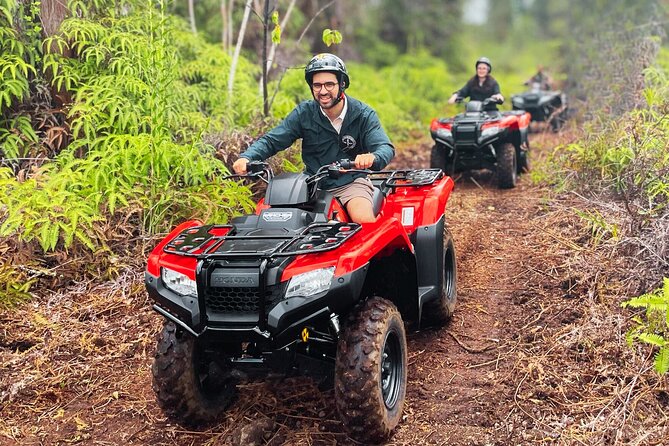
The most interesting part of the Big Island ATV Tour at Ohana Ranch is that the ride takes place on a working Hawaiian farm rather than a purpose-built motor-sports course. You follow trails through pasture, forest, fruit trees, and developing garden areas while learning how the families connected to this land hope to care for it for years to come.
I like two things right away: first-time riders get patient instruction, and the farm visit gives the ATV ride a real sense of place. You may pick guava, see pigs and cows, meet small farm animals, and hear about taro, coffee, Hawaiian traditions, and sustainable growing. The main consideration is that this is as much a cultural farm tour as an ATV outing. If you want speed, jumps, and long stretches of open trail, you may find the pace too gentle.
Key points to know
- A working ranch near Mountain View: You’ll see pastures, fruit groves, native forest, coffee plants, and farm projects on the 150-acre property.
- Friendly guides who help beginners: Guides including Maka’ala, Alana, Hannah, Pono, Kanoe, and Nat focus on safety and patient instruction.
- Culture is central to the experience: Expect stories about Hawaiian customs, land stewardship, family farming, and the history of the ranch.
- Mud and rain can improve the fun: Wet weather creates a messier, more exciting ride, while dry conditions may bring dust.
- Fresh fruit and animals add variety: Guava, berries, cows, pigs, goats, and other farm life are part of the visit.
- A compact two-hour activity: At $89 per person, it fits neatly into a Big Island day, though the value depends on wanting both ATV riding and education.
What kind of ATV tour is this?
You should arrive at Ohana Ranch expecting a guided farm outing with ATV riding woven through it. The setting is rural Mountain View, on the eastern side of the Big Island, rather than a resort zone or a polished adventure park. Please check your island carefully when booking: this ranch is on the Big Island of Hawaii, not Oahu.
The tour lasts about two hours. That is long enough to make the trip worthwhile without taking over your day. You can pair it with other activities around Hilo and the east side, though the exact timing of your other plans should allow for a relaxed arrival and a muddy, possibly wet finish.
The ranch is connected to five families, each with its own focus on the property. That gives the outing a personal quality. You are not simply circling a track. You are seeing land tied to family work, food production, cultural teaching, and plans for future projects.
More Quad Bike Trips in the USA:
- ATV Ranch ride Big Island Hawaii
★ 5.0 · 151 reviews - Oahu: North Shore Zip Line Adventure with ATV and Farm Tour
★ 4.9 · 91 reviews - Siem Reap: Khmer Village and Fish Farm ATV Tour
★ 4.9 · 266 reviews
Check-in, helmets, and the first practice ride
Your visit begins at 17 N Kulani Road in Mountain View. At check-in, you meet the guide team and get fitted with safety equipment. The staff place strong attention on helping new riders feel at ease, which matters because many people arrive with little or no ATV experience.
Before heading onto the property, you receive a safety briefing and practice the controls on flat ground. This is one of the better features for beginners. You have a chance to understand steering, acceleration, and braking before the trail becomes uneven or muddy.
The ATVs are described as large but manageable. Some groups use multi-rider machines, including four-seat ATVs driven by a guide. That arrangement can work well for families or larger parties who would rather enjoy the scenery and conversation than operate their own vehicle.
The maximum group size is 28 people. That is not an intimate private outing, but the guide-led format keeps everyone together. The experience will feel more personal when the group is small, and a larger group may mean more waiting during explanations or at stops.
Riding through pasture, forest, and fruit trees
Once you are comfortable, you follow the guide along beginner-friendly trails. The route crosses open pasture, native forest, and tropical fruit areas. This variety gives the ride its appeal. You are not looking at the same patch of dirt for two hours.
Cows may appear along the route, and pigs can pass by as you ride or stop. These moments are part of the ranch atmosphere, not staged animal encounters. You may also meet friendly farm animals such as baby goats, which gives children a reason to stay interested during the slower educational portions.
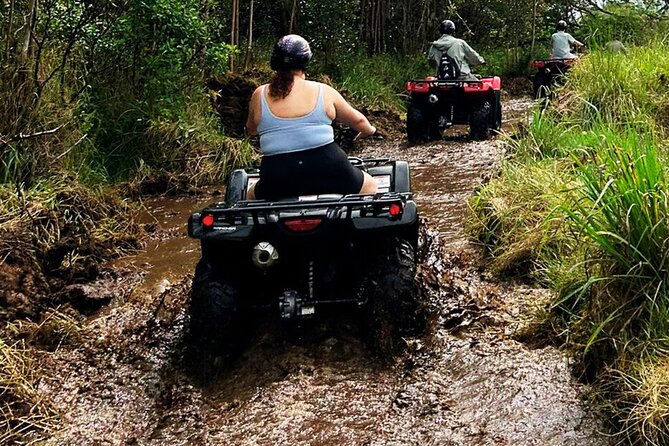
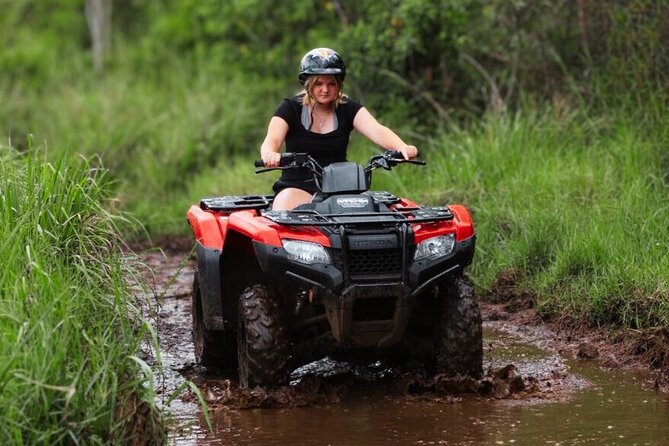
The trail surface changes with the weather. In wet conditions, expect mud, splashes, and a more rugged ride. Several visitors found the rain and mud added excitement, especially toward the end. In dry weather, the trail can be dusty. Wear clothes and shoes you do not mind dirtying, and bring sunscreen and water.
Do not expect a race. The pace is controlled, and the guide stays focused on keeping first-time riders comfortable and the group together. You may wish for more speed on the final stretch, but the slower pace lets you look around and hear the guide.
Fresh guava, berries, and the farm’s food plants
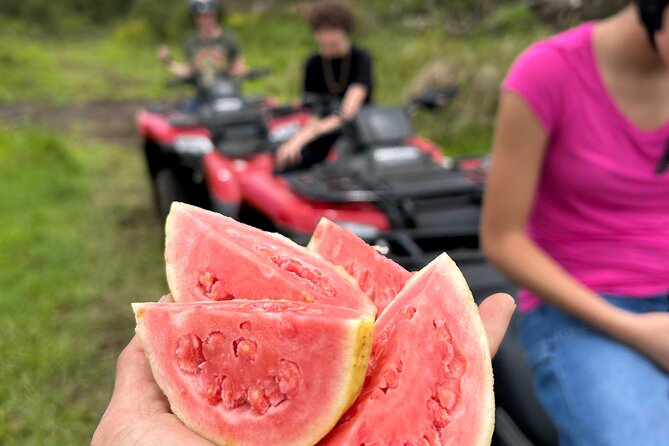
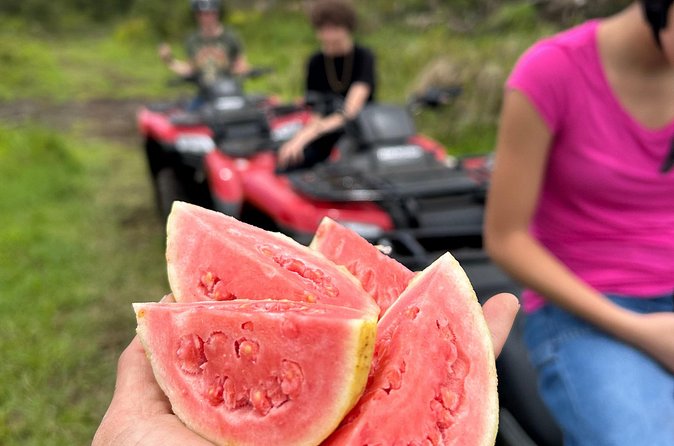
The farm stops make this different from a standard ATV excursion. Depending on what is growing, you may pick and taste fresh guava or berries directly from the property. The fruit is not a minor detail. It turns the farm from something you look at into something you experience with your hands and taste buds.
You may also see taro, coffee plants, and other Hawaiian staples. Some of the coffee trees are still young, so this is a look at a developing agricultural project rather than a finished plantation tour. That distinction matters. You are seeing a working effort in progress, including the ambitions and challenges of building a sustainable farm operation.
The garden work also includes practical methods such as reusing trees and cardboard around plantings. Guides explain how the ranch wants to grow food, protect the soil, and pass useful skills to younger generations. I find this part valuable because it connects Hawaiian culture to daily work rather than treating culture as a short performance added to a tour.
The timing of each stop can vary with the group and the conditions. If you have children, keep in mind that tasting fruit and seeing plants may hold their attention better than a long talk beside a developing coffee plot.
More Farm Tours in the USA:
- Maui Pineapple Farm Tour in Haliimaile
★ 5.0 · 2,855 reviews - Premium Amish Country Tour including Amish Farm and House
★ 4.5 · 1,306 reviews - Unique Horse Farm Tours with Insider Access to Private Farms
★ 5.0 · 1,192 reviews - Lahaina: Maui Ku’ia Estate Guided Cacao Farm Tour and Tasting
★ 5.0 · 1,103 reviews
Stories about Hawaiian culture and the ranch’s future
The guides are a major part of the experience. Maka’ala is praised for patience with new riders, while Alana is known for connecting the land with Hawaiian history and cultural traditions. Hannah has helped first-time riders gain confidence, and Pono combines safety instruction with stories about the ranch and Hawaiian culture.
Other guides, including Kanoe, Nat, John, and Robert, are also part of the team. The names may vary by departure, but the common thread is a personal approach. You are encouraged to ask questions rather than simply follow a script.
The cultural discussion may include the history of the land, Hawaiian traditions, the preparation of a pig for a luau, and the importance of growing native staples. You may hear about the ranch’s desire to support the local community, teach the next generation, and expand into activities such as hunting and fishing.
This is the point where expectations matter most. One part of the experience may involve standing in the sun while the guide explains a future luau pit, rockwork, or young coffee trees. If you want constant motion, that can feel slow. If you enjoy understanding how a place works and why the owners care for it, these stops add meaning to the ride.
The value of a $89, two-hour outing
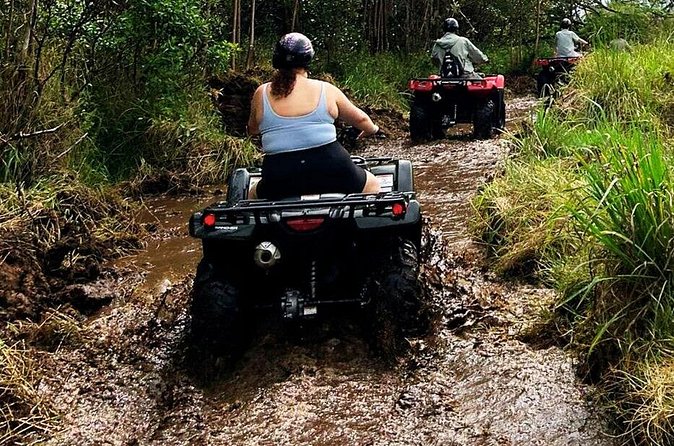
At $89 per person, the tour is priced in the middle range for a short guided ATV activity, but the value comes from more than the machine time. You are paying for a safety lesson, a guide, farm access, fruit tasting when available, cultural interpretation, and a look at a part of the Big Island that many standard itineraries skip.
I would judge the price favorably if you want a mixed experience. You get outdoor activity plus conversation about farming and Hawaiian life. It is less compelling if your only goal is a long, aggressive ATV ride.
The two-hour length helps justify the price for families and couples who want to keep room in the day for other plans. It also limits fatigue for beginners. The tradeoff is that the actual time spent moving on the ATV may feel shorter than expected once safety instruction, farm stops, and cultural talks are included.
The activity is offered in English. A mobile ticket is provided, and confirmation arrives at booking. Free cancellation is available if you cancel at least 24 hours before the start time. Inside that window, the payment is not refunded, and late changes are not accepted.
Who will enjoy Ohana Ranch most?
I would recommend this tour to:
- Couples looking for an unusual honeymoon stop with a personal, outdoorsy feel
- Families who want a hands-on farm activity rather than a formal museum visit
- First-time ATV riders who value calm instruction
- People curious about Hawaiian food plants, land care, and local traditions
- Visitors who enjoy mud, rain, animals, and a little unpredictability
- Larger groups who may appreciate riding together in a multi-seat ATV
The tour may not suit you if you have already taken fast ATV excursions in places such as Cabo, Greece, or other Hawaiian islands and want the same high-energy format. This ride is gentler and more educational. Children can enjoy it, but younger kids may grow restless during extended talks in the sun.
Most people can participate, and service animals are allowed. The experience is guided, so you do not need advanced riding ability. You should still be comfortable following instructions and handling an ATV on uneven, wet, or dusty ground.
How to prepare for mud, sun, and changing weather

Dress for dirt. Long pants and sturdy closed shoes are sensible choices, though the supplied information does not specify a required clothing list. Avoid anything you would be upset to stain. Mud can be thick after rain, and dust can cover clothing on a dry day.
Bring water and sunscreen. The farm has open areas where you may stand during explanations, and the weather can change. Rain does not automatically spoil the activity. In fact, wet conditions can make the ride more entertaining, but you should be ready to get splashed.
Keep your expectations flexible. Fresh fruit depends on what is in season, and farm projects are changing over time. You may see young plants rather than a mature coffee operation. That is part of the point, but it is worth knowing before you arrive.
Should you book the Big Island ATV Tour at Ohana Ranch?

Book it if you want a small taste of rural Hawaii, patient ATV instruction, fresh fruit, farm animals, and cultural stories in one compact outing. The strongest guides make the experience feel personal, and the ranch offers a more grounded look at island life than a standard resort activity.
Skip it if you want maximum driving time, high speeds, or technical trails. Ohana Ranch is best understood as a guided farm and culture experience that includes ATV riding, not as a dedicated off-road thrill ride. At $89, it is a fair choice for people who value the land, the people caring for it, and the chance to get muddy along the way.
FAQ
Where is the Big Island ATV Tour at Ohana Ranch?
The tour begins and ends at Ohana Ranch, 17 N Kulani Road, Mountain View, Hawaii 96771. It is on the Big Island of Hawaii, not Oahu.
How long does the tour last?
The experience lasts approximately two hours, including check-in, the safety briefing, practice riding, farm stops, and the guided ATV route.
How much does the tour cost?
The listed price is $89 per person.
Is the tour suitable for first-time ATV riders?
Yes. You receive instruction, a safety briefing, and a short practice ride on flat ground before following the guide onto the property.
What will I see during the ride?
The route includes open pastures, native forest, tropical fruit groves, and farm areas. You may see cows, pigs, goats, taro, guava, berries, and Hawaiian coffee plants.
Is the tour mainly ATV riding?
It combines ATV riding with cultural and agricultural stops. You should expect time listening to the guide and learning about Hawaiian traditions, farming, and the ranch’s plans, not just continuous riding.
Is the activity offered in English?
Yes. The tour is offered in English.
How many people can join the tour?
The maximum group size is 28 people. Some larger groups may use a multi-rider ATV driven by a guide.
What is the cancellation policy?
You can cancel at least 24 hours before the start time for a full refund. Cancellations or changes made less than 24 hours before the experience are not refunded or accepted.
Just added around the USA
- Las Vegas: Grand Canyon Ranch Tour with Horseback/Wagon Ride★ 4.7 · 38 reviews
- Combination Southfork Ranch and Dallas/JFK Highlights Tour★ 4.5 · 66 reviews
- Dallas and Southfork Ranch Small-Group Combo Tour★ 4.6 · 61 reviews
- Guided Lilymoore Alpaca Farm Tour★ 5.0 · 38 reviews
- Alpaca Ranch and Fiber Processing Mill Tour★ 5.0 · 24 reviews
- Grand Canyon West Skywalk Western Ranch Joshua Forest★ 5.0 · 67 reviews
- Lancaster: Amish Film, House, and Farmland Experience★ 4.6 · 72 reviews
- Bee Farm Ecotour and Honey Tasting in Waialua, North Shore Oahu★ 5.0 · 72 reviews
Quad Bikes, compared.


ATV to Macao Beach and Water Cave with Organic Farm
Read our review →
Nelson: Guided Quad Biking Tour Through Forest and Farmland
Read our review →
Dubai Desert Morning Tour in 4WD Vehicle: Camel Ride, Quad Bike Tour, Sandboarding, and Camel Farm
Read our review →
North Shore Zip Line Adventure with ATV and Farm Tour
Read our review →
Kota Kinabalu ATV Riding and Dairy Farm at Mountain Kinabalu
Read our review →Lists this farm appears in