
Reviewed · OLIVE GROVE TOURS
Olive farm & village
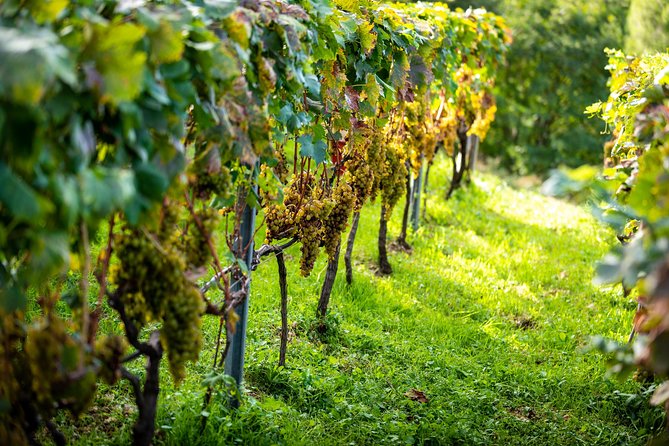
Just 15 minutes from Dubrovnik, Vardia farm trades the Old Town’s stone lanes for ancient olive terraces, fruit trees, and Adriatic views. Ivica Vlašić leads you through land his family has worked for centuries, sharing how olives, grapes, herbs, and seasonal produce fit into daily life here.
I like the small group size, capped at eight, and the direct pickup from your hotel or meeting point. I also like the tasting, which goes beyond a quick sip of oil: you get homemade bread, white wine, herb brandy or fruit liqueur, and produce picked around the farm. The main caution is the moderate walking on uneven ground, so bring sensible shoes and do not treat this as a seated tasting with a short stroll.
Key points to know before you book
- A family farm with three centuries of roots: Ivica shares the story of the Vlašić property and its connection to the land.
- Only about 15 minutes from Dubrovnik: You get a rural setting without giving up most of your day.
- A small group capped at eight: This allows room for questions and a more personal visit.
- A real walk, not just a tasting: Expect about 30 minutes of moderate, easy hiking through olive groves, farmland, and oak woods.
- Fresh farm products are central: Taste olive oil with bread, salt, and vinegar, along with wine, fruit, and liqueurs.
- Pickup and return are included: The tour begins at 8:30 a.m. with collection from Dubrovnik-area hotels or meeting points.
Leaving Dubrovnik for Malaštica Hill
The morning begins at 8:30 a.m., when you are picked up in front of your hotel or at an agreed meeting point in the Dubrovnik area. The drive to Vardia farm takes about 15 minutes, making this an easy addition to a Dubrovnik stay. You do not need to arrange a taxi, rent a car, or spend half a day reaching the countryside.
Vardia sits on Malaštica Hill, about 200 metres above the Adriatic and near the border with Bosnia and Herzegovina. That location matters. You are close enough to see Dubrovnik as your base, but far enough away to hear and see a quieter side of southern Croatia.
The setting is part of the value. For $84.10 per person, you are paying for transport, a guided farm visit, a walk, tastings, and nearly three hours of the host’s time. It costs more than simply ordering olive oil in town, but it gives you access to a working family property and a personal account of how the products are grown and made.
Group size is limited to eight people. That is a useful detail if you dislike large coach excursions. Ivica can explain the farm at a human pace, and you have a better chance to ask about olive cultivation, wine, fruit trees, or local rural life.
More Olive Grove Tours in the world:
- Heraklion: Olive Farm Tour with Tasting of Local Delicacies
★ 4.9 · 411 reviews - Traditional Olive Grove and Dragon Fruit Farm Tour
★ 4.8 · 118 reviews - Kleanthi Olive Farm: Guided Tour with Local Delicacies Tasting
★ 5.0 · 51 reviews
Walking through olive trees and old terraces
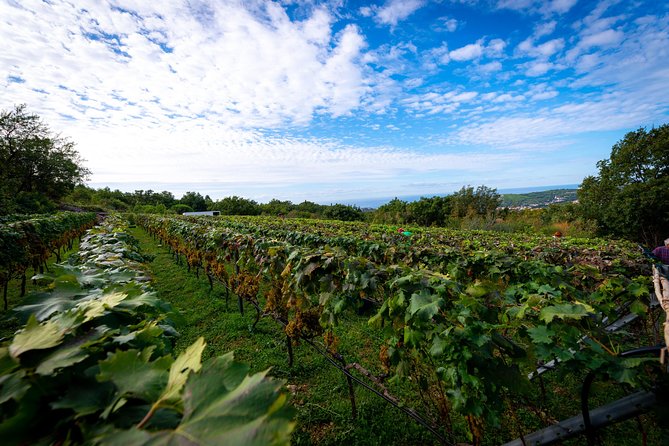
The visit includes an easy walk down and back up the hill. It passes through olive groves, the organic farm, and an old oak forest, with about 30 minutes of walking overall. The route is not described as strenuous, but the ground is not a polished city pavement.
Wear closed, sturdy shoes with a good grip. This is the most important practical tip for the day. The farm has slopes, terraces, and natural paths, so sandals or smooth-soled shoes may make the walk less pleasant.
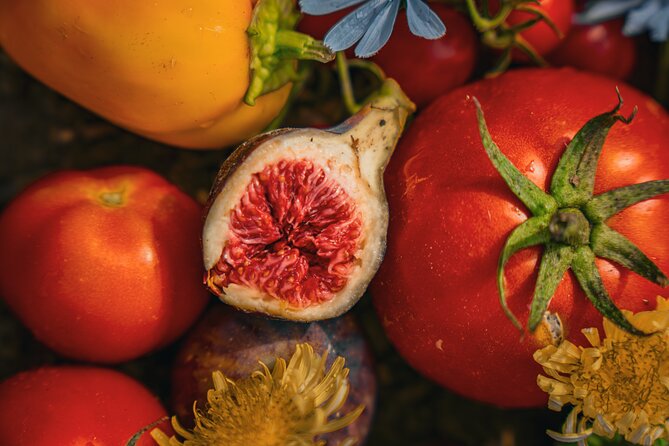
As you walk, Ivica points out the plants growing around the property. Depending on the season, you might see or taste figs, blackberries, grapes, almonds, pomegranates, winter oranges, tomatoes, bell peppers, plums, cherries, potatoes, rosemary, bay leaves, and wild flowers. The point is not to rush from one formal stop to another. The farm itself becomes the lesson.
Some of the most appealing details are small ones. You may taste an almond straight from the tree, pick fruit, or smell a herb growing beside the path. These moments explain how closely food and farming remain connected here. They also make the visit more useful than a standard tasting room stop, where the products arrive in neat bottles with little sense of their source.
The farm covers about 100 acres, according to the description shared during the experience, and the Vlašić family has tended the property for roughly three centuries. That does not mean every part of the land is cultivated or that you will walk across all of it. It does mean the visit has a strong sense of continuity, with family work, local plants, and old terraces tied together in one place.
Learning from Ivica Vlašić in the open air
Ivica is both host and guide. He explains cultivation and production through his own family’s work, education, and time in the fields with his father and grandfather. You are not getting a scripted museum talk. The farm is the classroom, and the examples are growing around you.
The strongest part of this approach is the connection between process and taste. You see olive trees before sampling the oil. You walk through fruit trees before trying fruit liqueur. You pass the vineyard before sitting down with wine. That order gives the tasting more meaning.
Ivica also shares the family’s reconnection with the farm and the history of the region. Exact details will depend on the questions you ask and what is happening on the property that day, but the format leaves room for conversation. If you are curious, ask about harvest timing, how olive oil is used, or which plants are grown for food and which are used for flavor.
The family atmosphere is one of the main reasons to choose this outing over a larger commercial wine tour. It can feel closer to being shown around a private family property than to attending a formal production facility. That personal quality is also why the tour suits people who enjoy meeting local hosts and hearing stories directly.
The tradeoff is that the visit may feel less polished than a large winery with a dedicated tasting room, printed diagrams, and a long list of wines. Vardia is a small family farm. Its appeal is the land and the host, not a highly staged production show.
Olive oil, bread, salt, and vinegar
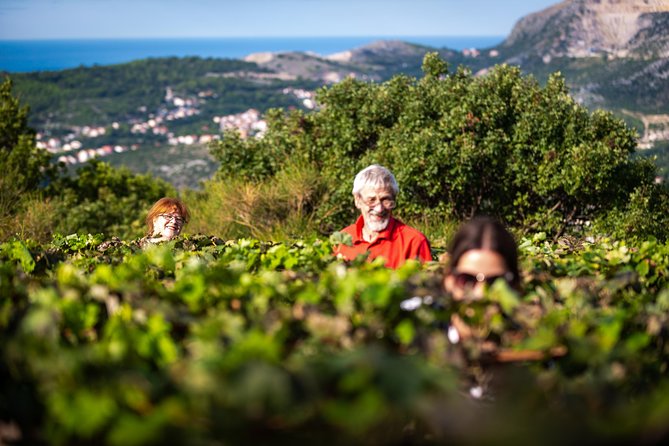
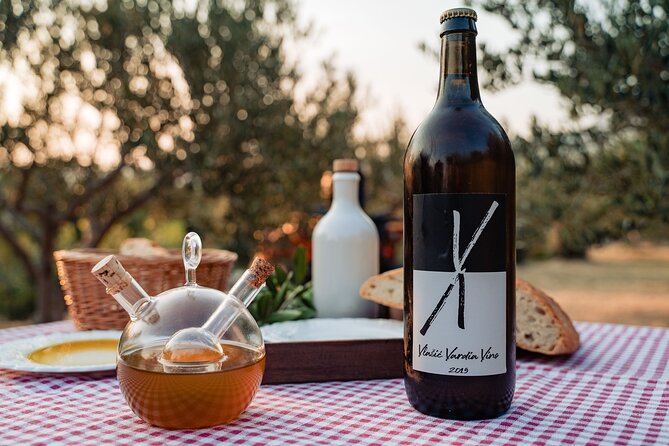
After the walk, you settle in for the tasting. The central item is olive oil served with homemade bread, salt, and vinegar. You taste the oil in three different ways, which helps you notice how the same ingredient changes when paired with simple additions.
This is a better lesson than swallowing a small sample and moving on. Bread shows the oil’s texture and flavor in a familiar way. Salt sharpens it. Vinegar changes the balance. You can compare the combinations and decide what you prefer instead of treating olive oil as a single, anonymous product.
The bread is homemade, and additional farm-made foods may include shortbread, apricot jam, or sugared almonds. Exact offerings can vary, so I would not book this as a full breakfast or lunch. Think of it as a generous tasting built around local products.
The oil is not presented alone. It is part of a wider picture of food production on the farm. You have just seen the trees, the herbs, and the fruit, so the table feels connected to the ground under your feet.
If olive oil matters to you, this is likely the most valuable part of the visit. You can learn a little about production without committing to a full specialist workshop. If you are not especially interested in olive oil, the wine, fruit, views, and family story keep the tasting from feeling narrow.
More Farm Tours in the world:
- Half-Day Thai Cooking Class at Organic Farm in Chiang Mai
★ 5.0 · 19,087 reviews - Florence Pizza or Pasta Class with Gelato Making at a Tuscan Farm
★ 5.0 · 6,801 reviews - Cooking Class and Lunch at a Tuscan Farmhouse with Local Market Tour from Florence
★ 5.0 · 4,831 reviews - Chiang Mai: Authentic Cooking Class with Market & Farm Visit
★ 4.9 · 4,546 reviews
White wine, herb brandy, and fruit liqueurs
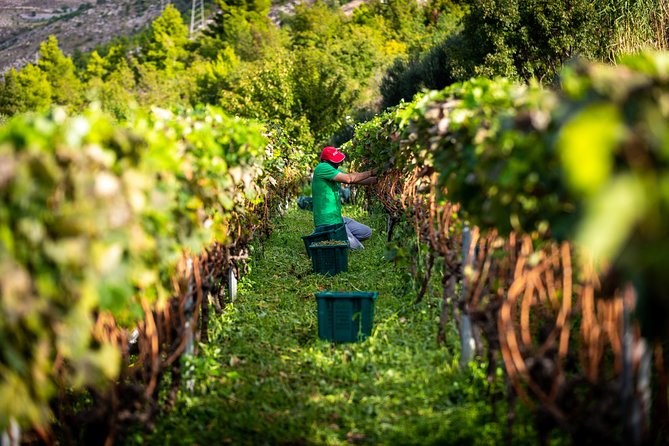
The farm also serves its white wine. The tasting may include two types of wine, and the lemon wine has received particular praise from people who tried it. You may also taste a homemade herb brandy or fruit liqueur made from the orchard.
The walnut liqueur is another memorable possibility, made with walnuts grown on the property. These drinks give you a clear sense of how the family uses its own produce beyond fresh eating. The tasting can include several different flavors, but this is not a large-scale wine flight with many labels.
That distinction is useful. If you want to compare a dozen Croatian wines, visit a dedicated winery or book a formal wine tour. At Vardia, the drinks are part of a broader farm visit. You are tasting the products while hearing where they come from and how they fit the family’s work.
The alcohol also means you should pace yourself. The tour includes walking, and the morning start is early. You can focus on small tastes rather than treating the stop as a drinking session. The description does not promise a meal, so eat beforehand if you need a substantial breakfast.
Families can also find this outing workable, since substitutes are available for children. Still, the activity includes a hill walk and tastings built around adult drinks. Parents should decide if that combination suits their children.
Views, quiet, and the change of pace
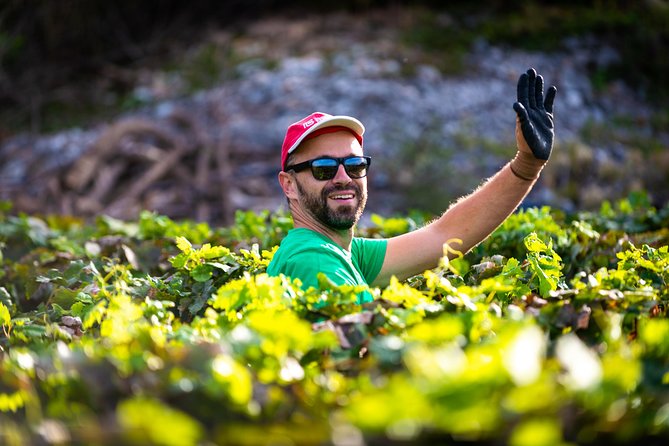
The Adriatic view is one of the farm’s strongest features. From the hill, you look out across a quieter setting than the Old Town, with the sea below and cultivated land around you.
I like that the scenery is not separated from the activity. You are not simply driven to a viewpoint, given five minutes for photographs, and moved on. The view accompanies the walk and the tasting. You can take your time with the food while looking over the countryside.
The morning departure also shapes the mood. At 8:30 a.m., you leave Dubrovnik before giving the city your full day. After about two hours and 45 minutes, you return with time remaining for sightseeing, swimming, or a late lunch.
There is also a sunset version of the walk, according to the information shared about the experience. The scheduled tour described here starts in the morning, so confirm the exact option when booking if sunset is important to you. The morning version is the safer choice for fitting into a busy itinerary.
What $84.10 gets you
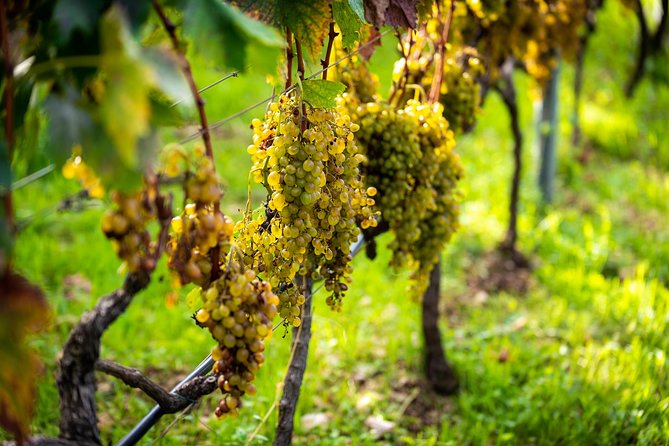
At $84.10 per person, this is not a bargain-basement farm visit. The price makes more sense when you count the parts together: hotel or meeting-point pickup, return transport, a small group, a guided walk, a farm lesson, homemade food, olive oil, wine, and liqueur tastings.
You are also paying for access to a family property that is not simply a public shop. The setting, the host, and the chance to taste ingredients connected to the farm are the real purchase.
The value is strongest for you if you want an authentic rural activity without renting a car. It is also good if you have only a few days in Dubrovnik and do not want to spend a full day traveling to a vineyard farther away.
The value is weaker if you only want wine. The tasting is not built around a wide selection of bottles, and olive oil and farm produce take equal billing. It may also feel expensive if you are not interested in walking or in hearing how food is grown.
The experience has received a five-star rating from all 41 recorded ratings and is recommended by 100 percent of participants. Those figures suggest a very consistent response, but they do not change the practical facts: the tour depends on good weather, includes outdoor walking, and is best for people who enjoy a personal, small-scale visit.
Who should book this farm visit
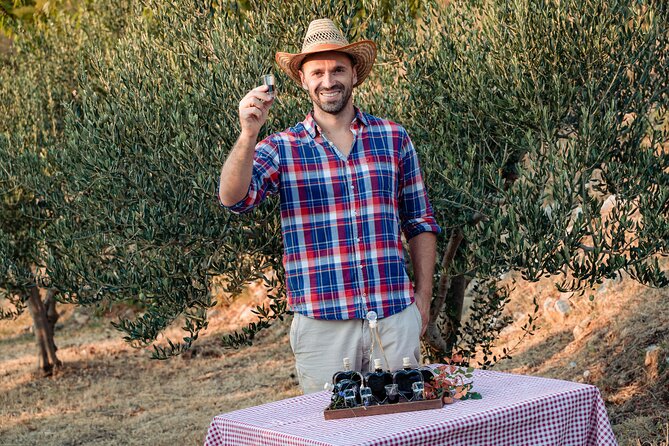
I would choose Vardia for a couple, solo visitor, or small group looking for a calm break from Dubrovnik’s main sights. It suits you if you want local food, conversation, countryside, and a little exercise in one outing.
It is especially useful for:
- People without a rental car who want an easy trip outside Dubrovnik
- Visitors interested in olive oil and how farm products are made
- Couples looking for a quiet morning with food and views
- Families whose children can manage a moderate walk
- Anyone who prefers a group of eight or fewer
- Repeat visitors who have already seen the Old Town and want a different side of the region
You may want another type of tour if you need fully accessible paths, dislike uneven ground, or want a serious wine education with many producers and bottles. The activity requires a moderate level of physical fitness, and the walk goes down and back up the hill.
Pickup is offered from any hotel or meeting point in the Dubrovnik area. Confirmation arrives when you book. Service animals are allowed. Since the visit requires good weather, poor conditions may lead to a different date or a full refund.
The cancellation rule is simple: cancel at least 24 hours before the start time for a full refund. Changes or cancellations inside that window are not accepted for a refund.
Should you book Vardia farm?
Book it if you want a personal connection to Dubrovnik’s countryside, not just another city attraction. Ivica Vlašić, the family farm, the old terraces, and the tasting table create a thoughtful three-hour break from the crowds.
The best reason to go is the combination. You walk among olives and fruit trees, hear how the property has been worked for generations, then taste the oil, bread, wine, and liqueurs in the same setting. Bring good shoes, arrive ready for a moderate walk, and expect a small farm visit rather than a grand winery tour.
If that sounds like your kind of morning, $84.10 is a fair price for the transport, setting, personal hosting, and food included. If you want a large wine selection, a full meal, or a completely flat route, choose another activity.
FAQ
Where is Vardia farm located?
Vardia farm is on Malaštica Hill, about 200 metres above the Adriatic Sea, near the border with Bosnia and Herzegovina. It is about a 15-minute scenic drive from Dubrovnik Old Town.
How long does the experience last?
The tour lasts approximately 2 hours and 45 minutes, including transport, the farm walk, explanations, and tastings.
What time does the tour start?
The scheduled start time is 8:30 a.m.
Is hotel pickup available?
Yes. Pickup is organized in front of hotels or at meeting points in the Dubrovnik area, followed by return transport to your accommodation.
How large is the group?
The experience has a maximum of eight participants.
What food and drinks are included?
You taste olive oil with homemade bread, salt, and vinegar. The experience also includes white wine and a homemade herb brandy or fruit liqueur made with produce from the farm’s orchard.
How much walking is involved?
The visit includes an easy but moderate hike down and back up the hill, with about 30 minutes of walking through olive groves, the organic farm, and an old oak forest.
What should I wear?
Wear sensible shoes suitable for uneven paths and a hill walk. A moderate level of physical fitness is required.
Can I cancel for a full refund?
Yes. You can cancel at least 24 hours before the start time for a full refund. If poor weather causes the provider to cancel the activity, you will be offered another date or a full refund.
Just added around the world
- Hoi An: Cycling – Water Buffalo Riding Farming and Fishing★ 5.0 · 2 reviews
- Cycling, Water Buffalo Riding, Traditional Farming Life★ 5.0 · 10 reviews
- Side, Alanya: Green Canyon Boat, Waterfall&Orchards Mix Tour★ 4.3 · 14 reviews
- Farmers Market visit & Turkish Cooking Class★ 5.0 · 60 reviews
- 2-Hour Alpaca Farm Experience in Kenilworth★ 4.5 · 14 reviews
- Cycling Through Vineyards & Farm Lunch & Ephesus visit★ 5.0 · 52 reviews
- Liverpool Music Icons Tour led by a member of 90s band The Farm★ 5.0 · 51 reviews
- Guided Hebridean Farm Hike near Tobermory, Isle of Mull, Scotland★ 5.0 · 25 reviews
Olive Grove Tours, compared.
Olive Farm Tour with Tasting of Local Delicacies
Read our review →
Traditional Olive Grove and Dragon Fruit Farm Tour
Read our review →
Kleanthi Olive Farm: Guided Tour with Local Delicacies Tasting
Read our review →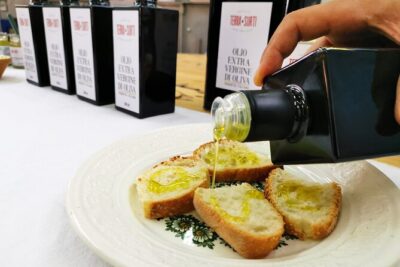
Visit to the olive grove, oil tasting and lunch at the farm
Read our review →
Private Traditional Olive Grove and Dragon Fruit Farm Tour
Read our review →Lists this farm appears in