
Reviewed · COOKING CLASSES
Village cooking class in an Agritourism Unit in Arcadia, Greece!
The best part of this experience is that it takes you well beyond the usual Kalamata food stop. You travel about 70 kilometers into mountainous Arcadia, walk through the fields, pick vegetables, and cook with local women in a working agritourism unit. I especially like the private format and the chance to make dishes such as kolokythopita and trachanokeftedes, rather than simply watching a demonstration.
I also like the cookware museum and the library, with more than 650 cookbooks and books dating back to the 19th century. Maria, the local host and guide, helps connect the food to Arcadian customs. The main drawback is the price, $382.01 per person, plus possible transport costs if you do not have a car. The long drive from Kalamata and the strict cancellation terms also call for careful planning.
Key points to know before booking
- A private six-hour food day: Once booked, the experience is reserved for your group alone.
- A mountain drive from Kalamata: The Arcadian workshop is about 70 kilometers from Kalamata and requires transport.
- Hands-on village cooking: You may prepare embroidered bread, courgette or pumpkin pie, fermented milk pasta balls, and other local foods.
- A rare cookware collection: The stone building contains a museum of household cooking items and a library with more than 650 cookbooks.
- Seasonal farm work: Field visits and vegetable picking run from March through October, with wheat harvesting possible in June.
- A full meal with local drinks: Your lunch includes the food you prepare, regional products, Greek wine, and ouzo.
From Kalamata to mountain Arcadia
Your day begins at 9:00 a.m. at the Kalamata Port Authority. From there, you need to reach a small village in the heart of Arcadia. The workshop is described as about 70 kilometers, or 45 miles, from Kalamata and roughly an hour away by road.
That transfer matters. This is not a short cooking lesson you can fit between two Kalamata sights. It is a full countryside outing, and the drive is part of the reason the day feels different from a city-based food class. You move from the coast and olive-growing country toward the mountains, where the setting is tied closely to farming and older village customs.
You can use your own vehicle, but transport can be arranged through local partners for an extra charge. Confirm this before paying. The advertised price does not include the transfer, so your final cost may be higher than $382.01 per person.
The return is to the same meeting point in Kalamata. Since the activity lasts around six hours, allow enough room in your schedule for the drive and any normal changes in the day. I would not pair this with a tightly timed ferry, flight, or evening appointment.
More Cooking Classes in Greece:
- Naxos Perivoli Farm Experience & Wood-fire Cooking Class
★ 5.0 · 339 reviews - Melanes: Naxos Perivoli Farm & Cooking Class with Wood Fire
★ 5.0 · 177 reviews - Santorini Family Farm Food & Wine Tour with Cooking Class
★ 5.0 · 107 reviews
The Arcadian workshop and its stone setting
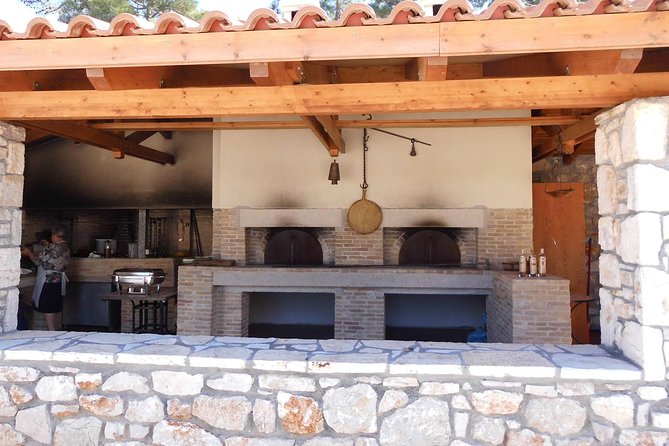
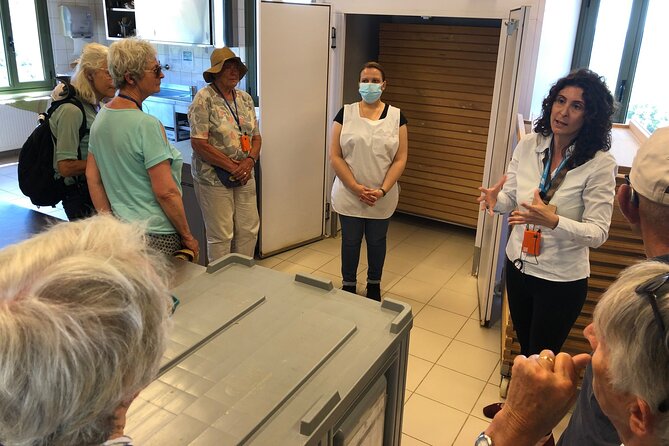
The destination is an agritourism unit and traditional food workshop built on 2.5 acres. The two-storey stone building looks toward Mount Lykaio and the village of Karytaina. You are not entering a polished cooking studio designed only for tourists. The place is built around local products, old recipes, food preparation, and the countryside around it.
Your guided tour covers three main indoor areas:
- The traditional food preparation area
- The Cookware Museum
- The library of more than 650 cookbooks
The food preparation area gives context to the class. You see where local products are made and how village food traditions are kept in use. That makes the cooking lesson more meaningful because you are learning in a place linked to the food itself.
The cookware collection is a strong reason to choose this experience. It displays items used by Greek village households as far back as the early 1900s. Some of the old books date to the 19th century, adding another layer to the visit. I like this part because it shows cooking as daily work, not just a list of famous Greek dishes.
The library is another unusual touch. With more than 650 cookbooks, it offers a chance to look at recipes from Arcadia and beyond. Maria explains local gastronomy and customs during the tour, so the books and objects are not left without context.
Picking vegetables and working with the seasons
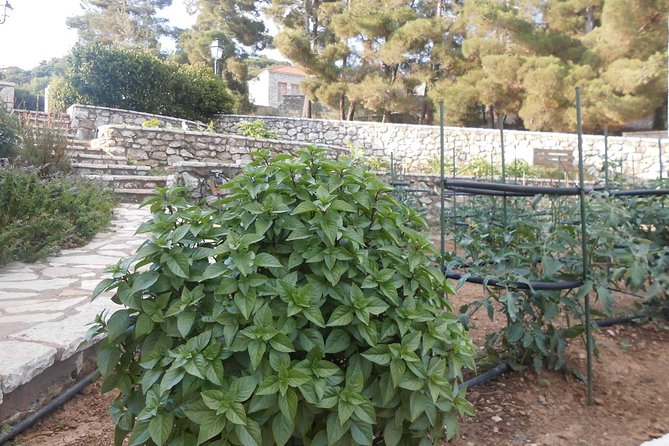
From March through October, the outdoor part of the day can include a walk through the fields and vegetable picking in the garden. This gives you a direct connection to the ingredients that later appear at lunch.
The timing of your visit changes the experience. June may include wheat harvesting in the wheat fields. That is a seasonal activity, not a guaranteed feature for every date, so ask about it when booking if it matters to you.
You should wear comfortable shoes and a hat. You will spend a good amount of time outdoors, and the advice is practical rather than decorative. The provider also asks you to report allergies, including food allergies and bee allergies, before the experience.
The farm portion is not described as a long agricultural work session. Think of it as a guided look at the fields and garden, with the chance to pick fresh produce and understand how local cooking starts. If you want a strenuous farm day, this may feel light. If you want a gentle connection to rural life before lunch, it fits well.
Cooking with local village women
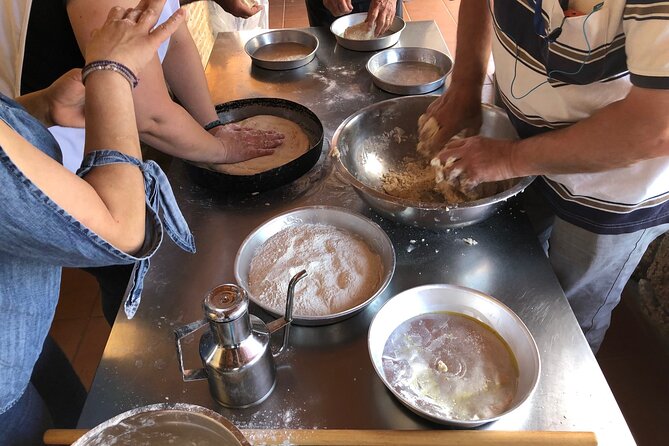
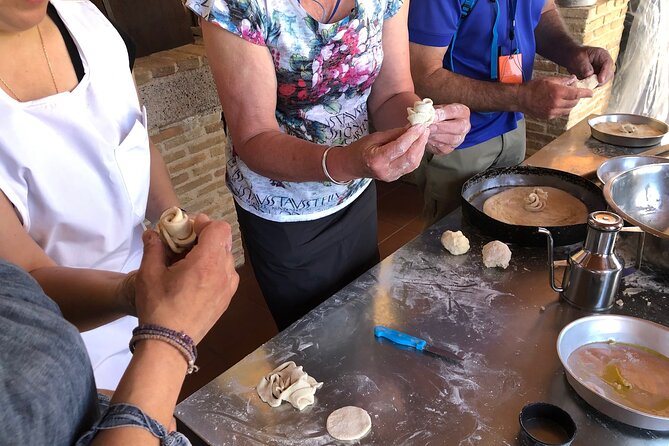
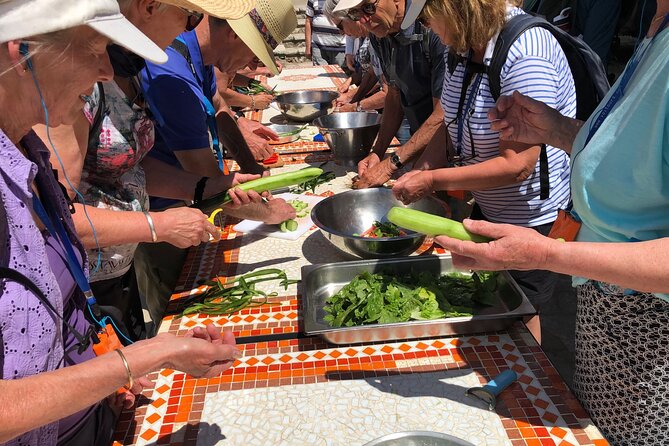
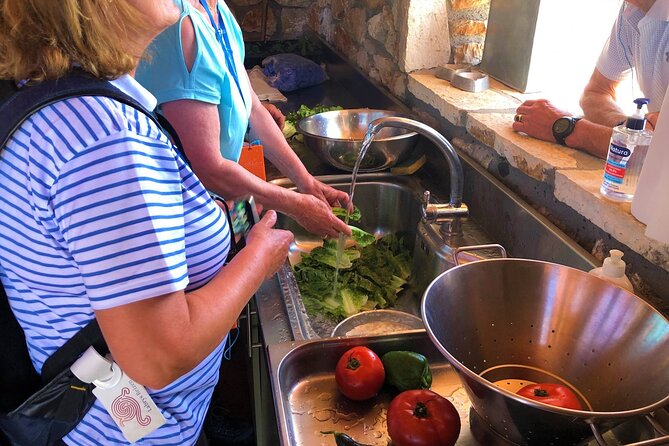
The hands-on class is led by a local chef and host, with local women helping in the workshop. Maria serves as the guide and keeps the day moving, answering questions about Arcadian food and customs. The class is designed to be practical, so you prepare food rather than simply watch someone else cook.
The exact recipes can vary. Possibilities include:
- Embroidered bread made from scratch
- Kolokythopita, using courgette or pumpkin
- Trachanokeftedes, made with fermented milk pasta
- Other local dishes and village specialties
Kolokythopita is a useful choice for anyone curious about Greek pies beyond the familiar spinach version. Trachanokeftedes is less familiar to many visitors and gives you a taste of a traditional fermented grain and dairy preparation in a different form.
The embroidered bread is also memorable because the appearance is part of the craft. You learn how dough can carry a decorative village tradition, not just serve as something to put on the table.
The recipes are not guaranteed in advance, so contact the provider if a particular dish is your main reason for booking. Dietary needs can be discussed, including vegetarian, vegan, pescatarian, and flexitarian diets. The same applies to allergies. Do this before the booking is finalized, not on the morning of the tour.
The class suits people who enjoy participation. You may need to stand, handle ingredients, and follow instructions in a working food area. Families can take part, and the unit also accepts school groups and team-building events. The private format makes it easier for your group to ask questions and work at its own pace.
More Workshops in Greece:
- Moires: Cooking Class and Olive Oil Tasting at a Family Farm
★ 5.0 · 93 reviews - Mykonian Farm and Bakery Class with Brunch in Greece
★ 4.5 · 39 reviews - Traditional Greek Cooking Class @ Lefkada Micro Farm
★ 4.7 · 32 reviews - From Mykonos: Mykonian Farm Baking Class with Brunch
★ 4.7 · 29 reviews
Lunch built around what you made
After the class, you eat at the on-site restaurant. Lunch includes the dishes prepared during the lesson, along with local products from the Arcadian workshop and other Greek producers.
The meal can include wrapped meat with grilled vegetables, rooster with local pasta, vegetarian dishes, traditional cheeses, and appetizers. The exact spread depends on the day and the cooking program, but this is not a small tasting plate. Lunch is a central part of the experience.
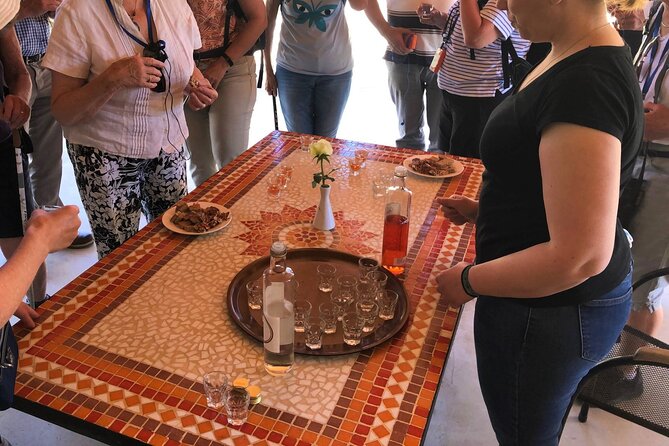
Greek wine from local producers is included, with red and white options, as well as ouzo. Coffee or tea and snacks are also part of the package. If you do not drink alcohol, the meal still includes plenty of food and nonalcoholic choices, but mention any preferences ahead of time.
I like the way the lunch completes the lesson. You pick or handle ingredients, learn a preparation, and then sit down to eat the results. The meal also gives you a chance to try products you did not personally prepare, including regional cheeses and other workshop specialties.
This is a good setting for a long, social meal. It is less suitable if you want to rush through lunch and return quickly to Kalamata. The day is built around food as a shared activity, not food as a quick stop.
How private is the private format?
The experience is reserved for your group only once the booking is made. No other group is added for the day. That is important at this price, particularly for couples, families, or a small group of friends who want a personal cooking lesson.
A private tour also helps if your group has special dietary needs or different cooking experience levels. You can discuss those matters with the host in advance and ask questions during the lesson without competing with a large class.
The private format does not mean every part of the day is isolated. You may work with local women at the workshop, and the experience is built around contact with the people who prepare the food. That human element is one of its strongest features.
The day can also be combined with accommodation in a traditional three-level stone villa in the village. This costs extra, must be arranged 15 to 20 days in advance, and includes local breakfast. It may suit you if you want to turn the cooking day into a rural overnight stay rather than return to Kalamata immediately.
Is $382.01 per person good value?
At $382.01 per person, this is an expensive food activity. You are paying for more than a meal, though. The price includes the cooking class, lunch, guide or local chef, coffee or tea, snacks, alcoholic drinks, and all fees and taxes.
You also receive a private six-hour experience, a guided workshop tour, access to the museum and library, and time in the fields and village. That makes the value easier to understand for a couple or small group that wants a custom day rather than a standard group excursion.
Transport is the important extra. If you do not have a vehicle, transfer service can be arranged at an additional cost. Ask for the full total before confirming. Personal purchases at the gift shop and tips are not included.
I would not choose this activity for a budget-minded visitor looking only for a Greek cooking class. Kalamata has less costly food experiences, and this one requires a long transfer. I would consider it good value if you place a high price on privacy, rural access, old culinary objects, and a full meal with wine.
Booking details that can affect your plans
The experience is offered Monday through Sunday, except Holy Friday, Easter Tuesday, and Greek official holidays. It operates on request and depends on availability. Confirmation can take up to 48 hours.
The booking and full payment must be completed at least three days before the experience. Since the activity is non-refundable and cannot be changed after booking, confirm the date, transport, food needs, and weather before paying.
Good weather is required because part of the day takes place outdoors. If poor weather forces cancellation, you are offered another date or a full refund. That protection applies when the provider cancels for weather, not when you cancel for personal reasons.
The activity is family-friendly and near public transportation, but transport is still needed to reach the workshop from Kalamata. I would not assume that local buses make the full journey convenient. Ask the operator about your exact transport plan.
Who should book this Arcadian food day?
I would recommend it most strongly to people who want food connected to place. You see the garden, visit the workshop, handle traditional recipes, and learn how food fits into village life. It works especially well for couples, families, and private groups who enjoy a relaxed day with plenty of conversation.
It is also a strong choice for anyone interested in food history. The old cookware, 19th-century books, and large cookbook library give the visit more substance than a basic recipe lesson.
The experience may not suit you if you dislike long drives, outdoor time, or a fixed six-hour schedule. It also may not be the right choice if you need guaranteed recipes, a low price, or a fully accessible indoor activity. The available information does not describe accessibility arrangements, so ask directly if that is important for your group.
Should you book it?
Book this experience if you want a private, hands-on day in the Arcadian countryside and value the combination of cooking, farming, food history, and a generous local meal. Maria’s guiding, the friendly workshop cooks, the cookware museum, and the old recipe books give the day a clear sense of place.
Skip it if the price and extra transfer cost stretch your budget, or if your Kalamata schedule cannot spare most of a day. Before booking, confirm the transport price, the recipes planned for your date, your dietary needs, and the weather outlook. For the right group, this is less a cooking class than a full introduction to how one corner of Greece grows, prepares, preserves, and shares its food.
FAQ
Where does the experience start?
It starts at the Kalamata Port Authority, Mpoumpoulinas 4, Kalamata 241 00, Greece, at 9:00 a.m.
Where does the experience end?
The activity ends back at the meeting point in Kalamata.
How long does the experience last?
The experience lasts approximately six hours.
How far is the Arcadian workshop from Kalamata?
The workshop is about 70 kilometers, or 45 miles, from Kalamata and is described as roughly one hour away.
Is transportation included?
Transportation to the Arcadian workshop is not included in the listed price. You can use your own vehicle, or transport may be arranged through partners for an additional charge.
What food might I learn to prepare?
Possible dishes include embroidered bread, kolokythopita made with courgette or pumpkin, trachanokeftedes, and other local foods. The exact cooking program depends on availability.
What is included with lunch?
Lunch includes the food prepared during the class, local Greek products, coffee or tea, snacks, local red or white wine, and ouzo.
Can dietary needs or allergies be accommodated?
You should notify the provider about dietary needs such as vegetarian, vegan, pescatarian, or flexitarian preferences, as well as food or bee allergies.
Is the activity refundable if I cancel?
The experience is non-refundable and cannot be changed for personal reasons. If poor weather causes the provider to cancel, you are offered another date or a full refund.
Just added around Greece
- Volos: Cook Like a Local at a Greek Farm★ 5.0 · 7 reviews
- Traditional Greek Cooking Class @ Lefkada Micro Farm★ 4.7 · 32 reviews
- Visit a Farm and Horseback Riding in Nature★ 5.0 · 10 reviews
- Insightful Pistachio Orchard and Factory Tour★ 4.5 · 27 reviews
- Flavors of Santorini: Farm-to-Table Meal Wine & Authentic Village★ 5.0 · 12 reviews
- Santorini 5 Hour Private Oia Tour & Lunch/Dinner at a Local Farm★ 5.0 · 40 reviews
- Cooking Class Sunset Dinner and Tour in Paros Farm★ 5.0 · 5 reviews
- Olympia Shore Ex: Olympic site, Honey Farm & Olive Oil Tasting★ 4.5 · 57 reviews
Cooking Classes, compared.
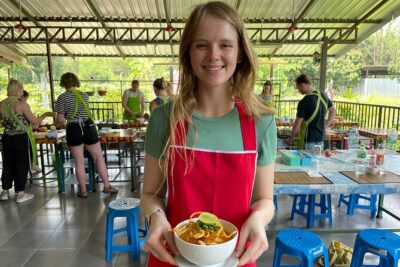
Half-Day Thai Cooking Class at Organic Farm in Chiang Mai
Read our review →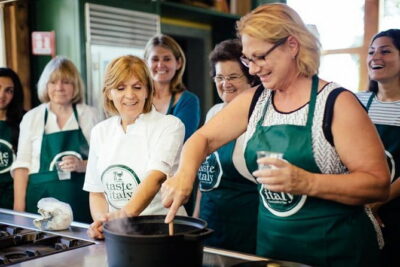
Cooking Class and Lunch at a Tuscan Farmhouse with Local Market Tour from Florence
Read our review →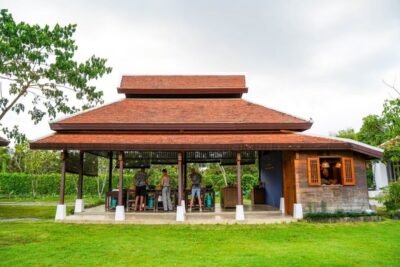
Authentic Cooking Class with Market & Farm Visit
Read our review →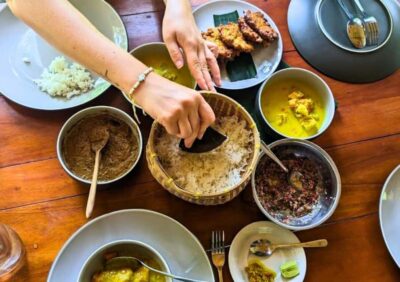
Hands-On Cooking Class & Farmhouse Tour on the Amalfi Coast
Read our review →
Lists this farm appears in