
Reviewed · TRAIN EXPERIENCES
Small train tour of a banana farm in Martinique
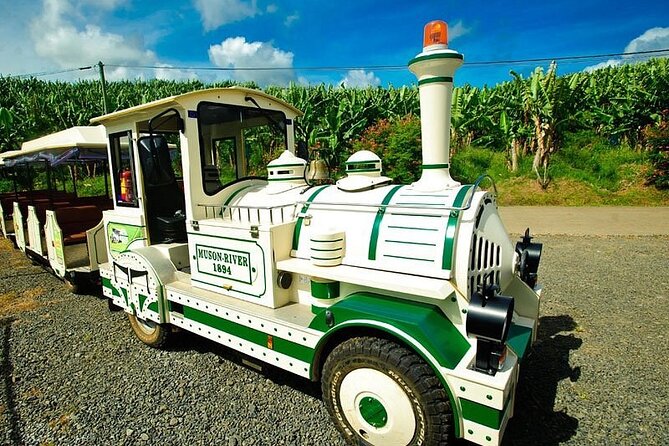
Martinique’s Belfort farm turns banana growing into a gentle, practical tour by small train. You roll through 65 hectares of banana plants, sugar cane, and fruit trees while the guide explains how the island’s bananas are grown. The ride is designed for children and adults, and it can go ahead in rainy weather.
I like the clear look at real farming, rather than a museum display, and the chance to see how bananas reproduce and reach the market. I also like the finish: a tasting of bananas and other local products, with guides such as Bruno adding music, humor, and plenty of personality.
The main caution is logistics. The access road has been described as rough for about 500 meters, and the small train has occasionally broken down. English is offered, but some English-speaking visitors have received only limited translation, so confirm the language arrangements before you go.
Key points to know before you book
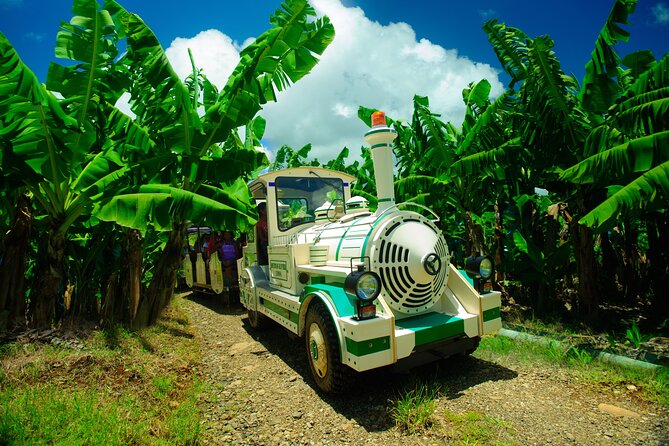
- A 65-hectare working farm: The train covers a large property with banana fields, sugar cane, fruit trees, and a river area.
- About 50 minutes on the train: The full activity takes roughly one hour, including the end tasting.
- Bruno may be your guide: He is known for friendly explanations, music, and a good sense of humor.
- Rain is not a deal breaker: The train allows the tour to continue in wet weather.
- A tasting finishes the visit: Expect bananas and prepared local products at the end.
- Check the meeting point carefully: The tour begins at Chemin Soudon in Le Lamentin, not at the Banana Museum in Sainte-Marie.
A small train through Martinique’s banana country
This is a simple idea, but it works well. Instead of walking through rows of plants under a hot Caribbean sun, you sit on a small train and let the farm come to you. The route covers the property while the guide points out growing methods, fruit trees, and the stages of banana production.
The setting is the Lamentin countryside, an area of open greenery away from the main city sights. You are not just looking at decorative gardens. You are seeing a working agricultural property and learning about the practical decisions behind Martinique’s banana industry.
The train makes this especially easy for families. Young children can stay interested because the ride keeps moving, while adults get a better sense of the size of the farm. Several stops allow the guide to explain details up close, rather than giving one long talk from a fixed building.
The activity is listed as about one hour, with the train portion lasting approximately 50 minutes. That makes it a manageable choice for a morning or afternoon between other Martinique plans. It is not a full-day excursion, and you should not expect a long walk, a large museum, or a formal agricultural course.
More Train Trips in the world:
- Floating & Railway Market and Coconut Farm Tour [Optional Luxury]
★ 5.0 · 835 reviews - From Bangkok: Floating & Railway Markets Tour & Coconut Farm
★ 4.7 · 145 reviews - Palma: Orange Valley Vintage Train and Orange Farm Tour
★ 4.7 · 49 reviews
What you learn about bananas at Belfort
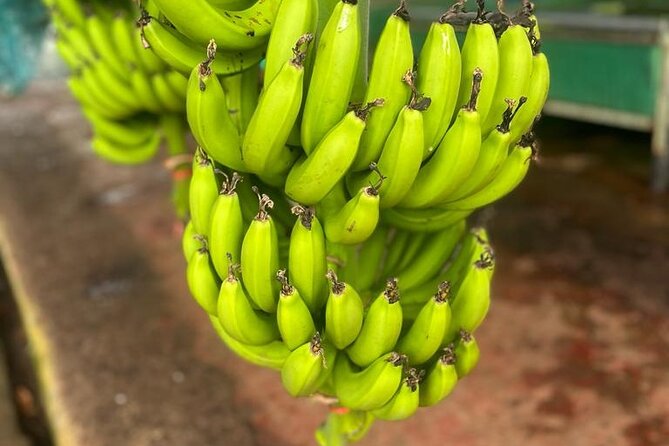
The focus is the Martinique banana, including the methods developed on the farm over more than 30 years. The guide explains how the plants are grown and points out the different stages of production as the train passes through the fields.
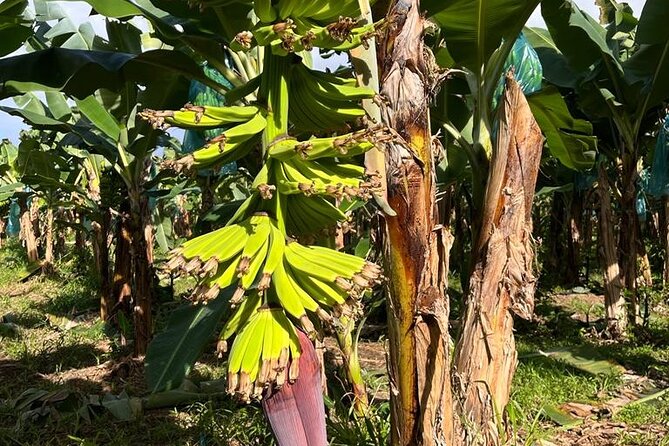
One of the most useful parts is the explanation of reproduction. Even people familiar with bananas may not know the different ways banana plants are propagated. The tour makes this part visible, using the plants around you instead of relying only on diagrams or technical language.
The commentary also places bananas within the wider farm. You may see sugar cane, coconut trees, mango trees, papaya, and other fruit trees along the route. This helps you understand that the visit is not limited to a single crop. It is a look at a tropical agricultural property with several kinds of plant life growing side by side.
The guide may stop to show a particular plant or explain a farming step in more detail. Bruno is the guide most often associated with the experience, and his style includes music, jokes, and a welcoming manner. A trumpet or musical welcome has also been part of the visit, giving the short ride a festive local touch.
The explanations are meant to be accessible, not highly technical. That is good news if you are traveling with children or simply want an introduction to banana farming. If you already work in agriculture, you may find the information basic. For most people, the value comes from seeing the process in the field and tasting the result afterward.
The farm route, from banana rows to fruit trees
The only listed stop is Belfort in Le Lamentin, but the train route itself has several points of interest. You meet at Chemin Soudon, Le Lamentin 97232, and the activity ends back at the same place.
Once aboard, the train carries you through the banana-growing area. The route gives you a broad view of the property while the guide explains what you are seeing. Because the farm covers 65 hectares, the train is more than a novelty. It is a practical way to cover ground that would be tiring to walk.
The banana rows are the heart of the tour. Look for the guide’s demonstrations about planting, growth, and reproduction. The stops matter because banana plants can look similar at first glance. A good explanation helps you notice the differences between a young plant, a mature plant, and the parts used to continue production.
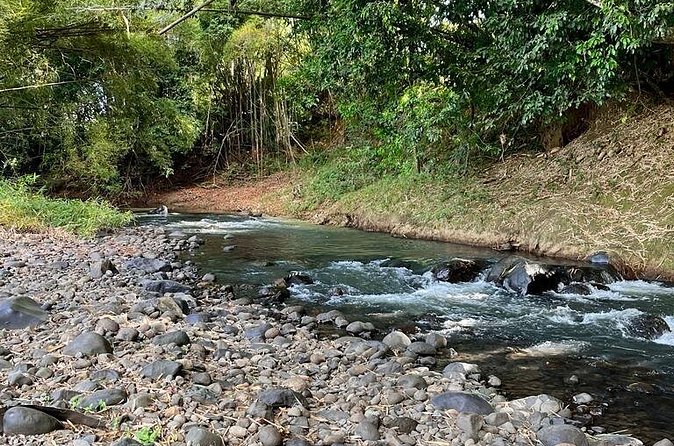
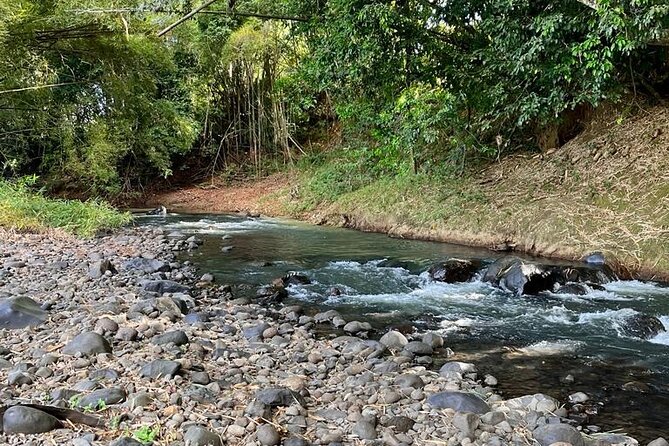
The route also passes sugar cane and a range of tropical fruit trees. Depending on the conditions, you may see a river area and turtles. These details add variety to what could otherwise be a single-crop visit.
The scenery is likely to appeal to families who want an easy outdoor activity without committing to a strenuous hike. You get fresh air, changing views, and a steady pace. The tradeoff is that the train limits your freedom to wander. This is a guided route, not an open farm visit where you explore at your own speed.
The tasting at the end
The tasting is an important part of the experience, not an afterthought. After seeing the crop in the field, you get to sample bananas and products made from local ingredients. This gives the visit a clear finish and connects the agricultural explanation with something you can actually taste.
The exact selection is not specified, so you should not expect a fixed menu of named dishes. The available descriptions point to bananas and prepared products, with some mention of local products and exotic fruit. Several comments describe the tasting as excellent or very enjoyable.
The amount may be modest. One family found the tasting good but not especially generous. That is worth keeping in mind if you are expecting a full snack or meal. I would treat it as a sample of farm products, not lunch.
You can also buy products after the tour. If you want a small food souvenir from Martinique, this is more meaningful than picking up a generic item in a shop. Just remember that any purchase will depend on what is available that day.
More Farm Tours in the world:
- Half-Day Thai Cooking Class at Organic Farm in Chiang Mai
★ 5.0 · 19,087 reviews - Florence Pizza or Pasta Class with Gelato Making at a Tuscan Farm
★ 5.0 · 6,801 reviews - Cooking Class and Lunch at a Tuscan Farmhouse with Local Market Tour from Florence
★ 5.0 · 4,831 reviews - Chiang Mai: Authentic Cooking Class with Market & Farm Visit
★ 4.9 · 4,546 reviews
Why the tour works well for families
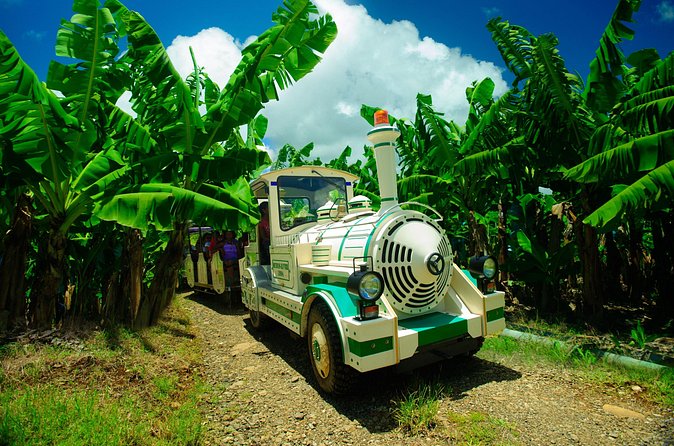
The small train is the main family advantage. Children do not need to walk long distances, and the ride gives them a clear activity from start to finish. Families with children as young as two have found the format manageable, and children around five to seven can take part in the stops and tasting.
The guide’s personality matters here. Bruno is described as patient, funny, and clear, with music helping maintain the mood. A friendly guide can make agricultural details easier for children to follow, especially when the subject is something familiar from the supermarket but unfamiliar as a living crop.
There are a few comfort concerns. Seating has been criticized when too many people were placed on a narrow bench, and passengers at the back may have a harder time seeing the demonstrations. If seating is assigned or flexible, try to arrive in time to ask about a forward position.
The tour is also suitable for solo visitors and couples who want something different from beaches and historic towns. You get a local subject, a guided look at farming, and a tasting without spending half a day on the activity.
Rain, roads, and the practical side
The train is designed to operate in rainy weather, which is useful in Martinique. A shower does not automatically mean you need to cancel your plan. Still, rain may affect visibility, comfort, and the condition of the access road.
The road leading toward the banana grove has been described as rough for more than 500 meters. Drive slowly and allow extra time. This point matters if you have a low-clearance vehicle or are using a rental car that you want to keep in good shape.
The meeting point is Chemin Soudon in Le Lamentin. Pay close attention to that address. It is not the Banana Museum in Sainte-Marie, and going to the museum will not lead you to this train. The farm and the museum are separate places.
There has also been at least one occasion when the train broke down, causing a delayed start and a change in the planned visit. This appears to be an operational risk rather than the normal experience, but it is sensible not to schedule an important flight, cruise departure, or timed attraction immediately afterward.
The activity is private, meaning only your group participates. That can make the visit feel more personal, though the available details do not specify the exact size of each train group or how seating is arranged. Confirmation is provided at booking.
Language and guide expectations
The tour is advertised in English and French. That makes it a possible choice for English-speaking visitors, but I would still confirm the English arrangements before paying, especially if detailed explanations matter to you.
Some English-speaking participants have found that most of the commentary was in French, with only a few English sentences provided on request. If you understand French, this is unlikely to be a problem. If you do not, you may still enjoy the scenery and tasting, but you could miss much of the farming information.
Bruno appears to be the guide most closely linked with the tour. His approach is lively and informal, with music and humor included in the experience. You should expect a personable farm guide rather than a formal academic lecture.
If you book in English, ask whether the full tour will be given in English on your chosen date. That one question can make the difference between a useful agricultural tour and a pleasant train ride with limited commentary.
Is $23.88 a fair price?
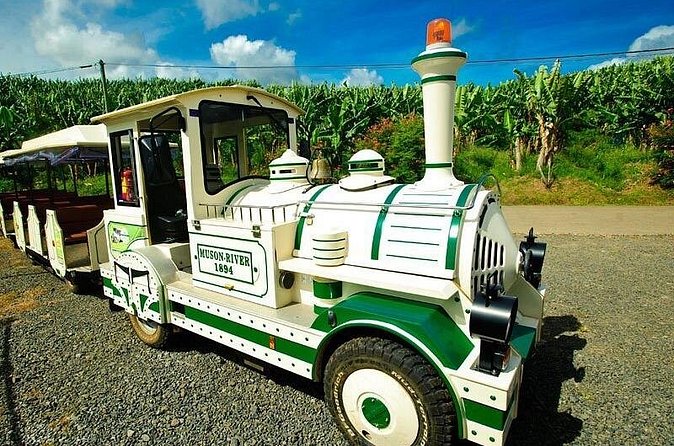
At $23.88 per person, the tour is reasonably priced if you value the combination of transport around the farm, guided explanations, and tasting. You are paying for access to a large working property, not just a short train ride.
The price looks strongest for families. A child-friendly activity that lasts about an hour, works in rainy conditions, and ends with food samples can fill a useful gap in a Martinique itinerary. It also avoids the cost and effort of a longer excursion.
The value is less convincing if you want a large tasting, extensive walking, or a full tour of banana exports and processing. The visit is short, and the tasting may be small. You are buying a focused introduction, not a full agricultural day.
Compared with a standard sightseeing stop, Belfort offers a more specific sense of place. You learn about one of Martinique’s important crops while seeing the plants in their growing environment. For curious visitors, that local focus gives the price a fair return.
Who should book this Belfort train ride?
I would recommend it to families, food-minded visitors, and anyone who wants a break from beaches and city sightseeing. It is also a good option if you have only an hour and want a guided activity with little walking.
It suits you particularly well if you are interested in how familiar foods are produced. The reproduction methods, growing stages, and mix of crops make the tour more useful than a simple photo stop.
You may want to skip it if you dislike vehicle tours, need guaranteed English commentary, or expect generous food portions. You should also reconsider if a rough access road or the possibility of a mechanical delay would create stress in your schedule.
Book at least 24 hours ahead if you want the option of a full refund after cancellation. Cancellations made less than 24 hours before the start time are not refunded, and late changes are not accepted.
Should you book the Martinique banana farm tour?
Yes, if you want an easy, affordable look at working agriculture with a friendly guide and a small tasting at the end. The combination of a 65-hectare farm, a moving train, tropical fruit trees, and practical banana explanations gives the activity a clear purpose.
Before booking, verify the Chemin Soudon meeting point, ask about English commentary, and leave some time around the one-hour schedule in case the train runs late. With those details settled, Belfort is a worthwhile family outing and a pleasant way to see a less touristy side of Martinique.
FAQ
Where does the banana farm tour begin?
The tour begins at Chemin Soudon, Le Lamentin 97232, Martinique. The activity returns to the same meeting point.
How long does the tour last?
The activity lasts approximately one hour. The guided train visit itself is described as lasting about 50 minutes, followed by a tasting.
How much does the tour cost?
The listed price is $23.88 per person.
Is the tour available in English?
The tour is provided in English and French. Because some English-speaking participants have received only limited English commentary, confirm the language arrangement for your date when booking.
Does the tour operate in rainy weather?
Yes. The small train allows visits to take place even when it rains.
What will I see on the farm?
You will see banana fields, sugar cane, fruit trees, and other parts of the 65-hectare property. The route may also include a river area and turtles.
Is the tour private?
Yes. It is described as a private activity, so only your group will participate.
What is included at the end of the visit?
The tour ends with a tasting of bananas and local products. The exact selection and quantity are not specified.
Can I cancel for a full refund?
Yes, if you cancel at least 24 hours before the experience start time. Cancellations or changes made less than 24 hours in advance are not accepted for a refund.
Just added around the world
- Zanzibar: Walking Spice Farm with Local Cooking Class★ 4.4 · 9 reviews
- Zanzibar:Jozani forest, Spice farm with Swahili Cuisine clas★ 4.2 · 3 reviews
- ZANZIBAR, Stone town tour, Prison Island & Spice farm★ 5.0 · 11 reviews
- Zanzibar: Spice Farm Tour with Traditional Cooking Class★ 4.6 · 16 reviews
- Zanzibar: Stone Town City Tour and Spice Farm with Lunch★ 3.7 · 33 reviews
- Zanzibar: Spice Farm Tour with Cooking lesson★ 4.5 · 4 reviews
- Zanzibar: Spice Farm Tour with Traditional Cooking Class★ 4.8 · 6 reviews
- Zanzibar: Spice farm tour with Zanzibar fruits tasting★ 3.8 · 7 reviews
Train Experiences, compared.
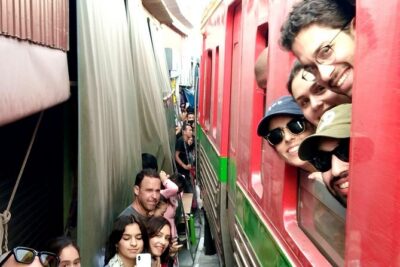
Floating & Railway Market and Coconut Farm Tour [Optional Luxury]
Read our review →

Palma: Orange Valley Vintage Train and Orange Farm Tour
Read our review →
Régua: Wine Tasting at a Farm, Traditional Lunch, Cruise and Train
Read our review →
Lists this farm appears in