
Reviewed · COOKING CLASSES
Cretan Cooking Class at a Farm with Hotel Pickup and Drop-Off
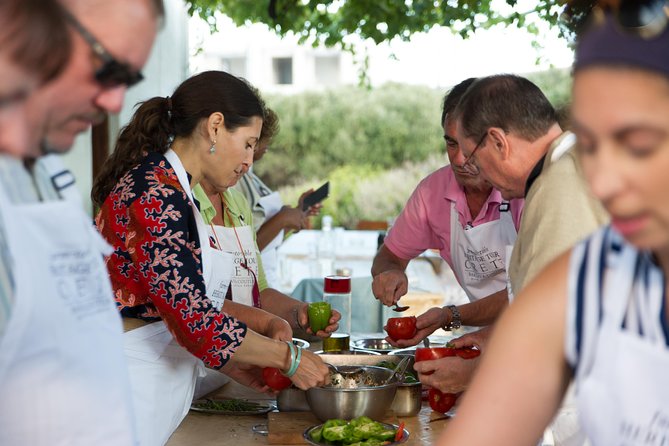
Cretan cooking is best understood with your hands, not from a restaurant menu. This five-hour farm visit brings you into a local family’s home, garden, olive grove, vineyard, and kitchen, where you prepare traditional dishes and sit down to eat them together. I especially like the farm-to-table setting and the warm, personal role played by Elena, the host and cooking instructor.
I also like the included hotel pickup and drop-off, which removes the usual hunt for a village meeting point. The main consideration is the late start at 4:30 pm and the slow pace. This is an evening built around food, conversation, and family traditions, not a quick class where you rush through recipes and leave.
Key points to know before booking
- A working Cretan farm: See the seasonal garden, aromatic herbs, olive grove, citrus orchard, vineyard, wine cellar, and chicken coop.
- Hands-on cooking: Prepare traditional Greek food under Elena’s guidance, with the detailed itinerary promising at least six recipes.
- A shared family dinner: Eat what you make with the family, alongside homemade Cretan wine.
- Hotel pickup included: Start and finish without arranging your own transport to a rural village.
- Dietary requests are possible: Vegetarian, vegan, lactose-free, and other needs can be shared before the visit.
- Small enough for personal attention: The group is capped at 20 people, though this is not a private class.
From hotel pickup to a Cretan family farm
The afternoon begins at 4:30 pm, with pickup arranged from your hotel. That detail matters in Crete, where a rural cooking experience can be difficult to reach without a car or clear local directions. You can settle into the outing from the start rather than spend part of the day worrying about maps, taxis, or a distant meeting point.
The drive takes you away from the city and into the countryside. The exact route and drive time are not specified, so you should treat the transfer as part of the outing rather than a tightly timed shuttle. The experience lasts about five hours, which places the meal and return later in the evening.
You arrive at a typical village farm, where a Cretan family welcomes you to its home and yard. This is not a cooking studio designed to look rustic. The food comes with a sense of place because you first see where many of the ingredients are grown and how the family uses the property.
The setting also helps explain Cretan cooking. Olive oil, fresh produce, herbs, wine, and simple preparations are not abstract ideas here. They are part of the farm around you.
More Cooking Classes in Greece:
- Naxos Perivoli Farm Experience & Wood-fire Cooking Class
★ 5.0 · 339 reviews - Melanes: Naxos Perivoli Farm & Cooking Class with Wood Fire
★ 5.0 · 177 reviews - Santorini Family Farm Food & Wine Tour with Cooking Class
★ 5.0 · 107 reviews
Walking through the garden, grove, and cellar
The farm tour covers several parts of the property. You see a seasonal vegetable garden and aromatic herbs, along with an olive grove, citrus orchard, vineyard, wine cellar, and chicken coop.
Each stop adds useful context before you begin cooking. The garden shows the sort of produce that can move directly from soil to kitchen. The herb beds help you connect the fresh smells and flavors with the finished food. The olive grove points to the role of olive oil in Cretan meals, while the vineyard and cellar explain why homemade wine is part of the evening.
The chicken coop and fruit trees make the visit feel like a look at everyday farm life rather than a class held in a rented venue. The property is described as a typical village farm, so you should not expect a polished attraction with formal displays or a long scripted tour. That is part of the appeal, but it also means the experience may feel less predictable than a professional culinary school.
Seasonality matters here. The garden depends on the time of year, and the produce you see or use can change. If you want a specific ingredient or dish, ask when you book rather than assuming the menu is fixed.
Preparing four to six traditional recipes
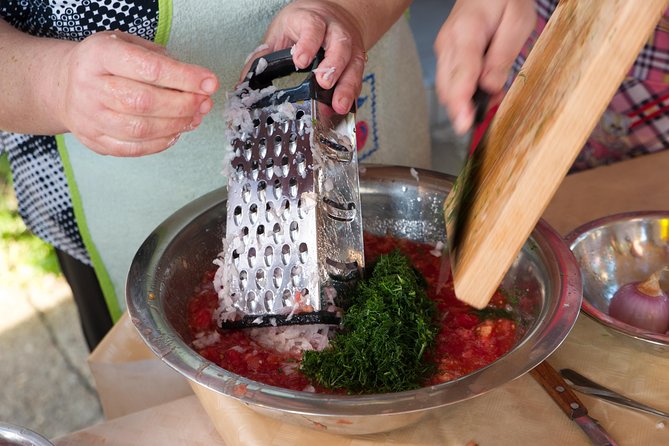
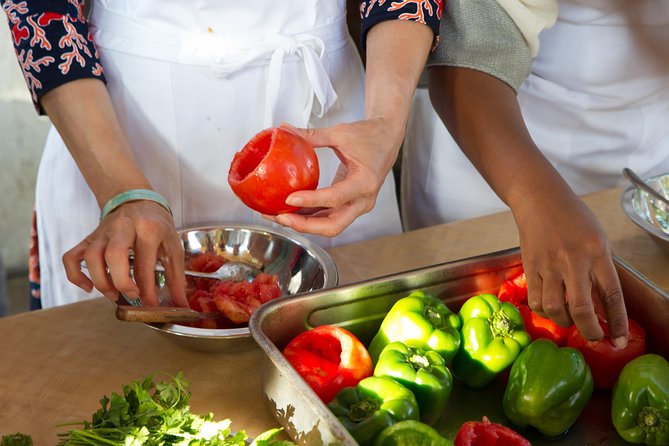
The cooking class is the center of the visit. You work under the family’s direction and use ingredients and equipment that may not be part of your own kitchen. The short tour description refers to four or five classic Greek recipes, while the detailed plan says you will prepare at least six different recipes. I would plan for a broad tasting and hands-on session rather than count on one exact number.
That difference is worth noting because the pace may feel full. You are not simply watching someone prepare dinner. You are expected to take part, follow instructions, and help create several dishes. The family guides the process, and the class is conducted in English.
The value here is practical. You get to see how the ingredients are handled in a home setting, then eat the result soon afterward. If you enjoy learning by doing, this is more useful than a demonstration where the chef keeps control of every task.
You should also expect traditional food rather than a restaurant-style menu built to suit every preference. The class can be adjusted for vegetarian, vegan, lactose-intolerant, and other dietary needs, but you need to share those requests in advance. Do not wait until pickup to mention an allergy or strict restriction.
For cooks who want exact recipes, the available information does not promise a printed cookbook or take-home recipe cards. Ask the host directly if that matters to you. The strongest feature is the live instruction and the chance to cook with farm products, not a guaranteed collection of written recipes.
Sitting down to a homemade Cretan dinner
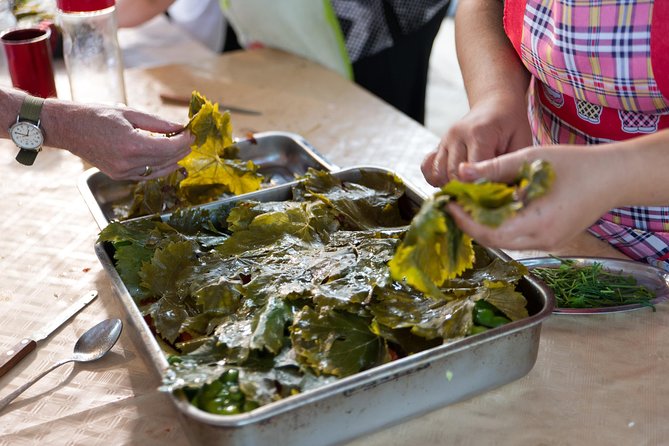
After the cooking, you eat as the family’s guests. The meal includes the dishes prepared during the class and the family’s homemade wine.
This shared dinner is what gives the experience its human side. You are not just sampling a series of plates and moving on. You sit with the people who welcomed you, and the food becomes a reason to talk about Cretan family traditions, olive trees, and daily life.
The supplied feedback gives special attention to Elena’s warmth and the way she shares family traditions connected with olive trees. That is useful to know when setting expectations. The host’s role is not limited to measuring ingredients or correcting your chopping technique. The evening also depends on conversation and personal exchange.
The homemade wine is included as part of the meal. If you do not drink alcohol, the available details do not specify an alternative beverage, so ask ahead. You may also want to confirm how the return transfer works if you plan to drink wine, though hotel drop-off is included.
This is a late afternoon and evening activity, not a morning market visit. The timing suits you if you want a relaxed dinner experience after sightseeing. It is less suitable if you prefer to keep evenings free for a show, nightlife, or an early night.
More Workshops in Greece:
- Moires: Cooking Class and Olive Oil Tasting at a Family Farm
★ 5.0 · 93 reviews - Mykonian Farm and Bakery Class with Brunch in Greece
★ 4.5 · 39 reviews - Traditional Greek Cooking Class @ Lefkada Micro Farm
★ 4.7 · 32 reviews - From Mykonos: Mykonian Farm Baking Class with Brunch
★ 4.7 · 29 reviews
Why the slow pace matters
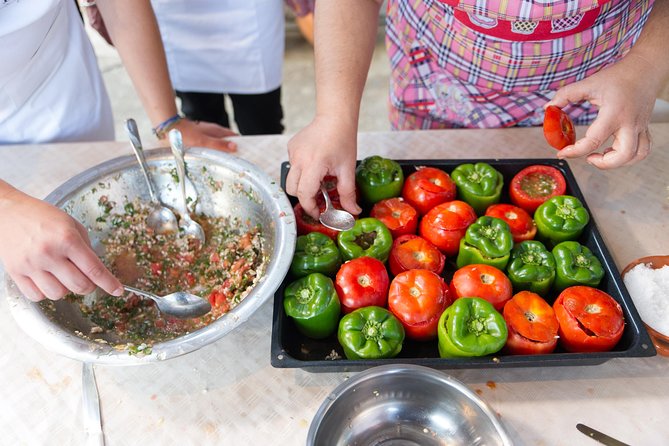
The experience is designed as a slow-paced meeting with local Cretans and other people from different countries. That wording signals the right mindset. You should come ready to spend time in one place, listen, help, eat, and talk.
I like this approach because it gives the food some context. A restaurant can serve excellent Cretan dishes, but a farm visit lets you see the garden, olive trees, cellar, and kitchen that support the meal. The connection between place and plate is the main reason to choose this over a standard food tour.
The trade-off is that the schedule may not suit someone looking for constant activity. The farm walk, cooking, and dinner all unfold at an unhurried pace. You will not be moving between several sights or collecting a long list of photo stops.
The group limit is 20 people. That is small enough to keep the activity personal in many cases, but it does not guarantee an intimate gathering of only a few participants. If your priority is private instruction, this is not presented as a private class.
Price, timing, and overall value
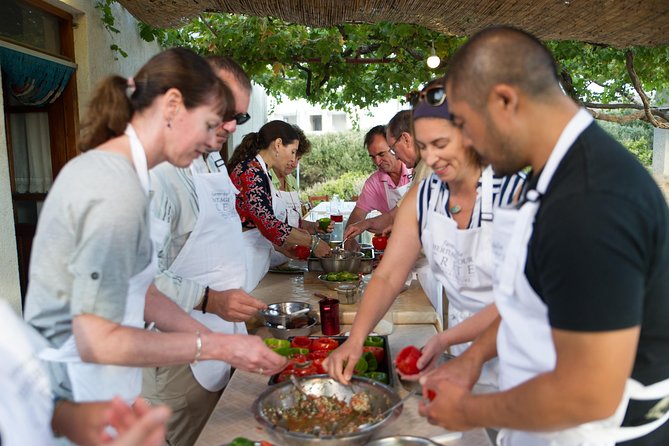
At $151.26 per person, this costs more than simply ordering a Cretan dinner. The price includes hotel pickup and drop-off, a farm visit, instruction, ingredients, the cooking session, the meal, and homemade wine. It also covers an experience that connects the food with the people and place behind it.
I see the strongest value in the combination of transport and access. Reaching a rural family farm on your own may require a rental car, local directions, and extra planning. Here, the transfer is part of a five-hour package.
The price makes more sense if you want an activity rather than only a meal. You are paying for the setting, family welcome, cooking time, and cultural exchange as well as the food itself. If you are mainly seeking a low-cost dinner, you can find cheaper options elsewhere.
The experience is booked, on average, about 45 days ahead. That does not guarantee that every date sells out, but it is a useful signal to reserve early, especially if your Crete schedule is fixed. Confirmation is normally provided at booking, though reservations made within two days of the date may take up to 48 hours to confirm, subject to availability.
Free cancellation is available until 24 hours before the start time. Changes or cancellations inside that window are not accepted for a refund. The activity also needs good weather and a minimum number of participants. If the provider cancels for either reason, you are offered another date or experience, or a full refund.
Who will enjoy this farm cooking class
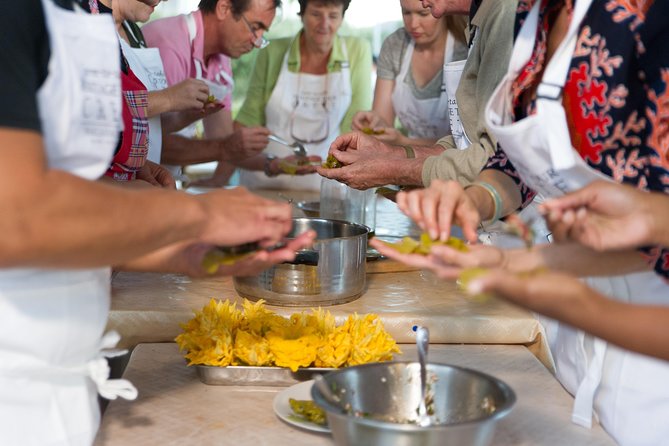
I would recommend this to you if food is one of the main reasons you travel. It suits people who want to learn, not just eat, and who enjoy meeting a local family in a home setting.
It is also a good choice for couples, families, and small groups who want one memorable evening outside the usual sightseeing route. The hotel pickup helps if you are staying in an area where a village farm would be awkward to reach.
Vegetarians, vegans, people avoiding lactose, and visitors with other food needs can request menu changes. The important point is to communicate early so the family can plan the ingredients.
You may want to skip it if you dislike group activities, need a tightly timed itinerary, or prefer formal culinary instruction. The group can reach 20 people, the menu is seasonal, and the evening depends on a relaxed social mood. Those are not flaws, but they are central to the experience.
Should you book this Cretan farm experience?
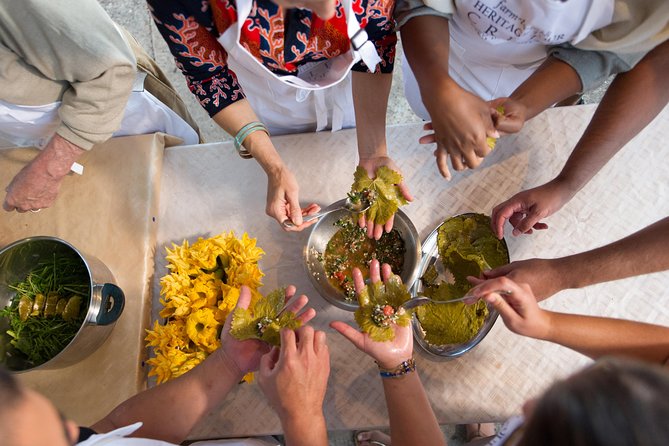
Book it if you want Cretan food with a human story attached. The farm walk, garden produce, olive grove, family kitchen, shared dinner, and homemade wine create a fuller picture than a restaurant meal alone.
The strongest reasons to choose it are Elena’s warm hosting, the chance to cook at least several traditional recipes, and the simple convenience of hotel pickup and drop-off. Keep the 4:30 pm start, weather requirement, group size, and unhurried pace in mind.
For a food-focused visit to Crete, I think the $151.26 price is reasonable when you value transport, instruction, dinner, and local contact as one package. Reserve ahead, state all dietary needs clearly, and arrive ready to help rather than simply watch.
FAQ
What time does the cooking class start?
The experience starts at 4:30 pm.
How long does the experience last?
The activity lasts approximately five hours.
Is hotel pickup and drop-off included?
Yes. Hotel pickup and drop-off are included, so you do not need to find a separate meeting point.
How many recipes will I prepare?
The experience description refers to four or five classic Greek recipes. The detailed plan says you will prepare at least six different recipes, so the exact number may vary.
Can the menu accommodate dietary requirements?
Yes. Vegetarian, vegan, lactose-intolerant, and other special requests can be accommodated if you notify the provider in advance.
Is the cooking class held in English?
Yes. The experience is operated by local Cretans in English.
How many people can join the activity?
The maximum group size is 20 participants.
Is homemade wine included?
Yes. The shared Cretan-style dinner includes the family’s homemade wine.
What happens if the weather is poor or the minimum group is not met?
If poor weather or an insufficient number of participants causes cancellation, you are offered a different date or experience, or a full refund.
Just added around Greece
- Volos: Cook Like a Local at a Greek Farm★ 5.0 · 7 reviews
- Traditional Greek Cooking Class @ Lefkada Micro Farm★ 4.7 · 32 reviews
- Visit a Farm and Horseback Riding in Nature★ 5.0 · 10 reviews
- Insightful Pistachio Orchard and Factory Tour★ 4.5 · 27 reviews
- Flavors of Santorini: Farm-to-Table Meal Wine & Authentic Village★ 5.0 · 12 reviews
- Santorini 5 Hour Private Oia Tour & Lunch/Dinner at a Local Farm★ 5.0 · 40 reviews
- Cooking Class Sunset Dinner and Tour in Paros Farm★ 5.0 · 5 reviews
- Olympia Shore Ex: Olympic site, Honey Farm & Olive Oil Tasting★ 4.5 · 57 reviews
Cooking Classes, compared.
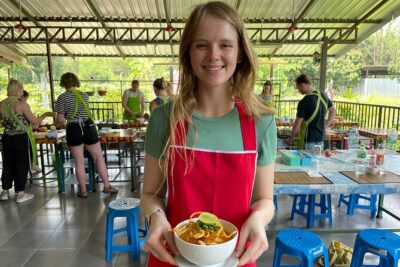
Half-Day Thai Cooking Class at Organic Farm in Chiang Mai
Read our review →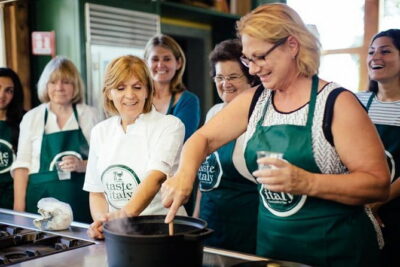
Cooking Class and Lunch at a Tuscan Farmhouse with Local Market Tour from Florence
Read our review →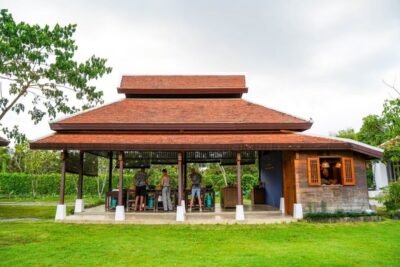
Authentic Cooking Class with Market & Farm Visit
Read our review →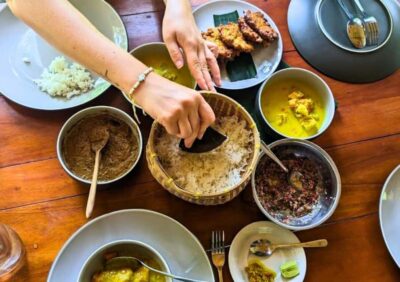

Hands-On Cooking Class & Farmhouse Tour on the Amalfi Coast
Read our review →
Lists this farm appears in