
Reviewed · LAOS FARM TOURS
Living Land Farm Rice Experience
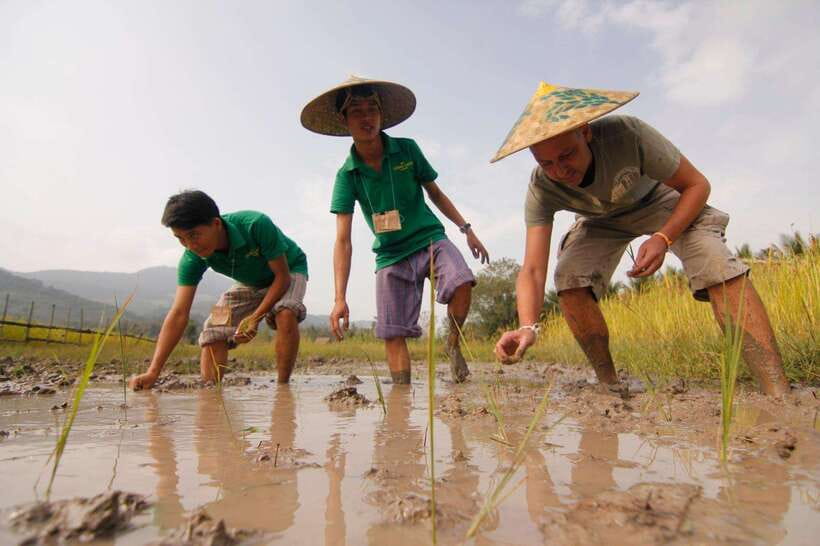
Living Land Farm turns a bowl of rice into a full day of work, skill, and mud. Just outside Luang Prabang, you’ll see how rice moves from field to food, then try several stages yourself under the guidance of a local English-speaking guide.
I like the hands-on farming and the chance to work with a buffalo rather than simply watch a demonstration. I also like the farm’s wider purpose: it is an organic community farm and educational centre that supplies vegetables, herbs, salads, and rice to Luang Prabang hotels and restaurants.
The main consideration is comfort. You’ll need clothes that can get dirty, sun protection, and a change of clothes. The farm is not suitable for wheelchair users, and meals are not included unless specifically stated in your booking details.
Key points to know before booking
- Guide a working buffalo plough: You can take part in one of the traditional jobs that prepares the rice field.
- Follow rice from field to grain: The day covers planting, reaping, and winnowing, not just a quick look at a paddy.
- See an operating community farm: Living Land Farm grows rice, vegetables, herbs, and salads for local businesses.
- Enjoy an open-air setting: Rice fields and mountains surround the farm just outside Luang Prabang.
- Travel in a small group: Numbers are limited to 10 participants, which suits a practical activity better than a large coach tour.
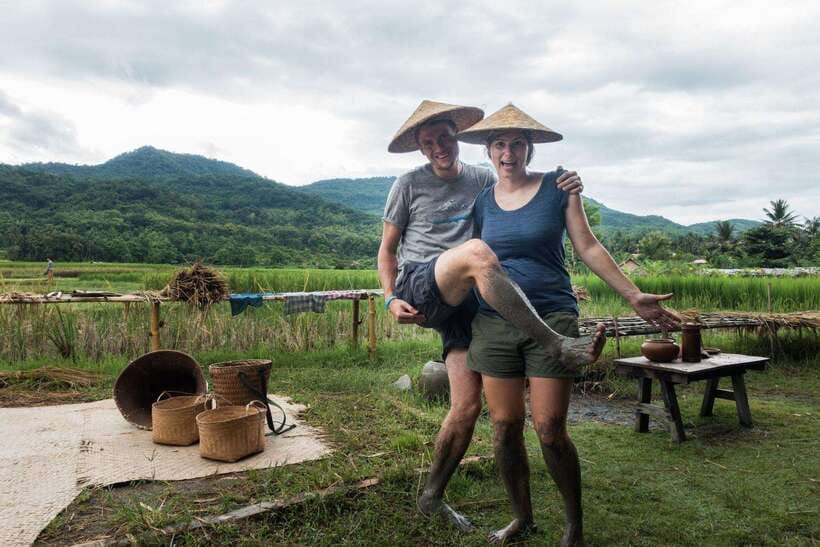
- Plan for sun and mud: Bring a hat, sunglasses, sunscreen, cash, water-friendly clothes, and spare clothing.
Why Living Land Farm makes rice the main event
Many farm visits give you a short demonstration and a photo stop. Living Land Farm offers a fuller picture. Rice is planted all year round, so the farm can show several parts of the growing process rather than tying the visit to one narrow harvest date.
That matters because rice farming is often presented as a simple rural image: green fields, water buffalo, and workers bent over plants. Here, you get the practical sequence. The field must be prepared, seedlings must be planted, mature rice must be reaped, and the grain must be separated from the chaff by winnowing.
I like this approach because it gives you useful context without turning the day into a lecture. You learn by doing. The work also gives you a better sense of how much effort sits behind a food that appears on nearly every Lao table.
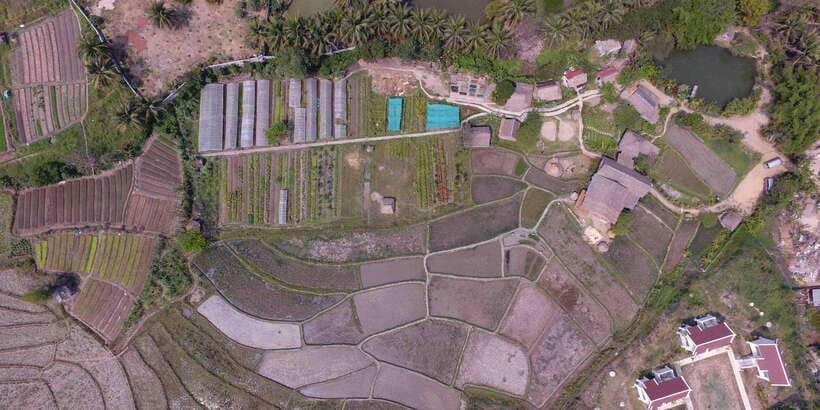
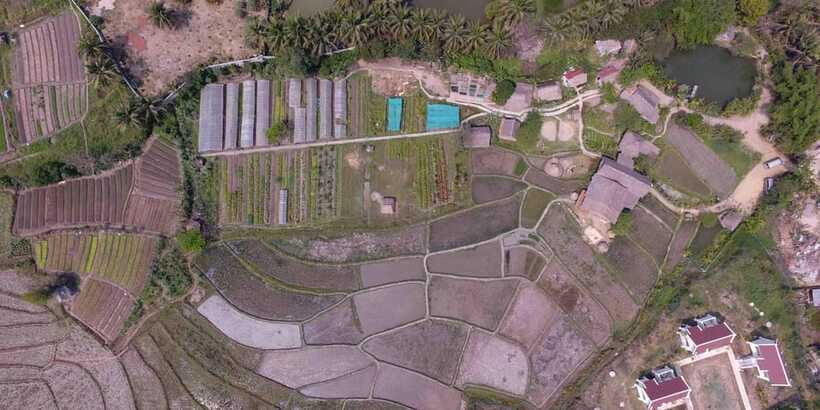
The farm is community-run and organic. Its rice fields sit alongside vegetable gardens that produce fresh food for hotels and restaurants in Luang Prabang. That connection gives the visit a local purpose. You are not only looking at a staged rural setting. You are seeing a working farm linked to the town’s food trade.
More Farm Tours in the world:
- Half-Day Thai Cooking Class at Organic Farm in Chiang Mai
★ 5.0 · 19,087 reviews - Florence Pizza or Pasta Class with Gelato Making at a Tuscan Farm
★ 5.0 · 6,801 reviews - Cooking Class and Lunch at a Tuscan Farmhouse with Local Market Tour from Florence
★ 5.0 · 4,831 reviews
The short journey from Luang Prabang to the fields
Your day begins with pickup at your hotel lobby, where you should be ready 45 minutes before the scheduled start. A private local driver and an air-conditioned vehicle are included, so you do not need to arrange separate transport to the farm.
The exact starting time depends on availability, and the experience is sold as a full day. Since the published details do not give a fixed hour-by-hour schedule, check the start time carefully when you reserve. That is especially useful if you are trying to fit in Luang Prabang temples, a market visit, or another day trip.
The trip out of town brings you to a farm setting with views across rice fields toward the mountains. The change is quick: from town streets and guesthouses to open paddies, gardens, and working farmland.
Cold drinking water is provided during the sightseeing portion. Still, take sunscreen and a hat. The farm offers little reason to expect long periods in shade, and the work takes place outdoors.
Guiding the buffalo plough
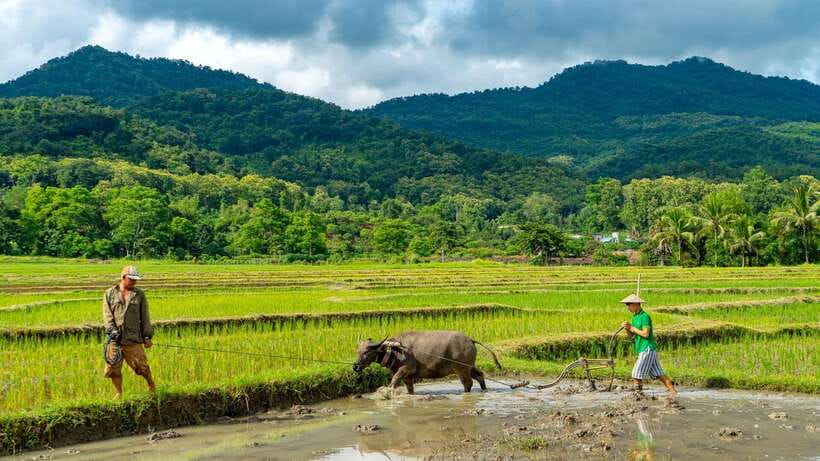
The buffalo plough is one of the most memorable parts of the experience. You can try guiding the animal as it works the field, with instruction from the local guide.
This is not just a decorative photo opportunity. Ploughing shows the first physical step in preparing the paddy for rice. It also explains why buffalo remain such a strong part of traditional farm life in Southeast Asia. The task requires patience and coordination, and you should expect the animal to set the pace rather than follow a neat tourist timetable.
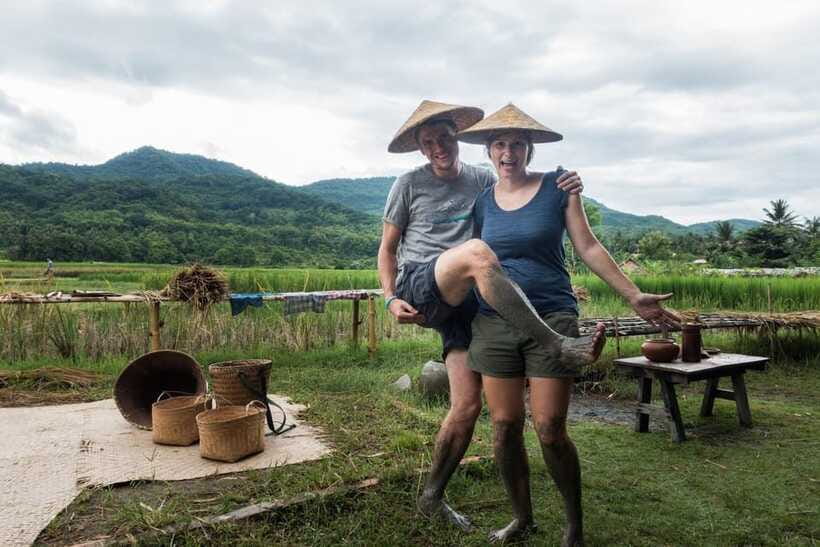
The practical side is important. You may get dirty, and your footwear and clothing will be exposed to mud or wet ground. The farm specifically advises you to wear clothes that can get dirty and bring a change of clothes. I would treat that advice as essential rather than optional.
The activity should suit people who like participation more than passive sightseeing. Children and adults may enjoy the novelty, but the farm is not suitable for wheelchair users. The information provided does not list other mobility details, so anyone with limited walking ability should ask the operator for more guidance before booking.
Planting rice one seedling at a time
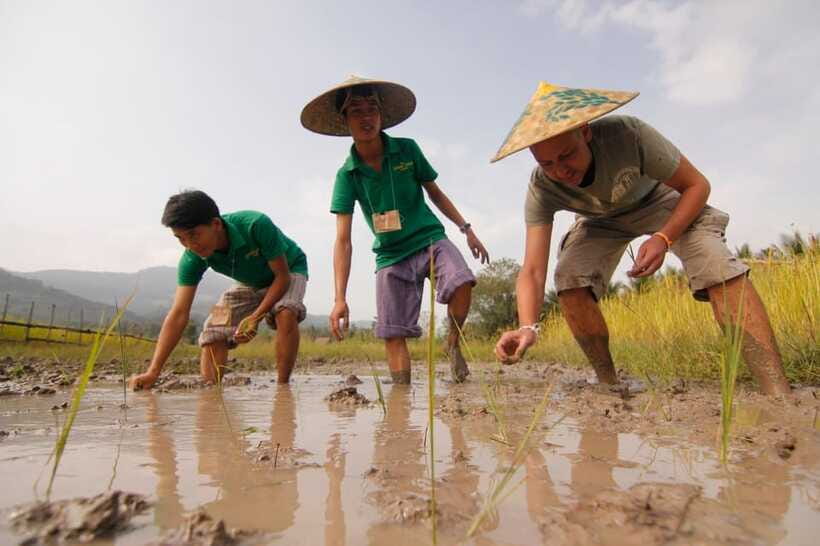
Rice planting gives you a close look at the most repetitive part of the farming cycle. You can work in the paddy and plant rice under local instruction.
The value here is scale. A single rice plant looks small and simple, but planting a whole field requires steady work across a large area. Trying even a small section helps you understand why rice farming depends on timing, teamwork, and careful handling.
The setting also changes your view of the paddy. From a road or viewpoint, rice fields can look calm and almost effortless. Once you step into the work, you notice the mud, the crouching, and the care needed to place plants correctly.
You should plan on getting wet or muddy during this part. A change of clothes is included on the farm’s suggested packing list, along with sunscreen, sunglasses, and a sun hat. Bring cash too, since personal spending is not included and the provided information does not specify which on-site purchases may be available.
Same fields, a different sort of morning:
- Chiang Mai: Authentic Cooking Class with Market & Farm Visit
★ 4.9 · 4,546 reviews - Tromsø: Reindeer Camp and Sami Cultural Tour with Lunch
★ 4.7 · 3,326 reviews - Maui Pineapple Farm Tour in Haliimaile
★ 5.0 · 2,855 reviews - Sorrento Farm and Food Experience including Olive Oil, Limoncello, Wine tasting
★ 5.0 · 2,524 reviews
Reaping and winnowing the harvest
The day continues with reaping rice, followed by winnowing. The activity information uses the phrase reading the rice, but the broader description clearly presents this stage as part of harvesting and processing the crop.
Reaping helps connect the planted field with the grain you eventually eat. It is a useful reminder that rice does not arrive at the kitchen ready for cooking. The plants must be cut and handled before the grain can be separated and prepared.
Winnowing is the final hands-on step listed for the farm visit. This process separates lighter chaff from heavier grain, often using movement and air. It is a simple technique to watch, but it explains an important part of traditional grain preparation.
I especially like that the farm includes these later stages. Many agricultural activities stop at planting because it is easy to demonstrate. Reaping and winnowing give the day a stronger sense of completion. You see more of the chain from field to food instead of leaving with only a picture of a muddy paddy.
The details do not promise that every participant will complete every stage for a fixed amount of time. Conditions in a working field can affect the order and pace. Go expecting active instruction, not a tightly timed performance.
Organic gardens and food for Luang Prabang
Rice is the headline, but the farm also includes vegetable gardens. The community-run organic operation supplies fresh vegetables, herbs, salads, and rice to hotels and restaurants in Luang Prabang.
This adds a useful town connection. You can understand the farm not only as a place for cultural education, but also as part of the local food system. Produce grown here may move from the garden to a restaurant kitchen, linking the countryside and the town in a direct way.
The information does not specify a formal cooking class or a meal at the farm. Do not book this expecting a food tour or lunch unless your confirmed program says otherwise. Meals are listed among the exclusions, and drinks other than the supplied cold water are also not included.
If you care about responsible tourism, the educational role is a real plus. The farm teaches visitors about rice and supports local production at the same time. The available information does not provide a detailed account of its farming methods, so I would avoid assuming more than the stated organic approach and community-run structure.
What the $89 price covers
At $89 per person, this is not the cheapest way to spend a day near Luang Prabang. The price makes more sense when you count the services included: private local driving, an English-speaking guide, air-conditioned transfers, entrance fees and permits during guided time, and cold drinking water.
The small group limit of 10 also affects the value. Farming activities work better when you can hear the guide and get a turn with the tools or buffalo. A large group could turn the experience into a distant demonstration. The smaller format gives you a better chance to take part.
You are paying for an organized cultural activity, not only transport to a field. The farm itself is the main attraction, and its community and educational roles give the visit more substance than a standard countryside stop.
Still, budget carefully. The price does not include visa costs, travel insurance, meals, drinks beyond the supplied water, laundry, telephone calls, or personal expenses. Travel insurance is compulsory, and non-ASEAN residents must arrange a valid visa. Those costs are separate from the farm visit.
I consider the price fair for visitors who want a full-day activity with transport and guided participation. It is less appealing if you only want a quick rural photo stop or if you are trying to keep every day of a Laos trip inexpensive.
How to prepare for a muddy, sunny day
The packing list tells you a lot about the experience. Bring:
- Sunglasses
- A sun hat
- Sunscreen
- A change of clothes
- Clothes that can get dirty
- A camera
- Cash
You should also wear practical footwear, although the provided information does not specify a required shoe type. Avoid bringing your best clothes. Mud and water are part of the farming setting, and changing afterward will make the return journey more comfortable.
A camera is useful for the buffalo plough, fields, mountains, and garden areas. Ask before photographing people at close range, especially during active farm work. The tour is built around participation, so keep your camera secure while handling tools or working in the paddy.
The farm supplies cold drinking water during sightseeing. Since all other drinks are excluded, do not assume soft drinks, alcohol, or extra refreshments are included. The same applies to meals. Confirm the day’s food arrangements before setting out.
Who will enjoy this farm experience most
I would recommend Living Land Farm to you if you want a cultural activity that asks you to do more than listen. It suits people who enjoy local food, rural life, simple physical work, and small-group tours.
Families may find the buffalo and rice activities memorable, but the muddy conditions and outdoor work may not suit every child. Couples and solo visitors who prefer a structured day outside town should also find the format appealing.
It is a particularly good fit if you have already seen Luang Prabang’s temples and want to understand another part of local life. The farm gives you a different view of the province, one based on food production and community work rather than architecture.
I would hesitate if you dislike getting dirty, need guaranteed accessible surfaces, or want a relaxed day with long meal breaks. The farm is not suitable for wheelchair users, and the available details do not promise a gentle or fully accessible route through the fields.
The experience is conducted in English, with a live English-speaking guide. No guide name is provided, so you should not expect to request a particular guide in advance.
Booking, cancellation, and group size
The tour allows free cancellation up to 24 hours before the activity for a full refund. You can also reserve now and pay later, which helps if you are still adjusting your Luang Prabang plans.
Meet at your hotel lobby 45 minutes ahead of time. Since a private local driver is included, hotel pickup is part of the plan rather than an extra transfer you need to arrange.
The group is limited to 10 participants. That is small enough for questions and hands-on turns, though the exact number on your date may be lower.
Should you book Living Land Farm?
Book it if you want to connect Luang Prabang food with the work behind it. The strongest reasons are the full rice-growing sequence, the chance to guide a buffalo plough, the community-run organic farm, and the small group setting.
Skip it if you want a dry, polished sightseeing day or if you need wheelchair access. Also check the final meal arrangements and start time, since food is not generally included and the schedule varies by availability.
For the right visitor, the $89 price buys more than a rural view. It buys a practical lesson in how rice is planted, harvested, and prepared, with enough participation to make the subject stick.
FAQ
Where is Living Land Farm located?
Living Land Farm is just outside Luang Prabang in Luang Prabang Province, Laos. The farm overlooks rice fields and mountains.
How long does the experience last?
The experience lasts one full day. Check availability for the starting time.
What rice-farming activities can I try?
You can experience guiding a buffalo plough, planting rice, reaping rice, and winnowing it.
Is rice planted at the farm all year?
Yes. Rice is planted all year round at Living Land Farm.
Is transportation included?
Yes. A private local driver, an English-speaking local guide, and transfers in an air-conditioned vehicle are included.
Where do I meet the tour?
Meet at your hotel lobby 45 minutes before the scheduled start time.
Are meals and drinks included?
Cold drinking water is included during the sightseeing tour. Meals, soft drinks, alcohol, and other drinks are not included unless specifically stated in the program.
Is the farm suitable for wheelchair users?
No. The experience is not suitable for wheelchair users.
Just added around the world
- Zanzibar: Walking Spice Farm with Local Cooking Class★ 4.4 · 9 reviews
- Zanzibar:Jozani forest, Spice farm with Swahili Cuisine clas★ 4.2 · 3 reviews
- ZANZIBAR, Stone town tour, Prison Island & Spice farm★ 5.0 · 11 reviews
- Zanzibar: Spice Farm Tour with Traditional Cooking Class★ 4.6 · 16 reviews
- Zanzibar: Stone Town City Tour and Spice Farm with Lunch★ 3.7 · 33 reviews
- Zanzibar: Spice farm tour with Zanzibar fruits tasting★ 3.8 · 7 reviews
- Zanzibar: Spice Farm Tour with Cooking lesson★ 4.5 · 4 reviews
- Zanzibar: Spice Farm Tour with Traditional Cooking Class★ 4.8 · 6 reviews
Laos Farm Tours, compared.
Laos Buffalo Dairy Tours Interact, Learn and Taste Fresh Flavors
Read our review →
Lists this farm appears in