
Reviewed · INDIA FARM TOURS
North Goa: Mulgao Village and Coconut Farming Experience
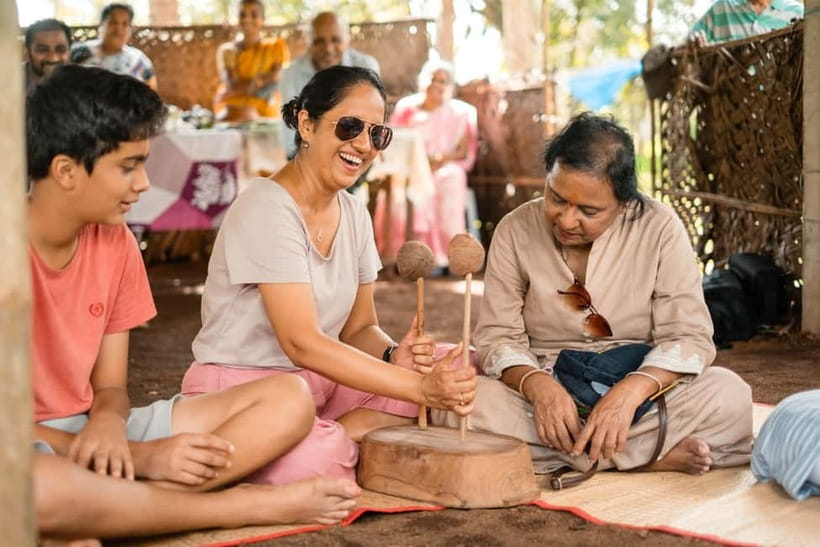
Mulgao offers a side of Goa that beach breaks rarely reveal. In three hours, you move from old village shrines and guardian-deity stories to Mulgão Verde, an organic coconut farm where the palm is treated as a useful part of daily life, not just a postcard prop.
I like the mix of folk culture and working agriculture, and I like that lunch is prepared by local villagers rather than served as a standard tourist buffet. The pace is gentle, and Rachana has been praised for making the village stories clear and engaging.
The main catch is practical: this is not a walking tour. You must arrange transport to Mulgao and between the stops, and the experience is not suitable for wheelchair users. If you want a simple, transport-included outing, this may feel less convenient than other Goa tours.
Key points to know before you book
- Mulgao’s shrines offer a look at local worship and pre-Portuguese heritage beyond Goa’s famous churches.
- Mulgão Verde coconut farm shows how coconuts become virgin coconut oil and other useful products.
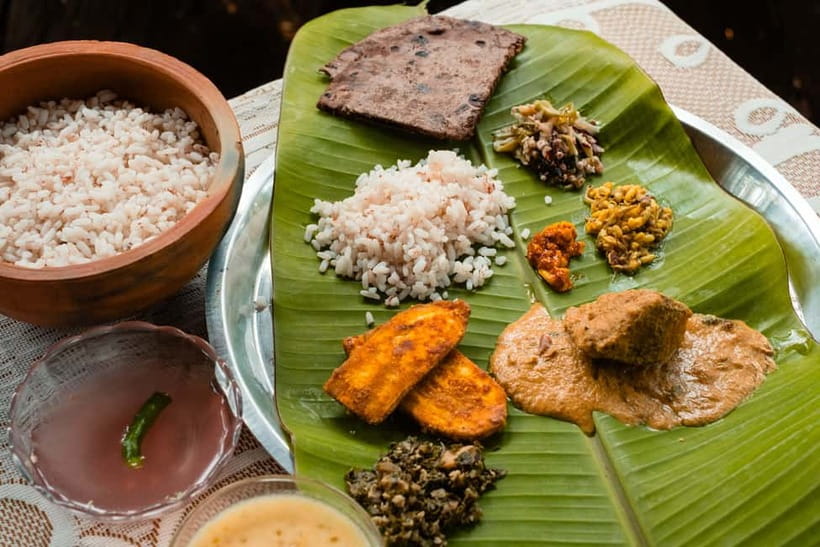
- The meal is part of the experience, with a traditional Goan vegetarian lunch prepared by village residents.
- Sustainability is practical here, including farm education, zero-waste ideas, and wider uses for the coconut palm.
- You need your own transport, including movement within the village during the three-hour visit.
- The price is $30 per person, a fair deal if you value local guiding, farm access, and lunch more than sightseeing volume.
Why Mulgao makes a good change from Goa’s beaches
North Goa is often sold through beaches, nightlife, and Portuguese-era buildings. Mulgao gives you a different frame. The focus here is village life, local worship, farming, and the small systems that help a rural community function.
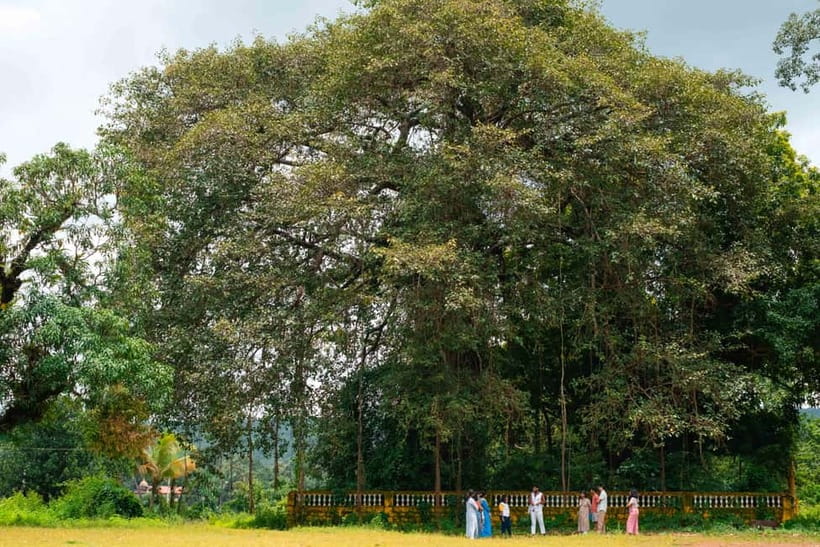
The village has more than 50 temples and shrines. You will not visit all of them in three hours, but the route introduces you to selected holy sites and the stories tied to them. That matters because these places are not simply old buildings to photograph. They connect to guardian deities, village customs, and a layer of Goan culture that is easy to miss if your sightseeing stays near the coast.
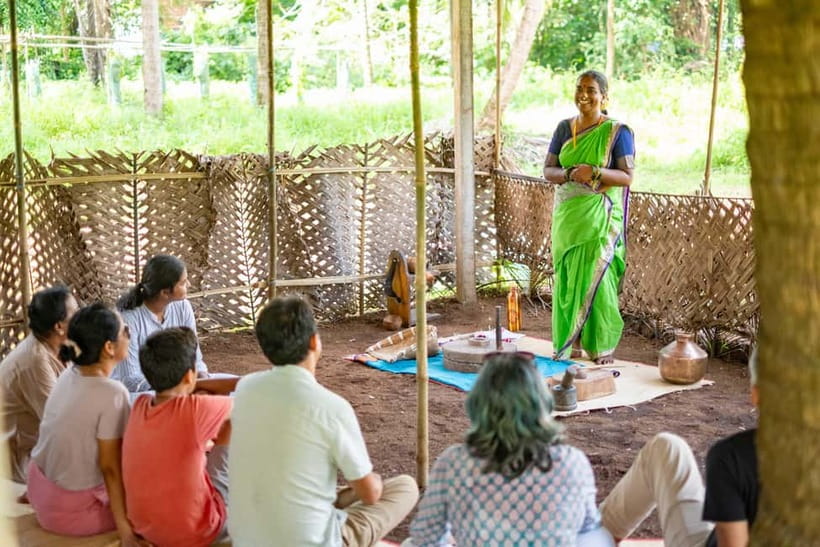
A local storyteller leads the experience in English. Rachana is one guide associated with the tour, and her approach has been described as friendly, clear, and full of useful stories. Another guide leads the temple portion as a young local man who explains the history of the shrines in an open and approachable way.
I would choose this experience if you want context rather than a long checklist of sights. It gives you time to ask questions and follow a theme. It is less suitable if you need constant activity or a packed schedule.
More Farm Tours in the world:
- Half-Day Thai Cooking Class at Organic Farm in Chiang Mai
★ 5.0 · 19,087 reviews - Florence Pizza or Pasta Class with Gelato Making at a Tuscan Farm
★ 5.0 · 6,801 reviews - Cooking Class and Lunch at a Tuscan Farmhouse with Local Market Tour from Florence
★ 5.0 · 4,831 reviews
Starting at Kelbai Temple in Mulgao
The experience begins at Kelbai Temple. This is both the meeting point and your first introduction to the village’s sacred side.
Expect the opening guided portion to last about an hour. The emphasis is on the temple, nearby shrines, local beliefs, and the stories of revered guardian deities. The mention of pre-Portuguese heritage is important here. Goa’s past is not limited to colonial churches and European influence. Hindu worship, village gods, and community traditions remain central to how many local places are understood.
The value of this stop depends on your willingness to listen. You may not get the instant visual drama of a major monument, but you get something more specific: an explanation of why a shrine matters to the people who maintain it.
Dress with respect and wear clothing that allows comfortable walking. The tour guidance calls for comfortable shoes and clothing suitable for both village movement and farm work. A hat, sunscreen, and water are sensible in Goa’s heat.
Visiting shrines and hearing village stories
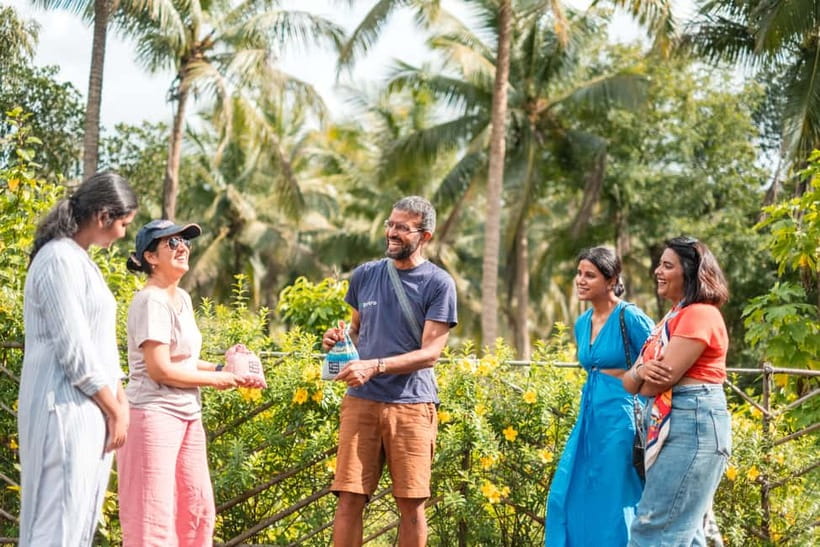
The next guided portion lasts about 20 minutes and continues the visit to shrines and holy sites. The exact number of stops can vary within the selected route, so you should think of this as a focused introduction rather than a full survey of Mulgao’s religious sites.
This section adds local texture to the farm visit. Without it, the coconut grove could feel like a pleasant rural stop with lunch. With it, you begin to see the village as a place shaped by ritual, memory, and agriculture together.
I like this part because it puts daily life ahead of spectacle. The stories of guardian deities give you a way to understand the village on its own terms. You are not simply looking at a shrine and moving on. You are learning why the site has a place in community life.
The tour is in English, which makes the storytelling accessible to English-speaking visitors. Still, this is a cultural visit, not a formal academic lecture. The experience is best approached with curiosity and respect.
At Mulgão Verde, the coconut becomes the main subject
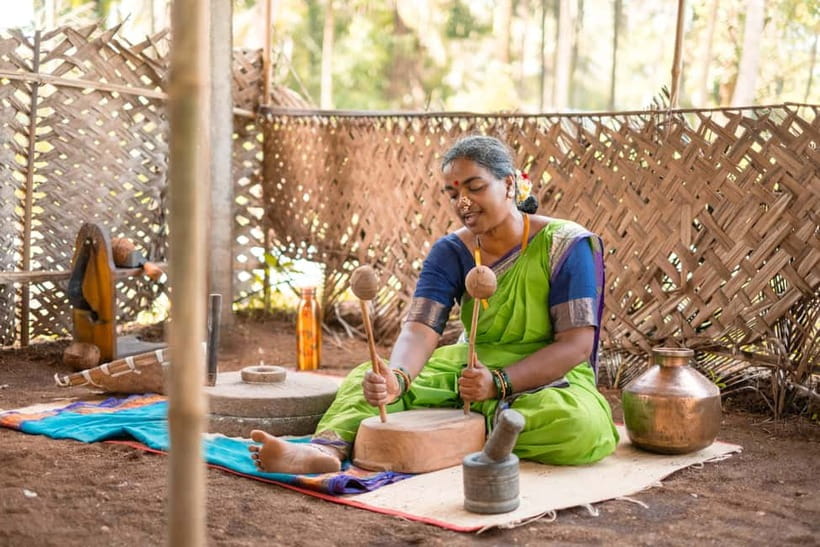
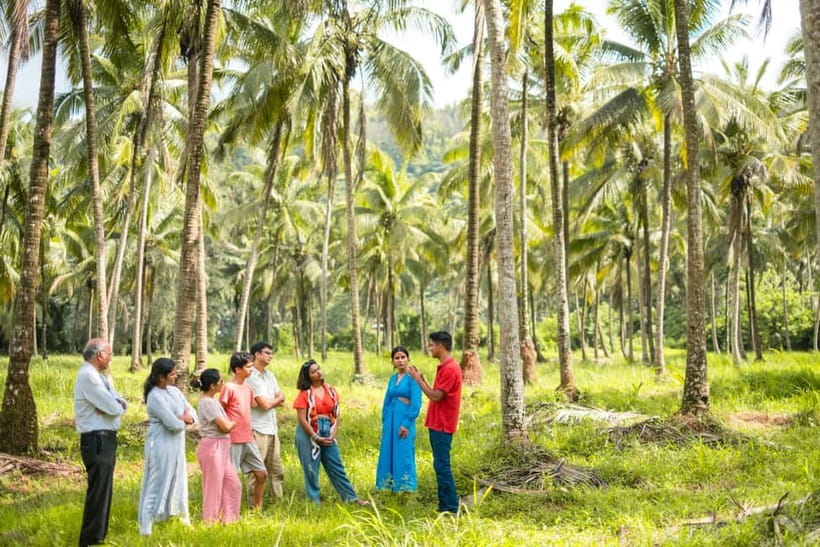
The largest portion of the experience lasts about 1.5 hours at an organic coconut farm. This is where the tour shifts from sacred places to working land.
You learn about the stages of farming and how virgin coconut oil is produced. The farm also makes other coconut-based products, giving you a broader look at the palm’s role in Goan life. Coconut is not treated as a single food ingredient here. Different parts of the palm can serve different purposes in cooking, household use, farming, and small-scale production.
That practical angle is one of the tour’s best features. You are not only told that farming should be sustainable. You get examples tied to a real farm, including education, waste reduction, and the effort to find useful purposes for materials that might otherwise be thrown away.
The phrase organic farm tells you something about the approach, but it does not mean this is a large commercial plantation visit. The supplied details focus on hands-on learning and conversation around the production process. If you expect factory machinery or a long technical demonstration, adjust your expectations. This is a small-scale agritourism experience with a local focus.
Same fields, a different sort of morning:
- Chiang Mai: Authentic Cooking Class with Market & Farm Visit
★ 4.9 · 4,546 reviews - Tromsø: Reindeer Camp and Sami Cultural Tour with Lunch
★ 4.7 · 3,326 reviews - Maui Pineapple Farm Tour in Haliimaile
★ 5.0 · 2,855 reviews - Sorrento Farm and Food Experience including Olive Oil, Limoncello, Wine tasting
★ 5.0 · 2,524 reviews
How virgin coconut oil fits into the visit
Virgin coconut oil is a central subject at the farm. You will learn about its production and see how the farm develops other products from the coconut.
For you, the useful part is understanding the work behind something that often appears as a finished bottle in a shop. The process connects planting, harvesting, processing, and product use. It also shows why a farm can gain more value from a crop by using several parts of it rather than treating one output as the whole business.
This is also where the zero-waste theme becomes more concrete. The experience presents sustainability as a series of choices: reduce waste, reuse materials, educate visitors, and make better use of farm resources. You should not expect a formal lesson with statistics or a scientific presentation. Instead, you get an accessible explanation tied to what the farm actually does.
The owner’s inventive approach is part of the appeal. You will see how local production can combine farming traditions with newer ideas for useful coconut products.
Lunch under the coconut palms
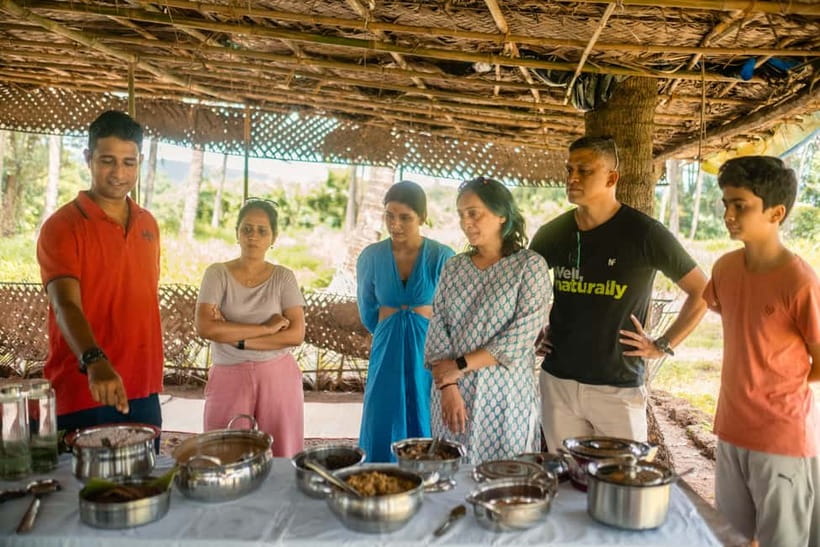
The final part of the farm visit is a traditional Goan vegetarian meal prepared by local villagers. It is served at the coconut farm, where you can eat in the shade and feel the breeze moving through the grove.
Food is often where a village experience either becomes personal or falls flat. Here, lunch is not an add-on snack. It is one of the main reasons to choose this outing. The meal gives you a direct taste of local home-style cooking and makes the visit feel like time spent with a community, not just a stop at a business.
The food is described as authentic and very good, but keep the wording in perspective. The tour promises a wholesome vegetarian Goan meal, not a menu of multiple restaurants or a cooking class. If you have strict dietary needs, the supplied information does not specify substitutions, so ask before booking.
I especially like the setting. A meal in a coconut grove links the food to the farm and the subject of the visit. You are eating in the same environment that has shaped the farm’s work, rather than stepping into a separate dining room.
What the $30 price really covers
At $30 per person, this is good value if you want a compact cultural and food experience. Your fee covers a local English-speaking storyteller, access to selected shrines and holy sites, the organic farm visit, an explanation of virgin coconut oil production, and a Goan vegetarian meal.
That is a strong package for three hours. You are paying for interpretation and access, not simply transport between attractions. The local stories, the farm conversation, and lunch make the price easier to justify than a short sightseeing loop with only photo stops.
The value drops if you already have a car, know Mulgao well, and would prefer to visit a farm independently. Transportation is not included, and you must arrange it yourself for the trip to the village and for movement during the experience. Factor in fuel, a driver, or a hired vehicle before comparing the total cost with other activities.
There is also free cancellation up to 24 hours before the start, and you can reserve now and pay later. Those terms help if your Goa plans are still shifting, but the bigger booking question is transport.
The transport detail you should not overlook
This experience requires transport. It starts and ends at Kelbai Temple in Mulgao, but the route is not designed as one continuous walking trail.
You can use your own vehicle or arrange another transport mode at your end. The tour does not provide transfers to the village or transport between the stops. Plan this before the day begins, not after arriving at the temple.
That detail changes the feel of the outing. With a car or driver, the route should be straightforward to manage. Without one, you may spend energy solving logistics instead of enjoying the village. Ask yourself how comfortable you are arranging transport in a rural area of North Goa.
The route also includes walking at shrines and farm activity. Comfortable shoes matter more than fashionable footwear. Bring water, sunscreen, and a hat. The experience provider does not supply umbrellas, raincoats, hats, caps, face masks, or sanitizers, so pack what you need.
Who will enjoy this three-hour experience
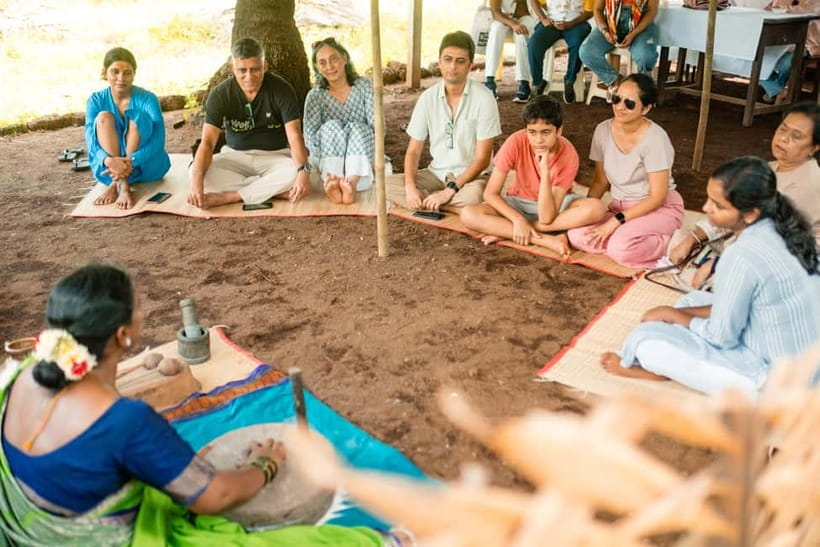
I would recommend this to you if you enjoy local food, small-scale farming, religious history, and conversations that explain how a place works. It suits couples, families with older children, and curious visitors who want a quieter half-day away from the coast.
It is also a good fit if you care about sustainability but prefer practical examples to broad slogans. The farm shows how education, coconut processing, and zero-waste thinking can connect in one working place.
You may want to skip it if you dislike rural roads, need a fully guided transport plan, or want a major attraction every few minutes. The experience is easy paced. One review specifically describes it as relaxed and enjoyable, which is useful guidance: this is not a high-energy adventure.
It is not suitable for wheelchair users. The village movement, shrine visits, and farm setting may also be difficult for anyone who cannot manage uneven walking, though the supplied details do not give a fuller accessibility assessment.
What to bring and how to prepare
Keep your packing simple:
- Comfortable shoes for village and farm walking
- A hat or cap
- Sunscreen
- Drinking water
- A camera
Do not bring alcohol, drugs, or smoking materials for use during the experience. Wear clothing that is comfortable for warm weather and appropriate for visits to holy sites.
I would also leave room in your schedule after lunch. The tour is listed as three hours, but your transport arrangements may take longer than the guided portion. Since the route begins and ends at Kelbai Temple, confirm your meeting plan clearly before setting out.
Should you book Mulgao and Mulgão Verde?
Book it if you want to understand a quieter part of Goa through shrines, farming, and food. The combination is unusual enough to feel worthwhile, and the meal gives the experience a warm finish. The strongest elements are the local storytelling, the practical coconut-farm visit, and the chance to eat a traditional vegetarian Goan meal in the grove.
Skip it if you need included transport or prefer a major sightseeing route. The need to arrange a vehicle is the only significant drawback, but it is not a minor one.
For $30, this is a sensible choice for a curious visitor who has half a day, a way to reach Mulgao, and an interest in Goa beyond beaches and nightlife.
FAQ
Where does the experience begin?
It begins at Kelbai Temple in Mulgao, North Goa.
How long does the experience last?
The experience lasts three hours.
Is transportation included?
No. You must arrange transportation to Mulgao and transport between the stops yourself.
Is this a walking tour?
No. It is not a continuous walking trail and requires transportation within the village, although you should expect some walking at the shrines and farm.
What language is the tour conducted in?
The live guided experience is conducted in English.
What does the tour include?
It includes a local storyteller, visits to shrines and holy sites, an organic coconut farm visit, information about virgin coconut oil production, and a vegetarian Goan meal prepared by local villagers.
Is the meal vegetarian?
Yes. The included meal is a traditional Goan vegetarian meal.
What should I bring?
Bring comfortable shoes, a hat, sunscreen, water, and a camera.
Is the experience suitable for wheelchair users?
No. The experience is listed as not suitable for wheelchair users.
Just added around the world
- Zanzibar: Walking Spice Farm with Local Cooking Class★ 4.4 · 9 reviews
- Zanzibar:Jozani forest, Spice farm with Swahili Cuisine clas★ 4.2 · 3 reviews
- ZANZIBAR, Stone town tour, Prison Island & Spice farm★ 5.0 · 11 reviews
- Zanzibar: Spice Farm Tour with Traditional Cooking Class★ 4.6 · 16 reviews
- Zanzibar: Stone Town City Tour and Spice Farm with Lunch★ 3.7 · 33 reviews
- Zanzibar: Spice farm tour with Zanzibar fruits tasting★ 3.8 · 7 reviews
- Zanzibar: Spice Farm Tour with Cooking lesson★ 4.5 · 4 reviews
- Zanzibar: Spice Farm Tour with Traditional Cooking Class★ 4.8 · 6 reviews
India Farm Tours, compared.

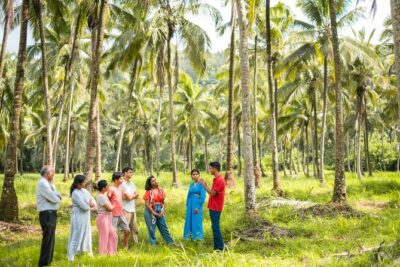
Mulgao Folk Village & Coconut Farming Experience – Make It Happen
Read our review →


Farm stay in Sikkim to explore monasteries and villages over 5 days
Read our review →
Coorg: Mercara Gold Estate Coffee/Spice Farm and Museum Tour
Read our review →
Philipkutty’s Farm Culinary Tour including Lunch and Cooking Demo
Read our review →Lists this farm appears in