
Reviewed · COOKING CLASSES
Traditional Greek Cooking Class @ Lefkada Micro Farm
The best part of this Lefkada experience happens before the cooking begins. At Lefkada Micro Farm, Andreas introduces you to the soil, animals, and regenerative farming methods that supply the meal. You then harvest seasonal ingredients and use them in an open-air kitchen, with bread and briam cooked in a traditional wood-burning oven.
I like the small group of up to 10 and the unhurried pace. I also like that you do not just follow a recipe: you see where the vegetables come from, work with sheep’s yogurt and goat cheese, and share the finished food at the Farmer’s Table. The main consideration is the price, $152.58 per person, and the fact that the class depends on good weather.
Key points to know before booking
- Meet Andreas at the farm: The class begins and ends at Lefkada Micro Farm near Nidri.
- Start with the soil: You learn about regenerative farming before harvesting ingredients for lunch.
- Cook four Greek staples: The menu includes wood-oven bread, tzatziki, Greek salad, and briam.
- Expect a relaxed four hours: This is a slow, social class rather than a fast lesson in complicated techniques.
- Small English-language group: The maximum is 10 people, and a mobile ticket is provided.
- Plan around the weather: Poor weather may lead to a new date or a full refund.
A farm visit before the cooking starts
This class begins at Lefkada Micro Farm, located on the road between Nidri and Vafkeri’s Rachi. The listed meeting address is Ε.Ο. Νυδριου Βαυκερής Ράχη, Nidri 311 00, Greece. You return to the same meeting point at the end, so this is a self-contained outing rather than a cooking class paired with town sightseeing.
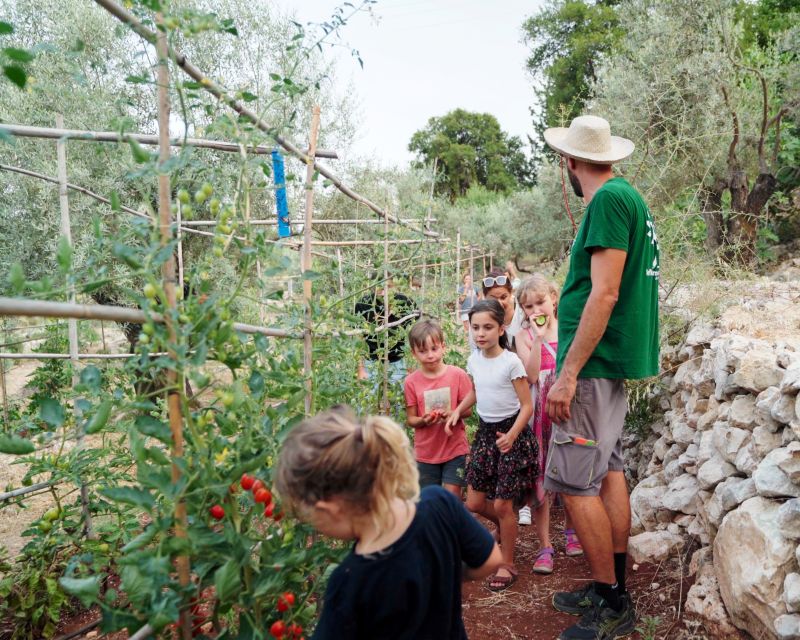
The farm is presented as an open-air museum, which tells you something about the pace. You are not simply shown a kitchen and handed a bowl. Andreas first explains how the farm works and why healthy soil matters. The focus is regenerative farming, with attention to the wider ecosystem rather than only the vegetables needed for one meal.
That beginning gives the food more meaning. A Greek salad can be made anywhere, but here you first see the connection between the garden, the farmer, and the table. I find that especially useful if you want to understand why Greek cooking relies so heavily on fresh produce, good olive oil, herbs, and simple preparation.
If you arrive early, the experience may begin gently. Andreas has welcomed early arrivals with coffee, fresh fruit, and cakes, and has invited them to feed the animals while waiting. These details are not guaranteed as a separate scheduled part of the class, but they show the informal character of the farm.
More Cooking Classes in Greece:
- Naxos Perivoli Farm Experience & Wood-fire Cooking Class
★ 5.0 · 339 reviews - Melanes: Naxos Perivoli Farm & Cooking Class with Wood Fire
★ 5.0 · 177 reviews - Santorini Family Farm Food & Wine Tour with Cooking Class
★ 5.0 · 107 reviews
Andreas and the slow rhythm of the class
Andreas leads the farm introduction and cooking experience, joined by his mother and the farm’s chef. His passion for the environment comes through in the way the activity is organized. You get time to ask questions, look around, and take part rather than moving from one fixed demonstration to the next.
The phrase slow living fits this class well. There is no promise of restaurant-style speed or advanced culinary training. Instead, you work with basic ingredients and traditional methods. The lesson is about making a few things properly, understanding the produce, and eating together.
That relaxed format suits couples, families, and small groups who want a social afternoon. It may be less appealing if you are searching for professional knife skills, a long list of recipes, or a highly structured cooking school. The emphasis is on connection and simplicity, not technical challenge.
The small maximum of 10 people matters here. With a group this size, you should have a better chance to take part in preparing the dishes instead of watching from the edge. It also keeps the Farmer’s Table feeling like a shared meal rather than a large food demonstration.
Harvesting seasonal ingredients from the farm
The class asks you to take part in gathering the ingredients used for the meal. The produce is seasonal and organic, and the activity explains how it is grown within the farm’s wider system.
This is one of the strongest reasons to choose the class over a standard cooking lesson. You are not starting with anonymous vegetables in a kitchen. You begin with the source, then carry that connection into the preparation.
Seasonality also explains the menu’s simplicity. The dishes do not depend on rare products or elaborate sauces. Fresh vegetables, local dairy, oregano, bread, and olive oil do most of the work. That is a practical lesson you can use at home: choose good ingredients and do less to them.
The farm’s own extra virgin olive oil is part of the meal, and it is described as award-winning. It is used with garden vegetables and the Greek salad, where quality oil makes a real difference. You should expect the oil to be treated as a central ingredient, not just a finishing drizzle.
Baking bread in a traditional wood-burning oven
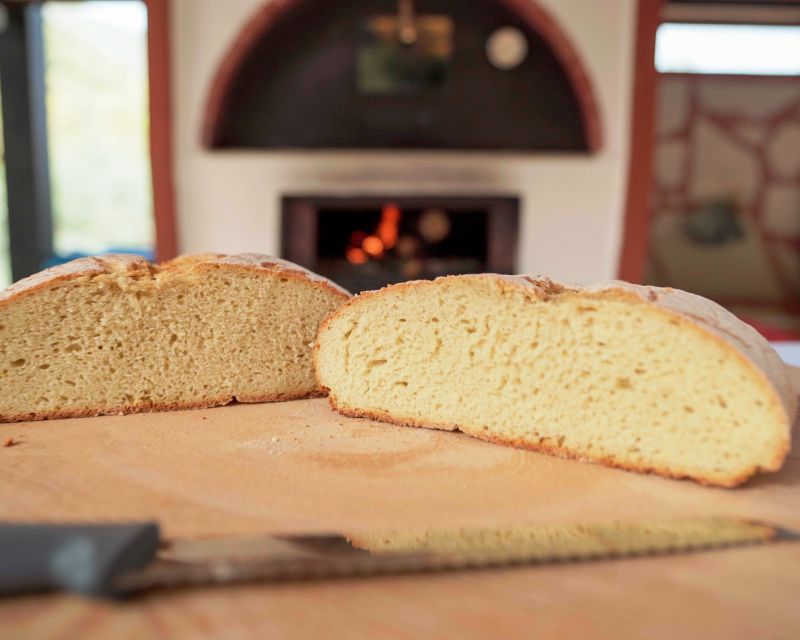
Bread is one of the starters, baked in the farm’s wood-burning oven. The oven adds a slower, more traditional part to the class and gives the meal a clear connection to older household cooking.
You also use the same oven for briam, the mixed vegetable main course. This means the oven is not just a decorative feature. It is part of the practical cooking method and helps show how Greek food can be hearty without relying on meat or complicated equipment.
The wood oven may be one of the most memorable parts of the day, but it also reinforces the need for patience. This is not a class built around instant results. The cooking moves according to the food and the oven, which is a good match for the farm’s calm style.
If you prefer a fast, hands-on class where every minute brings a new technique, you may find the pace too gentle. If you like food with a sense of place, the oven adds real value.
More Workshops in Greece:
- Moires: Cooking Class and Olive Oil Tasting at a Family Farm
★ 5.0 · 93 reviews - Mykonian Farm and Bakery Class with Brunch in Greece
★ 4.5 · 39 reviews - Traditional Greek Cooking Class @ Lefkada Micro Farm
★ 4.7 · 32 reviews - From Mykonos: Mykonian Farm Baking Class with Brunch
★ 4.7 · 29 reviews
Preparing tzatziki, salad, and briam
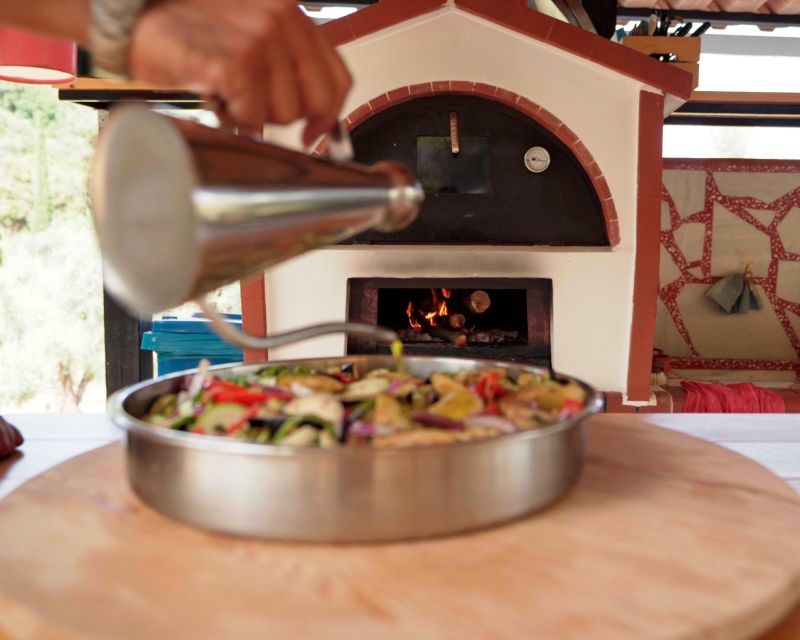
The menu is short, but it covers several basic parts of Greek cooking.
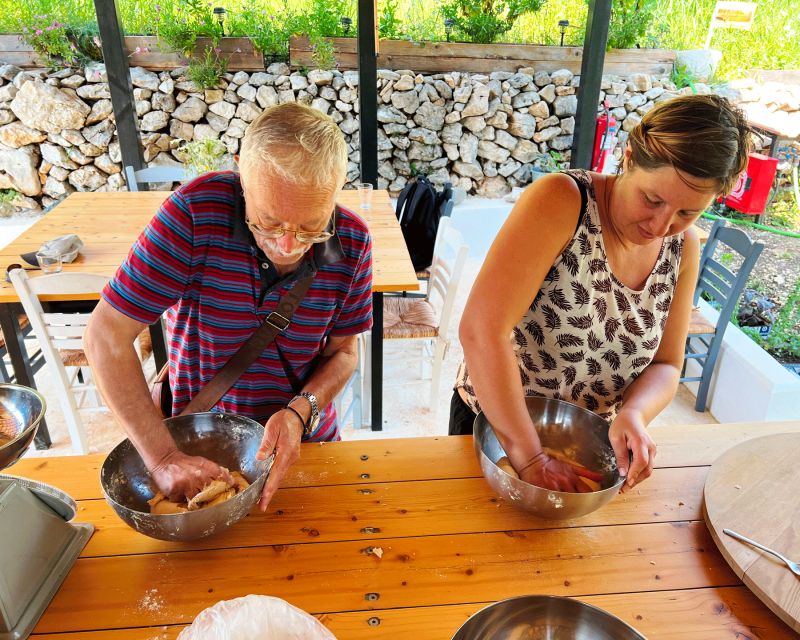
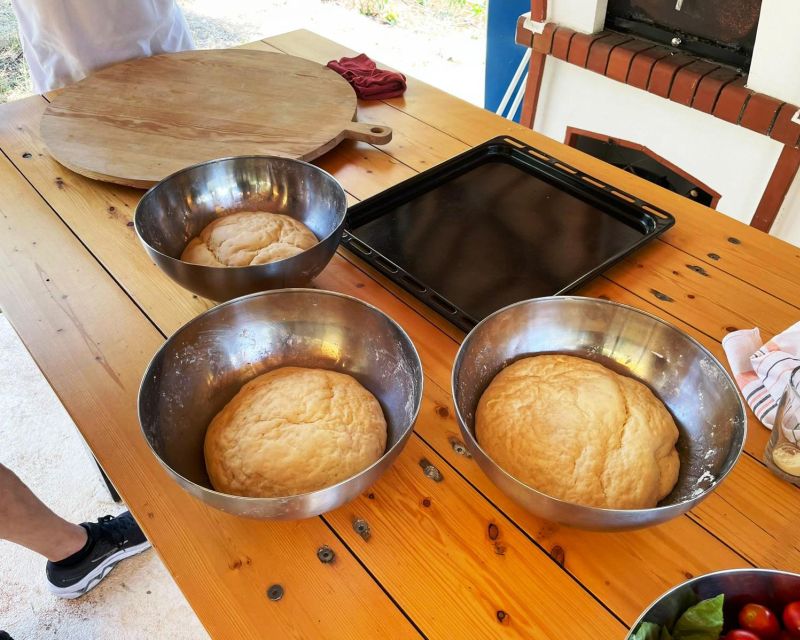
Bread: You help prepare bread that is baked in the wood-burning oven. It forms a simple opening to the meal and gives you a direct look at traditional baking.
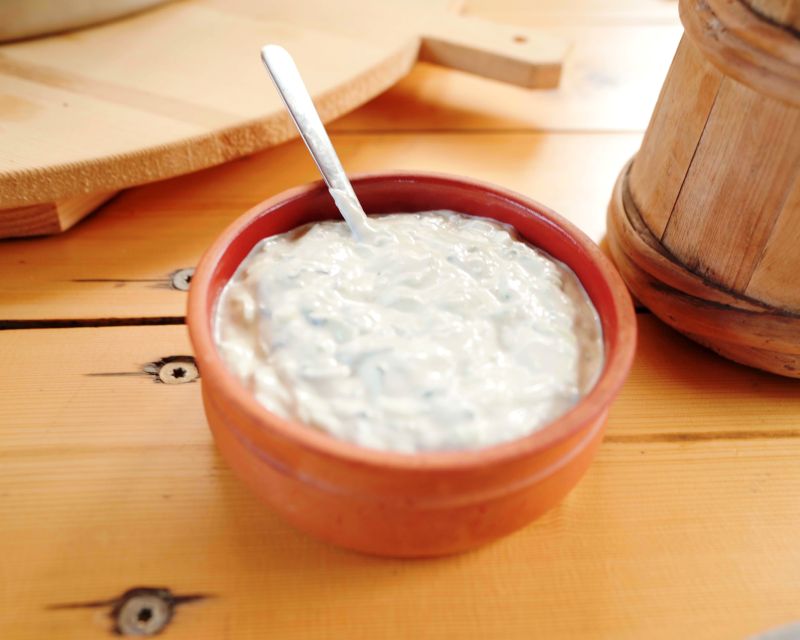
Tzatziki: This combines farm-to-table vegetables with sheep’s yogurt. The use of sheep’s yogurt gives the familiar dip a distinctly local character. It is a reminder that regional cooking often depends as much on the dairy and produce as on the recipe itself.
Greek salad: The salad uses farm vegetables, goat cheese, oregano grown at the farm, and the farm’s own extra virgin olive oil. This is the clearest expression of the class’s approach: fresh ingredients, a few strong flavors, and little unnecessary work.
Briam: This mixed vegetable dish is roasted in the wood-burning oven. Briam is a useful dish to learn because it turns everyday vegetables into a satisfying main course through slow roasting, olive oil, and seasoning.
Together, these dishes make a balanced meal. You have bread, a cool yogurt preparation, a fresh salad, and warm roasted vegetables. There is no listed meat or fish course, so this menu will suit vegetarians, though you should still contact the farm about allergies or dietary restrictions before booking.
Sitting down at the Farmer’s Table
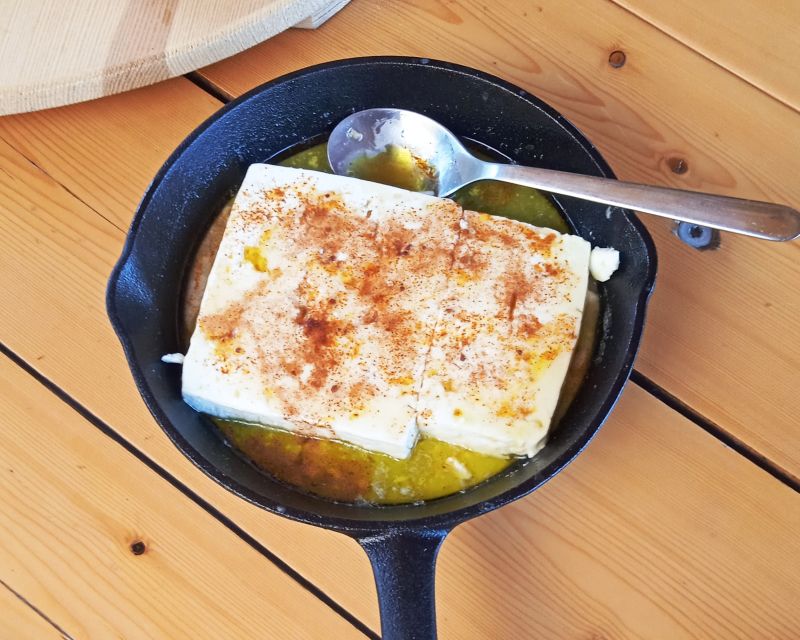
Once the food is ready, you eat what you have prepared at the Farmer’s Table. This shared meal is the natural finish to the class. You can taste the produce after seeing it in the soil, handling it in the kitchen, and cooking it in the oven.
I like this part because it gives the afternoon a proper ending. A cooking class can feel incomplete if you leave with containers of food but no time to sit down. Here, the meal is part of the experience, not an afterthought.
The table also keeps the focus on Greek hospitality. The class is designed around eating together, with Andreas, his mother, the chef, and the small group sharing the result. The setting is informal and family-like rather than polished or theatrical.
The menu is fixed in broad terms, so you should book this for the farm setting and cooking style rather than for unlimited menu choice. If you have allergies or dietary restrictions, tell the provider ahead of time. The farm specifically asks for that information, but the supplied details do not promise a particular substitute.
Is $152.58 a fair price?
At $152.58 per person, this is not a budget lunch. The value depends on how you measure the outing.
You are paying for about four hours of time, an English-language farm introduction, a small group capped at 10, guided food preparation, ingredients, the shared meal, and access to a working farm setting. You also get more than a recipe sheet. The class explains regenerative farming, harvesting, the wood-burning oven, and the role of olive oil and seasonality in Greek food.
I would consider the price reasonable for someone who values a personal, food-centered activity and wants more than a standard restaurant meal. The farm setting and small group help justify the cost, especially if you enjoy meeting the people behind the food.
I would think twice if you are mainly looking for a cheap meal or a packed sightseeing schedule. Four hours is a large part of a day, and the class has a slow pace by design. Its worth comes from the full sequence, from soil to table, not from the amount of food alone.
Timing, group size, and practical details
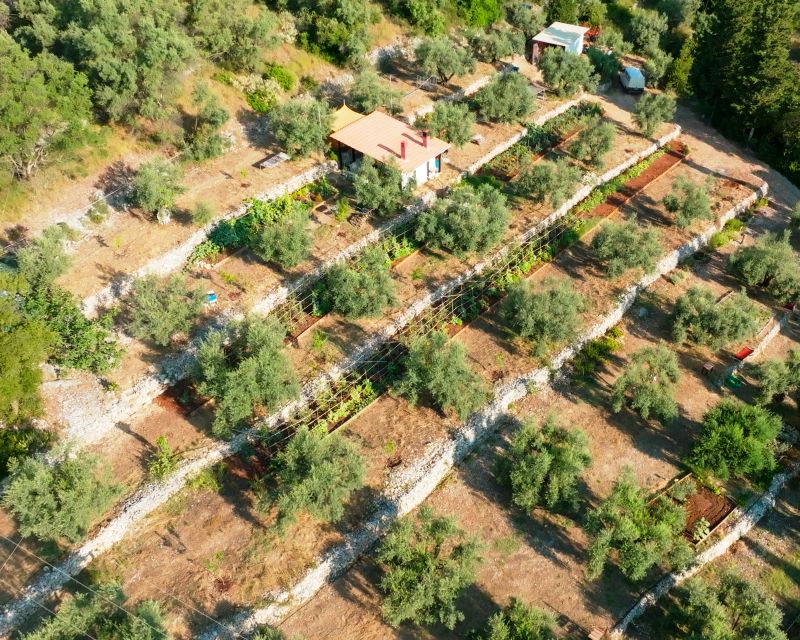
The activity lasts approximately four hours. It is offered in English and accepts a mobile ticket, which keeps the arrival process simple.
You meet at Lefkada Micro Farm and finish there. No transport from a hotel or another point is listed, so you should plan your own way to the farm. The meeting location is near Nidri, at Ε.Ο. Νυδριου Βαυκερής Ράχη.
The experience is limited to 10 people. That is a useful size for a cooking activity because everyone has a better chance to take part, ask questions, and sit comfortably at the shared table.
Confirmation is normally sent at booking. If you book within 10 hours of the start time, confirmation comes as soon as possible and depends on availability. Service animals are allowed.
The class requires good weather. If poor weather forces a cancellation, you are offered another date or a full refund. You can cancel for a full refund if you do so at least 24 hours before the start time. Cancellations or changes made within 24 hours are not refunded or accepted.
Who will enjoy this Lefkada cooking class?
I would recommend this to anyone who likes food with a clear source. It works especially well for couples, families, and small groups who want a calm half-day away from the usual beach routine.
It is also a good choice for people interested in sustainable farming. The regenerative approach is not an extra talk added at the end. It shapes the whole activity, from the farm walk to the harvesting and the meal.
Vegetarians should find the listed menu appealing, since the main dish is briam and the starters include bread, tzatziki, and Greek salad. Still, contact the farm if you need a strict dietary adjustment.
You may want to skip it if you dislike outdoor settings, prefer a tightly timed lesson, or want advanced cooking instruction. The experience is friendly and hands-on, but it is not presented as a professional culinary course.
Should you book Lefkada Micro Farm?
Book it if you want to spend a meaningful four hours learning how simple Greek food begins with healthy soil and good produce. The strongest features are the small group, the warm involvement of Andreas, his mother, and the chef, and the chance to cook in a wood-burning oven before eating at the Farmer’s Table.
The main warning is the price and the weather requirement. This is best treated as a special food experience, not a cheap lunch or a quick activity between beach stops.
If that distinction works for you, I would make this a strong choice for Lefkada. You leave with recipes, but the more useful lesson is simpler: fresh ingredients, careful farming, and time at the table can be enough.
FAQ
Where does the cooking class take place?
It takes place at Lefkada Micro Farm at Ε.Ο. Νυδριου Βαυκερής Ράχη, Nidri 311 00, Greece.
How long does the experience last?
The class lasts approximately four hours.
What dishes are prepared?
The menu includes bread baked in a wood-burning oven, tzatziki with farm vegetables and sheep’s yogurt, Greek salad with goat cheese, oregano, and extra virgin olive oil, and briam made with mixed vegetables.
Is the meal cooked in a wood-burning oven?
Yes. The bread and briam are baked or roasted in the farm’s traditional wood-burning oven.
What language is the class offered in?
The experience is offered in English.
How many people can join?
The activity has a maximum of 10 people.
Where does the activity finish?
It ends back at Lefkada Micro Farm, the same place where it begins.
Are service animals allowed?
Yes, service animals are allowed.
Can I report allergies or dietary restrictions?
Yes. You should tell Lefkada Micro Farm about any allergies or dietary restrictions.
What happens if the weather is poor?
The activity requires good weather. If it is canceled because of poor weather, you are offered another date or a full refund.
Just added around Greece
- Volos: Cook Like a Local at a Greek Farm★ 5.0 · 7 reviews
- Traditional Greek Cooking Class @ Lefkada Micro Farm★ 4.7 · 32 reviews
- Visit a Farm and Horseback Riding in Nature★ 5.0 · 10 reviews
- Insightful Pistachio Orchard and Factory Tour★ 4.5 · 27 reviews
- Flavors of Santorini: Farm-to-Table Meal Wine & Authentic Village★ 5.0 · 12 reviews
- Santorini 5 Hour Private Oia Tour & Lunch/Dinner at a Local Farm★ 5.0 · 40 reviews
- Cooking Class Sunset Dinner and Tour in Paros Farm★ 5.0 · 5 reviews
- Olympia Shore Ex: Olympic site, Honey Farm & Olive Oil Tasting★ 4.5 · 57 reviews
Cooking Classes, compared.
Half-Day Thai Cooking Class at Organic Farm in Chiang Mai
Read our review →
Cooking Class and Lunch at a Tuscan Farmhouse with Local Market Tour from Florence
Read our review →
Authentic Cooking Class with Market & Farm Visit
Read our review →
Hands-On Cooking Class & Farmhouse Tour on the Amalfi Coast
Read our review →
Lists this farm appears in