
Reviewed · COCOA AND CHOCOLATE FARM TOURS
1 Day cocoa farm tour
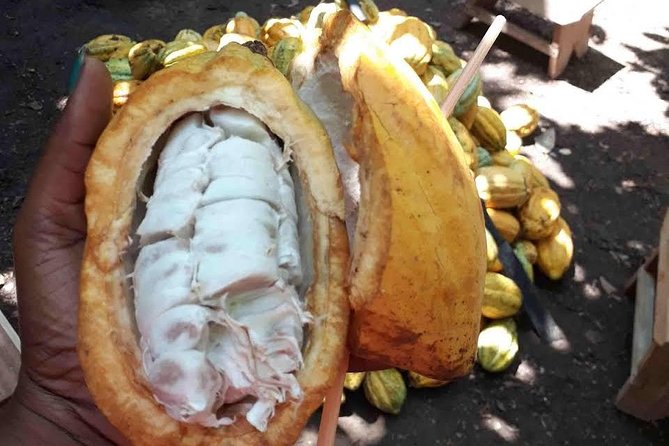
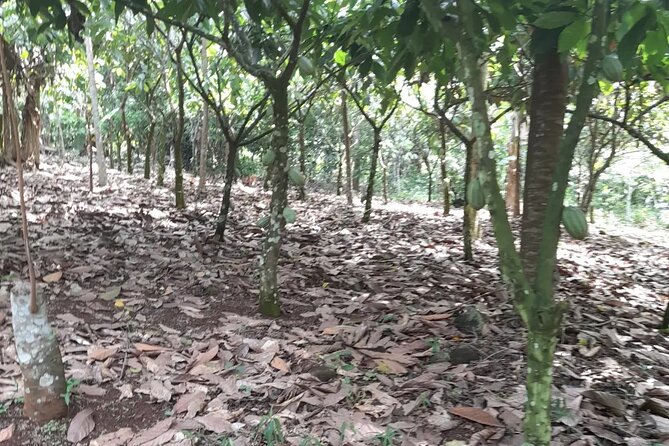
The most interesting part of this outing is seeing cocoa before it becomes a chocolate bar. In Asamankese, you walk beneath a canopy of cocoa trees, follow the farm’s working routines, and learn how pods are harvested, opened, dried, and prepared for sale. The quiet crunch of dry leaves underfoot adds a nice touch to the walk.
I like the private format, since your guide can shape the visit around your questions instead of leading a large crowd. I also like that lunch, snacks, and cocoa tasting are included, giving the day more substance than a quick photo stop. The main consideration is the $349.94 price, which is high for a six-and-a-half-hour outing, so the value depends on how much you want personal attention and a direct look at Ghanaian farm life.
Key points to know before booking
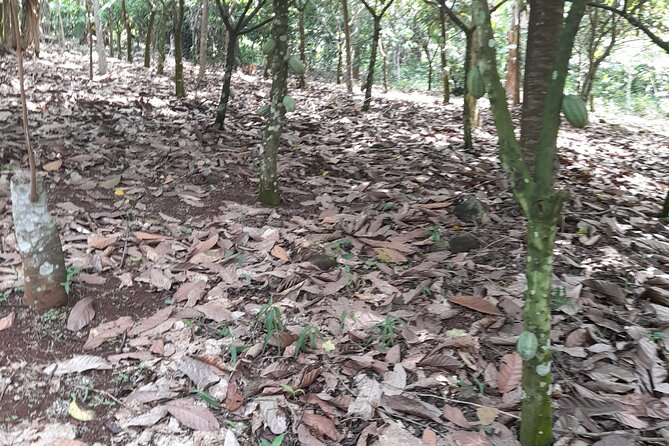
- Asamankese is the heart of the visit: The farm sits in this Ghanaian town, where you also learn about the area and its place in cocoa production.
- The farm walk is practical, not staged: You see cocoa trees under their canopy and learn what happens before beans reach the market.
- A private guide changes the pace: You can ask more questions and spend extra time on subjects that interest you.
- Cocoa tasting is part of the experience: You may taste cocoa in a form that feels very different from finished chocolate.
- Food is covered: Lunch and snacks are included, useful on an early start from Accra.
- Plan around the weather: The outing needs good conditions, and poor weather can lead to a new date or a full refund.
From Accra to Asamankese at 7:30 am
Your day begins at 7:30 am, with the listed meeting point on Fantail Street in Accra. Pickup is offered, but confirm the exact pickup arrangement when you book. That small check matters, especially if you are staying outside central Accra or prefer not to make your own way to Fantail Street.
The total experience lasts about six hours and 30 minutes. The farm portion is listed at about three hours, leaving the rest of the day for the journey, meals, and time around Asamankese. This is not a quick city excursion you can squeeze between breakfast and an afternoon appointment. Give it the full morning and early afternoon.
The early start makes sense. You get more usable daylight at the farm and avoid turning the visit into a rushed afternoon stop. I would eat lightly before leaving, then use the included snacks and lunch as part of the day rather than expecting to find food along the route.
More Cocoa Farm Tours in the world:
- Lahaina: Maui Ku’ia Estate Guided Cacao Farm Tour and Tasting
★ 5.0 · 1,103 reviews - Kauai Chocolate Farm Tasting Tour
★ 5.0 · 666 reviews - Award Winning Farm Tour: Coffee, Chocolate and Unique Gifts
★ 5.0 · 484 reviews
Walking beneath the cocoa canopy
The farm is in Asamankese, and the setting is the main reason to choose this tour. You are not just shown a finished packet of cocoa. You walk under the trees where the crop grows and see the farm as a working place.
The canopy changes the feel of the visit. Cocoa trees create a shaded environment, and the ground has its own sounds, including the dry leaves crunching beneath your feet. That may sound like a tiny detail, but it is exactly the sort of thing that separates a farm visit from a classroom talk.
The walk also gives you a better sense of the rural way of living in Ghana. You can see how much care goes into a crop that is often treated as a simple ingredient in other countries. The farm visit connects the plant, the farmer, the harvest, and Ghana’s wider economy in one setting.
Expect a walking tour rather than a polished museum display. The information provided does not promise paved paths, special facilities, or a formal visitor center. Wear practical shoes and clothing that can handle a rural farm setting. Since the tour depends on good weather, a light rain layer is sensible, though conditions may still affect the schedule.
How cocoa changes from pod to dried bean
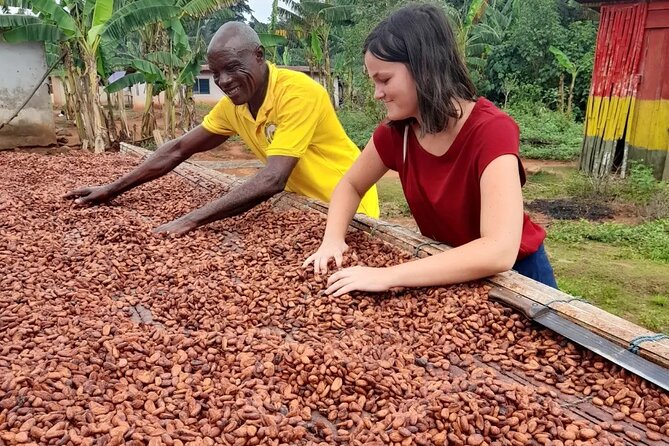
The strongest educational part of the outing is the explanation of what happens after cocoa grows on the tree. You learn how the crop is harvested, opened, dried, and prepared into the cocoa beans you may have seen in shops or heard about in discussions of chocolate production.
The process is easy to take for granted until you see the early stages. Cocoa does not arrive at a factory looking like a chocolate bar. At the farm, you can connect the tree to the raw material and then to the dried product. That simple sequence gives the tour its real value.
You also hear about the work involved in protecting the crop. The supplied accounts describe learning how farmers care for and protect the farm before the cocoa is ready. The exact farming practices can vary by season and farm conditions, so use your guide’s explanation as your best source during the visit.
Ask questions as you go. A private setting gives you a better chance to ask why certain tasks are done, how long drying takes, and what changes between harvest periods. The available information does not promise that every stage will be active on the day you visit, so think of this as a chance to understand the full process, with the visible work depending on timing.
Cocoa tasting beyond finished chocolate
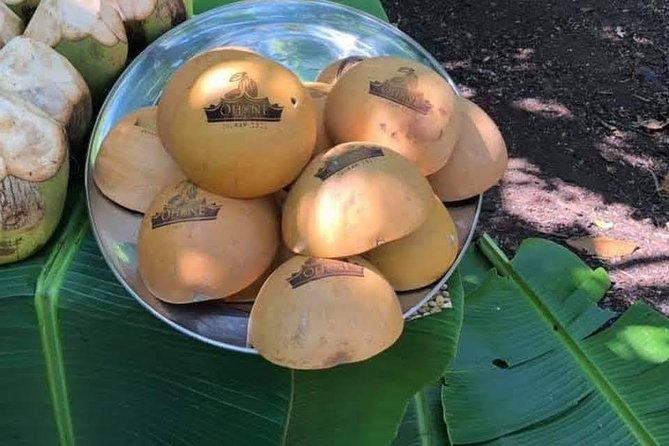
You get to try cocoa during the visit. That is a useful part of the day because it lets you compare the farm product with the sweet chocolate most people know.
The experience details do not specify the exact form of the tasting, so do not assume it will be a full chocolate-making workshop or a factory demonstration. It is better to expect a chance to taste cocoa and learn how it develops into familiar products. For many people, that direct taste will be more memorable than another explanation of cocoa exports.
The tour also promises cocoa products that are hard to find elsewhere. That wording suggests the chance to encounter local preparations or farm products not commonly sold in Accra or outside Ghana, but the precise items are not listed. If you have dietary restrictions or allergies, ask what will be served before you taste anything.
More One-Day Trips in the world:
- Gaucho Day Trip from Buenos Aires: Santa Susana Ranch
★ 4.0 · 272 reviews - Amsterdam: Day trip to Tulip Farm, Keukenhof + Windmill Cruise
★ 4.5 · 211 reviews - Appenzell Alps Day Trip from Zurich – Farm Life & Cheese Tasting
★ 4.5 · 148 reviews - Gaucho Experience: A Day Trip to Don Silvano Ranch
★ 4.0 · 148 reviews
Meeting the guide in a private setting
A private tour is the clearest advantage here. Only your group participates, so the day does not have to follow the needs of a busload of strangers. You can ask basic questions without feeling you are holding up a group, or spend more time on farming, local life, and cocoa’s role in Ghana’s economy.
Bless is named in the supplied information as a friendly and well-informed guide. If Bless is assigned to your outing, you can expect a guide who has been praised for patience and a strong grasp of the subject. Guide assignments can change, so confirm the name if having a particular guide matters to you.
The private format is especially useful for solo visitors, couples, families, and small groups with mixed interests. A solo visit can otherwise feel expensive, but the personal attention helps explain part of the price. For a family, the farm setting turns an ordinary sightseeing day into a lesson children can see and taste.
The one limit is that private does not mean luxury. No premium vehicle, air-conditioning details, farm facilities, or extra attractions are specified. One person received bonus attractions, but that should be treated as a pleasant possibility, not part of the guaranteed program.
Lunch, snacks, and the shape of the day
Lunch and snacks are included, which improves the practical value of the tour. You begin early, spend time walking and listening, and then have food built into the schedule rather than needing to arrange a separate meal.
The exact menu is not provided, so do not book this expecting a particular Ghanaian dish. If food is central to your plans, ask in advance what lunch includes and whether dietary requests can be handled. The same applies to allergies and the cocoa tasting.
The food also helps the tour feel like a full day in the countryside rather than a three-hour farm inspection. You have time to pause, talk, and take in the setting. Still, the published timing lists roughly three hours at the farm, so the outing is best understood as a half-day-plus experience, not a long agricultural stay.
Is $349.94 a fair price?
At $349.94 per person, this is not a budget activity. The cost makes the most sense if you value a private guide, pickup availability, included food, and a focused visit to one of Ghana’s oldest cocoa farms.
For a solo visitor, the price may be easier to justify because the private arrangement avoids joining an unknown group and gives you room to ask questions. For two or more people, compare the total cost with other private day trips from Accra. The listing gives a per-person price, but it does not explain how the amount changes with group size, so ask before booking.
I would not choose this tour solely for transport or a meal. The reason to pay more is the access to a working cocoa setting and the chance to connect farming with Ghana’s economy. If you only want countryside photos, a cheaper excursion may suit you better. If you want to understand where cocoa begins, the private format gives the price a stronger case.
The tour is booked about five days ahead on average, so it is wise to reserve before the last minute. Confirmation is provided at booking. Free cancellation is available until 24 hours before the start time, while cancellations or changes inside that window are not accepted for a refund. If poor weather cancels the outing, you can receive a different date or a full refund.
Who will enjoy the Asamankese visit most?
I would recommend this experience to you if you enjoy seeing how an everyday product is made. It works well for anyone curious about Ghana’s rural economy, visitors who want time outside Accra, and people who prefer a private guide over a crowded group.
It is also a good fit if you like sensory experiences. You hear the dry leaves, walk under the trees, see the cocoa process, and taste the crop. Those details make the day more memorable than a talk about exports alone.
Families can find plenty to discuss, although the published information does not give an age range or child-specific program. Most people can participate, but the outing includes time on a farm, so anyone who needs specialized accessibility arrangements should confirm those details in advance.
I would hesitate if your schedule is tight, if you dislike rural walking, or if $349.94 feels too steep for a six-and-a-half-hour trip. The tour is about learning and place, not a long list of attractions. Its success depends on your interest in cocoa and the guide’s ability to bring the farm’s work to life.
Should you book this cocoa farm tour?
Book it if you want to see cocoa at its source and prefer a personal, carefully explained outing from Accra. The best features are the private guide, the walk beneath the cocoa canopy, the chance to taste cocoa, and the clear look at harvesting and drying.
Before paying, confirm pickup details, the guide’s name, the lunch menu, and what cocoa products will be available that day. If the answers suit your needs, this is a thoughtful way to spend a morning and early afternoon learning about one of Ghana’s most important crops. If you are mainly looking for a cheap day out, the price will likely feel high.
FAQ
Where does the cocoa farm tour take place?
The farm is located in Asamankese, Ghana. The tour also includes learning about the town and its setting.
Where is the meeting point?
The listed meeting point is Fantail Street, Fantail St, Accra, Ghana. Pickup is offered, so confirm the exact arrangement when booking.
What time does the tour begin?
The stated start time is 7:30 am.
How long does the experience last?
The tour lasts approximately six hours and 30 minutes. About three hours are listed for the farm visit.
Is the tour private?
Yes. Only your group participates in this private tour or activity.
Is food included?
Yes. Lunch and snacks are included in the experience.
Will I get to taste cocoa?
Yes. The experience includes an opportunity to try cocoa. The exact form of the tasting is not specified.
What happens if bad weather cancels the tour?
The experience requires good weather. If poor weather causes cancellation, you can choose another date or receive a full refund.
Just added around the world
- Zanzibar: Walking Spice Farm with Local Cooking Class★ 4.4 · 9 reviews
- Zanzibar:Jozani forest, Spice farm with Swahili Cuisine clas★ 4.2 · 3 reviews
- ZANZIBAR, Stone town tour, Prison Island & Spice farm★ 5.0 · 11 reviews
- Zanzibar: Spice Farm Tour with Traditional Cooking Class★ 4.6 · 16 reviews
- Zanzibar: Stone Town City Tour and Spice Farm with Lunch★ 3.7 · 33 reviews
- Zanzibar: Spice farm tour with Zanzibar fruits tasting★ 3.8 · 7 reviews
- Zanzibar: Spice Farm Tour with Cooking lesson★ 4.5 · 4 reviews
- Zanzibar: Spice Farm Tour with Traditional Cooking Class★ 4.8 · 6 reviews
Cocoa and Chocolate Farm Tours, compared.
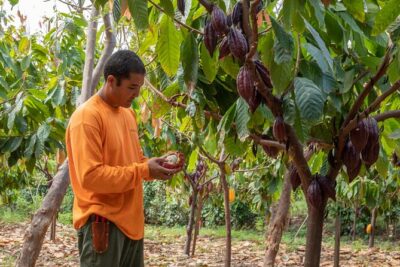
Maui Ku’ia Estate Guided Cacao Farm Tour and Tasting
Read our review →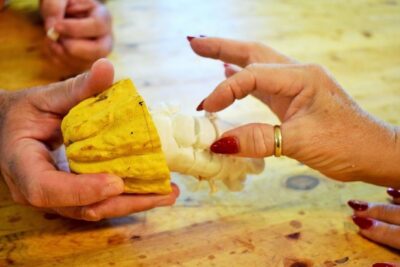
Award Winning Farm Tour: Coffee, Chocolate and Unique Gifts
Read our review →
Basel Farmer’s Market, Cheese, Chocolate & Pastry Tour
Read our review →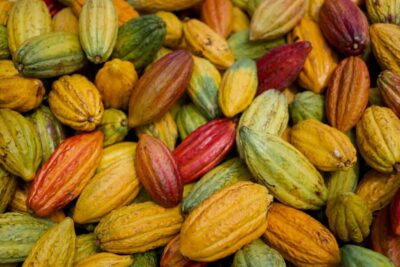
Maui Ku’ia Estate Guided Cacao Farm Tour & Tasting
Read our review →
Craft Chocolate Tasting and Farm Experience on the Big Island
Read our review →Lists this farm appears in