
Reviewed · COOKING CLASSES
Cooking Classes Farm to Table Marrakech
The best part of this Marrakech cooking class happens before you reach the stove: you shop for meat, vegetables, herbs, and spices in a local market, then take those ingredients to a farm for a half-day meal. Chef Abdel leads the cooking, with help from his team, and the setting gives you a welcome break from the medina.
I like two things here. First, you do not simply watch someone make tajine. You choose ingredients, prepare food yourself, and cook over coals. Second, the class reaches beyond recipes, with practical lessons about Moroccan spices, market shopping, and food customs. The main consideration is time: five hours is a sizable part of your day, and the market visit may feel less comfortable if you dislike crowds, unfamiliar meat stalls, or outdoor cooking.
Key points to know
- Market first: Shop for fresh vegetables, meat, fruit, herbs, and spices before cooking.
- A real hands-on class: You prepare your own tajine rather than watching a demonstration.
- Farm setting: Tea, sweets, garden time, and outdoor cooking add a relaxed rural pause.
- Small group: The class is limited to 12 people, with group discounts available.
- More than one dish: Depending on the class plan, you may make couscous, bread, meatballs, and several Moroccan salads as well as tajine.
- Convenient timing: The experience lasts about five hours and finishes back at the meeting point near Koutoubia.
From Koutoubia to the Market
The experience begins at Koutoubia in Marrakech’s old city. Pickup is offered, but the stated meeting point is Koutoubia, so check the exact arrangement when you book. This matters in the medina, where a clear meeting spot saves time and avoids a long search through narrow lanes.
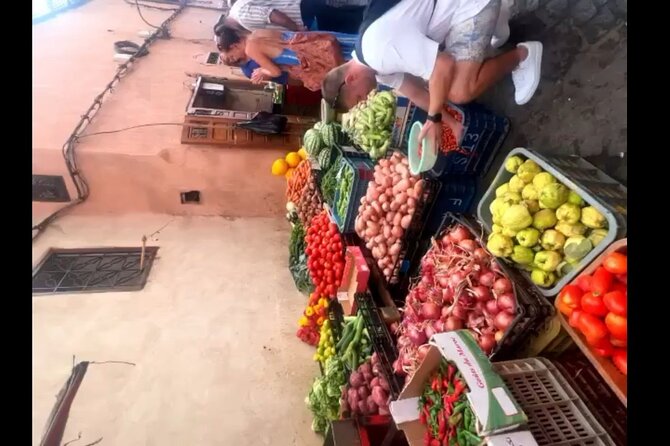
From there, you walk through the old medina toward a local market. This is not just a quick stop to collect ingredients. The market visit gives you a practical introduction to the food that shapes Moroccan home cooking.
You can expect to shop for vegetables, fruit, meat or poultry, herbs, and spices. The market is also a chance to take photographs and watch daily buying and selling, though you should be respectful around people and food. The point is not to collect a list of sights. It is to see how the meal begins with selecting ingredients.
That market connection adds value. A tajine tastes different when you understand the choices behind it: the cut of meat, the freshness of the vegetables, the use of preserved lemon, or the balance of Moroccan spice blends. The class also uses ingredients such as ras el hanout and preserved lemons, two staples that can be hard to understand from a restaurant menu alone.
More Cooking Classes in the world:
- Half-Day Thai Cooking Class at Organic Farm in Chiang Mai
★ 5.0 · 19,087 reviews - Cooking Class and Lunch at a Tuscan Farmhouse with Local Market Tour from Florence
★ 5.0 · 4,831 reviews - Chiang Mai: Authentic Cooking Class with Market & Farm Visit
★ 4.9 · 4,546 reviews
The Farm Kitchen Outside the Medina
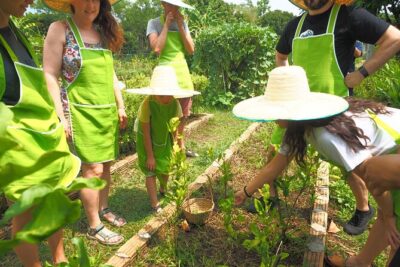
After shopping, the group goes to the farm and cooking site. The change in setting is one of the strongest reasons to choose this class. Marrakech can be intense, especially around the medina, so a garden with trees and vegetation gives the day a quieter rhythm.
You are welcomed with Moroccan tea and sweets before the cooking begins. That small pause matters. It gives you time to settle in, look around, and meet the people in your group instead of rushing straight from the market to a work station.
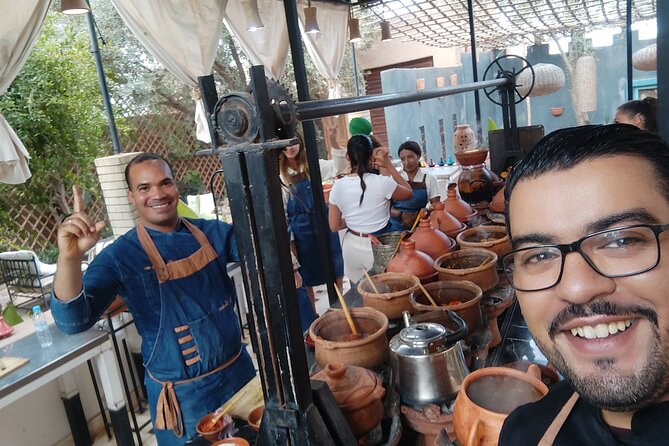
The cooking area is outdoors, and the meal is prepared in a farm setting. You may cook over coal, a traditional method that adds a clear sense of place to the lesson. The setting is pleasant, but keep your expectations practical. This is not a polished restaurant kitchen, and outdoor cooking can mean heat, smoke, and a more basic work area.
The experience works best if you enjoy being involved. You will likely chop, season, arrange, and prepare food with your own hands. If you want a quiet demonstration where someone else does the work, this is not the right choice.
Learning to Make Tajine by Hand
Tajine is the main event. You prepare your own dish with guidance from Chef Abdel and his assistants, then let it cook while the flavors develop. The format gives you something useful to take home: a method you can repeat, not just a plate you enjoyed once.
Moroccan tajine is less about a single fixed recipe than about the relationship between ingredients, seasoning, and slow cooking. The class can include sweet or savory options, with beef, chicken, lamb, or vegetables available depending on the choices for the day. That flexibility is helpful for mixed groups, especially when some people prefer meat and others want a vegetable dish.
The cooking is active, but it is not presented as a race. You have time to ask questions about preparation, spices, and Moroccan food traditions. Chef Abdel is described as speaking excellent English, and his teaching style includes humor as well as instruction. His assistant Fathima is also praised for helping the class run smoothly behind the scenes.
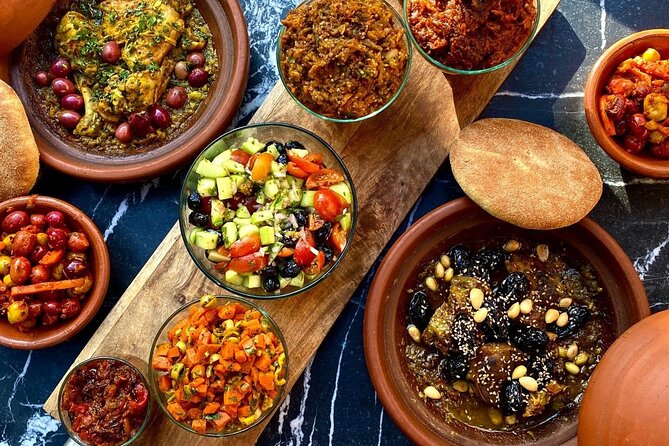
The exact menu may vary. Some sessions include more than tajine, with couscous, fresh bread, meatballs, and as many as six or nine salads. One reported private class included chicken tajine, fresh bread, and four salads. Another group prepared several tajines and a large spread of salads.
That variety is a plus, but it also means you should not assume every booking includes the same menu. The central promise is the hands-on tajine class. Other dishes depend on the day, the group, and the selected menu.
Moroccan Salads, Couscous, and a Full Meal
The class can produce a much larger meal than the phrase cooking class might suggest. Moroccan salads are especially useful to learn because they show how vegetables are seasoned and served in small portions, rather than treated as a side dish with little thought.
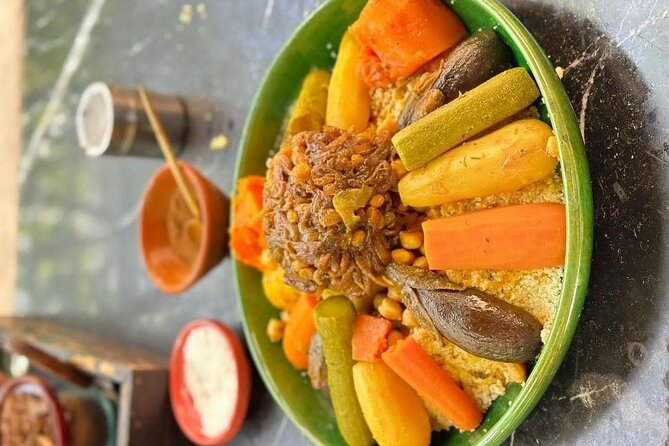
You may help prepare several salads, couscous, and bread alongside the tajine. The result can be a generous feast shared in the garden. That makes the experience feel like a meal with a cooking lesson attached, rather than a short workshop followed by a small tasting.
If you are cooking with children or teenagers, the format can work well. A family group with children from ages 8 to 15 enjoyed the class, and the generous portions helped make the day feel worthwhile for a larger party. Still, young children may need close supervision around knives, hot cookware, and coals. The provided information does not specify a minimum age, so ask before booking if that is important to you.
The meal is also useful for comparing restaurant food with home-style preparation. After several days of eating tajine in Marrakech, you may notice how much the cooking method, seasoning, and ingredient balance affect the final dish. The class gives you a better sense of what you are tasting across Morocco.
More Workshops in the world:
- Florence Pizza or Pasta Class with Gelato Making at a Tuscan Farm
★ 5.0 · 6,801 reviews - Ubud: Balinese Cooking Class at an Organic Farm
★ 5.0 · 1,786 reviews - Sorrento: Pizza Lesson, Wine, and Limoncello at a Local Farm
★ 5.0 · 1,513 reviews - Florence: Pizza or Pasta Class with Gelato at a Tuscan Farm
★ 4.9 · 1,181 reviews
What Makes the Farm Setting Worth the Time
The farm is more than a backdrop for photographs. It changes the pace of the experience. You begin in the medina, surrounded by shops and market activity, then spend the main part of the day among trees and vegetation, preparing food outdoors.
I like that contrast. It lets you connect the dish with both parts of Moroccan life: the market where ingredients are bought and the slower shared meal that follows. Tea and sweets at the farm reinforce the hospitality without turning the class into a formal performance.
The setting also suits people who want a break from sightseeing. You are not spending another half-day moving between monuments. Instead, you are using your hands, eating what you prepare, and leaving the rest of the day free.
There is a tradeoff. If you have only a short time in Marrakech and want to see major sights, five hours is significant. The class is a good choice when food and local culture are central to your trip, but less useful if you are trying to fit in as many landmarks as possible.
Group Size, Pace, and Personal Attention
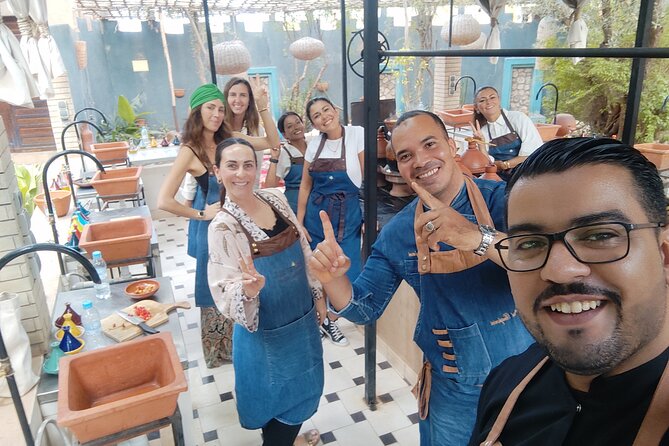
The maximum group size is 12 people. That is small enough for a social class without making the experience fully private. You will have company while shopping and cooking, but the instructor should still be able to give practical help.
Some people have paid extra for a private class, and a smaller session can work well if you want more control over the menu or more direct time with Chef Abdel. The standard format, however, already keeps the group limited, so you do not need a private booking to get a personal cooking experience.
The pace is leisurely but active. You can ask questions, watch techniques, prepare ingredients, and then sit down to eat. I would not schedule a demanding museum visit immediately afterward. The activity lasts about five hours, and the market, drive, cooking, and meal all take time.
The day ends back at the meeting point. That makes it easier to plan the evening, though you should leave some flexibility because the precise timing of a group cooking session can vary.
Is the $75.60 Price Good Value?
At $75.60 per person, this is not the cheapest meal you can buy in Marrakech. It is also not simply a restaurant lunch. The price covers a market visit, instruction, ingredients, the farm setting, tea and sweets, hands-on preparation, and the meal itself.
The value is strongest if you want several experiences in one: a short market tour, a cultural lesson, a cooking workshop, and lunch. You are also paying for access to a local host and a setting that would be difficult to arrange on your own.
The price looks especially reasonable for people who would otherwise book a separate food tour and restaurant meal. It can also work well for families or groups, since group discounts are offered and the portions are described as generous.
The value is weaker if you are mainly looking for a recipe sheet or a quick demonstration. The class takes about half a day, and part of what you pay for is the setting and the time spent together. Ask whether recipes will be sent afterward if that matters to you. One class participant received recipes by email, but initially found the message in the junk folder.
Who Should Book This Cooking Class?
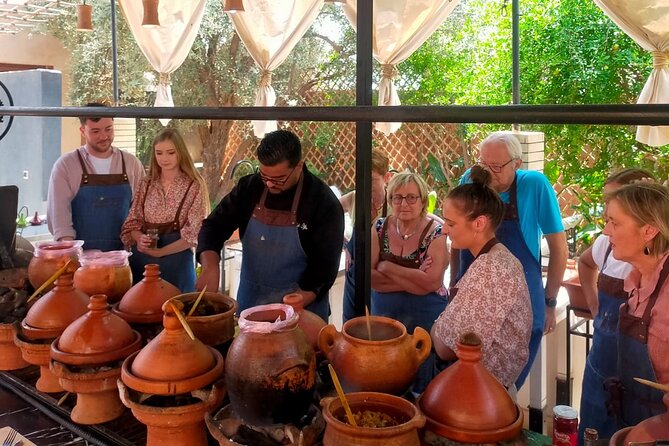
I would choose this experience if you like food that has a clear connection to place. The market visit gives you context, while the farm gives you room to cook and eat at a slower pace.
It suits:
- Couples wanting a shared activity beyond sightseeing
- Families with older children and teenagers
- First-time visitors who want an introduction to Moroccan food
- Home cooks interested in spices, tajine, couscous, and salads
- Anyone who wants time away from the medina
- Groups that prefer a social class without a large crowd
You should think twice if you dislike markets, outdoor kitchens, or hands-on preparation. You should also confirm menu details if you have dietary needs, since the supplied information does not list vegetarian, vegan, halal, allergy, or gluten-free arrangements.
The class is also a good fit for repeat visitors. Marrakech may feel familiar after several days, but cooking gives you a different way to understand the city and its food traditions.
Practical Details Before You Book
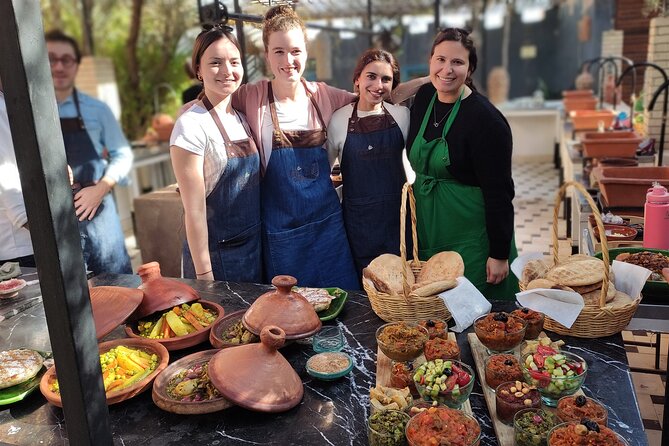
The experience lasts about five hours and ends back at the starting point. The stated start is Koutoubia, Marrakech, and pickup is offered. Confirm the pickup details and where you need to stand, since the medina is not an easy place for vague meeting instructions.
Confirmation arrives at booking, and the activity is near public transportation. The group maximum is 12 people, and the experience is booked, on average, 37 days ahead. If your dates are fixed, booking early is sensible.
Free cancellation is available up to 24 hours before the start time for a full refund. Changes or cancellations made inside that 24-hour window are not accepted for a refund. The class requires good weather and a minimum number of people. If poor weather or low enrollment cancels it, you are offered another date or experience, or a full refund.
Wear clothing you can cook in and shoes suitable for walking through a market and moving around a farm. An apron is provided, which helps protect your clothes and gives the class a more organized feel.
Should You Book Farm to Table Marrakech?
Yes, if you want a hands-on Moroccan food experience rather than a staged demonstration. The combination of market shopping, Chef Abdel’s instruction, outdoor cooking, tea, and a shared meal gives the day real variety.
I would book it especially for a first Marrakech visit, a family with older children, or anyone who has already seen the main sights and wants a slower activity. Just confirm the meeting and pickup details, allow the full five hours, and ask about the menu if dietary needs are important.
The main weakness is not quality but commitment. This is a half-day outing, not a quick class. If that fits your schedule, the $75.60 price buys much more than lunch: it gives you a practical look at Moroccan ingredients and a recipe you can try again at home.
FAQ
Where does the cooking class start?
The stated meeting point is Koutoubia in Marrakech, Morocco. Pickup is offered, so confirm the exact pickup arrangement when booking.
How long does the experience last?
The activity lasts approximately five hours.
What is the maximum group size?
The class accepts a maximum of 12 people.
What food will I cook?
The main dish is a traditional Moroccan tajine. Depending on the session and menu, you may also prepare couscous, fresh bread, meatballs, and several Moroccan salads. Options can include beef, chicken, lamb, vegetable, sweet, or savory tajines.
Do I visit a market during the class?
Yes. You walk through the old medina to a local market and help buy vegetables, meat or poultry, fruit, herbs, and spices before going to the farm.
Is the class held at a farm?
Yes. After the market visit, you go to a farm with trees and vegetation, where you have Moroccan tea and sweets and cook in an outdoor kitchen.
Can I cancel for a full refund?
You can cancel up to 24 hours before the experience start time for a full refund. If the activity is canceled because of poor weather or because the minimum number of people is not reached, you are offered another date or experience, or a full refund.
Just added around the world
- Hoi An: Cycling – Water Buffalo Riding Farming and Fishing★ 5.0 · 2 reviews
- Guided Hebridean Farm Hike near Tobermory, Isle of Mull, Scotland★ 5.0 · 25 reviews
- Paestum and Buffalo Farm Day Tour from Sorrento★ 5.0 · 3 reviews
- Balinese Cooking Class at Organic Farm★ 5.0 · 51 reviews
- Belém: Marajó Island Day Trip with Buffalo Farm Visit★ 4.0 · 16 reviews
- Cycling, Water Buffalo Riding, Traditional Farming Life★ 5.0 · 10 reviews
- Side, Alanya: Green Canyon Boat, Waterfall&Orchards Mix Tour★ 4.3 · 14 reviews
- Farmers Market visit & Turkish Cooking Class★ 5.0 · 60 reviews
Cooking Classes, compared.
Half-Day Thai Cooking Class at Organic Farm in Chiang Mai
Read our review →
Cooking Class and Lunch at a Tuscan Farmhouse with Local Market Tour from Florence
Read our review →
Authentic Cooking Class with Market & Farm Visit
Read our review →
Hands-On Cooking Class & Farmhouse Tour on the Amalfi Coast
Read our review →
Lists this farm appears in