
Reviewed · COOKING CLASSES
Authentic Moroccan Cooking Class in a Farm in Marrakech
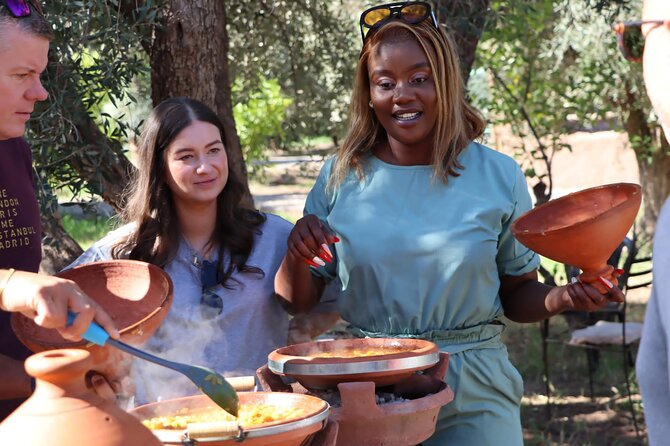
The best part of this Marrakech cooking class is that you do the work yourself. At a farm west of the city, Khaoula guides you through tajine, fresh salad, and mint tea, then you sit down to eat what you made beneath orange, lemon, and olive trees. It feels far removed from a standard city cooking demonstration.
I like the hotel pickup, which removes the nuisance of finding a rural meeting point, and I like the personal touch Khaoula brings to the class. Families have also found it workable with young children. The main consideration is the fixed morning schedule and the roughly three-hour commitment, so it may not fit a tightly packed Marrakech day.
Key points at a glance
- Farm setting west of Marrakech: Cook and eat among citrus and olive trees, away from the noise of the medina.
- Hands-on cooking: You prepare the food rather than simply watching a chef work.
- Three Moroccan staples: Make tajine, a fresh Moroccan salad, and traditional mint tea.
- Khaoula leads the class: She explains ingredients, methods, and the background of the dishes in a relaxed way.
- Hotel transport included: Pickup and drop-off make the rural location easy to reach.
- Good for families and groups: Dietary needs can be handled with advance notice, and group discounts are available.
Leaving Marrakech for a farm kitchen
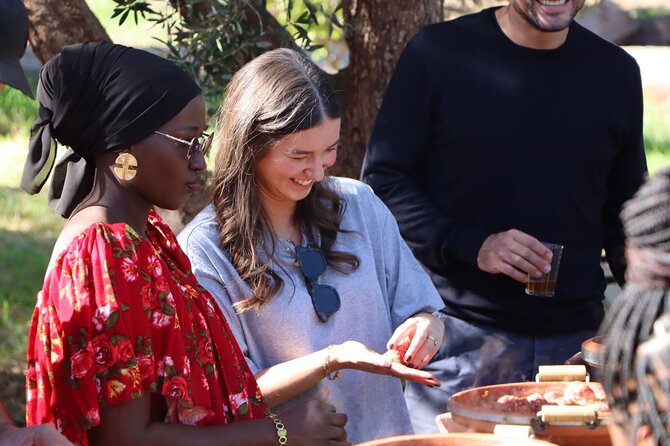
Your day begins with a 10:00 am pickup from your hotel. The driver takes you toward the western part of Marrakech, where the farm is located. One account puts the drive at about 20 minutes each way, though your exact time will depend on your hotel and road conditions.
That short ride matters. You get a change of scene without giving up a full day to an out-of-town excursion. Marrakech can be noisy and crowded, especially around the medina. Here, the cooking takes place in a calmer rural setting with orange, lemon, and olive trees around you.
The pickup is also a practical advantage. You do not need to locate an unfamiliar meeting point or arrange a taxi to the edge of town. At the end, the same service returns you to your hotel.
The experience allows up to 20 people. That is a fairly broad range for a cooking class. If the group reaches its maximum, you should expect a more social class rather than a private lesson. The setting is described as intimate, but the actual feel will depend on how many people book that morning.
More Cooking Classes in the world:
- Half-Day Thai Cooking Class at Organic Farm in Chiang Mai
★ 5.0 · 19,087 reviews - Cooking Class and Lunch at a Tuscan Farmhouse with Local Market Tour from Florence
★ 5.0 · 4,831 reviews - Chiang Mai: Authentic Cooking Class with Market & Farm Visit
★ 4.9 · 4,546 reviews
Meeting Khaoula in the farm kitchen
Khaoula is the host and cooking instructor. She has been praised for her calm manner, strong cooking skills, and ability to explain each stage without making the class feel stiff or formal.
That relaxed approach is useful if you are not confident in a kitchen. You will be shown what to do, then given the chance to take part. This is not a chef’s demonstration where you sit at a distance and watch finished dishes appear.
Expect an introduction to the session, the ingredients, and the order of work. Moroccan cooking often relies on a small group of familiar ingredients used with care. The value here is not just learning a recipe. You begin to see how the ingredients are prepared, combined, and cooked slowly in a tajine.
The class also gives you a chance to ask questions as you go. Khaoula explains the full process, including the mint tea. That is helpful because tea service is not an afterthought in Morocco. It is part of the meal and part of the welcome.
Preparing tajine from the first cut
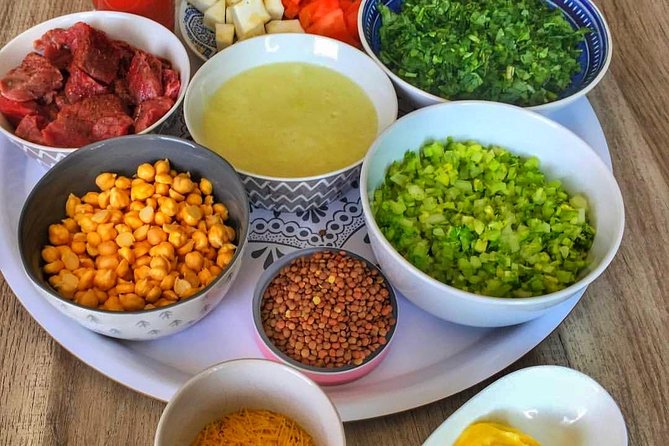
The main task is making Moroccan tajine. The word refers both to the dish and to the traditional cooking vessel, although the exact equipment used in the class is not specified. You will prepare the ingredients, assemble the dish, and let it cook slowly.
The class may include a Berber tajine and chicken tajine, depending on the menu arranged for the session. The available details also indicate that several tajines can be prepared at once. You should think of this as a practical lesson in Moroccan home cooking, not a restaurant-style workshop with elaborate plating.
That slower cooking time gives the class a natural rhythm. Once the tajine is on the heat, you can work on the salad and tea rather than standing over one dish. It also lets you talk with your host and enjoy the farm surroundings.
The useful takeaway is that you leave with a method you can repeat at home. You are not simply sampling a meal prepared by someone else. You have handled the ingredients and followed the steps yourself, which makes the cooking easier to remember later.
Making salad and mint tea
The menu includes a fresh Moroccan salad alongside the main course. This gives you a second preparation to work on and balances the slow-cooked tajine with something lighter.
You will also learn how to make Moroccan mint tea. The full process is explained, from preparation to serving. For many people, this is one of the most useful parts of the class because mint tea appears throughout Moroccan meals and social occasions.
Local pastries are included with the tea. They round out the meal and add a sweet finish without requiring another stop in town.
Dietary needs can be accommodated if you give notice in advance. Do not wait until the morning of the class to raise an allergy, vegetarian request, or other restriction. The information only promises accommodation with prior notice, so early communication is important.
More Workshops in the world:
- Florence Pizza or Pasta Class with Gelato Making at a Tuscan Farm
★ 5.0 · 6,801 reviews - Ubud: Balinese Cooking Class at an Organic Farm
★ 5.0 · 1,786 reviews - Sorrento: Pizza Lesson, Wine, and Limoncello at a Local Farm
★ 5.0 · 1,513 reviews - Florence: Pizza or Pasta Class with Gelato at a Tuscan Farm
★ 4.9 · 1,181 reviews
Eating lunch under the trees
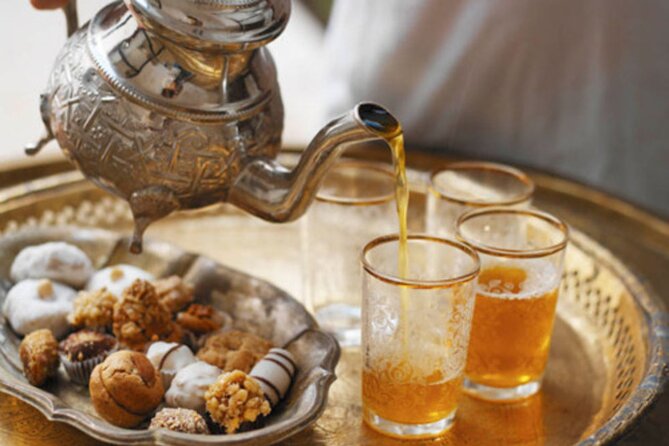
Once the food is ready, you sit down with your host and eat the lunch you prepared. The included meal consists of Moroccan salad and a main course, along with mint tea and local pastries.
This shared meal is a key part of the experience. You have time to slow down and talk, rather than rushing from one recipe to the next. The farm setting helps make the lunch feel like a visit to a local home or family space, though you should not assume that every class follows exactly the same family arrangement.
The setting is especially appealing if your Marrakech schedule has been heavy on souks, monuments, and traffic. You get a quiet break while still learning something tied directly to Moroccan culture.
The food is also more meaningful because you helped make it. A tajine tastes different when you know how the ingredients were prepared and how long they cooked. You may not become an expert chef in three hours, but you will have a clear memory of the process.
What the farm setting adds
A cooking class can happen in any kitchen. This one uses the farm to create a stronger sense of place. The orange, lemon, and olive trees give you a setting connected to food production, not just food service.
You should not expect a tour of agricultural operations unless the host adds one on the day. The value is simpler: you cook and eat in a rural setting close to Marrakech. That shift makes the experience feel distinct from a class held in a city restaurant or cooking school.
The farm is also a good backdrop for families. A 16-month-old and a nine-year-old were included successfully in one class, and the children took part in preparing food. That does not guarantee that every young child will be comfortable around a cooking area, but it suggests the format can work for families who want a shared activity.
Parents should still keep an eye on small children around hot cooking equipment. The provided details do not describe child safety arrangements, so you will need to use your own judgment.
Is the $56.99 price good value?
At $56.99 per person, this is more than the cost of ordering a casual Moroccan lunch. You are paying for several things at once: hotel transport, an English-speaking local host, hands-on instruction, lunch, mint tea, pastries, and the farm setting.
The price makes the most sense if you value the full half-day-style outing rather than just the meal. A standard restaurant visit gives you food. This experience gives you food, a lesson, a change of scenery, and a practical memory you can use after returning home.
The value is also stronger for people who would otherwise spend money on separate taxis and a restaurant lunch. Since pickup and drop-off are included, you can avoid the hassle of arranging transport to the farm.
Group discounts may improve the cost for larger parties. The class can take up to 20 people, so ask about the discount before booking if you are traveling with a sizable group.
The main limitation is that the class is only about three hours. If you want a long, detailed culinary course with many dishes, this is not that. It is a focused introduction built around tajine, salad, and tea.
Who should book this Marrakech cooking class?
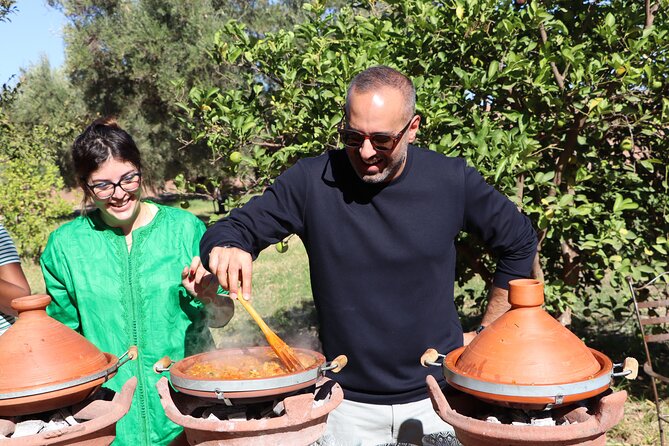
I would recommend this for you if you want a cultural activity that is practical rather than purely observational. It suits first-time visitors who want more contact with Moroccan food traditions, as well as returning visitors who have already seen the main sights.
It is a good fit for:
- Couples looking for a slower morning outside the city center
- Families wanting an activity children can join
- Small groups interested in cooking and shared meals
- Visitors who prefer local food experiences to formal sightseeing
- Anyone who wants a tajine method to try at home
You should think twice if you dislike group activities or want complete control over the schedule. The start time is fixed at 10:00 am, the class may include up to 20 people, and the program follows a set three-hour format.
It also may not suit you if you want a highly technical culinary course. The emphasis is on learning, eating, and connecting with the host, not professional chef training.
Timing, transport, and booking advice
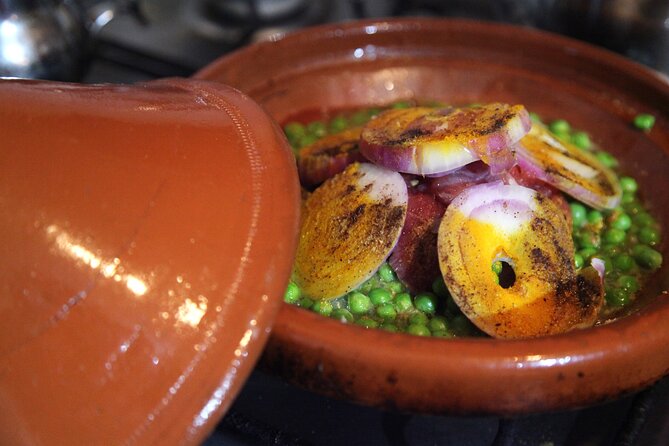
The experience lasts about three hours and starts at 10:00 am. With the drive to and from the farm, you should allow more time in your day than the class length alone suggests.
Hotel pickup and drop-off are included, but make sure your accommodation details are correct when you book. Confirmation is provided at booking, and mobile tickets are accepted.
The experience is often booked well ahead, with an average booking time of 33 days before the date. That is useful to know if you are traveling during a busy period or have only a few mornings available in Marrakech.
Free cancellation is available if you cancel at least 24 hours before the start time. Changes or cancellations made inside that window are not accepted for a refund. The cutoff uses local time in Marrakech, so do not leave the decision until the last minute.
Gratuities are not included. Tipping is optional, so you can decide at the end based on the service you received.
My take: a strong choice for a food-focused morning
I would book this class if I wanted to add a personal, hands-on activity to a Marrakech itinerary. The combination of farm setting, hotel transport, and a meal you prepare yourself gives it more substance than a basic cooking demonstration.
The strongest reasons to choose it are Khaoula’s relaxed instruction, the chance to make several Moroccan staples, and the peaceful setting among the trees. The main tradeoff is the group format and fixed morning schedule.
For $56.99, you get a useful cultural experience, not just lunch. Book it if you want to slow down, cook with a local host, and leave Marrakech with more than photographs. Skip it if you would rather spend the morning sightseeing or if you are looking for an advanced cooking course.
FAQ
What time does the cooking class start?
The class starts at 10:00 am local time.
Is hotel pickup included?
Yes. Pickup and drop-off from and to your hotel in Marrakech are included.
How long does the experience last?
The cooking class lasts approximately three hours, not including any additional time needed for transport arrangements.
What food will I prepare?
You will prepare Moroccan tajine, a fresh Moroccan salad, and traditional Moroccan mint tea. Lunch also includes local pastries.
Can dietary needs be accommodated?
Yes, dietary needs can be accommodated when you provide notice in advance.
What is the cancellation policy?
You can cancel at least 24 hours before the start time for a full refund. Cancellations or changes made less than 24 hours before the experience are not accepted for a refund.
Just added around the world
- Hoi An: Cycling – Water Buffalo Riding Farming and Fishing★ 5.0 · 2 reviews
- 2-Hour Alpaca Farm Experience in Kenilworth★ 4.5 · 14 reviews
- Cycling Through Vineyards & Farm Lunch & Ephesus visit★ 5.0 · 52 reviews
- Liverpool Music Icons Tour led by a member of 90s band The Farm★ 5.0 · 51 reviews
- Guided Hebridean Farm Hike near Tobermory, Isle of Mull, Scotland★ 5.0 · 25 reviews
- Paestum and Buffalo Farm Day Tour from Sorrento★ 5.0 · 3 reviews
- Balinese Cooking Class at Organic Farm★ 5.0 · 51 reviews
- Belém: Marajó Island Day Trip with Buffalo Farm Visit★ 4.0 · 16 reviews
Cooking Classes, compared.
Half-Day Thai Cooking Class at Organic Farm in Chiang Mai
Read our review →
Cooking Class and Lunch at a Tuscan Farmhouse with Local Market Tour from Florence
Read our review →
Authentic Cooking Class with Market & Farm Visit
Read our review →

Hands-On Cooking Class & Farmhouse Tour on the Amalfi Coast
Read our review →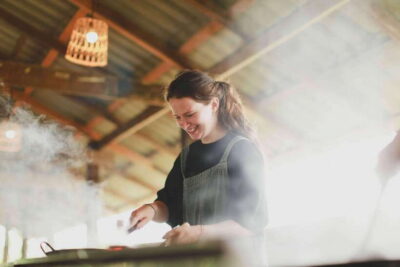
Lists this farm appears in