
Reviewed · COOKING CLASSES
Traditional Greek Cooking Class @ Lefkada Micro Farm
The best part of this Lefkada cooking class happens before the cooking begins. You pick vegetables and herbs from the farm, then carry them to an open-air kitchen where bread, briami, tzatziki, and Greek salad become lunch. The meal starts in the soil, not at the stove.
I like the small group size, capped at 10, and the direct contact with the farm’s regenerative methods. I also like the social finish at the Farmer’s Table, where you eat what you made with people from several countries. The main drawback is price: at $123 per person, you need to value the farm visit, instruction, ingredients, and shared meal as one package.
Key points at a glance
- Harvest your own ingredients: Seasonal organic produce comes straight from the farm garden.
- Cook over real wood fire: The traditional oven gives the class a slower, more hands-on rhythm.
- Learn from the farm itself: Andreas explains regenerative growing methods and the role of soil health.
- Make familiar Greek dishes: Expect bread, briami, tzatziki, and Greek salad, with recipes built around freshness rather than complicated technique.
- Eat at the Farmer’s Table: The final meal turns the class into a shared social occasion.
- Plan for four hours: English instruction, a small group, an apron, and cooking utensils are included.
Starting in the soil, not the supermarket
This class begins with the farm. You learn how Lefkada Micro Farm works with regenerative, organic produce before harvesting the ingredients for the meal. That order matters. Instead of hearing a short speech about local food and then sitting down to cook, you see where the food grows and take part in gathering it.
The farm is part of the Slow Food International farms network. In practical terms, the class focuses on seasonal produce, traditional recipes, and a careful relationship with the land. You will not be asked to master restaurant techniques. The point is to understand why a few fresh ingredients can make a satisfying Greek meal.
Andreas is one of the people who leads the experience. He talks about food, gardening, and everyday life in a friendly, informal way. You should expect plenty of conversation as well as instruction, which suits this class better than a formal demonstration with everyone watching silently.
The outdoor setting also shapes the pace. You are working with what is growing, rather than following a fixed menu built around ingredients brought in from elsewhere. The exact produce can change with the season, so the farm is part of the lesson.
More Cooking Classes in Greece:
- Naxos Perivoli Farm Experience & Wood-fire Cooking Class
★ 5.0 · 339 reviews - Melanes: Naxos Perivoli Farm & Cooking Class with Wood Fire
★ 5.0 · 177 reviews - Santorini Family Farm Food & Wine Tour with Cooking Class
★ 5.0 · 107 reviews
Harvesting seasonal ingredients by hand
The first active part of the class is the harvest. You collect organic ingredients from the soil and learn how the farm keeps its ecosystem healthy through regenerative methods. This gives you a useful connection between farming and cooking: you see the raw materials before they are washed, chopped, seasoned, or baked.
That connection is especially helpful if you already enjoy Greek food but want to understand its foundations. Greek cooking often depends on good produce, olive oil, herbs, and patient preparation. The class shows how little is needed when the ingredients are fresh.
You should not expect a long agricultural course. The available information points to an accessible introduction to the farm’s methods, not technical training in soil science. Still, the farming part gives the rest of the afternoon more meaning. You are not simply making a Greek meal. You are following it from garden to table.
The farm setting also adds small pleasures that have nothing to do with the recipe. One participant particularly enjoyed the cats that wander around the property. If you like relaxed rural settings and animals underfoot, this may add to the charm. If you want a polished cooking studio, the informal farm atmosphere may feel less predictable.
Cooking bread, briami, tzatziki, and Greek salad
Once the ingredients are gathered, you move to the open-air kitchen. The cooking centers on classic Greek dishes, including bread, briami, tzatziki, and Greek salad. These are useful recipes to learn because they are recognizable, practical, and tied closely to the produce grown on the farm.
Briami is a particularly good choice for this setting. This Greek vegetable dish depends on seasonal vegetables, olive oil, herbs, and slow cooking. It lets you see how a wood-burning oven and unhurried preparation can bring out flavor without demanding complicated skills.
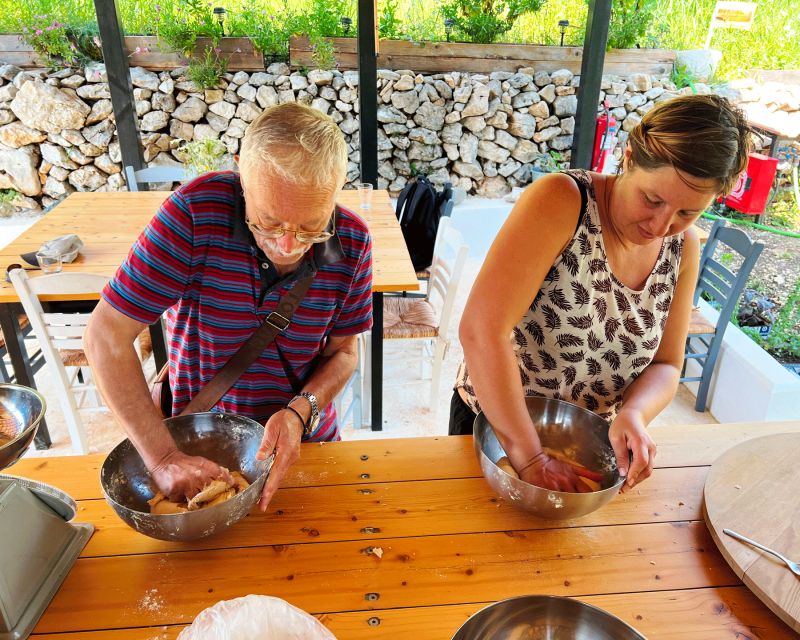
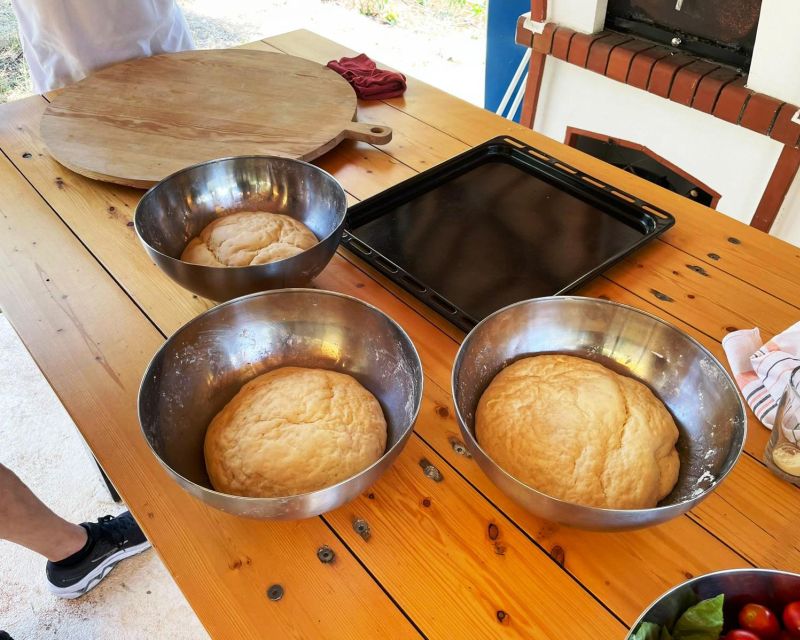
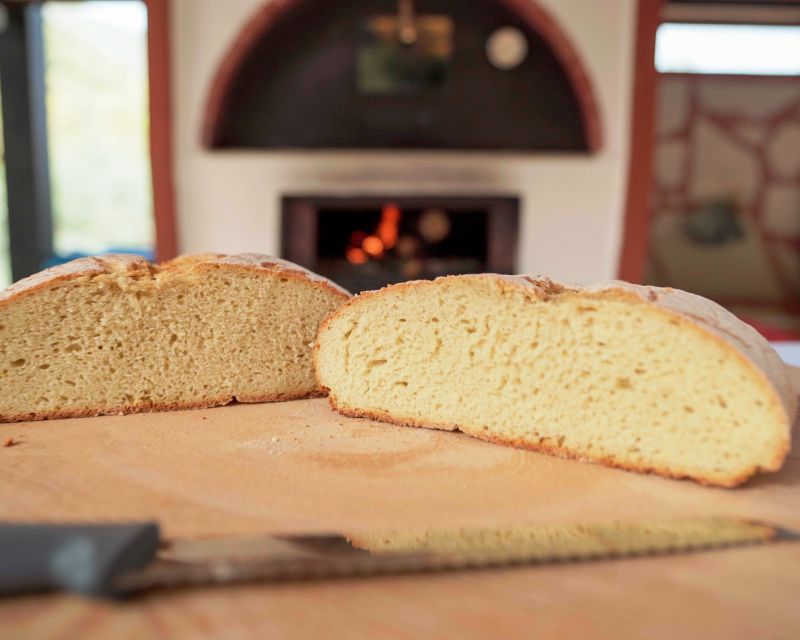
Bread adds another hands-on element. You are not only chopping and mixing ingredients for a meal that will be eaten quickly. You also work with dough and use the traditional oven, which gives the class a more physical feel.
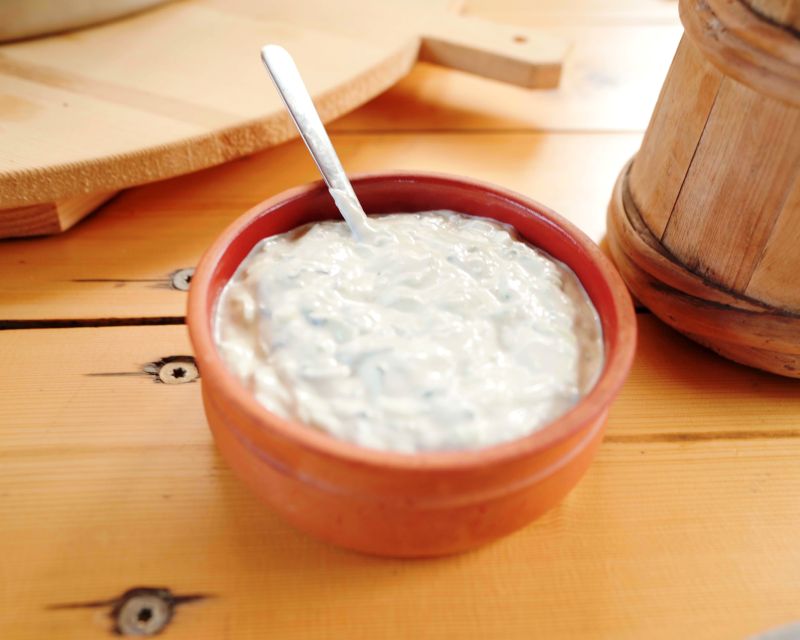
Tzatziki and Greek salad bring freshness and contrast to the meal. They also show why Greek cooking is often more about balance than elaborate technique. Creamy yogurt, crisp vegetables, herbs, and good oil can do plenty of work on their own.
The class is conducted in English. One useful point for international groups is that the format does not depend only on talking. You are also harvesting, mixing, shaping, chopping, and sharing food, so the activity has a natural rhythm even when participants come from different countries.
The wood-burning oven sets the pace
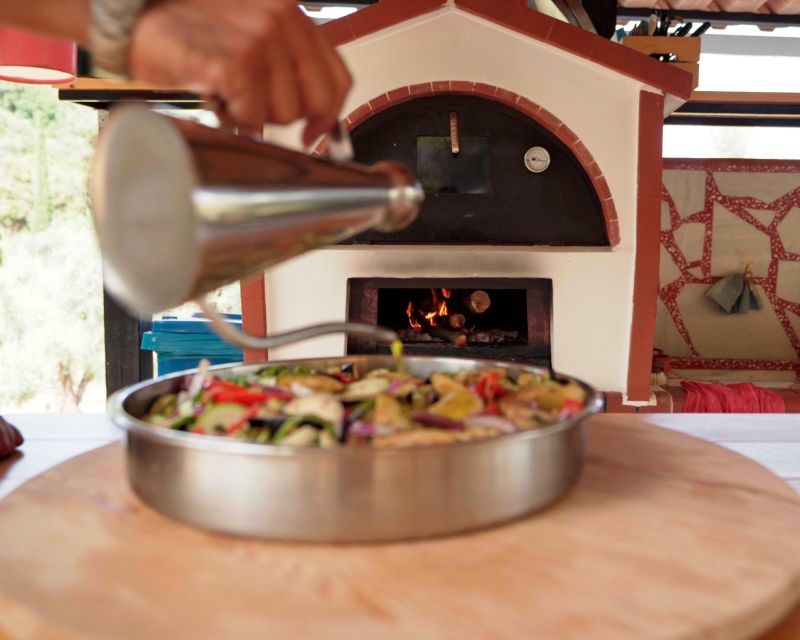
The traditional wood-burning oven is one of the strongest features of the class. It gives you a direct look at an older way of preparing food, where heat, timing, and patience matter. You will not get the exact control of a modern electric oven, and that is part of the point.
Cooking over wood also makes the meal feel connected to the place. The oven is not a decorative prop beside a demonstration counter. It is part of the working kitchen, helping prepare the bread and farm dishes you later eat.
I would approach this as a participation-based lesson rather than a precision cooking workshop. The available details do not promise advanced instruction, specialist equipment, or a printed recipe collection. You are paying for the setting, the ingredients, the shared work, and the connection to the farm as much as for formal culinary training.
That distinction matters when you consider the $123 price. If you want a cheap lunch with a quick demonstration, this is not the obvious choice. If you want four hours of cooking, farming, conversation, and a meal in a small group, the cost is easier to understand.
More Workshops in Greece:
- Moires: Cooking Class and Olive Oil Tasting at a Family Farm
★ 5.0 · 93 reviews - Mykonian Farm and Bakery Class with Brunch in Greece
★ 4.5 · 39 reviews - From Mykonos: Mykonian Farm Baking Class with Brunch
★ 4.7 · 29 reviews - Traditional Greek Cooking Class @ Lefkada Micro Farm
★ 5.0 · 28 reviews
Olive oil with a clear role on the plate
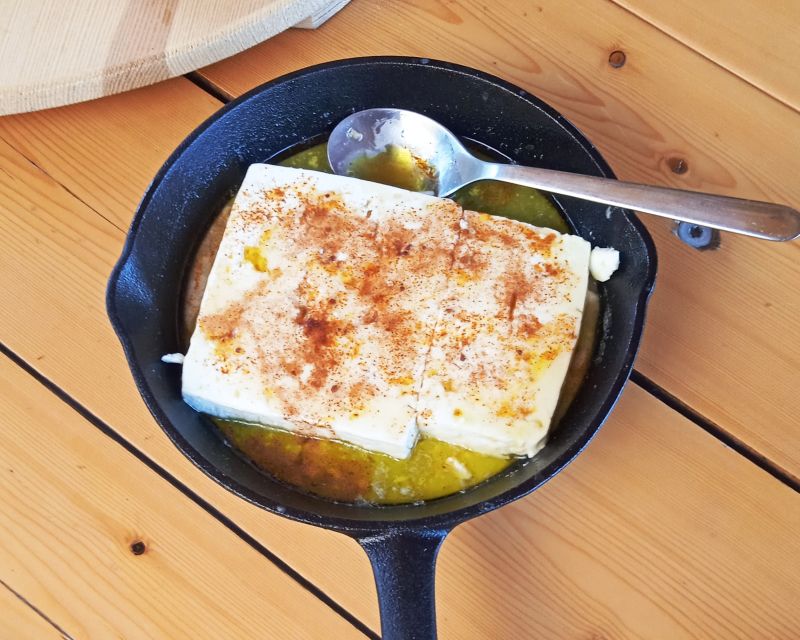
The farm uses its own award-winning, high-polyphenol olive oil. The oil is not treated as a side note. It is one of the main ways the cooking demonstrates the Greek approach to food: start with strong ingredients, then avoid covering them up.
You will see how the oil works with vegetables, bread, salad, and other parts of the meal. The result is a useful lesson for home cooking. You do not need a long list of sauces or difficult methods if the produce and oil are doing their job.
A participant described the food as simple, fresh, and filling, with the olive oil singled out as a highlight. That fits the class well. You should come expecting honest farm cooking rather than a highly designed tasting menu.
The high-polyphenol claim is part of the farm’s presentation, but the real value for you is practical: you get to taste the oil alongside food prepared in the same place. That is more useful than hearing a sales pitch about a bottle on a shelf.
Four hours with a group of ten or fewer
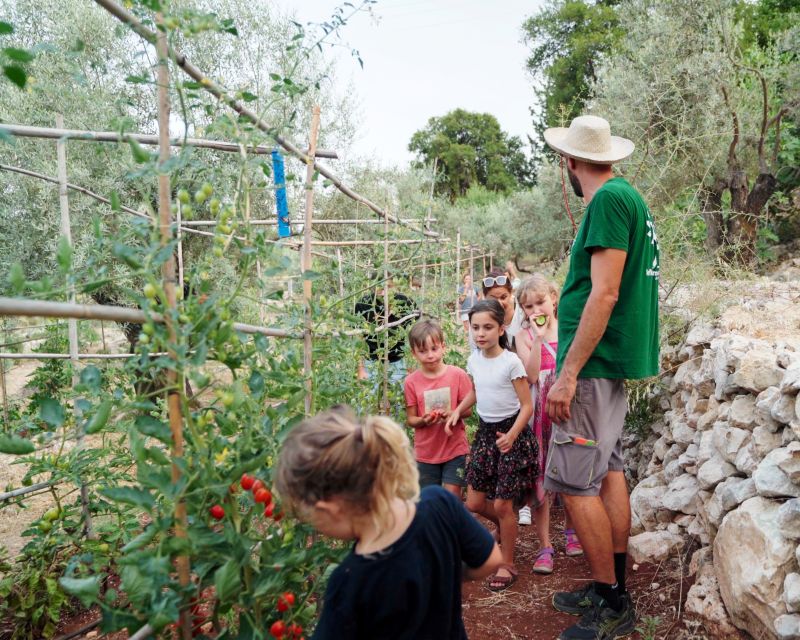
The four-hour length gives the class room to breathe. You can learn about the farm, harvest ingredients, prepare several dishes, cook with the wood-burning oven, and sit down for the final meal without forcing every step into a short timetable.
The group is limited to 10 people. That is small enough for the instructor to keep the session personal and for you to take an active role. It also supports the social side of the class. You may be cooking alongside couples, solo participants, and families from different countries.
The shared meal is the emotional center of the afternoon. At the Farmer’s Table, you eat what you helped prepare and talk with the people who cooked beside you. This is where the Slow Food idea becomes practical rather than theoretical. Food is not just fuel or a finished product. It is a reason to sit together.
You should allow for a relaxed pace. This is not a class designed to get you in and out quickly. The slower rhythm is a benefit if you want a break from sightseeing, but it may test your patience if you prefer a tightly timed activity.
What the $123 price includes
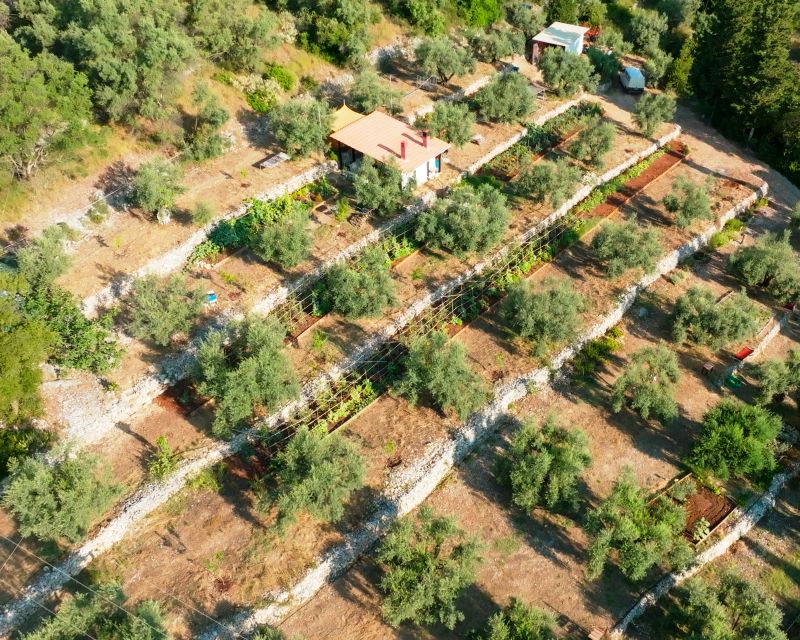
At $123 per person, this is a premium half-day activity. Cooking utensils and an apron are included, along with the farm visit, ingredients, instruction, and the meal you prepare. The price also covers access to a working organic farm and a small-group setting.
The value depends on what you want from a cooking class. I think the price makes more sense for someone who wants a complete food-and-farm outing rather than a basic recipe lesson. You are getting several linked activities: a farm introduction, a harvest, cooking instruction, wood-oven preparation, and a shared lunch.
The class may feel expensive if you compare it with the cost of a restaurant meal or a shorter cooking demonstration. One person who enjoyed the activity still felt the price did not fully match what was offered. That is a fair warning, especially if your main goal is to collect recipes.
On the other hand, the ingredients are not an afterthought, and the group size is limited. You are also spending four hours with an instructor rather than simply receiving a meal. For visitors who value organic farming, local food, and a slower pace, the package offers more than its menu alone.
Who will enjoy this farm cooking class
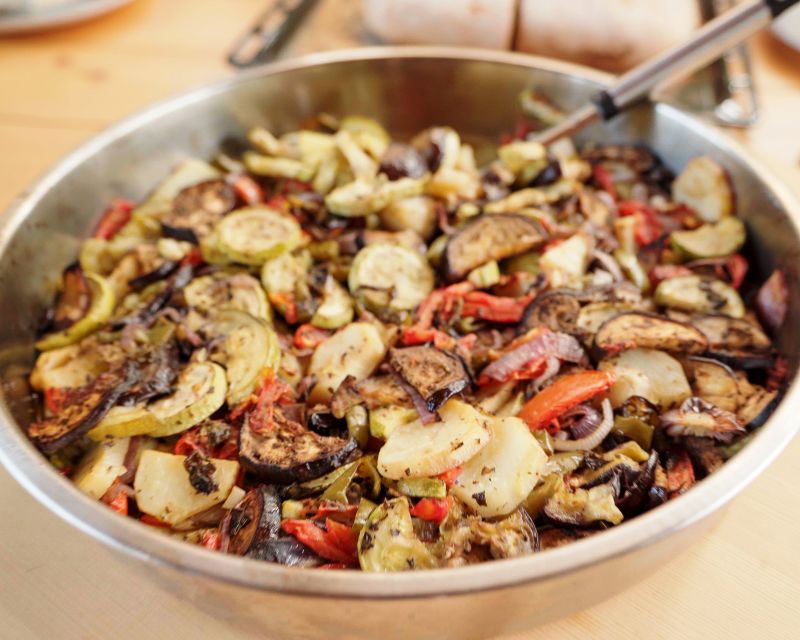
I would recommend it most strongly to you if you enjoy food with a clear sense of place. The farm-to-table structure gives you something more substantial than a standard cooking lesson, and the recipes are traditional without being intimidating.
It is also a good choice for people who like meeting others. The shared table, small group, and English-language format make conversation part of the activity. You may find yourself cooking with people from several countries, as happened with one group that included Maltese, Austrian, and British participants.
Families and couples can both fit comfortably into the format, but the supplied details do not specify a minimum age or child policy. If you plan to bring children, check those details before booking.
The class is wheelchair accessible. You should still contact the provider about your specific needs if you require detailed information about surfaces, seating, or movement between the farm and kitchen, since those points are not provided.
Food allergies and dietary restrictions should be shared in advance. That is especially important here because the menu is built around a set of seasonal ingredients and shared preparation.
A few things to keep in mind before booking
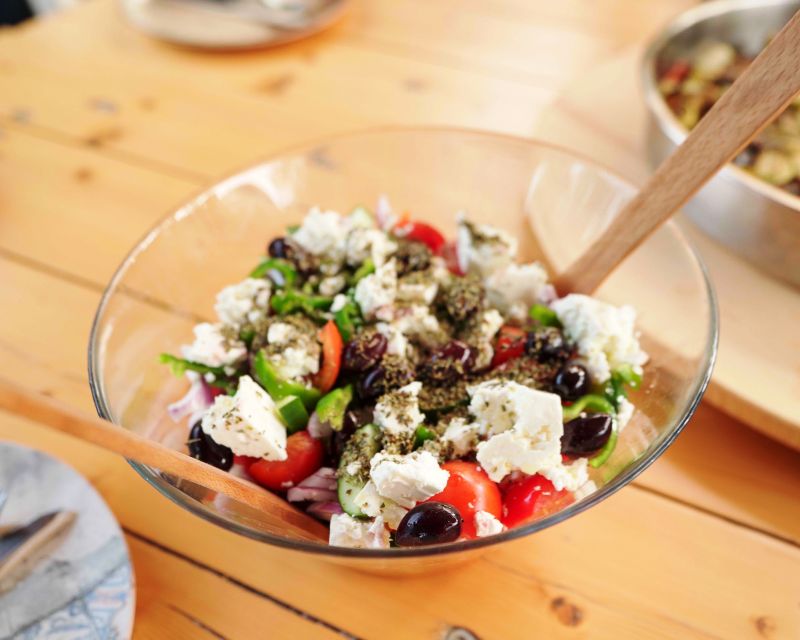
The open-air kitchen is a strength, but it also means the setting is informal. You should choose this activity for the connection to the farm, not for a polished culinary classroom.
The menu is traditional and seasonal. That is good news if you like Greek home cooking, but you should not expect a choice of several restaurant-style dishes. The experience is built around what the farm can provide and the recipes selected for the group.
The class is in English. The material includes farming, ingredients, recipes, and conversation, so you should be comfortable following spoken English for several hours.
You can cancel up to 24 hours before the start for a full refund, and the reserve-now, pay-later option lets you hold a place without paying immediately. Check the available start times when booking, since the exact schedule is not fixed here.
Should you book Lefkada Micro Farm?
Book this class if you want to understand Greek food through the farm that grows it. You will harvest organic produce, cook familiar dishes, use a wood-burning oven, taste high-polyphenol olive oil, and sit down to eat with a small international group.
Skip it if you want a short, low-cost lesson focused mainly on recipes or if you dislike slow, social activities. At $123, the class asks you to value the full afternoon, not just the food.
For the right visitor, the strongest reward is simple: you pick the ingredients yourself, cook them with others, and taste the result while the farm is still around you.
FAQ
How long does the cooking class last?
The activity lasts four hours.
Where does the cooking class take place?
It takes place at Lefkada Micro Farm in western Greece, with preparation in an open-air kitchen.
What dishes will I prepare?
The cooking includes bread, briami, tzatziki, and Greek salad.
Is the class conducted in English?
Yes. The instructor and activity language are English.
How many people can join the group?
The class is limited to 10 participants.
Is the activity wheelchair accessible?
Yes, the activity is listed as wheelchair accessible.
What is included in the booking?
Cooking utensils and a cooking apron are included. The activity also includes the farm visit, ingredient harvesting, cooking, and the shared meal described in the program.
How much does the experience cost?
The listed price is $123 per person.
Can I cancel or pay later?
You can cancel up to 24 hours in advance for a full refund. You can also reserve your place and pay later, so no payment is required at the time of booking.
Just added around Greece
- Volos: Cook Like a Local at a Greek Farm★ 5.0 · 7 reviews
- Visit a Farm and Horseback Riding in Nature★ 5.0 · 10 reviews
- Insightful Pistachio Orchard and Factory Tour★ 4.5 · 27 reviews
- Flavors of Santorini: Farm-to-Table Meal Wine & Authentic Village★ 5.0 · 12 reviews
- Santorini 5 Hour Private Oia Tour & Lunch/Dinner at a Local Farm★ 5.0 · 40 reviews
- Cooking Class Sunset Dinner and Tour in Paros Farm★ 5.0 · 5 reviews
- Olympia Shore Ex: Olympic site, Honey Farm & Olive Oil Tasting★ 4.5 · 57 reviews
- Katakolon 7hour tour : Olympia-Honey Farm-Winery-Beach★ 5.0 · 53 reviews
Cooking Classes, compared.
Half-Day Thai Cooking Class at Organic Farm in Chiang Mai
Read our review →
Cooking Class and Lunch at a Tuscan Farmhouse with Local Market Tour from Florence
Read our review →
Authentic Cooking Class with Market & Farm Visit
Read our review →
Hands-On Cooking Class & Farmhouse Tour on the Amalfi Coast
Read our review →
Lists this farm appears in