Reviewed · FARM TOURS
Farm to Table: With a local farmer family
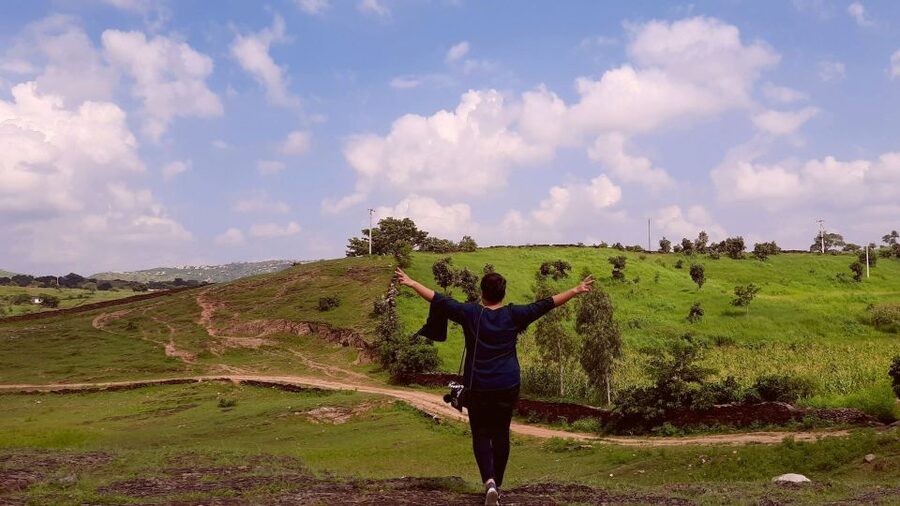
The best part of this experience is that the food starts in the fields, not on a restaurant menu. Near Udaipur, you walk through farm plots, meet the people who work them, and help turn local ingredients into a Rajasthani meal over a clay fire.
I like the hands-on cooking and the chance to see village life beyond Udaipur’s lakes and palaces. I also like the short walk to local temples, a stepwell, and other village sights when transport is arranged. The main catch is practical: this is on Udaipur’s outskirts, and conveyance is not included.
Key points at a glance
- Farm work before lunch: Walk through fields, learn about traditional methods, and pick fresh vegetables with local farmers.
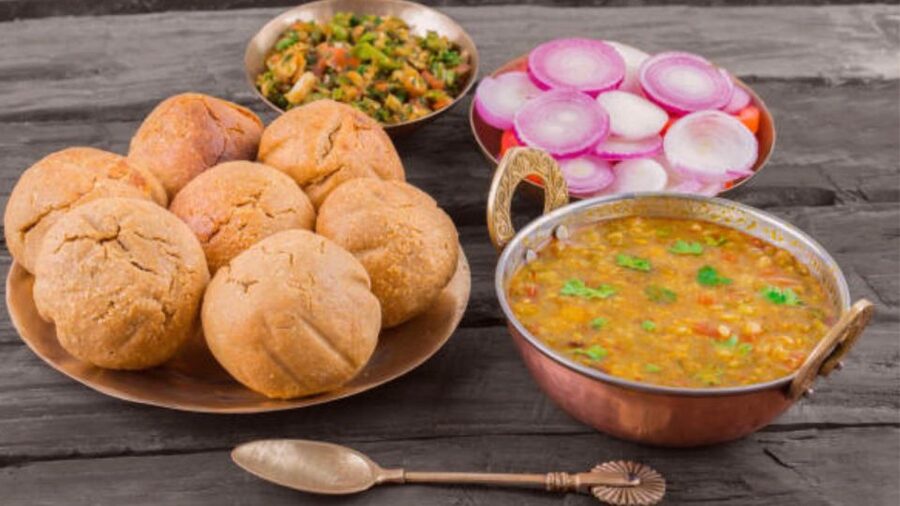
- Three classic dishes: Make Dal Bati, Churma, and Gatte Ka Saag, with Sarson Ka Saag also served at the meal.
- A real open-air kitchen: Expect a wood-fired clay stove or a simple manmade mud-clay cooking setup, not a polished cooking school.
- Village sights nearby: A car and driver may let you reach a Jain temple, renovated haveli, stepwell, and local devras.
- Food and cultural time: Eat beneath a neem tree with chaas, snacks, local artisans, and musicians.
- Good value at $21: The price covers food and a two-hour cultural activity, but your ride to the venue costs extra.
From Udaipur’s city streets to a working farm
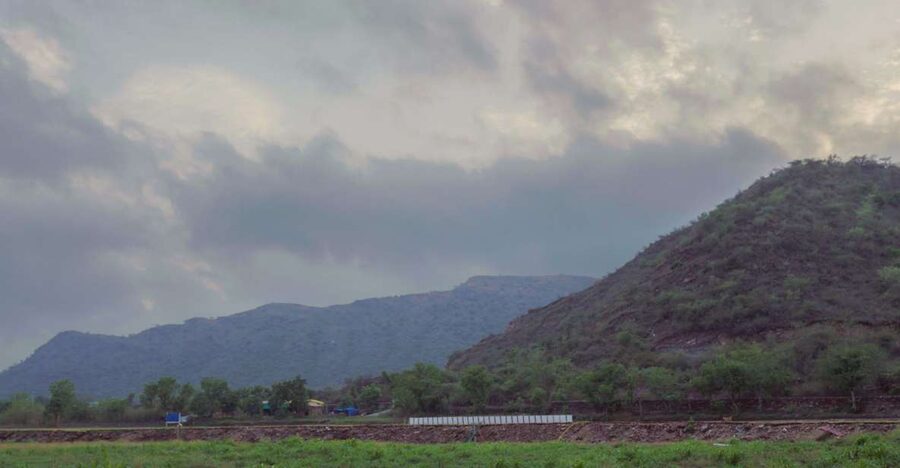
This outing takes you to a village setting on the outskirts of Udaipur, where the pace changes quickly. Instead of beginning with a palace facade or a lake view, you arrive among fields, earthy smells, farm work, and local homes.
Your hosts welcome you with the easy warmth that makes a small village visit feel personal. The setting can be simple. One account describes cooking in a home with a manmade mud-clay fire stove rather than the open field kitchen shown in promotional images. That detail is worth knowing before you book. You are choosing contact with everyday rural life, not a staged culinary attraction.
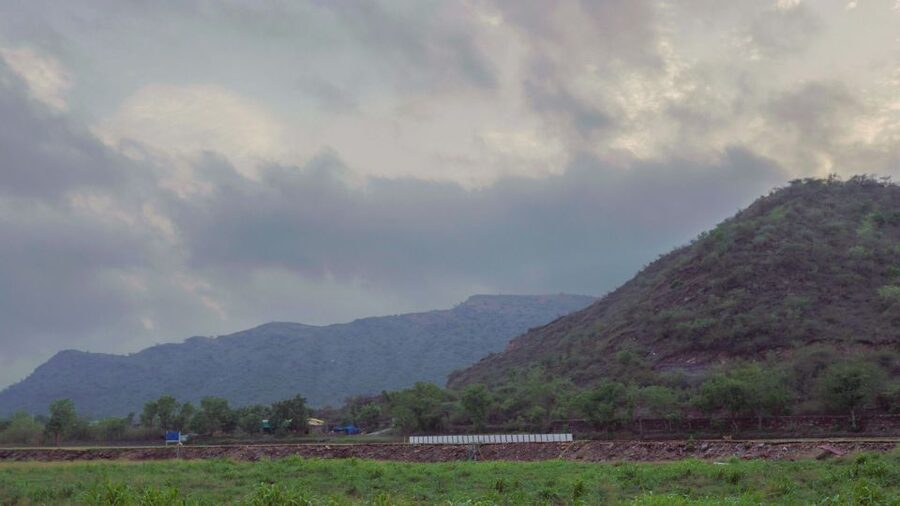
The surrounding countryside may include mustard fields, rolling hills, and a local temple. The exact feel will depend on the season and the farm’s daily work, but the point is clear: you get a look at the setting where food is grown before you sit down to eat it.
The advertised duration is two hours. That is enough time for a compact farm walk, cooking activity, and shared meal, but it is not a full-day village excursion. If you want time for a longer walk or nearby sights, arrange transport and ask how much extra time is possible.
More Farm Tours in the world:
- Half-Day Thai Cooking Class at Organic Farm in Chiang Mai
★ 5.0 · 19,087 reviews - Florence Pizza or Pasta Class with Gelato Making at a Tuscan Farm
★ 5.0 · 6,801 reviews - Cooking Class and Lunch at a Tuscan Farmhouse with Local Market Tour from Florence
★ 5.0 · 4,831 reviews
Walking through fields and learning what grows here
The farm walk gives the cooking class a useful sense of place. You may see mustard greens and chickpeas, and you can learn how local farmers tend their crops using traditional methods. Rather than hearing a general talk about Indian food, you connect ingredients with the soil and the people who raise them.
You can also pluck fresh vegetables with the farmers. This is a small task, but it changes the way you see the meal. Sarson Ka Saag, for example, is not just a green curry arriving in a bowl. It is part of the seasonal work of the farm and a familiar food in the region.
Do not expect a large agricultural demonstration. The supplied details describe a short walking tour and a chance to join in, not a long lesson in irrigation, harvesting, or livestock. I would treat this as a friendly introduction to farm life, especially useful if most of your Rajasthan trip is spent in cities and historic sites.
The walk also leads toward local cultural sights in and around the village. The word devra refers to a small local shrine, and the route may include temples or other places of worship. Dress with respect and follow your host’s instructions before entering any sacred area.
Cooking Dal Bati over a clay fire
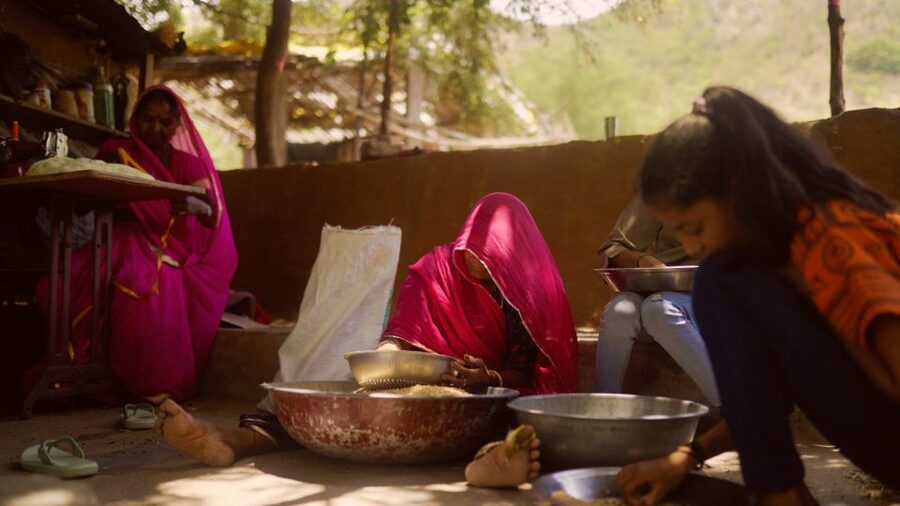
The cooking lesson is the heart of the visit. You help prepare Dal Bati, one of Rajasthan’s best-known meals. The bati is made from dough, then baked in a wood-fired clay oven or stove. It is a rustic cooking method, and the smoke, heat, and uneven fire are part of the experience.
You also prepare the dal, a lentil curry flavored with native masalas. The lesson includes learning to make spice, so pay attention to how the host combines and uses the seasonings. You are not simply watching a cook perform. You take part in shaping dough, handling ingredients, and following the steps that turn them into a meal.
The open-air kitchen may be basic. That is a strength if you want a genuine household-style activity, but it can be a drawback if you expect clean counters, printed recipes, or a professional cooking studio. The focus is participation and conversation, not technical instruction for a future restaurant career.
The dish is also filling. Bati is dense, and it is traditionally paired with dal, ghee, and other accompaniments. Since the activity includes several dishes and snacks, arrive ready to eat, but not so hungry that you rush through the cooking.
Churma and Gatte Ka Saag add the local character
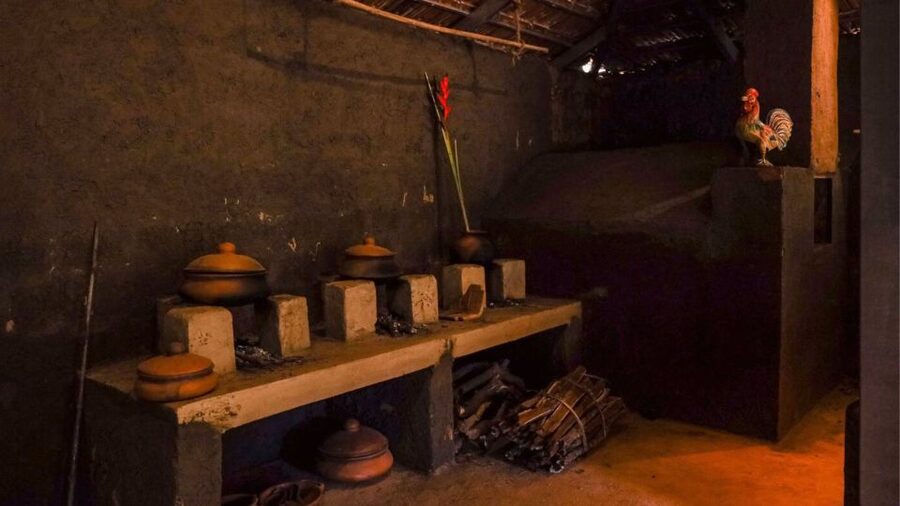
Churma uses crushed batis, ghee, and local jaggery to create a sweet finish. It is a good example of how one food can appear in more than one part of a Rajasthani meal. The same baked dough that works with dal becomes a sweet dish after it is crushed and combined with ghee and jaggery.
Gatte Ka Saag shows another side of regional cooking. Chickpea flour dumplings are cooked in a spicy curry, giving you a dish with a firm, hearty texture and a strong masala base. The preparation takes more than opening a packet of sauce, so the cooking lesson gives you a useful look at the time and care behind familiar Rajasthani flavors.
Sarson Ka Saag is also part of the final spread. Together, the dishes make the meal feel like a home table rather than a single demonstration recipe. You get a mix of lentils, baked dough, greens, dumplings, sweetness, spice, and yogurt-based refreshment.
Because food is the main inclusion, this is strong value for anyone who wants a meal and an activity in one booking. At $21 per person, you are paying for food, host time, cooking, farm contact, and a cultural setting. The price is less attractive if you only want a quick lunch, since you could likely find cheaper food elsewhere. It makes more sense if you value the preparation and conversation as much as the eating.
Same fields, a different sort of morning:
- Chiang Mai: Authentic Cooking Class with Market & Farm Visit
★ 4.9 · 4,546 reviews - Tromsø: Reindeer Camp and Sami Cultural Tour with Lunch
★ 4.7 · 3,326 reviews - Maui Pineapple Farm Tour in Haliimaile
★ 5.0 · 2,855 reviews - Sorrento Farm and Food Experience including Olive Oil, Limoncello, Wine tasting
★ 5.0 · 2,524 reviews
Chaas, snacks, and lunch under the neem tree
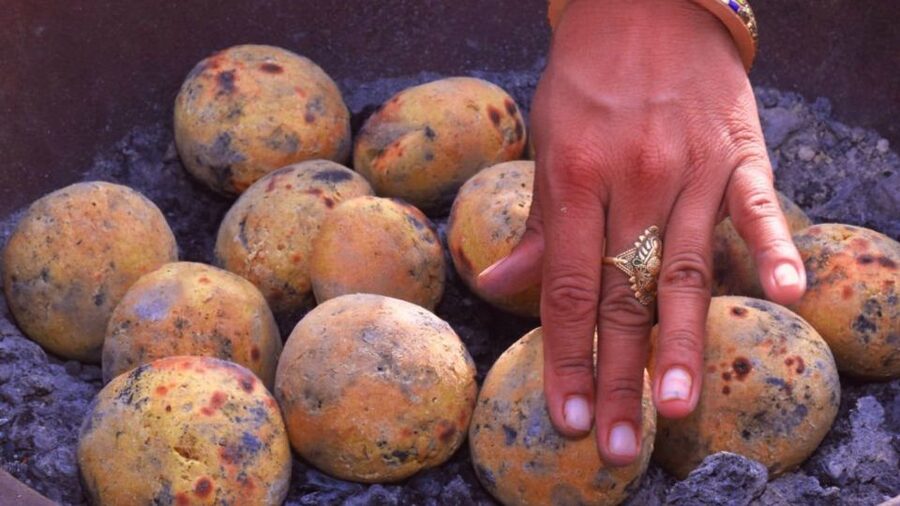
While the dishes cook, you receive local snacks and chaas, a traditional drink made from yogurt. Chaas is light and cooling, which is useful alongside spicy food and the heat of a wood fire. It also gives you a taste of a common everyday drink rather than another bottled beverage aimed at tourists.
The final meal is served under a neem tree. The setting matters. You are not eating inside a formal dining room, and the shade, farm surroundings, and shared table help keep the experience connected to village life.
Expect a group meal rather than a private restaurant service. The food is prepared for everyone, and part of the pleasure is talking with the hosts and other participants. If you prefer a quiet, highly controlled meal, this may feel informal. If you like eating what the household has prepared and trying several dishes at once, it should suit you well.
Local artisans and musicians may add to the meal or the surrounding cultural program. Their presence can make the visit more than a cooking lesson, with music and craft offering another way to understand the village. The exact performance details are not specified, so I would not book this solely for a planned concert. Think of it as a possible part of the wider welcome.
Add the village sights if you have a car
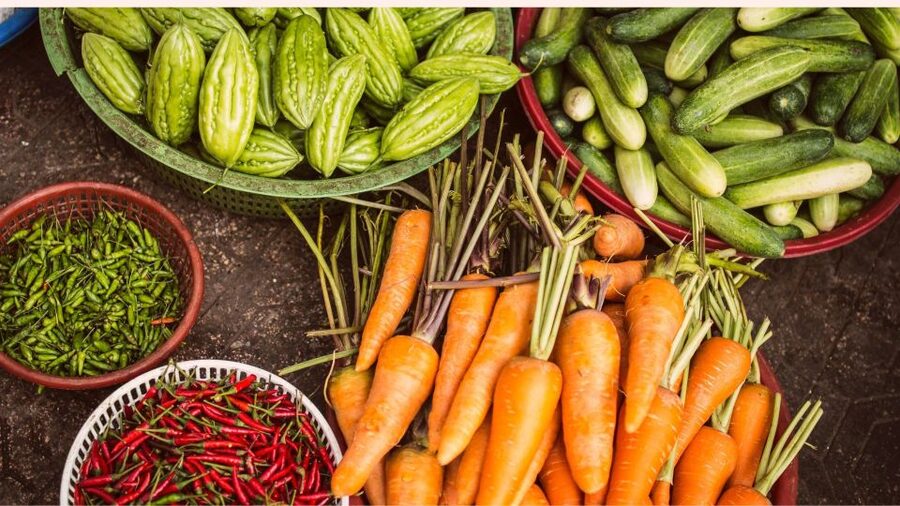
The farm visit itself does not include conveyance. This is the most important planning detail. The venue is outside central Udaipur, and you may need help arranging a vehicle. The provider can assist, but the transport charge is handled separately.
Having a car and driver can also expand the outing. A visit to a nearby village may include an impressive new Jain temple, a haveli under renovation, and a stepwell. These sights give you more context for the local community and architecture, but they are not guaranteed as part of the basic two-hour activity.
If you arrange a ride, confirm the meeting point and the return plan before setting out. The host will be waiting at the meeting point, but the supplied details do not state that pickup from your hotel is included. Build the transfer into your budget and schedule.
This is also where the experience can differ from the images used to promote it. One version may feel like a field visit, while another may take place at a family home with a clay stove. That is not necessarily a problem, but you should be comfortable with a flexible rural setting.
How the experience compares with a standard cooking class
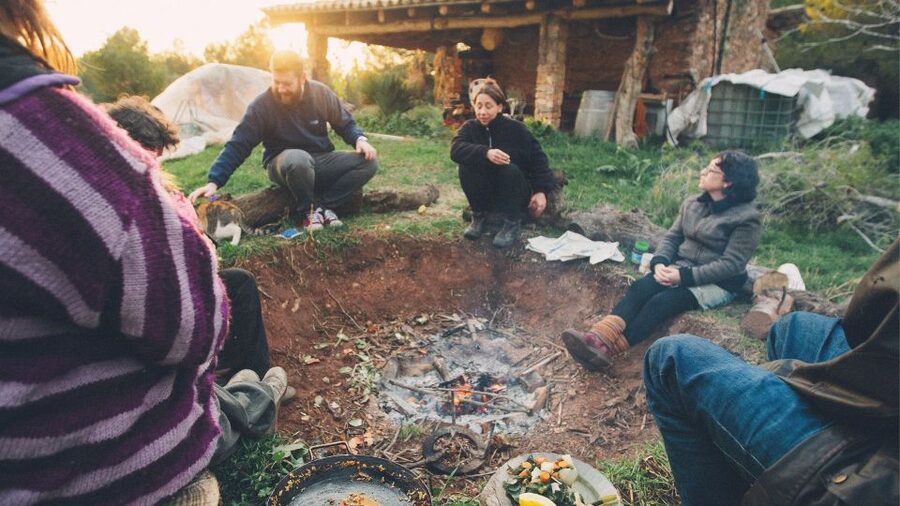
A city cooking class usually gives you a fixed kitchen, a set recipe, and clear workstations. This activity gives you the farm, the family, and the village as part of the lesson. You trade polish for context.
I would choose this experience if you want to know where Rajasthani ingredients come from and how a household meal comes together. It is especially suited to couples, families, and small groups who enjoy doing rather than only watching. Children may also like picking vegetables and shaping dough, though the hot clay stove requires close adult supervision.
It is less suitable if you need a precise schedule, a guaranteed professional kitchen, or a formal culinary curriculum. The host or greeter speaks English and Hindi, so basic communication is available, but the experience still depends on informal conversation and demonstration.
The two-hour format works well as an addition to an Udaipur itinerary. You can place it between major city sights without giving up an entire day. Still, allow extra time for transport if you are coming from central Udaipur or adding a village visit.
What to bring and how to prepare
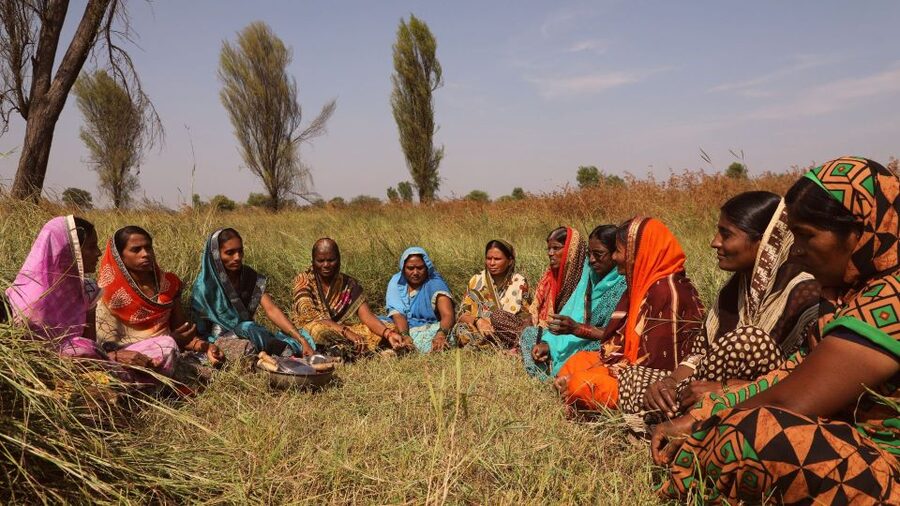
Wear comfortable clothing suitable for walking through fields and sitting in a rural cooking area. Closed shoes are sensible because the ground may be uneven, and you will want footwear that can handle dust or soil.
Dress modestly for the village and temple portions. Bring water, although chaas and snacks are provided, and protect yourself from the sun. The supplied details do not list any special equipment, so you should not need to bring cooking tools.
Tell the host about food restrictions before the activity if possible. The menu centers on wheat dough, lentils, chickpea flour, greens, dairy, ghee, and spices. The information provided does not confirm vegetarian, vegan, gluten-free, or allergy accommodations, so do not assume substitutions are available.
The activity includes food, but not transportation. It offers free cancellation up to 24 hours before the start time, and you can reserve now and pay later. Check the available starting times before booking because the exact schedule is not fixed in the activity details.
Who should book this farm visit?
I would recommend it to you if you want a close look at rural Rajasthan without committing to a full-day excursion. The strongest parts are the farm walk, hands-on cooking, shared meal, and chance to meet a local family.
It is also a good choice for anyone who finds restaurant dining too detached from local life. You see the ingredients, handle the dough, taste the chaas, and eat food prepared in a setting that feels tied to the community.
I would hesitate if your main aim is sightseeing in Udaipur or if you do not want to arrange a ride. The activity is outside the city, and the nearby Jain temple, haveli, and stepwell require transport and possibly extra time. I would also set modest expectations about presentation. The clay stove and home setting are part of the charm, but they may not match polished promotional photographs.
At $21, this is a fair buy when you count the meal, instruction, farm visit, and cultural contact. The value depends less on the amount of food than on your interest in how that food is made.
Should you book it?
Book this farm-to-table visit if you want hands-on rural contact and a generous Rajasthani meal in a family setting. Arrange transportation in advance, ask whether the cooking will take place at the farm or a home, and leave room for a flexible village visit.
Skip it if you only have a short Udaipur stop and want a central city activity with no transfer planning. For everyone else, this is a grounded way to add food, farming, and local conversation to a Rajasthan itinerary.
FAQ
Where does the farm-to-table experience take place?
It takes place in a village on the outskirts of Udaipur, Rajasthan, among farmland and local homes.
How long does the activity last?
The scheduled experience lasts two hours. Starting times vary, so check availability when booking.
Is transportation included?
No. Conveyance is not included. You may need assistance or a separate vehicle to reach the venue, and the provider can help arrange one for an additional charge.
What food will I help prepare?
You will help prepare Dal Bati, Churma, and Gatte Ka Saag. The meal also includes Sarson Ka Saag, dal, snacks, and chaas.
What is chaas?
Chaas is a traditional buttermilk drink made from yogurt. It is served as a refreshing part of the meal.
Will I visit a local temple?
The experience includes a short walk to local temples and devras. A nearby village visit with sights such as a Jain temple, stepwell, and renovated haveli may require a car and driver.
Is the cooking lesson held outdoors?
The activity describes an open-air kitchen, but one account found the cooking taking place at a home with a manmade mud-clay fire stove. The setting may therefore vary.
What languages are spoken?
The host or greeter speaks English and Hindi.
Is food included in the price?
Yes. Food is included. Transportation is not included.
Can I cancel the booking?
You can cancel up to 24 hours in advance for a full refund. The activity also offers a reserve-now, pay-later option.
Just added around the world
- Hoi An: Cycling – Water Buffalo Riding Farming and Fishing★ 5.0 · 2 reviews
- Belém: Marajó Island Day Trip with Buffalo Farm Visit★ 4.0 · 16 reviews
- Cycling, Water Buffalo Riding, Traditional Farming Life★ 5.0 · 10 reviews
- Side, Alanya: Green Canyon Boat, Waterfall&Orchards Mix Tour★ 4.3 · 14 reviews
- Farmers Market visit & Turkish Cooking Class★ 5.0 · 60 reviews
- 2-Hour Alpaca Farm Experience in Kenilworth★ 4.5 · 14 reviews
- Cycling Through Vineyards & Farm Lunch & Ephesus visit★ 5.0 · 52 reviews
- Liverpool Music Icons Tour led by a member of 90s band The Farm★ 5.0 · 51 reviews
Farm Tours, compared.
Half-Day Thai Cooking Class at Organic Farm in Chiang Mai
Read our review →
Florence Pizza or Pasta Class with Gelato Making at a Tuscan Farm
Read our review →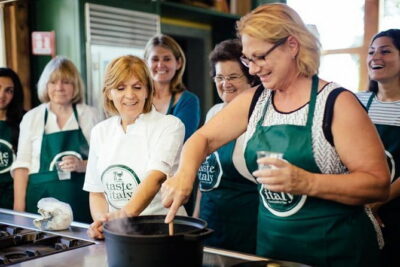
Cooking Class and Lunch at a Tuscan Farmhouse with Local Market Tour from Florence
Read our review →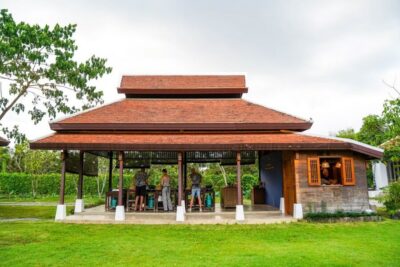
Authentic Cooking Class with Market & Farm Visit
Read our review →
Reindeer Camp and Sami Cultural Tour with Lunch
Read our review →
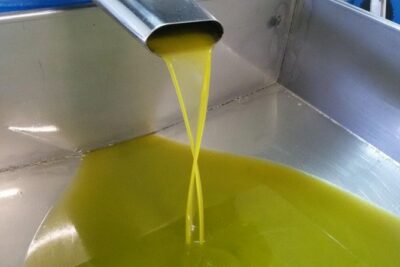
Sorrento Farm and Food Experience including Olive Oil, Limoncello, Wine tasting
Read our review →