
Reviewed · COCOA AND CHOCOLATE FARM TOURS
Cuenca to Guayaquil one-way tour with Cajas Park and a Cacao Farm visit
The clever part of this Cuenca to Guayaquil trip is that the road transfer becomes a full day of Ecuador in miniature. You begin among cold Andean lakes and Polylepis trees, cross the continental divide, then descend toward warmer country, tropical fruit, and cacao farms. Cajas National Park gives you the big scenery, while the family farm gives you a close look at daily life.
I like the comfortable door-to-door transport and the small-group feel. I also like the range of stops: a short hike, a local meal, a fruit market, and hands-on chocolate making. Guides such as Wilson, Genero, Javier, and Luis have helped make the trip feel personal, with special attention to plants, local customs, and family groups.
The main thing to consider is the schedule. Weather can change plans in Cajas, and one experience reported missing the cacao farm, which is an important part of what you are paying for. Confirm that Cacao Loma is included before departure, and remember that its $15 entrance fee is extra.
Key points to know before booking
- Cajas comes first: Expect cold, high-elevation conditions, mist, lakes, and an optional hike at Laguna La Toreadora.
- The route changes dramatically: You cross from the Andes to Ecuador’s warmer lowlands in a single day.
- The cacao visit costs extra: Cacao Loma charges $15 per person, separate from the tour price.
- The van goes door to door: Pickup begins in Cuenca, with drop-off at your Guayaquil hotel, the airport, or another city location.
- Guides matter here: For one to five people, the bilingual guide also drives. Larger groups receive a separate driver and guide.
- This is more than a transfer: It suits you best if you want scenery and local stops instead of a basic four-hour ride.
Why this Cuenca to Guayaquil transfer works so well
A direct drive between Cuenca and Guayaquil gets you where you need to go, but it leaves much of the country outside the window. This trip takes the same basic route and turns it into a six to eight-hour outing.
You start in Cuenca’s high country and finish in Guayaquil’s warmer setting. Along the way, you see Ecuador’s sharp change in climate, vegetation, food, and farm life. That contrast is the real attraction.
At $73.99 per person, the trip can be good value if you already need to reach Guayaquil. Your price covers private van transportation with air conditioning and hotel pickup and drop-off. Depending on the option selected, it can also include a bilingual guide-driver and lunch.
You should check the exact booking option carefully. Lunch is listed as included only if selected, and Cacao Loma charges an additional $15 per person. The tour requires at least two people, so solo visitors need to arrange another person for the booking.
For groups of one to five passengers, the guide also drives. For more than five, a separate driver and bilingual guide are provided. The maximum group size is 15, though a smaller group is the better choice if you want more flexible stops and conversation.
More Cocoa Farm Tours in the world:
- Lahaina: Maui Ku’ia Estate Guided Cacao Farm Tour and Tasting
★ 5.0 · 1,103 reviews - Kauai Chocolate Farm Tasting Tour
★ 5.0 · 666 reviews - Award Winning Farm Tour: Coffee, Chocolate and Unique Gifts
★ 5.0 · 484 reviews
Laguna La Toreadora and the high country of Cajas
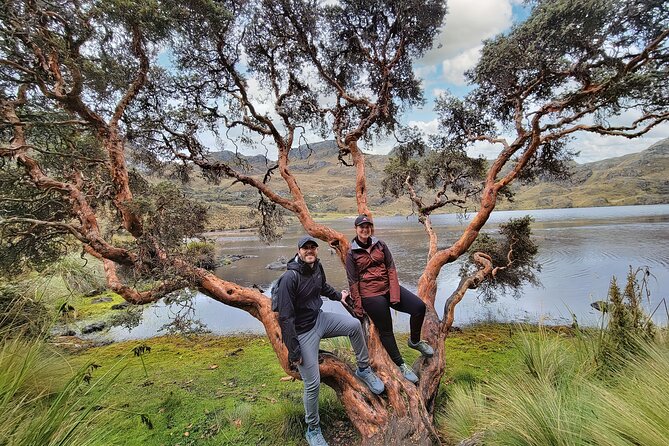
The first major stop is Laguna La Toreadora, at a refuge in Cajas National Park. The drive from Cuenca climbs into the Andes, where the air is cold and the views can change quickly with mist and cloud.
Cajas is one of southern Ecuador’s most important protected areas and supplies much of Cuenca’s water. That gives the stop more meaning than a quick photo break. You are seeing a high-elevation water system that matters to the city below.
The optional hike takes you through Polylepis forest and moorland, with lakes along the route. Polylepis trees have twisted trunks and peeling bark, giving the forest a distinctive look. The moorland is open, wet, and spare, with a feeling very different from the warmer country you will reach later.
You do not need to be a serious hiker to appreciate this stop, but you should be ready for high-altitude conditions and uneven ground. The tour information says most people can participate, yet cold, fog, and weather can affect how much time you spend outside.
That weather point matters. One guide handled thick fog carefully and calmly, but poor visibility can reduce the views. Another guide adjusted the outing because of bad weather, allowing the passenger to enjoy a modified version of the trip. If Cajas is your main reason for booking, keep your expectations flexible.
The stop lasts about 90 minutes, including the visit and optional walk. That is enough for a taste of the park, not a long trek. You will get the best value here by wearing warm layers and shoes suitable for a short hike.
Crossing the continental divide
After Cajas, the van continues across the continental divide and begins its descent toward Ecuador’s lowlands. This is where the route becomes especially rewarding. In a matter of hours, you move from cold lakes and high moorland to a warmer farming region.
The road itself is part of the experience. Weather permitting, the guide can make stops for views along the way. The scenery is not guaranteed, and fog may hide sections of the route, but the changing vegetation gives you a clear sense of Ecuador’s geography.
I like this section because it links the stops together. Cajas is not an isolated park visit, and the cacao farm is not just a separate food activity. The road shows how quickly the country changes as you descend from the Andes toward the coast.
The drive can also be tiring. The total day lasts six to eight hours, and much of that time is spent in the van. If you want a fast transfer, take the direct bus or car instead. If you prefer to turn necessary transport into sightseeing, the longer schedule makes sense.
Lunch at Mestizo Restaurant
The lunch stop at Mestizo Restaurant is designed as a local break rather than a formal dining event. Trout is the house specialty, which fits the mountain setting, and there are vegetarian and vegan choices.
Your guide can help with the available dishes and dietary needs, but you should provide those requirements when booking. Lunch is included only with the selected option, so confirm this before you pay.
This stop lasts about an hour. It gives you time to eat, stretch your legs, and take in views of the Andes. One family group described the lunch as very good, while another party skipped it because the restaurant was closed around Christmas. That is a useful reminder that holiday schedules can affect the plan.
If you do not want lunch, or if you have already eaten, you may have less interest in this stop. Still, a proper meal breaks up the long drive and gives the day a more relaxed rhythm.
More Farm Tours in the world:
- Half-Day Thai Cooking Class at Organic Farm in Chiang Mai
★ 5.0 · 19,087 reviews - Florence Pizza or Pasta Class with Gelato Making at a Tuscan Farm
★ 5.0 · 6,801 reviews - Cooking Class and Lunch at a Tuscan Farmhouse with Local Market Tour from Florence
★ 5.0 · 4,831 reviews - Chiang Mai: Authentic Cooking Class with Market & Farm Visit
★ 4.9 · 4,546 reviews
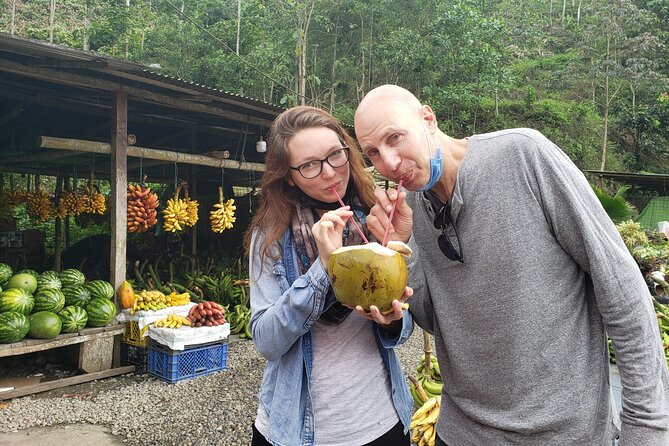
Fruit at Puente de las Frutas de Tamarindo
The fruit stop is short, about 15 minutes, but it adds a welcome local touch. At Puente de las Frutas de Tamarindo, you can see and sample fruit sold for everyday Ecuadorian cooking and snacking.
The list includes bananas, mandarins, coconut, dragon fruit, and passionfruit. The point is not simply to identify familiar names. Fruit grown and sold locally can taste quite different from what you find in a supermarket far from Ecuador.
Your guide helps explain the fruits and how they fit into local life. You can sample them if you wish, so this is an easy stop for curious eaters and a simple one to skip if you are not hungry.
Do not expect a long market visit. Fifteen minutes goes quickly. Think of it as a small window into the food of the warmer region, not a full shopping excursion.
Cacao Loma and the making of chocolate
Cacao Loma is the most distinctive stop on the route. This local family farm grows cacao, the bean used to make chocolate, along with breadfruit, coffee, passionfruit, pineapple, and other crops.
Here, you can taste the pulp around fresh cacao beans and learn how the beans become craft chocolate. The guide explains cacao’s history and local customs, while the family farm gives the visit a personal setting that a standard chocolate shop cannot match.
The pulp is especially worth trying. Many people know cacao only after it has been roasted, sweetened, and turned into a bar. Fresh cacao has a different texture and flavor, and tasting it helps you understand that chocolate begins as an agricultural product, not a finished sweet.
The visit lasts about 30 minutes according to the planned schedule. That is enough for an introduction and a tasting, but it is not a full farming course. The short visit works well as part of a transfer, though you should not expect hours of walking through the farm.
Cacao Loma costs $15 per person, and that fee is not included. Since the cacao farm is one of the tour’s central attractions, confirm that it is operating on your date. One booking did not include the farm even though it was expected, and the guide apparently did not have it on the day’s plan. That appears to have been an itinerary problem, but it is still a practical reason to reconfirm before leaving Cuenca.
The guides and the feel of the ride
The guide can shape this trip more than any single stop. Wilson has helped visitors with Spanish and explained local plants and history. Genero has been praised for his eye for scenic viewpoints and plant knowledge, along with careful driving in thick fog. Javier has led walks through the Polylepis forest and explained vegetation and wildlife, while Luis has been noted for a friendly, informative approach.
The exact guide depends on the date, so you should not book expecting a particular person. Still, the repeated focus on plants, culture, and calm driving tells you what kind of service to expect.
Because the guide drives for smaller groups, the day can feel more like a private outing than a large coach excursion. That arrangement also has a tradeoff: the guide must concentrate on the road, so conversation may pause during difficult sections.
The private van has air conditioning and handles the entire route from pickup to drop-off. You do not need to switch buses or arrange a separate ride to your hotel in Guayaquil. Drop-off can be at a Guayaquil hotel, the airport, or another city location arranged with the operator.
Who will enjoy this experience most
This trip is a strong fit if you are already moving between Cuenca and Guayaquil and want to use the journey well. It also suits families, couples, and small groups who prefer a personal vehicle to a large scheduled bus.
Families can benefit from the variety. Children may enjoy the fruit tasting and chocolate making, while older relatives can take part without committing to a long hike. The walking portion is optional, which gives you some control over the day.
It is also a good choice for anyone interested in plants and agriculture. Cajas gives you highland ecosystems, while Cacao Loma shows how crops shape life in the lowlands. The two stops complement each other.
You may want a different option if you prefer a quick transfer, dislike changing weather, or need a strict arrival time. The tour normally takes six to eight hours, and road conditions or weather can affect the schedule.
Practical details, price, and booking advice
The listed price is $73.99 per person. That is reasonable when you consider the private air-conditioned transport, guide service where selected, pickup and drop-off, and several sightseeing stops. It becomes less attractive if you only need to get from one city to the other as quickly as possible.
The tour starts at Simón Bolívar 832 in Cuenca. The listed Guayaquil end point is Av. 9 de Octubre 109, but hotel and airport drop-off can be arranged. Contact the operator in advance with your preferred destination.
You receive confirmation at booking, and passport name, number, and nationality are required for every participant. You should also report dietary needs when booking.
The tour requires a minimum of two people and allows a maximum of 15. Free cancellation is available up to 24 hours before the start time. Poor weather or an unmet minimum can lead to a new date, another experience, or a full refund.
Should you book the Cuenca to Guayaquil tour?
Book it if you want your transfer to include Cajas scenery, a short highland hike, tropical fruit, and a family cacao farm. The route offers a useful look at Ecuador’s changing regions, and the door-to-door van service removes much of the hassle of arranging transport.
Before booking, check three things: the exact option with lunch, the $15 cacao entrance fee, and confirmation that Cacao Loma will be open and included. If weather is poor, the Cajas views may be limited, but the food and farm stops can still give the day value.
Skip it if speed matters more than scenery. Choose it if the journey itself is part of your Ecuador plan. For most people making the Cuenca to Guayaquil move, this is a practical transfer with enough substance to feel like a real day out.
FAQ
How long does the Cuenca to Guayaquil tour take?
The experience lasts approximately 6 to 8 hours, including the drive and stops at Cajas National Park, the restaurant, the fruit market, and Cacao Loma.
Is lunch included?
Lunch is included only if you select the option that includes it. Mestizo Restaurant serves trout and also has vegetarian and vegan choices.
Is the cacao farm entrance fee included?
No. Cacao Loma charges an additional $15 per person.
Can I be dropped off at my Guayaquil hotel or airport?
Yes. Hotel drop-off within Guayaquil can be arranged, and the tour can also drop you at the airport or another agreed location in the city.
Is the hike at Laguna La Toreadora required?
No. The hike through the Polylepis forest and moorland is optional.
How many people can join the tour?
The tour requires at least two people per booking and accepts a maximum of 15 participants. For one to five passengers, the bilingual guide also drives. For larger groups, a separate driver and guide are provided.
Just added around the world
- Zanzibar: Walking Spice Farm with Local Cooking Class★ 4.4 · 9 reviews
- Zanzibar:Jozani forest, Spice farm with Swahili Cuisine clas★ 4.2 · 3 reviews
- ZANZIBAR, Stone town tour, Prison Island & Spice farm★ 5.0 · 11 reviews
- Zanzibar: Stone Town City Tour and Spice Farm with Lunch★ 3.7 · 33 reviews
- Zanzibar: Spice Farm Tour with Traditional Cooking Class★ 4.6 · 16 reviews
- Zanzibar: Spice farm tour with Zanzibar fruits tasting★ 3.8 · 7 reviews
- Zanzibar: Spice Farm Tour with Cooking lesson★ 4.5 · 4 reviews
- Zanzibar: Spice Farm Tour with Traditional Cooking Class★ 4.8 · 6 reviews
Cocoa and Chocolate Farm Tours, compared.
Maui Ku’ia Estate Guided Cacao Farm Tour and Tasting
Read our review →
Award Winning Farm Tour: Coffee, Chocolate and Unique Gifts
Read our review →
Basel Farmer’s Market, Cheese, Chocolate & Pastry Tour
Read our review →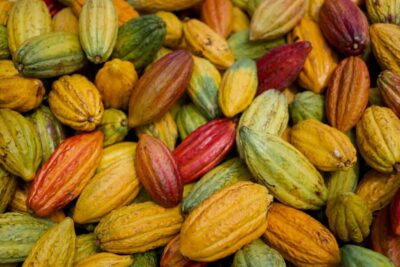
Maui Ku’ia Estate Guided Cacao Farm Tour & Tasting
Read our review →
Craft Chocolate Tasting and Farm Experience on the Big Island
Read our review →Lists this farm appears in