
Reviewed · COOKING CLASSES
Udawalawe: Farm to Table Cooking & Authe: Village Experience
Sri Lanka’s village life comes into focus here through useful, hands-on work: you pick vegetables, grind spices, cook over a traditional fire, and then eat what you made. The old gem mine and cinnamon peeling demonstration add two very different windows into local work.
I like the garden-to-kitchen format and the friendly local women who involve you in the cooking rather than leaving you to watch. I also like the small private-group setting, which should make it easier to ask questions and take part. The main caution is value: at $30 per person, the experience is not cheap for two hours, and drinks served with the meal may cost extra at a marked-up price.
Key details at a glance
- A reconstructed 200-year-old village: You walk through a setting designed to show how older Sri Lankan agricultural communities lived and worked.
- A real hands-on meal: You pick produce, help prepare traditional dishes, and eat the food at the end.
- Two unusual stops: The ancient gem mine and cinnamon peeling demonstration add local industry and craft to the cooking class.
- Close to Udawalawe Elephant Orphanage: The meeting point is only 1.2 kilometers away, so this fits neatly into a Udawalawe day.
- Private groups and bilingual guides: Tours are offered in English or Sinhala, with a private group rather than a large shared crowd.
- A walking-heavy visit: The full route takes about 90 minutes on foot, within a stated two-hour activity period, and is not suitable for wheelchair users.
Entering a Sri Lankan village from another time
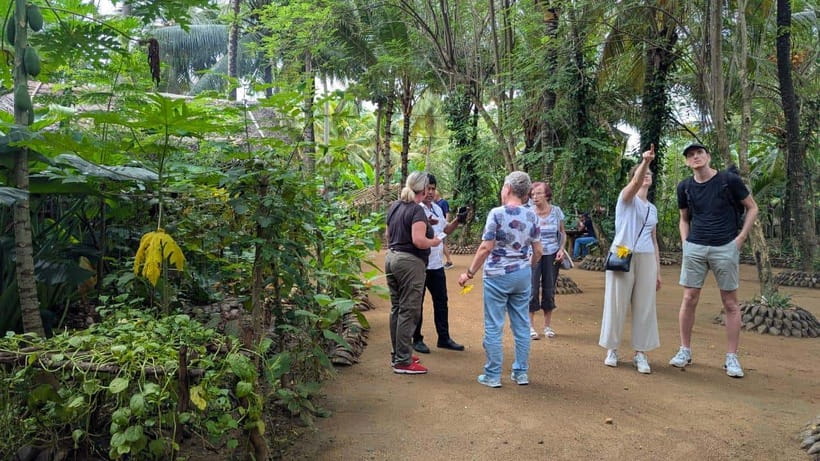
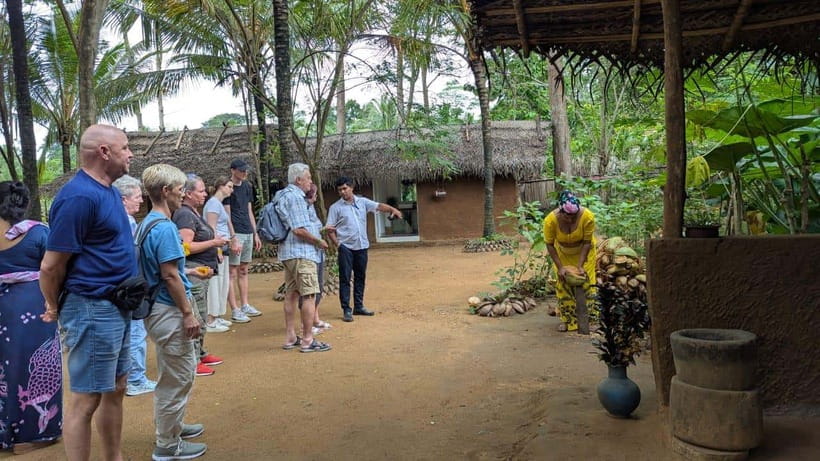
The setting is a reconstructed traditional village presented as a picture of Sri Lankan life from about 200 years ago. That framing gives the visit more purpose than a simple cooking lesson. You are not only learning a recipe. You are seeing how food, farming, craft, and household work fit together.
I would approach the village with the right expectation. This is a cultural attraction built to explain older village life, not an untouched settlement frozen in time. That does not make it less useful. A recreated setting can show you details that are hard to understand from a city restaurant or a standard sightseeing stop.
The visit is near Udawalawe Elephant Orphanage, just 1.2 kilometers away. That makes it a practical add-on if you are already in the area. You can spend the morning with elephants and reserve this activity for later, or arrange the two visits around the same part of your route.
The experience lasts two hours, though the walking portion is described as about 90 minutes. Wear shoes you can walk in and expect to move between the garden, mine, demonstration areas, and kitchen. The information does not promise air-conditioned spaces or a seated tour, so I would not plan this as a rest stop.
More Cooking Classes in the world:
- Half-Day Thai Cooking Class at Organic Farm in Chiang Mai
★ 5.0 · 19,087 reviews - Cooking Class and Lunch at a Tuscan Farmhouse with Local Market Tour from Florence
★ 5.0 · 4,831 reviews - Chiang Mai: Authentic Cooking Class with Market & Farm Visit
★ 4.9 · 4,546 reviews
Cinnamon tea, king coconut, and the first taste of the day
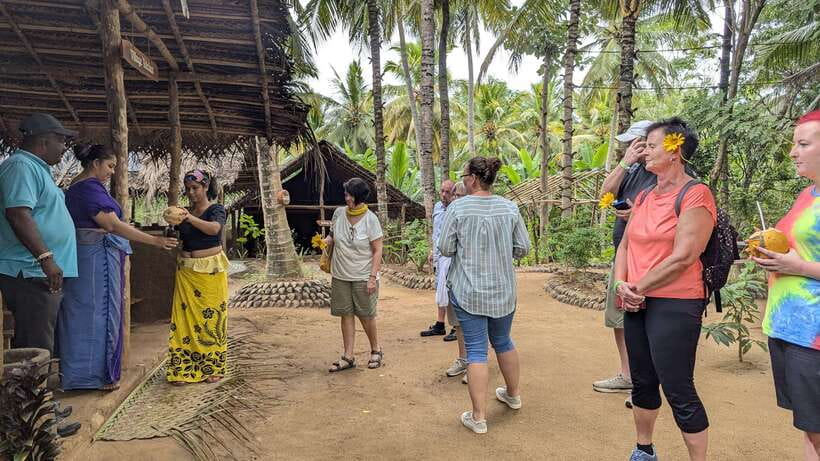
The welcome sets a local tone before the walking begins. The experience description mentions cinnamon tea, while the included items list a refreshing king coconut. Since both are stated in the information provided, I would confirm which welcome drink is served when booking.
Either option fits the setting. Cinnamon is one of Sri Lanka’s best-known spices, and a king coconut is a familiar local refreshment. The drink is a small detail, but it gives the guide a natural way to introduce ingredients you will see later.
The welcome is not the main reason to book. Think of it as a pleasant start before the practical parts begin. The real value comes once you are handling produce and cooking with the village team.
What the old gem mine adds
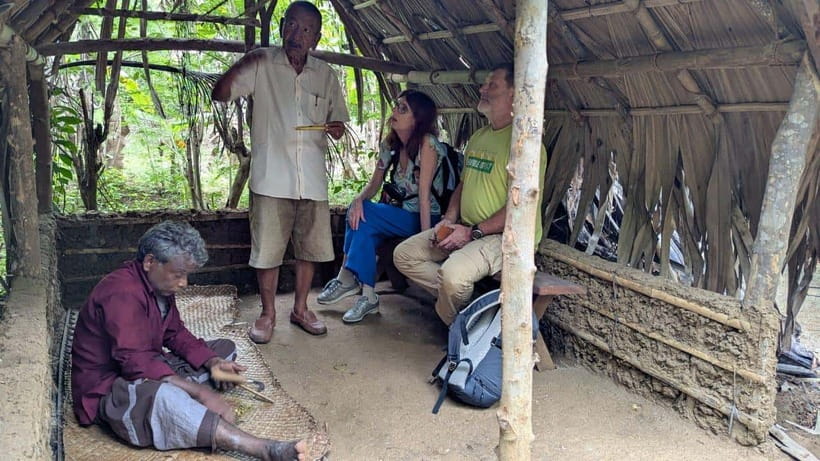
The ancient gem mine visit gives the tour a welcome change of pace. Sri Lanka is known for its gem trade, and this stop explains how stones were sought and recovered using older mining methods. You should expect a guided look at the process and a demonstration rather than a full mining expedition.
This is useful because it connects the village to work beyond farming. A traditional Sri Lankan community depended on many skills and trades, and the mine helps broaden the picture. You get a short lesson in local industry before moving into the food-centered part of the visit.
Keep your expectations measured. The available information does not specify that you will find or purchase a stone, and it does not describe the mine’s exact size or condition. If you are interested in buying gems, treat this stop as an introduction and ask clearly about any sales, prices, or certifications before spending money.
Cinnamon peeling is a close-up craft demonstration
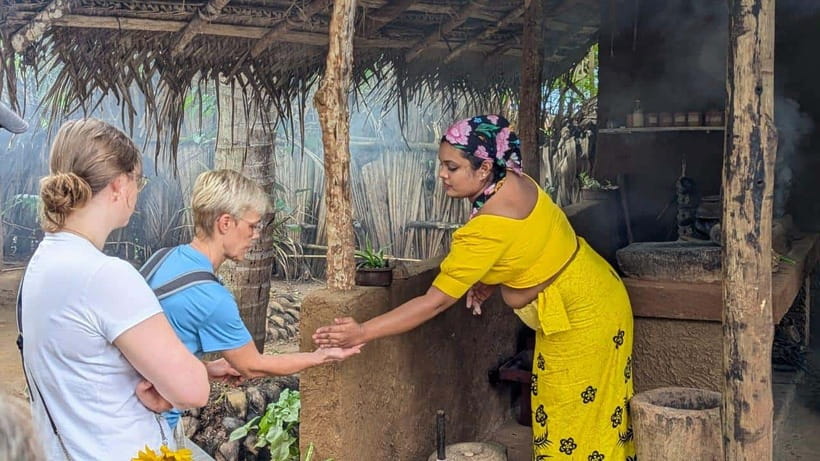
The cinnamon demonstration focuses on the work behind a spice many people know only from a jar. Skilled artisans show how cinnamon bark is peeled and prepared into sticks. This is one of the more specific cultural details in the visit, and I would pay close attention to the handwork.
The demonstration also explains why cinnamon matters to Sri Lankan culture and economy. That context gives the spice a human scale. You begin to see it as a crop that requires care and skill, not simply a flavor added to tea or dessert.
The activity is described as a demonstration, so you may not get the same hands-on role here as you do in the garden and kitchen. That is not a problem. The contrast is helpful: you watch an experienced worker perform a specialized task, then take an active role in preparing your meal.
More Farm Tours in the world:
- Florence Pizza or Pasta Class with Gelato Making at a Tuscan Farm
★ 5.0 · 6,801 reviews - Tromsø: Reindeer Camp and Sami Cultural Tour with Lunch
★ 4.7 · 3,326 reviews - Maui Pineapple Farm Tour in Haliimaile
★ 5.0 · 2,855 reviews - Sorrento Farm and Food Experience including Olive Oil, Limoncello, Wine tasting
★ 5.0 · 2,524 reviews
Picking vegetables before you cook
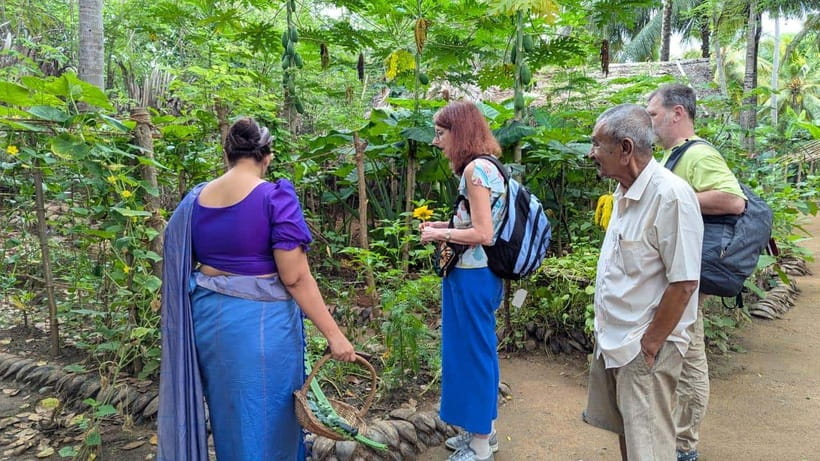
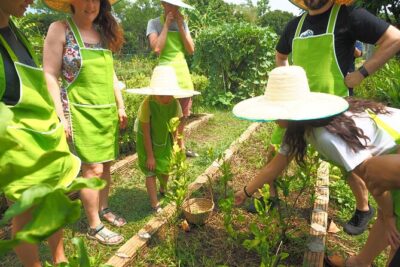
The garden is where the visit becomes genuinely practical. You walk through the organic vegetable garden and pick fresh produce for the class. This simple act changes how you think about the meal because you see at least part of the path from soil to plate.
I like this stage because it avoids the usual cooking-class shortcut, where every ingredient is already measured and waiting. Picking your own vegetables gives you a better feel for village food production. It also creates a reason to walk around the property instead of sitting in one room for two hours.
The garden itself is one of the most praised parts of the experience. The grounds are described as beautiful, and the fresh produce gets particular attention. You should not expect a formal farm tour with a long explanation of every crop, since no detailed plant list is provided. Instead, this is a short, useful garden visit tied directly to lunch or a meal.
Cooking with local women in a traditional kitchen
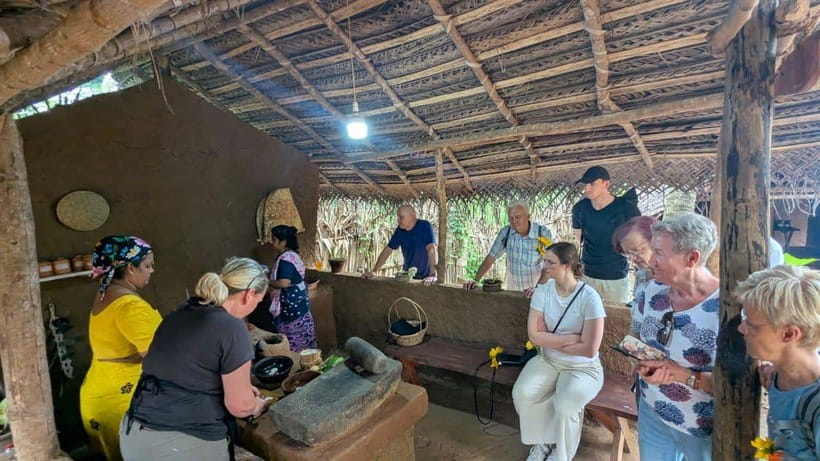
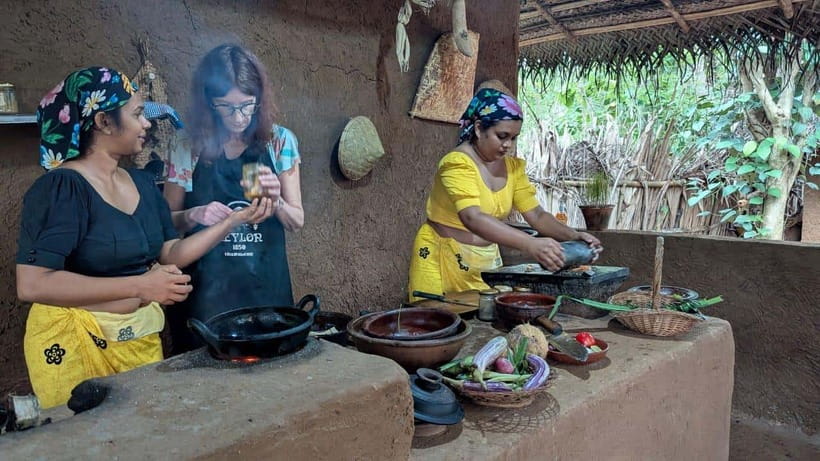
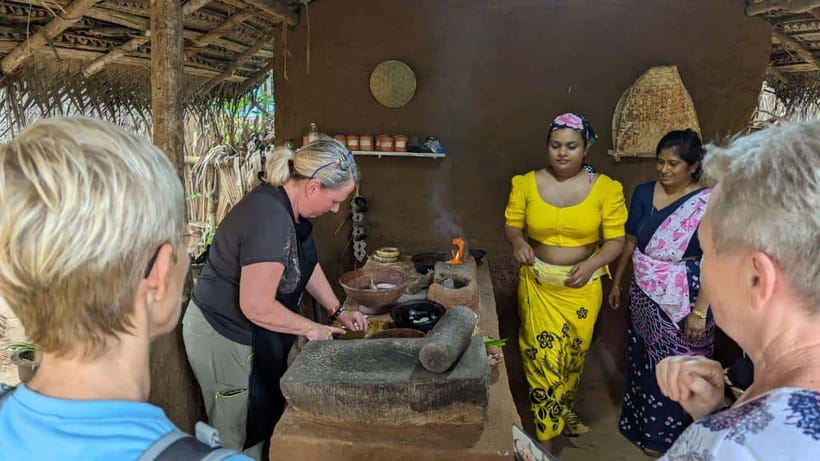
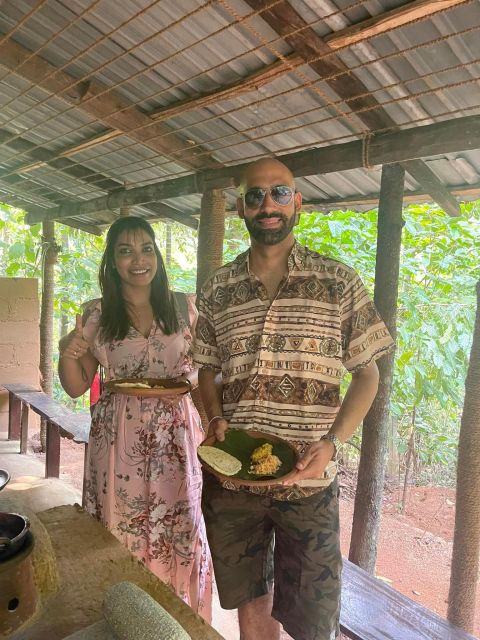
The cooking class is the heart of the activity. Local women guide you through traditional Sri Lankan dishes using older recipes and methods. You may help with tasks such as grinding spices and cooking over an open flame, all within a village kitchen rather than a modern culinary school.
That setting matters. A polished demonstration can teach you what a dish looks like, but a working kitchen shows you how ingredients are handled and how cooking fits into daily life. The class is designed to involve you, not just place you in front of a finished plate.
The available feedback gives special praise to the cooking instruction and the warmth of the women leading it. The class is called informative and fun, with the staff making an effort to show and explain as much as possible. That is a good sign for first-time cooks, since you should not need advanced kitchen skills to take part.
One specific dish gets a strong mention: coconut sambal and dhal. These are familiar Sri Lankan staples, but the class gives you a chance to see how they are made in this setting. The final meal is not just a tasting menu. It is the result of your work in the kitchen.
The open-flame cooking deserves a practical note. You will be walking and taking part in food preparation, so loose clothing and shoes that are easy to manage are sensible choices. The information does not give a detailed list of ingredients or accommodation for dietary restrictions, so ask before booking if you have food allergies or special requirements.
The meal is the payoff
After cooking, you sit down to eat the dishes you helped prepare. The meal is served in a communal setting, which keeps the focus on shared food and village hospitality rather than formal restaurant service.
I find this kind of meal more memorable than a plate handed to you at the start. You know where some of the vegetables came from, you have taken part in the preparation, and you can connect the flavors with the work you just saw. That makes the food feel like the natural finish to the visit.
The cooking receives the strongest praise in the available feedback, especially for the dhal and coconut sambal. The meal is described as delicious, but you should keep in mind that the experience is still a short cultural activity, not a full-day food tour with several courses.
Pay attention to the drinks bill. One visitor was charged separately for drinks at prices reported to be several times higher than shop prices, without being told in advance that drinks were not included. The safest approach is to ask before ordering: confirm which drink, if any, comes with the meal and what extra beverages cost.
The melas add color, but check the schedule
The visit may finish with participation in local melas, described as traditional fairs with music, dance, crafts, and local delicacies. This offers a broader social setting after the quieter garden and kitchen work.
The word may matters here. The description includes participation in melas, but the schedule and frequency are not explained. I would ask whether a mela is taking place on your date and how much time is set aside for it. You should not assume that a large fair will be running every day.
If available, this part can add energy and variety. You can look at crafts, sample local foods, and see customs presented in a public setting. If no mela is scheduled, the main experience still includes the mine, cinnamon, garden, kitchen, and meal, which are the more clearly defined parts of the visit.
Is $30 per person good value?
At $30 per person, this is a mid-priced short activity rather than a bargain stop. The fee covers a private-group experience, a guide in English or Sinhala, the gem mine visit, cinnamon demonstration, garden picking, cooking class, prepared meal, and stated participation in local melas.
I think the price is reasonable if you want active cultural learning and will take part fully. You are paying for staff time, food, instruction, and access to several parts of the property, not merely a meal. The private format also matters if you prefer to ask questions without a large group waiting.
The value is weaker if you mainly want lunch. You can eat for less elsewhere, and the activity lasts only two hours. It also feels less attractive if you are not interested in cooking, walking, or learning about local crafts.
The drink issue needs to be part of your budget. Since extra drinks may not be included and one report describes a large price difference from shop prices, ask for the cost before accepting anything beyond the included refreshment. That small conversation can prevent an unpleasant surprise.
Who will enjoy this most?
I would recommend this for couples, families with older children, and food-focused visitors who want more than a restaurant meal. It suits people who like to use their hands, ask questions, and learn through short demonstrations.
It is also a good fit for anyone staying near Udawalawe Elephant Orphanage. The short distance makes it easy to pair with other local sightseeing without committing to a full-day excursion.
You may want to skip it if you dislike walking, have limited mobility, or want a highly polished cooking school. The route is about 90 minutes on foot, and the activity is not suitable for wheelchair users. The kitchen is traditional, so the appeal is participation and local character rather than professional equipment.
The private-group format should suit visitors who want a more personal visit. The two listed guide languages are English and Sinhala. No guide names are provided, so do not expect to book a specific instructor by name.
Practical planning for your two hours
Allow the full two hours even though the walking segment is listed at about 90 minutes. That leaves time for the welcome drink, cooking, eating, and any additional explanation or mela activity.
Wear comfortable walking shoes and clothing suitable for a kitchen. You will move through outdoor areas, pick vegetables, and take part in cooking, so this is not a dress-up excursion.
The experience offers free cancellation up to 24 hours before the start time and a reserve-now, pay-later option. Starting times depend on availability, so check the schedule rather than assuming you can arrive at any hour.
The meeting point is 1.2 kilometers from Udawalawe Elephant Orphanage. Arrange your transport to the village directly, since no transfer service is specified. If you are combining the activity with the orphanage, allow time between visits rather than treating the two places as one entry.
Should you book the Udawalawe village experience?
I would book it if you want a compact, hands-on introduction to Sri Lankan village food and craft. The garden picking and cooking class are the strongest reasons to go, and the gem mine and cinnamon work give the visit more range than a basic cooking lesson.
I would hesitate only if $30 feels high for two hours, if you need wheelchair access, or if you want a guaranteed fair and a long cooking session. Confirm the welcome drink, ask about extra beverage prices, and check whether a mela is running on your date.
For the right visitor, this is a useful Udawalawe add-on: practical, friendly, and centered on food you help make yourself.
FAQ
How long does the Udawalawe village experience last?
The activity lasts two hours. The walking portion around the village is described as approximately 90 minutes.
Where is the meeting point?
The experience is located 1.2 kilometers from Udawalawe Elephant Orphanage.
What is included in the experience?
The package includes a welcome drink, a guided visit to an ancient gem mine, a gem-mining demonstration, cinnamon peeling, vegetable picking, a traditional cooking class, a meal made during the class, and participation in local melas.
Is the cooking class hands-on?
Yes. You pick vegetables from the garden and help prepare food in a traditional village kitchen with local women.
Which languages are available?
The live tour guide is available in English and Sinhala.
Is this a private tour?
Yes. The activity is offered for a private group.
Is the experience suitable for wheelchair users?
No. The activity is not suitable for wheelchair users, and the route includes about 90 minutes of walking.
Can I cancel for a full refund?
Yes. You can cancel up to 24 hours in advance for a full refund. A reserve-now, pay-later option is also available.
Just added around the world
- Zanzibar: Walking Spice Farm with Local Cooking Class★ 4.4 · 9 reviews
- Zanzibar:Jozani forest, Spice farm with Swahili Cuisine clas★ 4.2 · 3 reviews
- ZANZIBAR, Stone town tour, Prison Island & Spice farm★ 5.0 · 11 reviews
- Zanzibar: Spice Farm Tour with Traditional Cooking Class★ 4.6 · 16 reviews
- Zanzibar: Stone Town City Tour and Spice Farm with Lunch★ 3.7 · 33 reviews
- Zanzibar: Spice farm tour with Zanzibar fruits tasting★ 3.8 · 7 reviews
- Zanzibar: Spice Farm Tour with Cooking lesson★ 4.5 · 4 reviews
- Zanzibar: Spice Farm Tour with Traditional Cooking Class★ 4.8 · 6 reviews
Cooking Classes, compared.
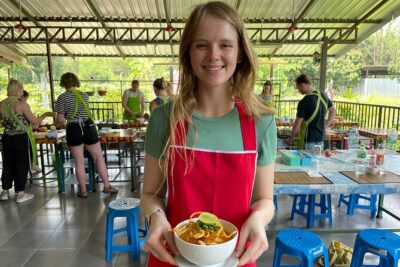
Half-Day Thai Cooking Class at Organic Farm in Chiang Mai
Read our review →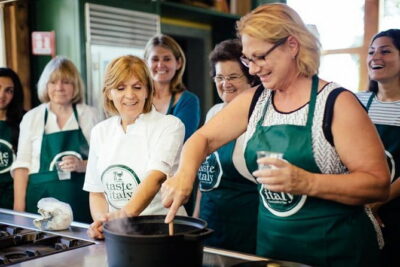
Cooking Class and Lunch at a Tuscan Farmhouse with Local Market Tour from Florence
Read our review →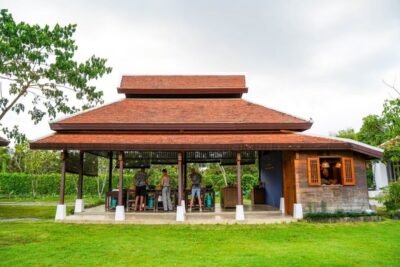
Authentic Cooking Class with Market & Farm Visit
Read our review →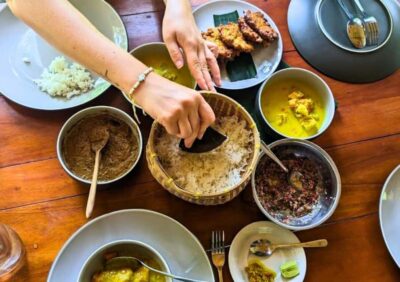

Hands-On Cooking Class & Farmhouse Tour on the Amalfi Coast
Read our review →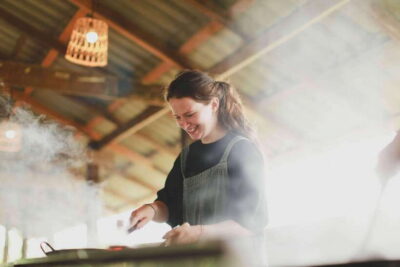
Lists this farm appears in