
Reviewed · SPICE FARM TOURS
Zanzibar:Stone Town & Spice Farm Private Tour Lunch Included
Zanzibar’s story makes the most sense when you connect its spice farms with Stone Town’s old trading streets. This private tour does that in one outing, taking you from plants, fruit, and Swahili food to forts, markets, palaces, and the difficult history of the slave trade.
I like the hands-on farm visit, where you can smell cinnamon, cloves, nutmeg, vanilla, ginger, black pepper, and lemongrass at their source. I also like the private format, which lets your Stone Town guide adjust the pace and explain sights such as the Old Fort, Forodhani Gardens, and the former slave market in detail.
The main consideration is time on the road. From many beach resorts, the van ride can take about an hour each way, leaving roughly two hours at the farm and two hours in Stone Town. The tour also includes plenty of walking, uneven streets, heat, and strong historical material.
Key points to know before booking
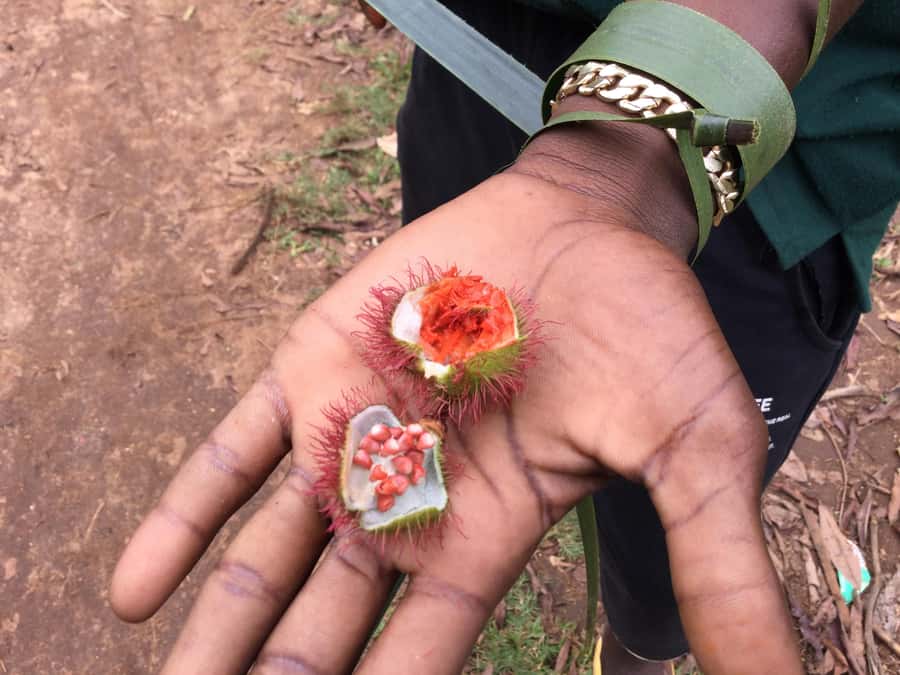
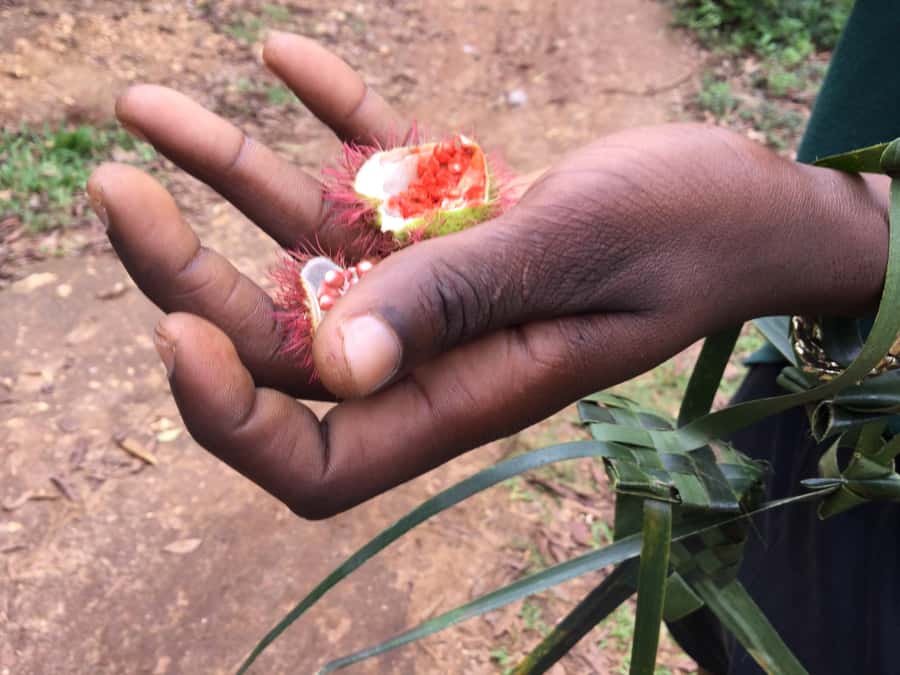
- Fresh spice tasting: Smell and taste cinnamon, cloves, nutmeg, vanilla, ginger, black pepper, and lemongrass during a guided farm walk.
- Swahili lunch included: Eat a local meal prepared with spices and produce from the farm, with tropical fruit served as part of the visit.
- Stone Town’s major sights: See the Old Fort, Forodhani Gardens, the House of Wonders from outside while it is under renovation, the Sultan’s Palace, and Freddie Mercury’s birthplace.
- A serious historical stop: Visit the Old Slave Market site, Anglican Church, slave monuments, and small former slave chambers.
- Private transport: Hotel pickup and return are available from resorts across Unguja, including Nungwi, Paje, Jambiani, Matemwe, Stone Town, and others.
- Flexible language choice: Guides may be available in English, French, German, Polish, Arabic, Spanish, Italian, Swahili, Portuguese, or Afrikaans.
Why this tour works as a Zanzibar introduction

Zanzibar can feel like two different places. Its beaches and resort areas are quiet and easygoing, while Stone Town is dense, old, and full of reminders of trade between Africa, Arabia, India, and Europe. The spice farm adds a third layer, showing how the island’s crops became part of its economy and identity.
I like the way this tour links those pieces instead of treating Stone Town as a quick photo stop. You first learn about the crops that helped make Zanzibar famous, eat a meal using local flavors, then see the port city where goods, people, and cultures moved through the island.
The price is about $46 per person. For a private van, hotel pickup and drop-off, two private guided walks, the Old Slave Market entrance, lunch, and fruit tasting, that is a strong package if you want a full cultural day without arranging separate transport. The value is less appealing if you are already staying in Stone Town and prefer to explore on foot, since much of the cost and time goes toward driving between the coast and town.
The advertised duration ranges from three to six hours, but the route describes approximately one hour in the van, two hours at the farm, two hours in Stone Town, and another hour returning. In practice, resort location and traffic will affect the day. Ask for the likely total timing when booking, especially if you have dinner plans or a flight.
More Spice Farm Tours in the world:
- Zanzibar: Prison Island, Stone Town, & Spice Farm Tour
★ 4.5 · 579 reviews - Full-Day Private Stone Town +Spice Farm and Prison Island Tour
★ 4.5 · 216 reviews - Zanzibar: Stone Town & Spice Farm Tour with Lunch
★ 4.5 · 97 reviews
The drive from your hotel to the spice farm
Pickup is offered from a long list of locations, including Nungwi, Kendwa, Matemwe, Kiwengwa, Pwani Mchangani, Uroa, Chwaka, Stone Town, Paje, Jambiani, Bwejuu, Michamvi Kae, Pingwe, Kizimkazi Mtendeni, and Makunduchi.
You wait in your hotel lobby at least five minutes before the scheduled time. The driver’s car number and booking name are provided to help you identify the vehicle, and transport is by private van.
That private setup matters. You are not tied to the rhythm of a large coach group, and your party can ask questions without competing for the guide’s attention. It also makes the tour practical for couples, families, or friends who want one vehicle and one schedule.
The drawback is distance. If you are based in Nungwi or another northern resort, the trip to the farm and Stone Town may take close to an hour each way. Bring water, wear light clothing, and accept that this is partly a transport day, not a quick local excursion.
Walking through Zanzibar’s spice farm

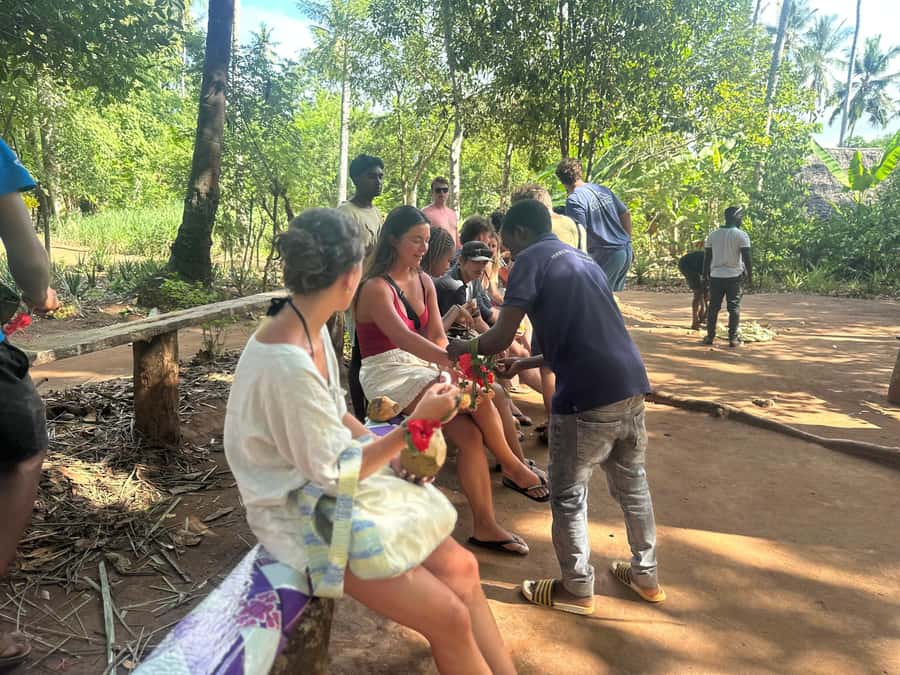
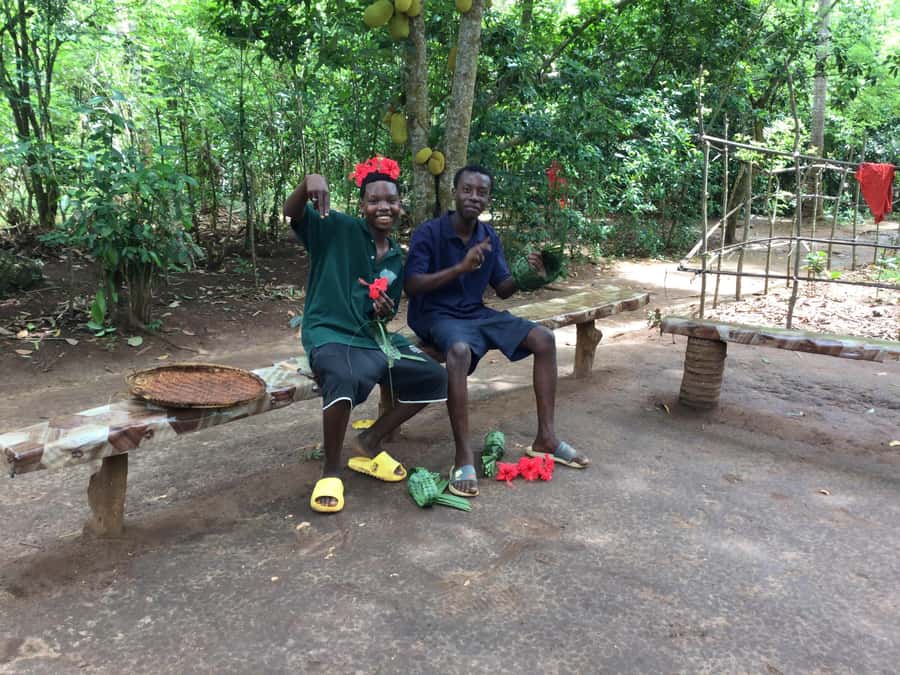
The farm visit lasts about two hours and begins with an explanation of how the farm was established and how Zanzibar grows its spice crops. This background gives the walk a purpose. You are not simply being shown a row of plants, you are learning how ordinary leaves, bark, seeds, and fruit become the flavors associated with the island.
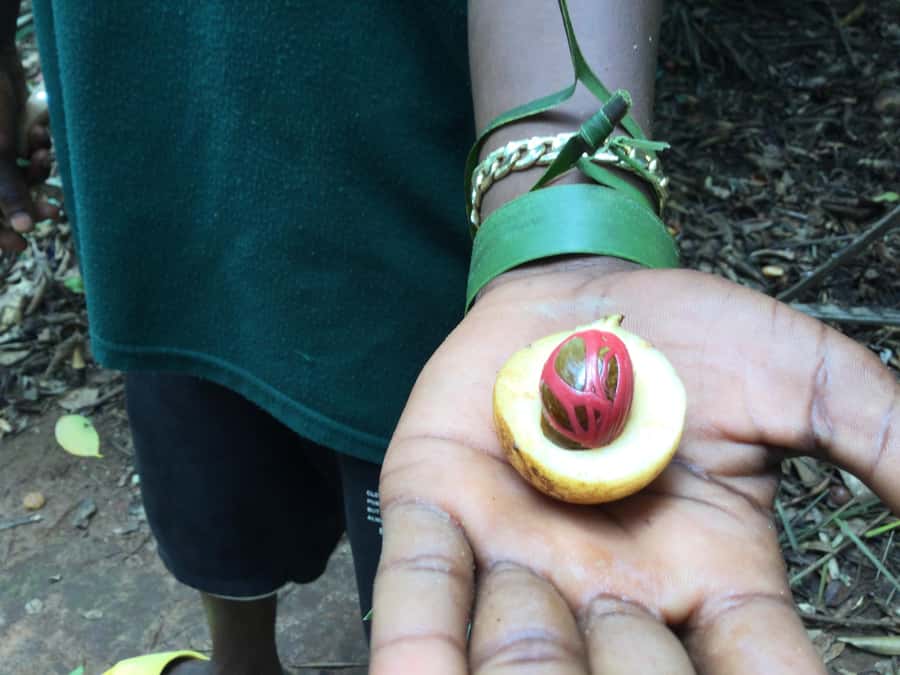
The guide introduces crops such as cloves, nutmeg, cinnamon, ginger, bananas, pineapples, black pepper, and vanilla. You may also encounter lemongrass and other organic plants. The useful part is sensory: you can smell and taste selected spices close to where they grow.
Cinnamon is especially interesting because the familiar spice comes from tree bark. Cloves, nutmeg, vanilla, ginger, and black pepper each look quite different in their natural form than they do in a kitchen jar. The guide’s explanation helps you connect the plant to the finished product.
Follow the instruction not to touch plants without permission. That protects the crops and keeps the visit respectful. If you want to inspect a leaf, pod, or bark more closely, ask first rather than reaching out.
The farm also includes a spice shop with handmade products made from local spices. This is a shopping stop, so decide in advance if you want to buy something. You can see the finished goods, compare favorites, and support the farm, but you do not need to treat the shop as part of the educational portion.
Tropical fruit and a Swahili lunch
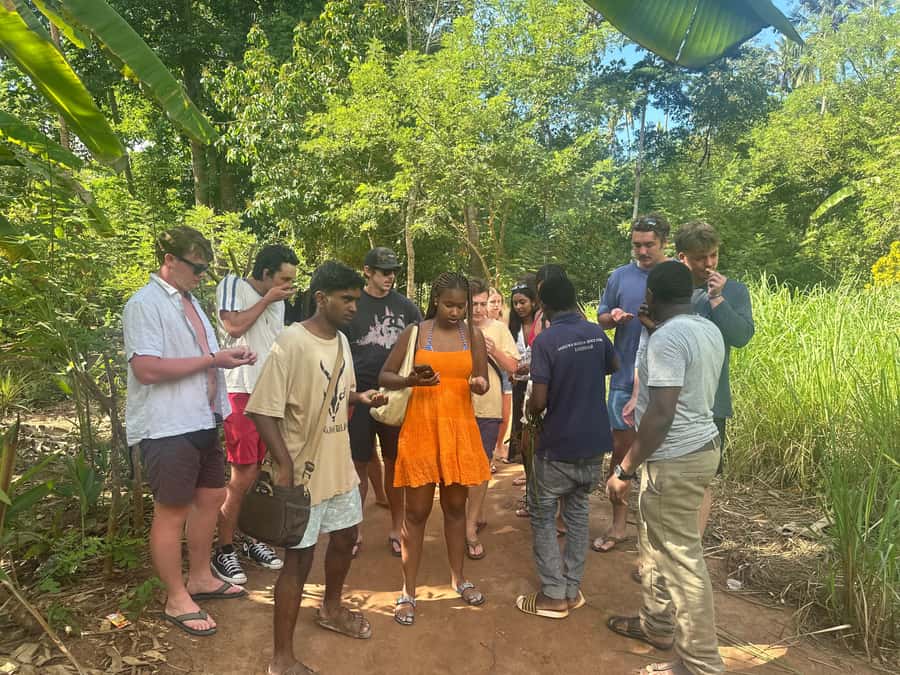
The fruit tasting is one of the lighter, more enjoyable parts of the morning. Expect watermelon, red bananas, yellow bananas, pineapple, mangoes, and oranges, with the exact selection subject to what is available.
The red and yellow bananas are a small detail, but they make the tasting more interesting than a standard hotel fruit plate. You get a chance to compare local produce while your guide explains what is grown on the farm.
Lunch is included and is prepared with fresh spices and fruit from the farm. It is described as a local Swahili meal, and the portion is intended to serve as a proper midday break rather than a token snack. A guide may join you for lunch, which can make it easier to ask follow-up questions about the food and the farm.
Food allergies are a serious concern here. The experience is listed as unsuitable for people with food allergies, so do not assume that a meal can be adapted. Ask before booking if you have dietary restrictions, and carry water throughout the day.
More Lunch Experiences in the world:
- Cooking Class and Lunch at a Tuscan Farmhouse with Local Market Tour from Florence
★ 5.0 · 4,831 reviews - Tromsø: Reindeer Camp and Sami Cultural Tour with Lunch
★ 4.7 · 3,326 reviews - Montserrat Lunch & Wine at Farmhouse Small Group from Barcelona
★ 5.0 · 2,368 reviews - Barcelona: Montserrat Visit & Lunch at Farmhouse Small Group
★ 4.7 · 1,313 reviews
Entering Stone Town through its old streets
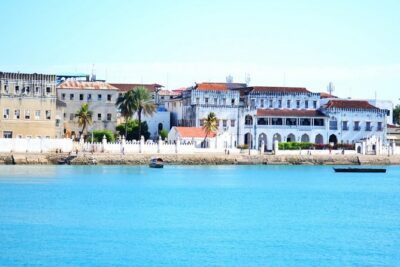
After lunch, the van takes you to Stone Town, Zanzibar’s UNESCO World Heritage Site since 2000. The town’s architecture reflects Swahili, Arab, Indian, and European influences, and the best way to appreciate that mix is on foot.
The streets are narrow and can feel crowded, noisy, and irregular underfoot. That is part of Stone Town’s character, but it also means you should wear comfortable walking shoes and avoid bringing more than you need.
Your private guide can help turn the streets into a readable story. Instead of seeing only carved doors, old walls, and small lanes, you learn how the town developed around trade, religion, politics, and the sea.
The House of Wonders is included as a sight, but it is currently undergoing renovation. Expect to view the building from the outside rather than count on a full interior visit. This is an important expectation to set before you arrive.
Forodhani Gardens, the Old Fort, and the waterfront
Forodhani Gardens sits by the water and is one of the town’s best-known public spaces. During a guided walk, it gives you a useful sense of how Stone Town connects to the sea and to daily public life.
The Old Fort was built by the Portuguese and later became part of Zanzibar’s changing political and military story. Its heavy walls contrast with the delicate details found elsewhere in town. The fort is a good place to pause and understand that Stone Town was not only a trading center, but also a contested port.
The Arab Sultan’s Palace adds another part of the political story. Along with the House of Wonders and Old Fort, it shows the changing power of the sultanate and the connections between Zanzibar and the wider Indian Ocean world.
You will also pass the house associated with Freddie Mercury’s birth. This stop is brief compared with the historical sites, but it adds a modern cultural note to a town usually discussed through much older events.
City Market and the former slave market
The City Market brings you closer to daily trade. You can see fresh produce and household goods, and the tour includes a lively fish auction. This is one of the places where Stone Town feels least like a preserved monument and most like a working town.
Be prepared for strong smells, close quarters, and a quick pace around active stalls. Keep your belongings secure and follow your guide’s lead, especially near the auction and market lanes.
The Old Slave Market site is the most emotionally difficult stop. The visit includes the Anglican Church, slave monuments, and small, stark chambers where enslaved people were held. The guide provides the historical setting, but the spaces themselves require little explanation to feel serious.
Some people may find this part of the tour too heavy after a morning of food and sightseeing. I would not skip it simply because it is uncomfortable. It is one of the places where Zanzibar’s past becomes personal and visible, and the entrance is included in the price.
The tour’s historical balance is worth noting. It does not present Stone Town only as an attractive old quarter. It includes royal buildings, military architecture, trade, markets, popular culture, and the painful legacy of slavery.
Guides, languages, and the private format
The tour offers guides in English, French, German, Polish, Arabic, Spanish, Italian, Swahili, Portuguese, and Afrikaans. Language availability should be confirmed when you book, since not every language will necessarily be offered at every starting time.
Several guides have received particularly strong personal recognition. Abdul is noted for making the spice farm informative without letting the walk become dull. Kassim is known for very good French and detailed explanations of Stone Town’s past, while Omar has been able to tailor the town walk to a party’s interests. Driver Rama is described as friendly and professional.
Those names are useful to request if available, but do not assume a particular guide is guaranteed. The key advantage is the private arrangement itself. You can ask for more detail at the slave market, spend extra time on architecture, or keep the pace moving if the heat is wearing you down.
The tour is listed as wheelchair accessible, but the activity is also marked as unsuitable for people with mobility impairments. Those details do not fully agree. Stone Town’s narrow lanes, uneven surfaces, market conditions, and walking requirements may create problems, so anyone with limited mobility should confirm the exact route and transport arrangements before paying.
What to bring and how to pace the day
Wear light clothing and comfortable walking shoes. You will need them at the farm and in Stone Town, where heat and uneven streets can make poor footwear especially tiring.
Bring a hat, sunscreen, water, insect repellent, and a camera. The farm is outdoors, and the day includes time in the sun. Water is particularly important if you are staying at a northern or eastern resort and spending several hours in transit.
A private tour gives you some flexibility, but it does not remove the basic demands of the route. You still have a farm walk, a market, historical sites, and town streets to cover. Take the morning at a steady pace so you have enough energy for Stone Town’s more serious second half.
Who should book this tour
I would recommend it to first-time visitors who want Zanzibar’s food, crops, architecture, and history in one day. It suits couples and small private groups who prefer a personal guide to a large bus excursion.
It is also a good choice if you are staying outside Stone Town and do not want to arrange separate taxis, entry tickets, lunch, and guiding. The included hotel transport is a major part of the value.
You may want a different plan if your main goal is a relaxed beach day, if you dislike long drives, or if you want several hours inside Stone Town museums. The House of Wonders is under renovation, and the listed Stone Town time is about two hours, so this is an overview rather than a full museum program.
Should you book it?
Book this tour if you want a well-packed introduction to Zanzibar and value private transport, a local lunch, fruit tasting, and a guide who can explain the island’s past in context. The strongest parts are the hands-on spice walk, the meal, and the private Stone Town commentary, especially if you can secure a guide suited to your language.
Think twice if you have food allergies, mobility concerns, or little patience for road time. For most visitors staying at a beach resort, though, the $46 price offers a practical way to connect Zanzibar’s agricultural life with Stone Town’s streets and difficult history in one carefully planned day.
FAQ
How long does the Zanzibar spice farm and Stone Town tour last?
The advertised duration is three to six hours. The route includes about one hour by van to the spice farm, two hours at the farm, two hours in Stone Town, and about one hour returning, so the total time can depend on your pickup location.
Is hotel pickup and drop-off included?
Yes. Private van pickup and return are included, with locations across Unguja such as Nungwi, Kendwa, Paje, Jambiani, Matemwe, Stone Town, and other listed resort areas.
What food is included?
The tour includes a local Swahili lunch at the spice farm and a tasting of fresh tropical fruit such as watermelon, red and yellow bananas, pineapple, mangoes, and oranges.
Which spices will I see and taste?
The farm visit can include cinnamon, vanilla, nutmeg, cloves, lemongrass, ginger, black pepper, and other crops including bananas and pineapples.
Is the Old Slave Market included?
Yes. Entrance to the Old Slave Market Historical Site is included. The visit also covers the Anglican Church, slave monuments, and the former slave chambers.
Which languages are available for the guide?
Guide languages may include English, French, German, Polish, Arabic, Spanish, Italian, Swahili, Portuguese, and Afrikaans. Confirm your preferred language when booking.
Can I cancel or pay later?
You can cancel up to 24 hours in advance for a full refund. A reserve-now, pay-later option is also available.
Just added around the world
- Hoi An: Cycling – Water Buffalo Riding Farming and Fishing★ 5.0 · 2 reviews
- Side, Alanya: Green Canyon Boat, Waterfall&Orchards Mix Tour★ 4.3 · 14 reviews
- Farmers Market visit & Turkish Cooking Class★ 5.0 · 60 reviews
- 2-Hour Alpaca Farm Experience in Kenilworth★ 4.5 · 14 reviews
- Cycling Through Vineyards & Farm Lunch & Ephesus visit★ 5.0 · 52 reviews
- Liverpool Music Icons Tour led by a member of 90s band The Farm★ 5.0 · 51 reviews
- Guided Hebridean Farm Hike near Tobermory, Isle of Mull, Scotland★ 5.0 · 25 reviews
- Paestum and Buffalo Farm Day Tour from Sorrento★ 5.0 · 3 reviews
Spice Farm Tours, compared.
Full-Day Private Stone Town +Spice Farm and Prison Island Tour
Read our review →
Zanzibar full day Jozani forest + Spice farm and stone town
Read our review →
Lists this farm appears in