
Reviewed · SPICE FARM TOURS
Zanzibar: Walking Spice Farm with Local Cooking Class
A Zanzibar spice farm becomes much more interesting when you can touch the plants, taste the fruit, and follow the ingredients into a cooking hut. This six-hour experience combines a guided walk at Tangawizi Spice Farm with a practical Swahili food session, hotel transport, and lunch.
I like the direct link between farm and plate, especially the chance to smell cloves, lemongrass, nutmeg, cinnamon, vanilla, turmeric, and black pepper before eating food made with local spices. I also like the relaxed private-group format, which gives your guide room to adjust the walk for your pace.
The main catch is that the cooking portion may be closer to a demonstration than a hands-on class. The meal description also promises four courses, while the actual serving may be one buffet-style meal followed by fruit, so book this for the setting and food rather than a formal culinary lesson.
Key points at a glance
- Smell cloves on the tree: You will see, touch, and taste spices and crops rather than only hearing a list of names.
- Watch coconut milk being made: The cooks scrape fresh coconut from the shell and squeeze it for use in the dishes.
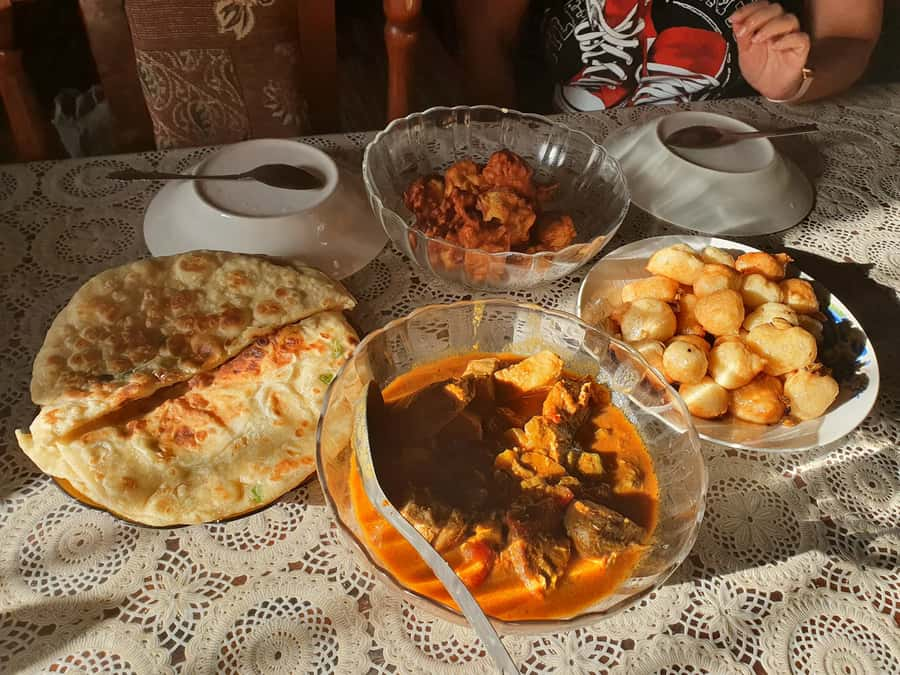
- Taste a full Swahili lunch: Common dishes include pilau rice, fish, spinach, plantain, and a tomato-based sauce.
- Expect a six-hour outing: The day includes pickup, the farm walk, cooking, lunch, and return transport.
- Private groups suit mixed abilities: Guides can choose safer walking routes, though the farm remains a walking experience.
- Carry cash for the spice stall: Fresh spices, soaps, and creams may be available after the tour, with cash required.
From hotel pickup to Tangawizi Spice Farm
Your day begins with pickup from a hotel in Stone Town, Zanzibar, or the Unguja North Region. You are asked to wait at reception about 10 minutes before the scheduled time. Transport is included both ways, which makes the $50 price easier to judge, especially if you are not arranging a taxi for a full-day trip.
The drive brings you to Tangawizi Spice Farm, where a guide leads you through the shamba, the Swahili word for a cultivated farm. This is not a polished botanical garden with signs at every turn. The appeal comes from seeing useful plants growing in their working setting and learning how they are cultivated.
The tour is offered as a private group activity. That matters if you want to ask questions, stop for photos, or spend more time identifying smells without being tied to a large party. Guides speak English, German, or French, so choose the language that lets you follow cooking instructions and plant explanations with ease.
More Spice Farm Tours in Zanzibar:
- Zanzibar: Prison Island, Stone Town, & Spice Farm Tour
★ 4.5 · 579 reviews - Full-Day Private Stone Town +Spice Farm and Prison Island Tour
★ 4.5 · 216 reviews - Zanzibar: Stone Town & Spice Farm Tour with Lunch
★ 4.5 · 97 reviews
Walking among cloves, cinnamon, and tropical fruit
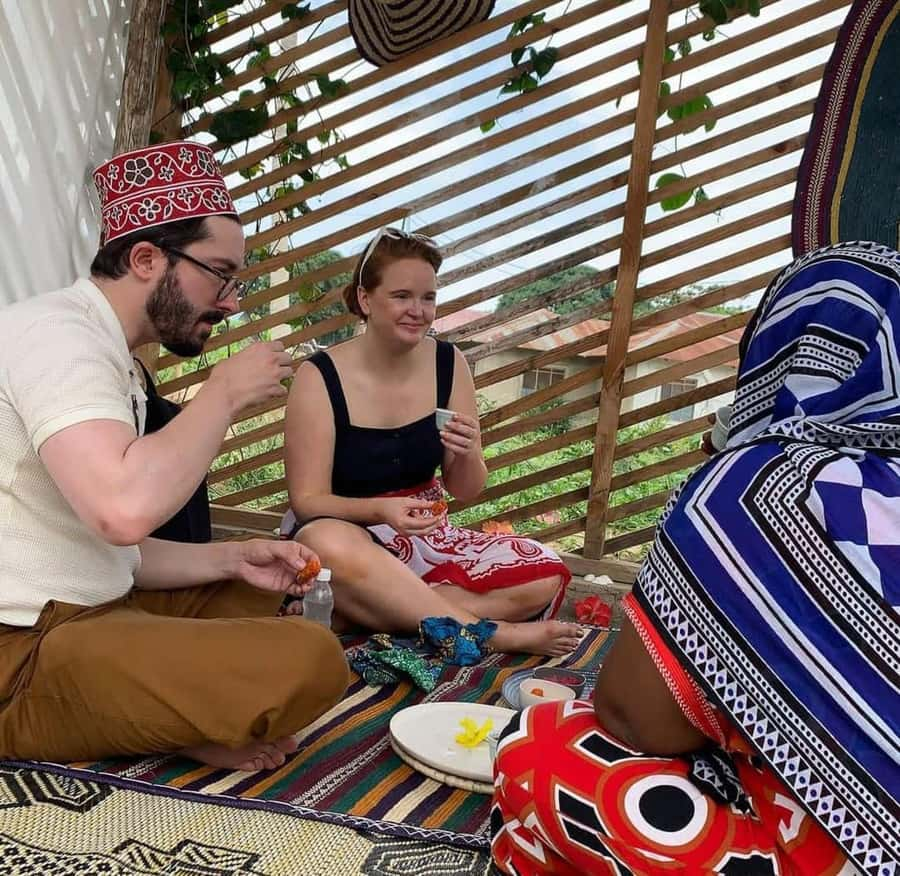
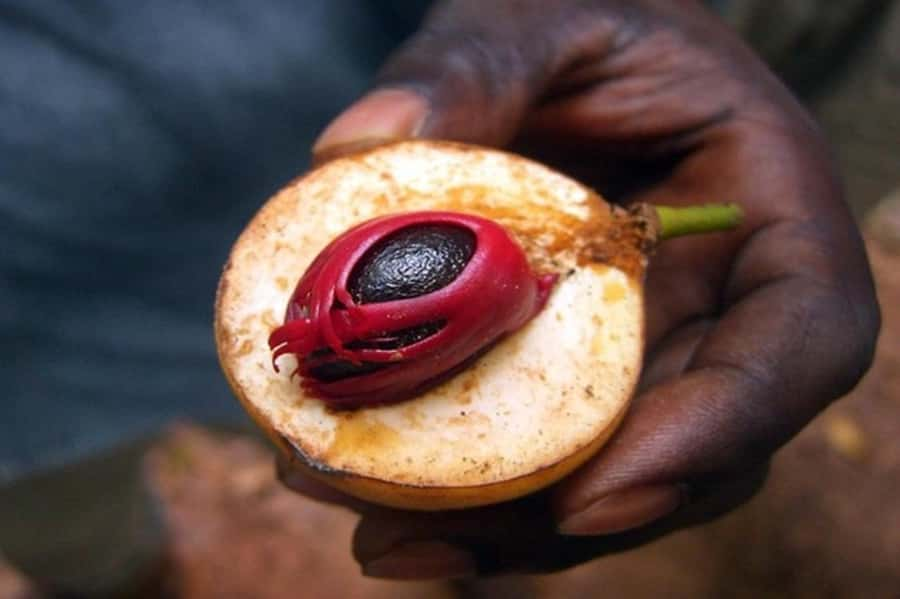
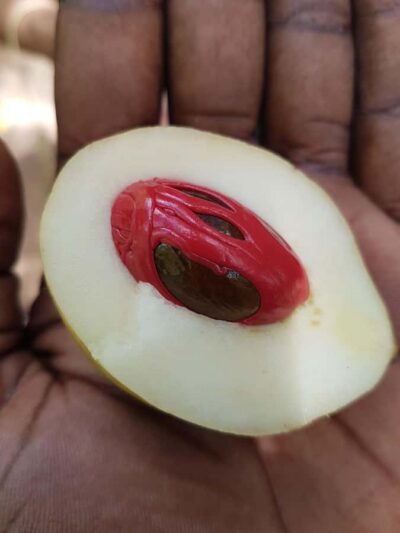
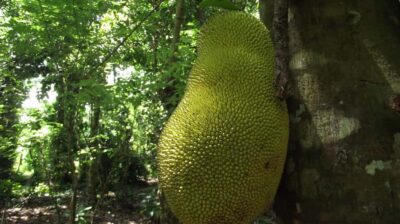
The farm walk is the heart of the experience. You may encounter cloves, lemongrass, nutmeg, cinnamon, turmeric, vanilla, coconuts, papaya, chili, black pepper, jackfruit, cardamom, cassava, and oranges. You are encouraged to smell and taste the plants, which turns a familiar spice rack into something much more memorable.
Cloves are a particularly useful part of the walk. Zanzibar became one of the world’s leading producers of cloves, and seeing the plant where the spice grows gives context that a market visit cannot provide. Cinnamon, vanilla, and nutmeg also make more sense when you encounter them as living crops instead of dried ingredients in small jars.
The fruit tasting adds variety. Tropical produce such as papaya, jackfruit, coconut, and oranges gives you a break from the stronger spices and helps show how much of a meal can come from a small farm area. Some plants may be in season while others are not, so the exact tasting selection can change throughout the year.
This is a walking tour, not a vehicle-based farm visit. The paths may require steady footing, and the experience is less suitable for anyone who cannot walk around uneven outdoor areas. Still, the private format can help. One participant with limited mobility found the guide attentive and willing to choose safer routes, a useful sign that you should explain your needs before setting out.
A cooking hut with simple tools and strong flavors
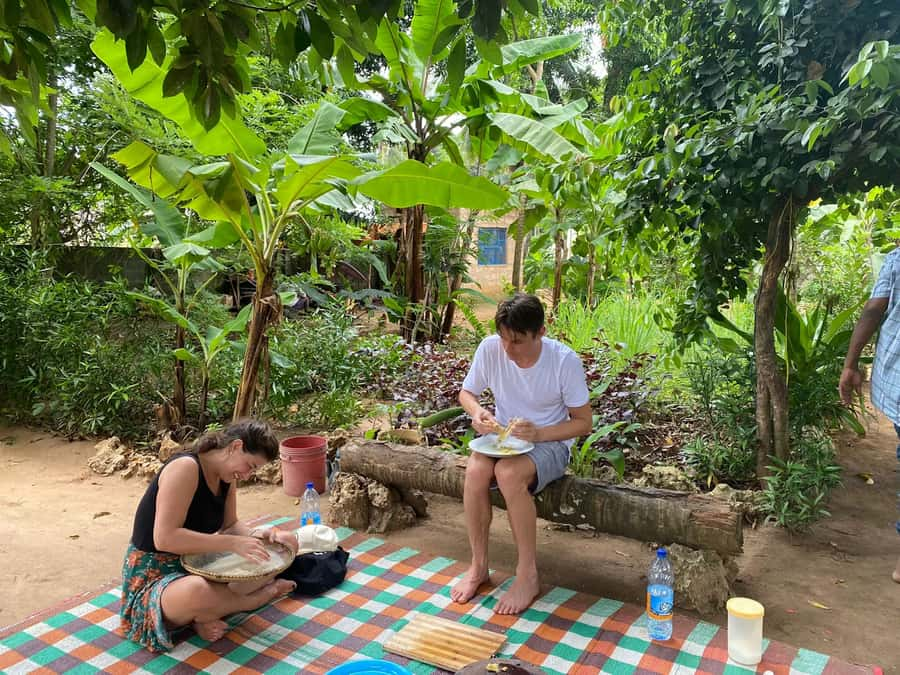
After the farm visit, you return to the cooking area for the food session. The setting is basic: a small open-air hut with corrugated metal sides, coconut frond roofing, one wood fire, and two charcoal burners. That simplicity is part of the lesson. You see how much flavor can come from careful preparation rather than modern equipment.
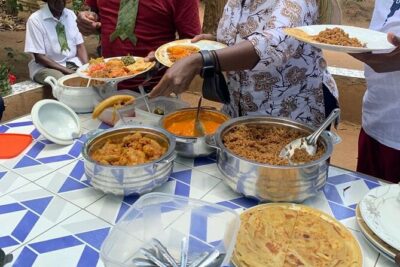
The cooking team may prepare pilau rice, fish, spinach, plantain, and a sauce made with tomato and onion. One of the most interesting steps is the preparation of coconut milk. The cooks scrape coconut meat from the shell, then squeeze it by hand to produce milk for the dishes.
Pilau rice is especially worth watching. Several spices are combined to create its warm flavor, showing why the farm visit comes first. After smelling individual spices along the trail, you get to taste how they work together in a finished dish.
Fish is marinated with lime and salt before being fried. Plantain brings a softer, sweeter contrast, while spinach and the tomato sauce round out the meal. The food is served as lunch, and you sit down to eat together after the preparation.
You should set your expectations carefully. The experience is described as a practical class, but the amount of hands-on work may vary. In some cases, the cooks do most of the preparation while you watch from the cooking hut. If your main goal is to practice knife work, measure ingredients, and cook every dish yourself, this may feel more like a demonstration.
If your priority is learning through observation and eating a fresh Swahili meal in a local setting, the format works better. You can still ask questions, identify spices, and follow the steps closely, but you should not expect a professional cooking school with individual workstations.
What you actually eat at lunch
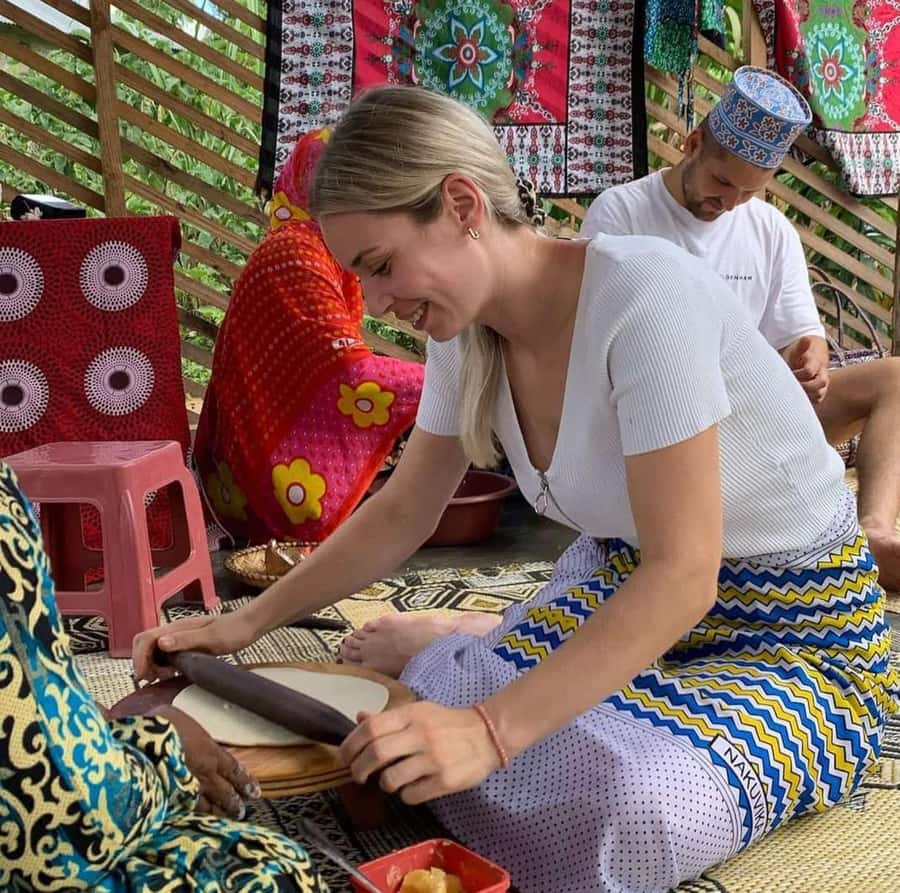
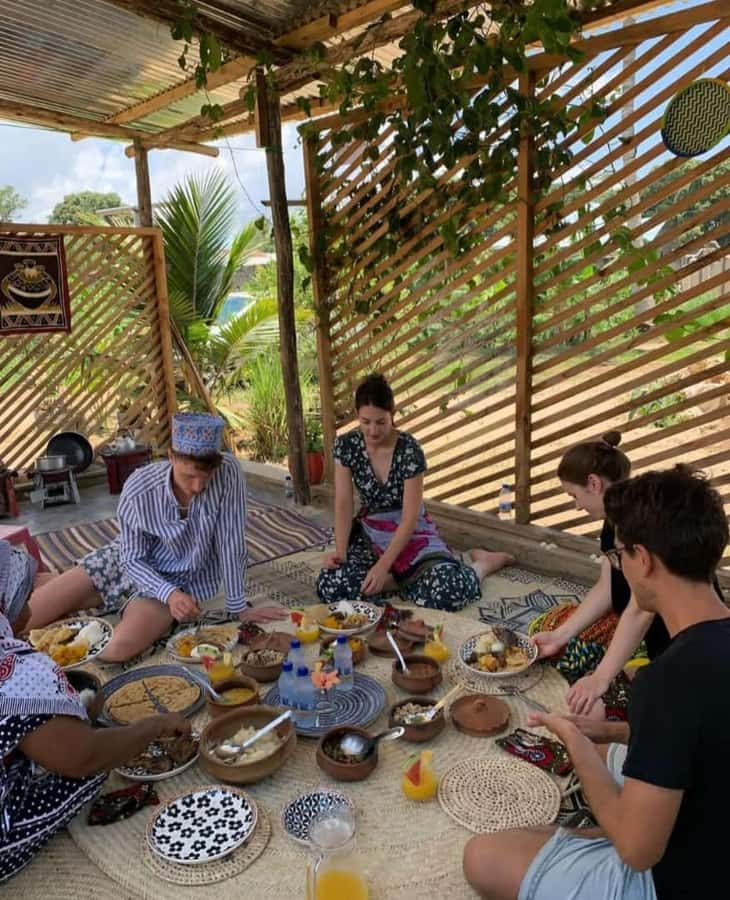
The meal is one of the strongest reasons to consider this outing. The food is prepared with very basic tools, yet the use of fresh coconut, citrus, spices, fish, greens, and fruit gives it plenty of character.
The advertised format refers to three meals and a dessert, or four courses. In practice, the serving may come as one buffet-style meal with fruit afterward. That difference is worth noting for anyone comparing this with a structured multi-course cooking class.
Still, a buffet is not necessarily a weakness here. It allows you to try several preparations at once, including rice, fish, vegetables, plantain, and sauce. You can focus on the taste rather than waiting for each course to arrive separately.
I would tell you to come hungry, but not to expect a menu chosen in advance. The ingredients and dishes may reflect what is available at the farm and what the cooking team normally prepares. That is part of the local character, though it gives you less control than a formal culinary workshop.
More Cooking Classes in Zanzibar:
- Zanzibar: Spice Farm Tour with Traditional Cooking Lesson
★ 4.8 · 77 reviews - Zanzibar: Spice Farm Tour with Traditional Cooking Class
★ 4.6 · 16 reviews - A private half day spice farm with a cooking lesson
★ 5.0 · 13 reviews - Zanzibar: Spice Farm Tour and Cooking Class with Lunch
★ 4.2 · 11 reviews
The spice stall and what to bring home
The tour finishes with a stop at a spice stall selling fresh packaged spices. This is a practical end to the day. After seeing the plants and eating the food, you can take home the ingredients that made the strongest impression.
Cash is required at the stall, so carry small bills. The selection may also include soaps and creams, giving you options beyond bags of cloves or cinnamon. Buying is optional, but the stop can be useful if you want gifts that are light, easy to pack, and tied to Zanzibar’s farming traditions.
Tips for the farm workers are already included in the tour price. You do not need to budget a separate tip for that part, although you should still carry cash for purchases and any personal spending.
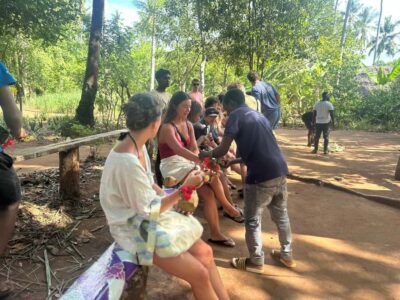
The walking tour may also include small cultural touches. On one outing, a man sang while climbing a coconut tree, and another person made simple crowns and ties during the walk. These details are not guaranteed, but they show the kind of informal interaction that can make the farm feel like a real working place rather than a display built only for tourism.
Is $50 good value for six hours?
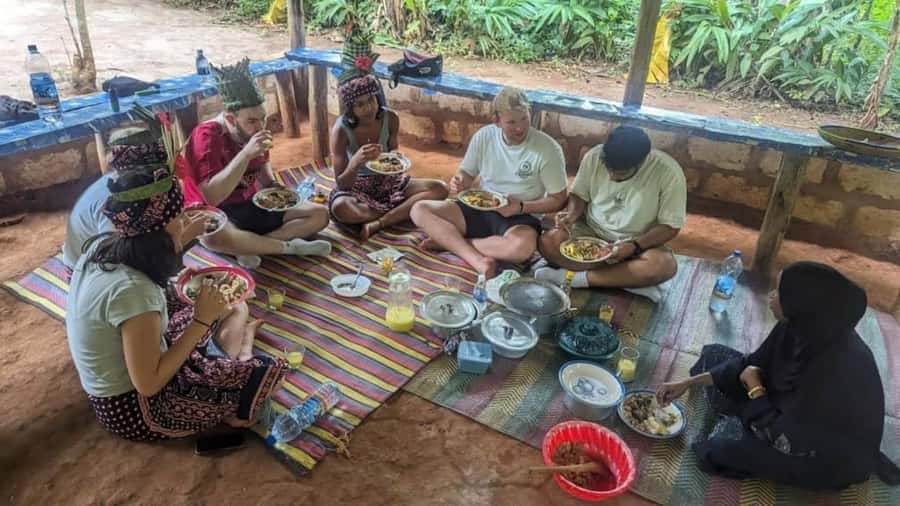
At $50 per person, the experience offers a substantial half-day package. Hotel pickup and drop-off, a private group, a guided farm walk, lunch, the cooking session, and the spice stop are all included.
The price looks strongest if you are staying outside central Stone Town and would otherwise need to arrange separate transport. It also works well for people who want two Zanzibar activities in one outing: a spice farm visit and a food experience.
The value is less clear if you want a serious, hands-on cooking course. You may spend much of the lesson watching the local cooks rather than preparing each dish yourself. In that case, a shorter farm tour plus a dedicated cooking school might suit you better, if one is available for your dates.
For families, couples, and small private groups, the combination is appealing. People of all ages are welcome, and the farm offers several ways to take part: walking, smelling, tasting, watching, and eating. You do not need to be an experienced cook.
Timing, comfort, and practical planning
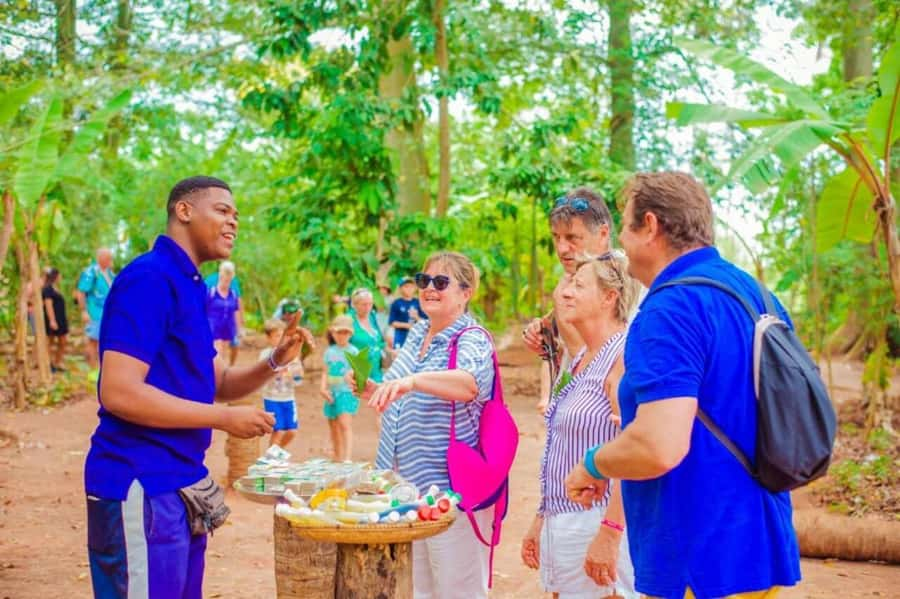
Allow the full six hours. The exact start time depends on availability, so check the schedule before booking and be ready in your hotel reception 10 minutes early. Pickup and drop-off locations include Stone Town and the Unguja North Region.
Wear shoes that you can walk in comfortably. The tour takes place outdoors on a farm, and even a gentle route can be tiring in warm weather. Bring water, though the supplied details do not specify what refreshments are provided during the day.
The activity runs all year. Plant availability may change, so do not assume every listed spice or fruit will be ready to taste on your date. The variety is broad enough that you should still encounter several plants, but the farm is a growing place, not a fixed museum display.
The experience is offered with English, German, and French-speaking guides. If you have mobility concerns, contact the operator before the day and explain what you need. The guide may be able to choose safer routes, but this remains a walking visit rather than a fully accessible vehicle tour.
Free cancellation is available up to 24 hours before the start for a full refund, and you can reserve while paying later. Those terms help if your Zanzibar plans are still shifting.
Who should book this Zanzibar food experience?
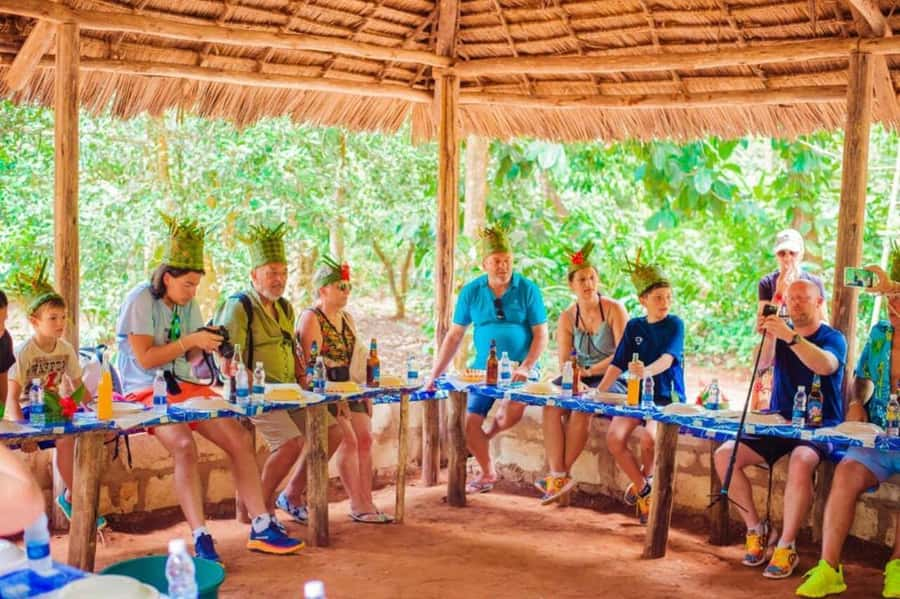
I would recommend it to you if you want to connect Zanzibar’s famous spices with everyday cooking. The farm walk gives you the plant side, while lunch shows how those ingredients are used in a real meal.
It is also a good choice for families and private groups with different interests. Someone who likes plants can focus on the farm, while a food lover can pay closer attention to coconut milk, pilau seasoning, fish, and plantain.
You may want to skip it if you dislike outdoor walking, need a fully hands-on class, or expect a carefully timed four-course meal. The cooking portion can be observational, and the lunch may arrive as a shared buffet rather than separate courses.
Should you book it?
Book this tour if you value fresh food, farm visits, and local contact more than polished presentation. The best parts are the plant walk, the fragrant spices, the handmade coconut milk, and the strong Swahili lunch.
Before booking, accept two limits: the farm requires walking, and the cooking session may be a demonstration. If those points suit you, $50 is a fair price for six hours of transport, food, guiding, and cultural context. If you want a formal class where you prepare every dish yourself, choose a different experience.
FAQ
How long does the Zanzibar spice farm and cooking experience last?
The experience lasts about six hours, including transport, the Tangawizi Spice Farm visit, the cooking session, and lunch.
Where can pickup and drop-off take place?
Pickup and drop-off are available in Stone Town, Zanzibar, and the Unguja North Region. You should wait at your hotel reception 10 minutes before pickup.
Which languages are available?
The live guides speak English, German, or French.
What foods and spices might I see?
The farm may include cloves, lemongrass, nutmeg, cinnamon, turmeric, vanilla, coconut, papaya, chili, black pepper, jackfruit, cardamom, cassava, and oranges. The cooking may include pilau rice, fish, spinach, plantain, and a tomato-based sauce.
Is lunch included?
Yes. Lunch is included, and you eat the food prepared during the cooking session.
Is the cooking class fully hands-on?
Not always. The activity is presented as a practical cooking lesson, but the cooking may be mainly a demonstration, with the local cooks handling much of the preparation.
More Workshops in Zanzibar
- Zanzibar: Spice Farm Tour with Traditional Cooking Class
★ 4.8 · 6 reviews - Zanzibar Cooking Class [Swahili food test ] and Spice farm Private tour
★ 4.5 · 6 reviews - Zanzibar: Spice Farm Tour with Cooking lesson
★ 4.5 · 4 reviews - Spice Farm Tour with Traditional Cooking Lesson
★ 5.0 · 3 reviews
Just added around Zanzibar
- ZANZIBAR, Stone town tour, Prison Island & Spice farm★ 5.0 · 11 reviews
- Zanzibar: Spice Farm Tour with Traditional Cooking Class★ 4.6 · 16 reviews
- Zanzibar: Stone Town City Tour and Spice Farm with Lunch★ 3.7 · 33 reviews
- Zanzibar: Spice farm tour with Zanzibar fruits tasting★ 3.8 · 7 reviews
- Zanzibar: Spice Farm Tour with Cooking lesson★ 4.5 · 4 reviews
- Zanzibar: Spice Farm Tour with Traditional Cooking Class★ 4.8 · 6 reviews
- Zanzibar: Spice Farm Tour with Traditional Cooking Class★ 5.0 · 2 reviews
- Zanzibar: Spice Farm Tour with Lunch & Tropical Fruits★ 4.9 · 10 reviews
Spice Farm Tours, compared.

Full-Day Private Stone Town +Spice Farm and Prison Island Tour
Read our review →
Stone Town & Spice Farm Private Tour Lunch Included
Read our review →Zanzibar full day Jozani forest + Spice farm and stone town
Read our review →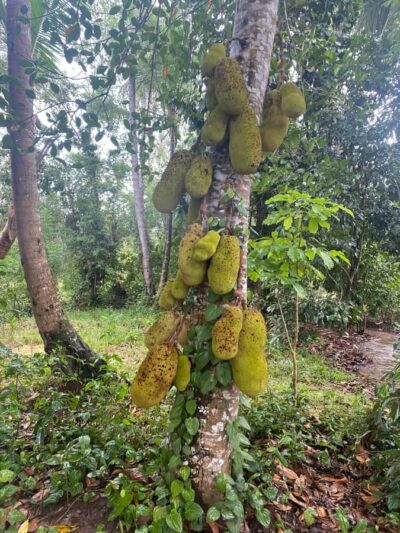
STONE TOWN, PRISON ISLAND AND SPICE FARM ( Lunch included )
Read our review →Lists this farm appears in