
Reviewed · SPICE FARM TOURS
Spice Farm Tour -Half Day
Zanzibar’s spices make the most sense when you see them growing. This half-day outing takes you from Kidichi Persian Baths into a working shamba, where cloves, vanilla, cinnamon, turmeric, lemongrass, and tropical fruit become real plants instead of names on a market label.
I like the mix of hands-on tasting and local history. I also like the relaxed pace, with hotel pickup, air-conditioned transport, and a walking portion that lets you see how people cultivate the land. The main consideration is that this is an outdoor farm walk, so you need moderate fitness and a willingness to cope with warm, sometimes wet weather.
Key points to know before booking
- Kidichi Persian Baths: Begin with an unusual 19th-century site built for a Persian princess.
- Taste spices at the source: Smell and sample cloves, vanilla, turmeric, cinnamon, black pepper, cardamom, and more.
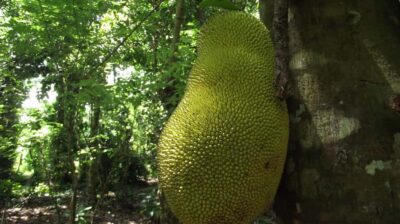
- Tropical fruit is part of the lesson: Depending on the season, you may try coconut, papaya, jackfruit, pineapple, citrus, and other produce.
- Three hours is enough for a useful introduction: You get a farm walk without giving up an entire day in Zanzibar.
- Cooking class available on request: Ask ahead if you want more than a guided walk.
- Hotel pickup and drop-off included: The tour is easier to fit into a Zanzibar City stay.
From Kidichi Baths to the spice-growing countryside
The tour opens at Kidichi Persian Baths, built in 1850 by Sultan Seyyid Said for his Persian wife, Princess Sheherezade. She was the granddaughter of Fatah Ali Shah of Persia. That family connection explains the unusual Persian decoration on a Zanzibar island site.
The baths were built on one of the island’s highest points. You’ll see domed bathhouses, deep stone tubs, large seats, and ornamental stucco work. The architecture is more decorative than you might expect from a bathing complex, and it gives the first part of the tour a clear link to Zanzibar’s royal past.
There is also a useful contrast nearby. The plain baths at Kizimbani were built among the sultan’s clove trees and coconut plantation. The two sites help show how royal comfort, plantation agriculture, and Zanzibar’s position in the Indian Ocean were tied together.
I appreciate this stop because it prevents the farm visit from becoming only a list of spices. You get a short piece of cultural context before walking into the countryside. The limitation is time. The overall outing lasts about three hours, so Kidichi is an introduction rather than a long archaeological visit.
More Spice Farm Tours in Zanzibar:
- Zanzibar: Prison Island, Stone Town, & Spice Farm Tour
★ 4.5 · 579 reviews - Full-Day Private Stone Town +Spice Farm and Prison Island Tour
★ 4.5 · 216 reviews - Zanzibar: Stone Town & Spice Farm Tour with Lunch
★ 4.5 · 97 reviews
Walking through a Zanzibar shamba
After the baths, the tour continues through a farm, or shamba. The important difference between this walk and simply buying spices in Stone Town is that you see the plants in the ground and learn how they are cultivated.
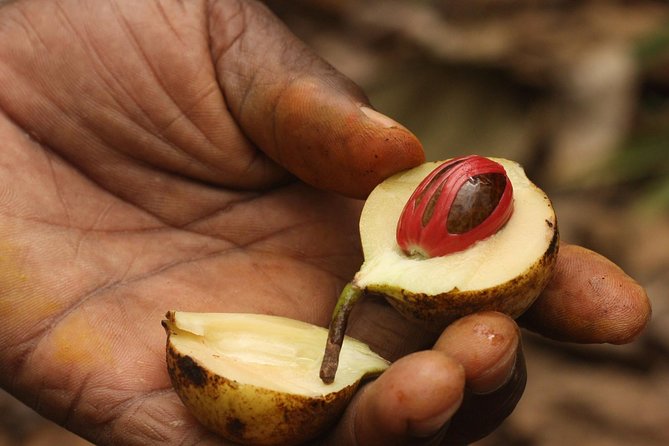
A guide explains the crops as you walk. You can expect to smell and taste spices, herbs, and fruit, while learning how they are used in cooking and daily life. The tour includes cloves, lemongrass, nutmeg, cinnamon, turmeric, vanilla, chili, black pepper, cardamom, cassava, and oranges.
Some of these plants are familiar in dried or powdered form, but less familiar when growing. Vanilla, for example, is not just a flavor in a bottle. Turmeric is more than a bright yellow powder. Seeing the plants gives you a better sense of the work behind the ingredients you use at home.
The guide’s role matters here. The strongest praise for this experience centers on a guide who is informative without making the outing feel rushed or stiff. You should expect explanations delivered in a relaxed way, with time to smell, taste, and ask questions as you move through the farm.
This is still a walking tour, not a formal agricultural demonstration. The supplied details do not promise a set of farming tasks or a guaranteed harvest activity. You are there mainly to observe, taste, and learn.
The fruit tasting is more than a snack
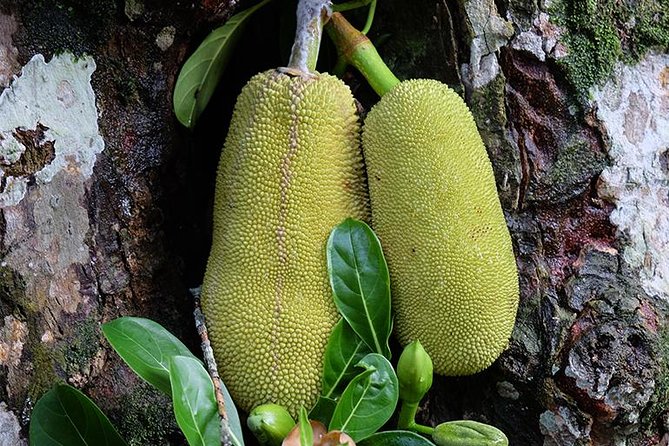
The spice plants get the headline, but the fruit may be the most enjoyable part for many people. Depending on what is in season, the farm visit can include jackfruit, pineapple, banana, green coconut juice, papaya, oranges, lychee, sour fruit, love apple, and durian.
That seasonal point matters. The exact selection is not fixed, and you should not expect every fruit listed to be available on every date. What you do receive is a direct introduction to Zanzibar’s tropical produce, with the chance to taste some of it where it grows.
Green coconut juice is a particularly fitting part of a warm farm walk. It gives you a fresh drink while showing one practical use of the coconut palm. Other fruit, such as jackfruit or durian, can be more memorable for their texture and strong character than for easy familiarity.
The tour also includes a bottle of water. That is useful, but it does not replace sensible preparation. You should still dress for an outdoor walk and bring what you normally need for warm conditions.
Why the spice lesson has lasting value
A good spice tour changes the way you shop. After seeing the plants, you are more likely to notice the difference between whole cloves and ground clove, fresh ginger-like roots and dried powders, or a vanilla pod and artificial vanilla flavoring.
The guide also explains how the crops can be used. That connects cultivation with Zanzibar’s food traditions and with the island’s trade past. Cloves, cinnamon, pepper, cardamom, and vanilla are not just souvenirs. They are ingredients with strong links to home cooking, markets, and the island economy.
You’ll have an opportunity to shop for spices near the end of the outing. This is convenient, but I would treat it as a chance to buy rather than an obligation. The tour is more useful when you first learn what you are seeing, then decide what you actually want to take home.
Because this is a walking visit to a farm, the experience feels more grounded than a quick stop at a shop. You are looking at crops, hearing how they are grown, and tasting fresh produce before making any purchase. That sequence gives the shopping a purpose.
More Farm Tours in Zanzibar:
- Zanzibar:Stone Town & Spice Farm Private Tour Lunch Included
★ 4.2 · 94 reviews - Zanzibar full day Jozani forest + Spice farm and stone town
★ 4.7 · 90 reviews - Zanzibar: Spice Farm Tour with Traditional Cooking Lesson
★ 4.8 · 77 reviews - A Private Full Day Tour To Stone Town & Spice Farm
★ 5.0 · 53 reviews
A possible cooking class on request
A cooking class is available at the spice farm if arranged in advance. This could make the experience a better fit if you want to connect the ingredients with Zanzibar-style food preparation.
The details supplied do not specify the class length, dishes, menu, or extra cost. I would ask about those points before booking the cooking option. Do not assume it is part of the standard half-day visit.
The regular tour is already built around food in a simple way. You smell spices, taste fruit, and hear how plants are used. The cooking class is best seen as an optional extension, not something included automatically.
Lunch is not included in the standard price. Coffee and tea are also excluded, so plan your day around that. The tour is short enough to pair with another meal in Zanzibar City, but the exact timing will depend on pickup and the day’s route.
What the $50 price covers
The cost is $50 per person. For a three-hour experience, that is not the cheapest way to see a farm, but the price includes several practical services: an experienced professional guide, hotel pickup and drop-off, private comfortable air-conditioned transport, and a bottle of water.
That transport matters in Zanzibar. You are not left to arrange your own way to a rural farm, and the air conditioning provides a welcome break between the city and the walking portion. Pickup also makes this easier to fit into a day based in Zanzibar City.
The value is strongest if you want a guided introduction rather than only a transfer to a plantation. You are paying for the history stop, the farm explanation, the tastings, and the convenience of transport in one compact outing.
Group discounts are offered, though the exact discount is not specified. The activity can accommodate a maximum of 20 people. Ask about the discount before paying if you are booking for a family or larger party.
Timing, transport, and physical effort
The advertised duration is about three hours. One part of the route is described as lasting about two hours, with the remaining time used for transport and the other stop. Exact timing may shift with pickup locations, weather, and the pace of the walking group.
Pickup and drop-off are included. The transport is described as private, comfortable, and air-conditioned, which is a useful feature in Zanzibar’s heat. Mobile ticketing is also available, making the booking information easy to keep on your phone.
The activity calls for a moderate level of physical fitness. You will walk through a farm, and the surface may not feel like a paved city sidewalk. The information does not provide a detailed accessibility statement, so anyone with mobility concerns should ask the provider before booking.
Good weather is required. If poor weather causes cancellation, you can choose another date or receive a full refund. The standard cancellation rule allows a full refund when you cancel at least 24 hours before the start time. Changes or cancellations inside that 24-hour window are not accepted for a refund.
Who will enjoy this half-day outing
This tour suits you if you want to understand Zanzibar through food, farming, and history. It is especially useful early in your stay, when you are still getting your bearings and want a short activity outside the city.
Families may like the tasting element, the fruit, and the variety of plants. Children often respond better to something they can smell and touch than to a long indoor history talk, though the moderate walking requirement still matters.
Food lovers will get the most from the spice explanations and the chance to shop after learning what each product is. The optional cooking class adds appeal if you want a more active food experience.
The tour is less suitable if you want a full-day plantation visit, a long historical tour, or a guaranteed list of every fruit named in the description. Seasonal availability affects the tasting, and the three-hour format keeps the visit focused.
A few sensible tips for the day
Wear clothing suitable for a farm walk and warm outdoor conditions. Bring water beyond the included bottle if you usually drink often during exercise.
Keep your schedule flexible around the three-hour estimate. Pickup times and the pace of a group can affect the finish time, even though the activity itself is designed as a half-day outing.
If you want the cooking class, request it before the visit. Ask about its price and menu, since those details are not included in the standard description.
Set aside some room in your luggage if you plan to buy spices. The shopping opportunity comes after you have had a chance to see and taste the products, which makes it easier to choose useful souvenirs instead of buying blindly.
Should you book the Spice Farm Tour?
I would book this if you want a compact, well-rounded introduction to Zanzibar’s crops and culture. The combination of Kidichi Persian Baths, a guided shamba walk, fruit tasting, spice education, and included transport gives the $50 price reasonable value.
The best reason to go is the connection between the plant and the finished ingredient. The relaxed guide style is another strong point, especially if you prefer learning through conversation rather than a formal lecture.
I would skip it only if you dislike outdoor walking, need a fully accessible route, or want a detailed cooking experience included in the base price. For most people with three free hours in Zanzibar City, it offers a useful look beyond the beach and the souvenir shelf.
FAQ
Where does the Spice Farm Tour take place?
The experience is based in Zanzibar City, Tanzania, with a visit to Kidichi Persian Baths and a walking tour through Zanzibar spice farms and plantations.
How long does the tour last?
The tour lasts approximately three hours. One part of the route is listed as about two hours, with the remaining time used for the rest of the experience and transport.
Is hotel pickup included?
Yes. Hotel pickup and drop-off are included in the tour.
Is transportation air-conditioned?
Yes. The transport is described as private, comfortable, and air-conditioned.
What spices and plants might I see?
The tour includes cloves, lemongrass, nutmeg, cinnamon, turmeric, vanilla, chili, black pepper, cardamom, cassava, and oranges. You may also see tropical fruit and other seasonal produce.
What fruit might I taste?
Possible fruit includes jackfruit, pineapple, banana, green coconut juice, durian, love apple, lychee, sour fruit, papaya, and oranges. The exact selection can vary by season.
Is lunch included?
No. Lunch is not included. Coffee and tea are also not included.
Is a cooking class part of the tour?
A cooking class is available at the spice farm on request. It is not listed as part of the standard included experience.
How many people can join the activity?
The activity has a maximum group size of 20 people. Group discounts are available, although the discount amount is not specified.
What happens if the weather is poor?
The experience requires good weather. If it is canceled because of poor weather, you can choose a different date or receive a full refund.
Just added around Zanzibar
- Zanzibar: Walking Spice Farm with Local Cooking Class★ 4.4 · 9 reviews
- ZANZIBAR, Stone town tour, Prison Island & Spice farm★ 5.0 · 11 reviews
- Zanzibar: Spice Farm Tour with Traditional Cooking Class★ 4.6 · 16 reviews
- Zanzibar: Stone Town City Tour and Spice Farm with Lunch★ 3.7 · 33 reviews
- Zanzibar: Spice farm tour with Zanzibar fruits tasting★ 3.8 · 7 reviews
- Zanzibar: Spice Farm Tour with Cooking lesson★ 4.5 · 4 reviews
- Zanzibar: Spice Farm Tour with Traditional Cooking Class★ 4.8 · 6 reviews
- Zanzibar: Spice Farm Tour & Stone Town Adventure★ 4.6 · 48 reviews
Spice Farm Tours, compared.

Full-Day Private Stone Town +Spice Farm and Prison Island Tour
Read our review →
Stone Town & Spice Farm Private Tour Lunch Included
Read our review →Zanzibar full day Jozani forest + Spice farm and stone town
Read our review →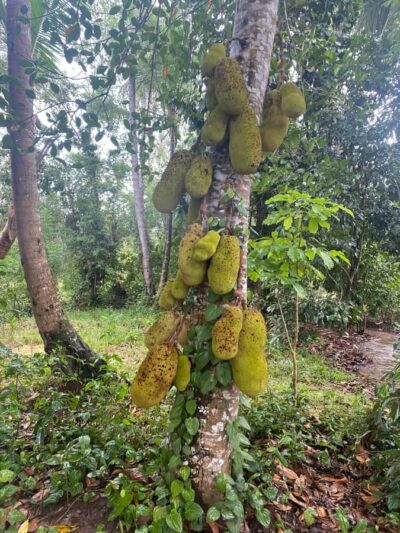
STONE TOWN, PRISON ISLAND AND SPICE FARM ( Lunch included )
Read our review →Lists this farm appears in